品

Corea든 Korea든, 품격이 먼저다
Whether Corea or Korea, dignity comes first.
Whether Corea or Korea, dignity comes first.
Now
지금
751 Diaspora
Heritage
유산
Humanity
인문
Mirengsi
未冷尸
Politics
정치
Media
언론
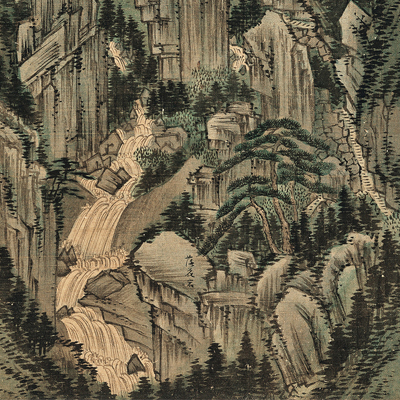
낙화암 가에 공주는 천재(千載)의 한(恨)을 품고 물과 같이 흘러 갔다.

야담사화
칼럼
深山
The Princess of Passion and the Warrior

0
2026. 10. 31
If this body were a flower,
blown by the wind,
I would not cross that wall.
I would not fall in profusion
onto the street, to be trampled,
nor would I be trampled every time
on the path you take when you leave and return,
or when you return and leave.
I would not be trampled every time.
The Uija Royal Palace in Buyeo Fortress, the capital of Baekje, floated like a buoyant castle on a sea of ginkgo blossoms, rising majestically amidst thousands of acres of ginkgo trees. It was early April, and the pure white ginkgo blossoms began to bloom at the palace, spreading like a dense fog over the eight hundred and eighty temples and every household in the million-strong capital. As the warm April southern wind blew, the petals from every branch fell like a snowstorm, piling generously on the roads, walls, and even on the backs of mules.
Beneath this ginkgo tree, a young warrior, dressed in a blue robe, wearing a crown, and with a long sword embroidered with paulownia leaves at his waist, was singing this song, constantly gazing at the towering royal fortress. He would take a step, then look into the thousand-foot-high castle with burning eyes, take another step, and look again. Finally, he pressed his ear against the wall and listened intently, not because he was intoxicated by the beauty of his own voice, but because he was hoping for a word or two of response, even as faint as a mosquito's buzz, from within the castle. However, from within the long, twelve-layered palace, not a single cough was heard.
The warrior, as if regretful, turned his gaze from the city walls and stared blankly at the distant mountains without a destination. Just then, on the Half-Moon Fortress, which stretched out below the western sky, scattered moonlight illuminated the Baekje mountains and rivers like a painting. Swallows, which had arrived on the third day of the third month, had not yet built their nests, for they were seen flying, carrying mud and kicking off the river water. Above, from Goransa Temple, the sound of the first watch's bell rang out, deep and vigorous. He scratched his head repeatedly, feeling a pang of sorrow, as if he alone had become a rock that knew neither how to laugh nor cry, while all the mountains, rivers, plants, birds, and beasts were in harmony with spring, melting into its warmth. Indeed, when the Gangnam swallows brought the ninety days of spring light and settled in the barley fields, they would press down the barley, and when they settled in the homes of Chang'an, they would make those households burst with laughter.
If there is anyone who cannot help but shed tears on this beautiful spring night, they must surely be banished by the goddess of spring. As the warrior thought this, a sudden chill seemed to rise through his body, and he shivered. Indeed, accumulated petals fell from his shoulders and back like snowflakes in the dead of winter.
He angrily scuffed at the fallen flowers with his foot, but still feeling frustrated, he tore at his chest with both hands and, singing the song he had sung earlier, turned and walked away around the wall. His scholar's robe still fluttered lightly in the night wind, gracefully like the wings of white gulls rising and falling over the distant sea, but only the heartbreaking melody he sang fell with the petals and was buried by the roadside. It was the spring of the six hundred and eightieth year, the thirtieth generation since King Goonjo, the founder, established the nation on the eastern peninsula.
The Baekje Royal Palace, which welcomed King Uija, stood majestically on the foothills of Mansusan Mountain, in the heart of Buyeoseong, a place of beautiful mountains and clear waters. The roofs of every pavilion in the palace were adorned with the rarest blue tiles in the world, and the pillars, painted ten times with dancheong, were as red as coral. The foundation stones, made of white marble several gil high, were carved slender like the legs of a crane, making it so splendid that it could be said to embody the essence of human artistry. With a pavilion every five steps and a platform every ten paces, the numerous towers and halls must have contained a mountain of treasures, such as golden crowns, precious jewels, Gangnam silk, golden hairpins, silver rings, and golden censers, enough to fill several carts and still have plenty left over.
Perhaps, to fire just one of those tiles, our good-natured ancestors were bound for years, obeying the king's command. And to excavate just one of those foundation stones, how many people from across the nation, from Jang'an to the deepest mountain valleys where stones were found, must have been mobilized, enduring tearful hardship? Not to mention, how many common people suffered and paid taxes to provide just one golden hairpin or one golden ring that the king would playfully toss to the three thousand court ladies in the hundreds of concubine palaces, built like the peaks of Geumgangsan Mountain behind Goransa Temple?
The houses within that grand and terrifyingly high palace were all made of stone with iron pillars, so they would not rust. But who knows if one day the voice of the people will turn into the voice of heaven, and spiders will spin webs in this palace, like the A-bang Palace, and crickets will sing the 'Autumn Wind Farewell Song' every night? Even now, the sounds of banquets that used to fill the nights can be faintly heard seeping through the walls to everyone outside the royal palace.
Naked dancing girls, not a thread on their bodies down to their waists, danced in the vast palace, their footsteps rising and falling in the air, a sound that I could clearly hear, as if right by my ear. I clearly saw the king and his courtiers, with mountains of crane meat, peacock hearts, and beef ribs piled high, tilting golden wine bottles and gulping down delicious wine. This year, the lavish and splendid palace entertainment was even more extravagant than last year, and today was even more so than yesterday, a daily spectacle. Unfortunately, the common people, with their ears, noses, and eyes, watched this in silence.
As this extravagant and debauched life of feasting and revelry continued day after day, it was clear what the future held for this nation. The handsome warrior with slender eyebrows, whom I saw earlier, stopped abruptly, as if dumbfounded, upon hearing the music of the samhyun-yukgak (a traditional Korean ensemble) flowing from the palace. He stared inside for a long time, then, as a subject who drank the rain and dew of Baekje's mountains and rivers, he seemed unable to bear it. He looked up at the distant sky, bowed deeply, muttered something, and turned away. It seemed he was expressing that His Majesty should compose himself more. The flowers swayed more and more in the wind, and the night deepened.
Even from the alley where the gyobang (a gisaeng house) was, the beautiful young men of Jang'an, who had been searching for Hyanghwachon (a famous gisaeng house), seemed to be returning, tipsy. The blue lanterns, like morning stars, were going out one by one. The warrior gazed at the flickering lights of Seoul's Jang'an at night for a long time, then, as if having made a decision, he rushed to the wall. He quickly took out a silk thread, tied one end firmly to the root of a ginkgo tree, and then threw the other end over the wall. He then looked around to see if there were any royal guards, and quickly leaped over. A moment later, there was a thud from the other side. The palace seemed not to have heard this sound, showing no sign of it, only the sound of the wind music growing louder.
The warrior finally hid in the orchid field under Woljeonggyo Bridge, below the palace. This seemed to be near Eojeongsu, and soon after, he saw a young girl carrying water and passing by. He lay buried, barely breathing, yet he peered out through the moonlight. To the west, there was a luxurious house, like something out of a dream, with a blue-tiled roof without a ridgepole, perhaps a pavilion where the king resided, signifying that there is no heaven above the king. Connected to it, rising into the clouds, was a two-story pavilion, Myeongjeongjeon, which managed the nation's affairs. Below it, a wide courtyard seemed to be where morning greetings were offered, with stone tablets for Jeongilpum and Jongilwi standing in two rows as if greeting each other. To the east of the bridge, amidst dense willows, a cluster of houses seemed to be the concubines' quarters, and the neighboring house, connected by a corridor, appeared to be a playground, as music flowed from there.
In front of it was the well-crafted Anapji Pond, with a stone balloon half-floating on the water, and lotus petals blooming profusely, with night dew glistening on each leaf. The warrior thought to himself, “How beautiful.” Thinking that there was no life as luxurious and good as that of a king, he stretched his neck above the orchids to look at the hazy distance. Just then, he saw a pair of young girls carrying paper torches, walking back and forth in front of him. Startled, the warrior gripped his sword hilt, held his breath, and lay down again in the grass. They walked slowly and softly, without even stirring dust, and the lamplight flickered before his eyes, when suddenly
“The moon is bright!” a beautiful voice was heard. The maids standing on either side chimed in, “Indeed, Princess. It looks even brighter now that spring has arrived.” The warrior, though afraid, looked towards the source of the sound.
Indeed, in the middle of the bridge, there was a woman so dazzlingly beautiful that one might suspect she was a moon spirit fallen from the moon, not merely a mortal, standing gracefully with her feet still, gazing at the moon, surrounded by young girls holding lanterns and banana-leaf fans. She was the princess. At that moment, the warrior felt a jolt throughout his entire being. Truly, the one he had yearned for so desperately earlier in the ginkgo tree field, lamenting in song that he couldn't become a flower to climb over the wall, and the one he had waited for, hidden in the grass, covered in dew, was the princess. There was a poignant story behind his waiting for this princess.
It was just a few days ago, on the eighth day of the fourth month. King Uija, the Queen, and the Princess all came to Goransa Temple and enjoyed themselves with hundreds of thousands of people from the capital. Even when offering bows in the Buddhist style before Sakyamuni Buddha, His Majesty went up to the main hall like the common people, struck the bronze gong three times, and bowed. Then, presumably, the Princess, ministers, monks, generals, and scholars all bowed in turn. And later, during the lantern offering ceremony by the Baekmagang River, and when playing in the water by the Sasusu River, and especially when dancing and playing flutes on the lawn behind the temple, celebrating as if it were a grand birthday festival, like Dano or Gawi, with the common people enjoying themselves, His Majesty was present, and the Princess also participated. At that time, this nameless warrior was captivated by the Princess's beautiful appearance and subtly stayed by her side from morning till night.
That day, too, while performing a sword dance with other warriors in front of His Majesty, he saw the Princess sitting under a floral umbrella, intently watching the sword dance. He became so dizzy that he dropped his sword. At that, the Princess smiled gently and had a maidservant quickly run and pick up the sword for him. The King was surprised by this incident, and the assembled people were also surprised, but they simply laughed it off, thinking it was nothing significant. However, for the young warrior, it was an unparalleled great honor.
From that day on, returning home, he could not hide his joy and smiled faintly, longing for the princess who had given him the sword, to the point of falling ill. It was a foolish unrequited love, one might say; as a mere commoner, an unknown warrior, there was no way he could love a princess. It would be easier to pluck a star. From then on, every night, consumed by unrequited love, the warrior would come near the royal palace, shedding endless tears over fallen flowers, singing passionate songs of longing for the princess until the rooster crowed, then he would return home. Then, with a burning heart, he decided to see the princess one more time before he died. That night, he boldly leaped into the palace, soaking himself in the night dew, waiting, hoping the princess might pass by. The princess, once again, looked up at the moon and said,
“The full moon is fading. I prefer the crescent moon before it’s fully round. Children, I want to gaze at the moon alone. You all go inside first.” “It’s getting late, Princess, please go inside soon,” seemed to be the words of an old lady-in-waiting. “No, I want to quietly lean against the railing alone and gaze at the sad moon. The night of the last Buddha’s Birthday was truly beautiful too. Go inside quickly.” The ladies-in-waiting could no longer disobey and all dispersed into the inner palace. Silence enveloped everything.
Occasionally, only goldfish could be seen under the bridge, opening their mouths wide as if to catch flower petals, playing in pairs. The princess stood alone on the stone bridge of Woljeonggyo. A corner of her rustling silk skirt, like a peacock's wing, hung over the stone railing of the bridge, while indifferent ginkgo blossoms crept over the wall and fell in a shower onto her skirt. She fanned herself gracefully with a fan made of crane feathers, as if scattering pollen, and gazed at the sixteenth-night moon floating in the sky, as if intoxicated by it.
With two left fingers, carved as if from beads, resting on the railing, and eyebrows like painted green mountains, she looked up at the sky. It was as if the spirits of all the beautiful mountains and rivers of this land had gathered to form her mouth, nose, and eyes, purifying, sanctifying, and beautifying the entire world. The princess, unable to resist the spring's delight, sang in a beautiful voice, enhancing the charm of the spring night. "When the moon rises, the sky will widen. Ah, I wish to become the moon—" "The moon will be even clearer when it rises among thousands of stars." Ah, I too wish to become that moon rising among the stars. This song trailed off, winding through the alleys of the royal palace. No warrior, not made of wood or stone, could possibly resist its charm.
"Moon, moon, what moon is it?"
"It's that moon, floating high behind the sky."
"The moon is in the sky, and it rises."
"Ah, I wish to become that sky—"
With a sound, the warrior rushed out. He came out and, before the startled and bewildered princess, clasped his hands together and bowed respectfully, lowering his head deeply.
"I am the nameless humble servant you met at the sword dance arena of Goransa Temple on the eighth day of the fourth month." "Did you come to see me?" "I offered my life and did so." "For what reason?" He hesitated, wondering what to say, then lowered and raised his head, his cheeks reddening as he said, "With a heart of admiration—with a heart of admiration—" "With a heart of admiration—" the princess repeated like a parrot, then added, "How great and fervent it is."
"If you ask me to count each snowflake falling on Baekdusan, I will count them. If you ask me to count the waves of the East Sea that come and go ten million times, I will count them. If I die loving you until my hair turns white, I will have no regrets." "Does the snow on Baekdusan not melt? Do the waves of the East Sea not come and go? Will your love not be like this?" "Not only snow, but even if all things in the world melt, the flame of love burning in my heart will be eternal and boundless. Water comes and goes, but this body's journey ends here. Please do not torment me so much," he said, boldly taking a couple of steps closer.
“You must be sincere. Does love have an inside and an outside? But ever since the incident at Goransa Temple, I have always wanted to see you.” She blushed as if to say that even a princess is a slave before love, and she took a step closer, unable to look directly, and stood aside. “Why did I miss the sun and the moon? I missed them because of their light. Why did I miss the princess? I missed her because of burning love.” The two embraced, unable to distinguish whether they were in the royal palace or somewhere else. The throbbing blood in their hearts and the flames of passion resounding from their four hundred and eighty bone joints seemed to burn the two bodies that had become one. The night was gradually breaking. Soon, the Seoul roosters would crow for the first time. The joy was like ascending to heaven, and the royal palace shone even brighter with the love of the two youths.
“Though it’s time to go, my feet won’t leave.”
“What sin do my feet bear?”
“I can neither come nor go in this village.”
When the warrior sang,
“What can’t I let go of? Why can’t I let go of the palace or the jewels?” “I am a strong person, but there is one person I simply cannot let go of.” The princess, with a longing heart, stroked the warrior’s disheveled hair. Let the heavens play the flute and the earth dance. When you see young lovers steeped in love, don’t you, too, feel the worth of having created heaven and earth? However, when the temple bell of Goransa rang twice, the two had to part. Taking one step, then two, they looked back, parting sadly from each other like Gyeonwoo and Jiknyeo separating on the Ojakgyo Bridge on Chilseok in July.
The round moon eventually sets, and the colored maple leaves eventually fall; this is the principle of nature.
The golden age of Baekje was chased away by the sounds of royal music every night.
The time finally came for the 31st King Uija to face judgment.
King Seong, the 26th monarch who moved the capital from Ungjin to Buyeo, was as indulgent and extravagant as any previous ruler, but by the time of King Mu, the 29th monarch, a new tyrant emerged. King Uija lived a life as luxurious and debauched as Louis XVI, who overthrew the French monarchy. That was even better, for he forced his poor people to plot day and night to conquer Silla, only to fail. Moreover, when he recklessly blocked Silla's path to communicate with Emperor Gaozong of the Tang dynasty by colluding with Goguryeo, the mountains and rivers of Baekje became shrouded in the clouds of war, and the untimely sound of horses' hooves echoed loudly across the land where azaleas bloomed and larks sang. The Baekje dynasty, which was thought to last for ten thousand years, wavered on the edge of a sword.
There was no one among the people of Baekje who did not shoot an arrow, and no one who did not grasp a spear and go out to fight, yet tragically, they were brutally defeated in the final battle of Baekmagang. The royal palace burned for three days, the king wrote a letter of surrender, and the people scattered in all directions like sheep without a shepherd. It was a scene of immeasurable sorrow and misery for a people without a country. Alas, the royal palace is burning. The burning flames flew across heaven and earth, leaving no tree or stone pillar of Baekje untouched. Myeongjeongjeon burned, Woljeonggyo burned, and the inner palace burned. The tragedy of Nakhwaam, steeped in the sorrowful history of the royal palace for a thousand ages, also began here.
The combined forces of Silla and Tang swept in like a flood and occupied the royal palace. Now, the crown, the throne, the gold and silver treasures, the princesses, the three thousand concubines of the harem, all fell into their hands. At that moment, the young warrior who had guarded the palace gates until the very end could do nothing against the overwhelming tide. Driven from the gates, he entered the main hall; driven from the main hall, he entered the inner chambers. As he went, his sole purpose was to protect the princess, his beloved, thinking, 'Even if this body dies a hundred times and turns to dust, my unwavering devotion to my lord will never fade.' But by then, the princess and her ladies-in-waiting were fleeing through the back gate, weeping to the heavens.
The luxurious palace halls were set ablaze, screens toppled, flowerpots shattered, and the nation's vanguard was helplessly scattered like dust under the horses' hooves. The cries of lament from the people, court ladies, and royal family, slaughtered inside and outside the palace, rose to the ninth heaven. Then, they were buried deep within the earth. Amidst this chaos, the noble princess, riding in a four-person palanquin, separated from her father and the empresses, and surrounded by hundreds of ladies-in-waiting, fled to Sajasutga. The river flowed serenely, and the wild garlic flowers blooming on its banks seemed to boast of worldly glory, lining up, blooming, and smiling.
Upon arriving at Sajasutga, life was truly longed for. In this world where people live, there is indeed a captivating fragrance, and incense always burns. Especially for the princess, who had a young warrior—she wept, beating the riverside rocks with her bare feet, swollen and bleeding from stumbling on stones. Hundreds of court ladies, unable to suppress their sorrow and grief when the royal palace, which had been their home until recently, was engulfed in flames, stomped their feet and wept bitterly, surrounding the princess. In the dead of night, when heaven and earth were quietly asleep, and the flower-like princess and hundreds of court ladies cried out by the river, even the moon, perhaps unable to bear witness, slowly hid its light behind dark clouds.
The sound of the water, the princess's cries, the lament of the court ladies—how could even wood and stone not weep at this tragic end? At last, the final fate arrived. The Silla soldiers, who had set fire to the royal palace, spurred their horses again; one group set out to find King Uija, while another followed the court ladies and stormed towards Sajasutga. The thudding, rolling sound of hooves, the traces of the great army approaching, raising a white cloud of dust like a mist... The final fate rushes closer with every passing moment. The princess shivered, feeling as if the sound of the hooves was trampling over her chest, and simply waited for her life to end. However, she held no resentment towards death, and though she couldn't enjoy the glory of youth, she wished to see her beloved warrior just once before her eyes closed. She longed to be held in his arms again before her fluttering heart stopped beating.
Meanwhile, the warrior, to save his beloved, retreated towards Sajasutga, fending off the enemy with a few palace guards. The situation grew increasingly urgent. The cries of the court ladies, like lost souls, sounded even more desolate. Cavalrymen, each with a spear in hand, rushed towards Sajasu like a cloud. At that critical moment, the warrior whom the princess had wished to see one last time suddenly appeared before her eyes. However, before she could even call out his name, the enemy soldiers had already rushed so close that they could grab her skirt.
When the white snow covered the entire world, there was nothing as close as the loyalty of a bamboo, standing alone and green, or the loyalty shown when the nation's fate hung by a thread. Hundreds of court ladies, to save their lives, would have to greet the enemy with smiles, and in doing so, would bear the children of their enemies, spreading them across this land—a deed they could not bear to do. Their chastity, in itself, would elevate the king's name, uphold the Baekje dynasty, and make the name of Baekje shine for eternity. How could they so carelessly defile themselves with the enemy and suffer such disgrace? After resigning themselves to their fate, they let out a final, heart-wrenching wail, then donned the silk skirts given by their lord upside down, and threw themselves from the rock into the river. The princess, her eyes wide with a desperate hope to see the warrior one last time, searched for him, but by then, the warrior had already been struck by a spear in the chest, bleeding red, and had fallen. The princess, her vision blurring, then plunged into the thousand-fathom waves.
Was it a dream or reality? The warrior who witnessed this scene, without the strength to cry out further, rose again and collapsed onto the rock, watching the Saja River flow majestically. When the foam rose, the princess's hand, once lifted, fluttered as if calling to a loved one, then quickly disappeared. Soon after, her pale, flower-like face briefly shimmered on the river's surface before vanishing into the white waves, never to be seen again. As the moon shone brightly, the figures of the court ladies, floating up and down as they drifted away, appeared even more piteous.
The rocks, morning and evening, in the taste of Baekje,
Cried and laughed.
When going to Baekje, how could one forget the mountains and rivers?
From tomorrow, even the azaleas blooming on the riverbank
Will no longer be Baekje flowers, but Silla flowers.
If even the flowers are so, then O people with beating blood,
From tomorrow, what kind of sun and moon will you face,
And weep?
Ah, by Nakwaam, the princess, holding a thousand years of sorrow, flowed away with the water.
But how could that love flow? Rather than dying at the hands of an enemy, it was better to die by his own hand, so the warrior immediately threw himself into the river and died. The remnants of Baekje were passed down through Silla, Goryeo, and Joseon, but the princess and the warrior, who had cried and wept over their love, left no descendants and went to the next world. In King Uija's palace, four foundation stones remain, telling the legend, and in Banwolseong, the crescent moon that rose a thousand years ago still hangs, just like its name. At Goransa Temple, a broken bell still rings morning and evening, enriching the Buyeo valleys. So, in the end, the only ones who left no trace in this world, like the autumn sky after a crane has passed, are the souls of the princess and the warrior in the vast land of Baekje.
However, even after a thousand years, even after ten thousand years, until the day Nakwaam disappears without a trace due to wind and rain, as long as history exists in the human world, and until the Sajasu river dries up so much that even magpies can bathe in it, the traces of their love will remain forever. If you go to Sajasu in search of the two souls, you will immediately see the Pyeongjetap, a monument commemorating Tang General Su Dingfang's pacification of Baekje, standing tall. And as if each court lady had become a rhododendron flower, beautifully decorating the landscape, rhododendron flowers bloom by Nakwaam. We wish that we would pick just two of them and call out, "Princess, Warrior, are you well?" and never forget their souls each year.
댓글
( 0 / 500 )
Happy_C
6
백제의 멸망이라는 역사적 비극을 공주와 무사의 애절한 사랑으로 풀어낸 작품이 인상적입니다. 한 나라의 흥망성쇠 속에서도 인간의 사랑과 그리움은 시대를 넘어 살아남는다는 사실을 아름답게 보여 주는 이야기입니다.
( 0 / 500 )
sarang91
6
화려한 궁궐과 삼천궁녀의 향락을 묘사하는 대목에서는 나라의 운명을 외면한 지배층의 무책임이 느껴집니다. 결국 역사를 무너뜨리는 것은 외부의 침략만이 아니라 내부의 부패와 민심을 잃은 권력이라는 생각이 듭니다.
( 0 / 500 )
viva
4
공주와 무사의 사랑은 신분과 권력의 벽을 넘어선 순수한 마음이었지만, 나라가 무너지는 순간 그 사랑마저 지켜낼 수 없었습니다. 개인의 운명과 국가의 비극을 하나로 엮어낸 서사가 오래도록 여운을 남깁니다.
( 0 / 500 )
hanna
3
낙화암을 단순히 삼천궁녀의 죽음으로 기억하는 데서 벗어나, 그 시대를 살았던 사람들의 사랑과 슬픔, 두려움까지 상상하게 하는 이야기입니다. 역사는 승자의 기록만이 아니라 이름 없이 사라진 사람들의 삶으로도 기억되어야 합니다.
( 0 / 500 )
minho7
3
천 년이 지나도 공주와 무사의 사랑을 기억해 달라는 마지막 대목이 특히 마음에 남습니다. 왕조와 권력은 사라지고 궁궐도 폐허가 되었지만, 인간의 사랑과 시대의 아픔을 기억하려는 마음은 남습니다. 야담이라는 형식을 통해 역사를 인간의 이야기로 되살린 작품입니다.
( 0 / 500 )
Qumran
1
역사의 큰 흐름 속에서 이름 없이 사라진 사람들의 삶을 이처럼 섬세하게 상상해 보는 것도 야담이 가진 매력이라고 생각합니다. 왕과 장수의 기록에서는 찾기 어려운 평범한 사람들의 감정이 오히려 역사를 더욱 생생하게 만듭니다.
( 0 / 500 )
최대호
0
마지막에 공주와 무사의 영혼을 기억해 달라는 대목에서 작가의 따뜻한 시선이 느껴집니다. 나라와 왕조는 흥망을 거듭하지만 사랑과 희생, 그리고 잊혀진 사람들을 기억하려는 마음만큼은 세월이 흘러도 사라지지 않는다는 여운을 남깁니다.
( 0 / 500 )
신고내용
신고내용을 선택해주세요
회원비난/비하/욕설글 및 댓글도배성 게시물저작권 침해/불법자료 유출허위사실유포개인정보 유출.사생활 침해무단광고/홍보음란물 및 도박 불법 광고물범죄행위 관련 글불법행위 관련 소개물품 판매 및 사기글악성코드 및 스파이웨어 유포기타 사유 및 운영진 판단


비밀번호를 잊으셨나요?
Sign in with Google
All information provided by us is free of charge and is for the public good.