品

Corea든 Korea든, 품격이 먼저다
Whether Corea or Korea, dignity comes first.
Whether Corea or Korea, dignity comes first.
Now
지금
751 Diaspora
Heritage
유산
Humanity
인문
Mirengsi
未冷尸
Politics
정치
Media
언론
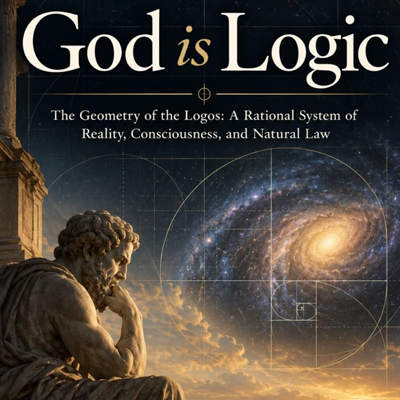
로지크학파(논리주의, Logicism)

PUM-X
The Logic School (Logicism), those who monopolized the language of truth

0
2026. 11. 13
The Logicism school, which sought to confine the most solid foundations of mathematics within a few symbols and axioms, appears on the surface to be a triumph of pure intellect, but from the perspective of secret knowledge, it can be read as a scene in a long-term project to monopolize the language of truth. This work, begun by Frege at the end of the 19th century, was not merely an academic attempt to reduce arithmetic to logic. By asserting that mathematical truth is a purely logical necessity, independent of human intuition or experience, he sought to fix the standard of the most certain knowledge within a specific formal system.
The movement to deny the synthetic a priori nature of arithmetic, which Kant believed was possible through intuition, and to define all numbers as the extension of concepts and derive them solely from logical laws, was an attempt to concentrate the ultimate judgment of knowledge into a single language: logic. Later, after Russell discovered contradictions in Frege's system and patched them up with type theory, Principia Mathematica, co-authored with Whitehead, represents the culmination of this project. That book, in which even the simplest fact, 1+1=2, is only proven through hundreds of pages of symbolic development, clearly revealed that the foundations of mathematics could never be fully grasped by the intuition of ordinary people.
This abstruseness was not merely the result of academic rigor, but functioned as a device to structurally limit access to truth. If mathematics is the foundation of physics, engineering, and indeed modern technological civilization, then confining that foundation within a vast symbolic system that only a tiny minority of experts can fully comprehend is no different from narrowing the door to what is considered the most objective knowledge. It is known that very few people actually completed Principia after its publication, and its abstruseness further deepened the specialization of mathematical logic and analytic philosophy.
From the perspective of secret knowledge, this is no coincidence. By allowing the language of the most certain truth to exist only within specific forms and traditions, the effect is to concentrate the authority to interpret and expand that language in the hands of a small intellectual elite. The fact that Russell himself belonged to the institutional space of Cambridge and was later a public intellectual who openly advocated for world government, nuclear disarmament, and social reform is even more significant in this context. That the work of reconstructing the foundations of mathematics and the political and social claims to reshape the world came from the same person and intellectual tradition goes beyond the scope of mere academic interest.
This is precisely why logicism appears in conspiratorial narratives. While the school itself is rarely directly identified as a tool of a secret society, the symbolism of Russell as a figure and Principia as a work constantly raises the question of “who sets the standard for truth?” In some narratives, Russell is portrayed as an elite who advocated for world government and criticized traditional value systems, operating within the network of Cambridge and analytic philosophy.
In this context, logicism is interpreted not merely as a philosophy of mathematics, but as an attempt to monopolize the right to interpret the most objective domain of knowledge by reconstructing it with specific symbols and rules. Confining the foundations of mathematics within an abstruse formal system can appear to the general public as an act of setting the ultimate standard of truth in a way that is invisible to them. If science and technology are built upon this mathematics, then making its foundations accessible only through an extremely specialized language becomes a structural condition that concentrates the power to explain reality in the hands of a specific group.
The even stranger fact is Kurt Gödel himself, who virtually nullified logicism. Gödel seriously believed in a conspiracy that Leibniz's envisioned universal characteristic and computational reason were intentionally concealed or destroyed. He thought that there were forces that had been hindering humanity's intellectual progress for centuries, and he claimed that Leibniz's core ideas were systematically suppressed. The fact that a key figure at the heart of the foundations of mathematics directly asserted the suppression of secret knowledge shows that discussions surrounding the foundations of logic and mathematics are not merely academic debates but can lead to the question of 'who possesses and controls the language of truth.'
What logicism pursued was to make all mathematical knowledge transparent through logic, but that transparency only existed within an extremely specialized language. As a result, even the most certain domain of knowledge remained in a form that only a few experts could fully grasp. Gödel's incompleteness theorems revealed the limits of formal systems, but at the same time, they left the paradox that the language proving those limits was also confined within the same specialized tradition.
From the perspective of secret knowledge, logicism ultimately failed, but even after its failure, discussions surrounding the foundations of mathematics and logic still remain a question of "who can describe the hardest parts of the world with what language." Modern science and technology are built upon this foundation, and the authority to interpret and expand upon it is still concentrated in highly specialized groups. What logicism left behind was not the idealism that sought to free mathematics from the ambiguity of intuition, but the structural reality that even the language of truth, which should be the most objective, is fully justified only within specific forms and traditions.
The reason conspiracy theories are drawn to this school of thought lies precisely in this reality. The very fact that the door to the most certain knowledge is extremely narrow makes one question who opens and closes that door. Logicism has faded into history, but the desire to monopolize the language of truth and the structure of exclusion created by that desire still remain in the silence surrounding the foundations of mathematics and science.
댓글
( 0 / 500 )
orange_papa
5
수학을 논리로 환원하려는 학문적 시도가 역설적으로 진리의 접근성을 좁히고 전문가 집단의 권위를 강화했다는 지적이 흥미롭습니다. 지식의 객관성과 그 지식에 접근할 수 있는 권한은 별개의 문제라는 점을 생각하게 합니다.
( 0 / 500 )
park72
3
진리를 증명하는 체계가 정교해질수록 일반 대중과의 거리는 오히려 멀어질 수 있다는 역설이 인상적입니다. 오늘날 AI와 과학기술의 지식 독점 문제에도 그대로 적용할 수 있는 중요한 질문입니다.
( 0 / 500 )
89철민
3
프린키피아 마테마티카의 난해함을 단순한 학문적 엄밀성으로만 볼 것인지, 지식의 권위가 형성되는 구조로도 볼 것인지는 충분히 생각해 볼 문제입니다. 지식의 전문화가 곧 지식의 민주화를 의미하지는 않으니까요.
( 0 / 500 )
boys_to_man
3
흥미로운 것은 진리를 누구나 이해할 수 있도록 투명하게 만들겠다는 논리주의의 이상이 오히려 극소수 전문가의 해석을 필요로 하는 결과로 이어졌다는 점입니다. 지식의 발전과 지식의 독점은 경계해야 할 문제입니다.
( 0 / 500 )
kokoria
3
괴델의 불완전성 정리가 보여준 것은 인간 이성의 한계뿐 아니라 어떤 형식 체계도 진리 전체를 독점할 수 없다는 사실이라고 생각합니다. 절대적 진리를 주장하는 체계일수록 스스로의 한계를 성찰해야 합니다.
( 0 / 500 )
eunjung
2
라이프니츠의 보편기호 구상과 괴델의 문제의식을 연결한 대목이 특히 흥미롭습니다. 지식이 축적되는 역사에는 무엇이 살아남고 무엇이 잊히는가라는 권력의 문제도 함께 존재한다는 사실을 되새기게 합니다.
( 0 / 500 )
손수미
1
결국 중요한 것은 논리주의가 성공했느냐 실패했느냐보다 진리의 기준을 누가 만들고, 누가 해석하며, 누가 접근할 수 있느냐는 문제인 것 같습니다. 오늘날 과학기술과 AI 시대에도 여전히 유효한 질문을 던지는 글입니다.
( 0 / 500 )
신고내용
신고내용을 선택해주세요
회원비난/비하/욕설글 및 댓글도배성 게시물저작권 침해/불법자료 유출허위사실유포개인정보 유출.사생활 침해무단광고/홍보음란물 및 도박 불법 광고물범죄행위 관련 글불법행위 관련 소개물품 판매 및 사기글악성코드 및 스파이웨어 유포기타 사유 및 운영진 판단


비밀번호를 잊으셨나요?
Sign in with Google


All information provided by us is free of charge and is for the public good.