品

품격있는 정치, 품위있는 정치인과 함께 하는 세상이어야 하는데
All Koreans are refugees like animals in the zoos. Corea, Korea, Corean, Korean, Coreans and Koreans. Whatever they are!
All Koreans are refugees like animals in the zoos. Corea, Korea, Corean, Korean, Coreans and Koreans. Whatever they are!
Now
지금
751 Diaspora
Heritage
유산
Humanity
인문
Mirengsi
未冷尸
Politics
정치
Media
언론

망우리 열전
칼럼
정종배
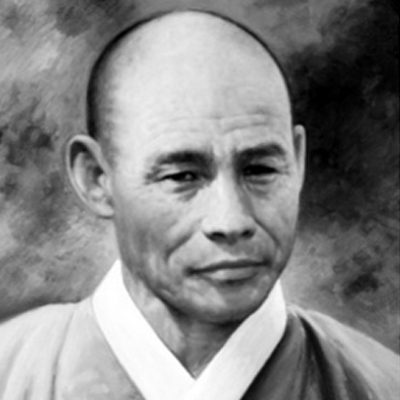
81st Anniversary of Manhae (萬海) Han Yong-un (韓龍雲, 1879~1944.6.29.)

0
2025. 06. 28
A giant of modern Korean history, almost the only one who resisted until the end in Korea during the Japanese colonial period, awarded the Order of Merit for National Foundation
81st Anniversary of Manhae (萬海) Han Yong-un (韓龍雲, 1879~1944.6.29.)
Manhae Han Yong-un was one of the 33 national representatives (Buddhist community) of the March 1st Movement. Manhae's father was Han Eung-jun (韓應俊) and his mother was Bang Suk-yeong (方淑英) of the Onyang Bang clan. Manhae was born on August 29, 1879, as the second son at 491 Jambanggul Village, Bakcheol-dong, Seonggok-ri, Gyeolseong-myeon, Hongseong-gun, Chungcheongnam-do. Han Yong-un's 본관 (clan origin) is Cheongju, his birth name is Jeong-ok (貞玉), his childhood name is Yu-cheon (裕天), his given name is Bong-wan (奉玩), his dharma name is Yong-un, and his dharma title is Manhae (萬海, 卍海). He served a three-year prison sentence for his involvement in the March 1st Independence Movement. He dedicated himself to literary and Buddhist reform movements and passed away at the age of 64 on June 29, 1944 (lunar calendar, May 9), at Simujeong in Seongbuk-dong. Manhae was a poet, a monk, and an independence activist. His tomb is located in Manguri Park.
Manhae's family produced many military officers. His father, Eung-jun, served as a Do-sa of Chung-hun-bu (a government office) of Jong 5-pum (fifth rank) and a Bu-sa-yong (deputy commander) of Seon-ryak-jang-gun-haeng-chung-mu-wi (a military title). His grandfather, Yeong-ho, served as an Cheom-jeong (adjutant) of Seon-ryak-jang-gun-haeng-hun-ryeon-won (a military training institute) of Jong 4-pum (fourth rank). His great-grandfather, Gwang-hu, served as a Dong-ji-jung-chu-bu-sa (a high-ranking official) of Jong 2-pum (second rank) and a Ga-seon-dae-bu-haeng-yong-yang-wi-ho-gun (a military commander). Around the time of his birth, his family was a rural middle class with some financial余裕 and Confucian education. As a child, Manhae was small in stature but strong and adventurous, a determined child who disliked losing to others. From the age of six, he studied classical Chinese at a local seodang (village school) for ten years.
In 1892, at the age of 14, he married 전정숙 (全貞淑, 1877~1950) in his hometown. In 1904, his son 한보국 was born. At the age of twenty-five, 한보국 joined the Sin'ganhoe Hongseong branch and began his first serious social activism. He later served as the chairman of the Hongseong County Committee for the Preparation of Korean Independence and the chairman of the Hongseong County People's Committee. In April 1948, during the North-South Joint Conference, he participated in the Haeju City People's Representatives' Meeting. In January 1950, he was arrested, sentenced to life imprisonment, and served time in Seodaemun Prison. At that time, he was a member of the South Korean Workers' Party. On June 28 of the same year, he was released from prison by the People's Army and served as the chairman of the Hongseong County Party Committee and the chairman of the Chungnam Farmers' Alliance. He then participated in the war as a volunteer soldier and subsequently defected to North Korea with his family. 한보국 had one son and five daughters. 한보국 lived a relatively smooth life as the deputy manager of the Pyongyang Clothing Management Office. 한보국 passed away on June 30, 1977, at the age of 73. It is said that on his deathbed, he left a will for his children to visit his grandfather 한용운's grave on his behalf and perform ancestral rites if the country were unified. His eldest son died young, and it was revealed that five of Manhae's granddaughters and descendants lived in North Korea when his third daughter, 명심, contributed to the North Korean magazine 《통일신보》 at the end of 2001.
In 1894, the 31st year of King Gojong's reign, 한용운 participated in the Donghak Peasant Revolution, but after its failure, he entered Oseam Temple on Seoraksan Mountain in 1896, the first year of Geonyang. After engaging in the independence movement for a time, traveling to places like Gando Province in Manchuria, he returned to Buddhism in 1907, receiving precepts as the third disciple of his mentor, Monk 김연곡 (金連谷), at Baekdamsa Temple in Inje in 1905, the 9th year of Gwangmu. After entering Buddhism, he primarily focused on scholastic studies, perusing the Tripitaka, and especially dedicated himself to translating Buddhist scriptures written in Chinese into Korean, a task aimed at popularizing Buddhism.
Manhae faced two near-death experiences in his youth. After reading "Yonghwanjillyak" (by Seo Gye-yeo, 1850), a world geography book, and realizing the vastness of the world, Manhae embarked on a world tour in 1906. His first destination was Vladivostok, Russia. There, young Koreans who had fled their hometowns due to Japanese imperialism would beat to death or drown alive anyone with a shaved head, believing them to be "Iljinhoe members, Japanese collaborators." Manhae was on the verge of being killed twice there but managed to escape after a struggle and returned to his homeland.
In 1911, while heading to Manchuria, he crossed a mountain pass called 'Gullajae'. Young Korean independence movement trainees mistook him, a short monk with a very short haircut, for a Japanese spy and shot him, with a bullet lodging in his head. However, even with such a fatal injury, he did not curse the shooter or panic. Instead, he calmly and silently arrived at the village, and when he underwent surgery at the hospital without anesthesia, he did not make a sound. Kim Dong-sam, an independence activist who arranged his treatment, admired him as a "living Buddha." Later, when the young men came to the hospital, knelt, and begged for forgiveness, Han Yong-un replied, "Why would you do that? Young men, don't worry at all. I didn't realize the independence army was so brave. I am now at ease. Korea's independence is very hopeful with warriors like you." However, as a sequela of this shooting, Han Yong-un suffered from involuntary head tremors for the rest of his life, and he lived with the bullet still lodged in his bones until his passing.
Between these two periods, he studied in Japan. After graduating from Myungjin School (now Dongguk University) in 1908, he visited Japan for about six months starting in May, mainly in Tokyo and Kyoto, where he learned about new cultures and experienced Japanese customs firsthand. At Jodo-shu University (now Komazawa University) in Tokyo, he studied Buddhism and Western philosophy with the help of Japanese professor Asada. During this time, he met and befriended Choi Rin, who was also studying abroad. The connection that would later lead them to become key figures in the March 1st Movement was already budding.
In 1911, he held a monk's conference with 선사 박한영 and others to oppose pro-Japanese Buddhism. From 1910, he wrote and in 1912 completed 『조선불교유신론』 (Joseon Buddhism Reform Theory), a treatise advocating for the reform of Buddhism. In 1913, he taught at the Buddhist Academy. Afterwards, he would explain and persuade patriots who came to Baekdamsa Temple about the sorrow of a people without a country and the strategies for the future independence movement. In this year, he entered Beomeosa Temple and in 1914, along with 『불교대전』 (Great Buddhist Canon), he authored an annotated version of 『채근담』 (Caigentan) based on the augmented edition by the Qing dynasty monk 내림 (Lailin). From 1912, he meticulously reviewed 1,511 volumes and 6,802 books of the 『고려대장경』 (Goryeo Tripitaka) at Tongdosa Temple and extracted important contents from over 1,000 volumes of sutras, vinayas, and treatises. 『불교대전』 can be called a 'condensed Palman Daejanggyeong'. Manhae published 『불교대전』 in 1914, advocating for the reform of the traditionally incompetent Buddhism based on the Prajna thought of Mahayana Buddhism and asserting Buddhism's participation in reality. In 1918, he published the monthly magazine 《유심(惟心)》 (Yusim) in Gye-dong, Seoul, striving to lead the public enlightenment movement, and while staying in Seoul, he developed a cultural enlightenment movement.
On February 24, 1919, when the momentum for national independence and liberation was building, Manhae met with Son Byeong-hui, Gwon Dong-jin, and Oh Se-chang. He heard about the independence movement plan from Choi Rin, who had discussed it with them, and reviewed the draft of the Declaration of Independence and other documents prepared by Choi Nam-seon, deciding to participate in the plan. He then informed Baek Yong-seong, a monk from Haeinsa Temple, about the plan, encouraging him to participate as a Buddhist. Baek Yong-seong agreed and entrusted Manhae with his seal to sign as a national representative. When Choi Nam-seon was drafting the Declaration of Independence, he intended to name it a "Petition for Independence" or "Request for Independence," but Manhae strongly insisted on "Declaration of Independence" as the title. On the 27th, he again visited Choi Rin, signed as a national representative himself, and also signed with the seal entrusted to him by Baek Yong-seong.
Once the signatories were confirmed, on the night of February 27th, representatives from the Christian side, Lee Seung-hoon, Lee Pil-ju, and Ham Tae-young, from the Buddhist side, Han Yong-un, and Choi Nam-seon in his personal capacity, gathered at Choi Rin's house. The main agenda of this meeting was the order of signing the Declaration of Independence.
The Christian side suggested that the order of signatories be by age or in alphabetical order. Choi Rin pointed out that if this were the case, from the perspective of the Cheondogyo side, where the hierarchy is firmly established, the order of teacher and disciple would be reversed, leading to a difficult situation. After a long discussion, it was agreed that, considering the preparation process, Son Byeong-hui would be listed first, followed by Pastor Gil Seon-ju (Presbyterian), representing Christianity, in second place, Pastor Lee Pil-ju (Methodist) in third place, and Baek Yong-seong (monk) representing Buddhism in fourth place. Thus, the order of Son Byeong-hui, Gil Seon-ju, Lee Pil-ju, and Baek Yong-seong was decided, and the remaining 29 individuals signed in alphabetical order of their names.
The next day, the 28th, they met with other national representatives at Son Byeong-hui's house in Jae-dong to finalize the preparations for the Declaration of Independence to be held the following day.
The 33 national representatives who signed the Declaration of Independence are as follows (age at the time in parentheses):
- Cheondogyo (15 people): 손병희(59)·권동진(59)·최린(42)·오세창(56)·임예환(55)·권병덕(53)·이종일(62)·나용환(56)·나인협(49)·홍기조(60)·김완규(44)·이종훈(65)·홍병기(51)·박준승(54)·양한묵(58)
- Christianity (16 people): 이승훈(56)·박희도(42)·최성모(47)·신홍식(48)·양전백(51)·이명룡(47)·길선주(51)·이갑성(31)·김창준(31)·이필주(51)·오화영(40)·박동완(35)·정춘수(45)·신석구(45)·유여대(42)·김병조(44)
- Buddhism (2 people): 한용운(41)·백용성(56)
Key figures who did not sign as national representatives include 함태영, as previously mentioned, as well as 송진우 and 현상윤. They were excluded from signing to take on the responsibility of continuous movement and leadership after the March 1st Movement. And 최남선 was accepted as he decided to "finish his life as a scholar." The list of individuals who led the March 1st Revolution along with the 33 national representatives is as follows:
[78dc44c79736d6]
- Cheondogyo: 박인호 (66)·노헌용 (53)·이경섭 (45)·한병익 (20)·김홍규 (45)
- Christianity: 함태영 (48)·김지환 (29)·안세환 (33)·김세환 (32)
- Education Sector: 송진우 (31)·현상윤 (28)
- Writers: 최남선 (31)
- Unemployed: 임규 (51)·김도태 (29)·노정식 (30)
- Students: 강기덕 (31)·김원벽 (27)
At 2 PM on March 1, 1919, the Gimi year, with 29 participants excluding 길선주, 김병조, 유여대, and 정춘수, the declaration was announced to the Police Commissioner's Office of the Gyeongseong Prefectural Government, while copies of the declaration were sent to the Government-General and Jongno Police Station. Representing the national representatives gathered at Taehwagwan in Insadong, 한용운 delivered a speech, concluding the Declaration of Independence ceremony. After shouting "Manse!" three times, he was arrested by the dispatched Japanese police. In 1920, he was sentenced to three years in prison by the Gyeongseong Appellate Court for allegedly violating the so-called Security Law and Publication Law, and served his sentence. Furthermore, while in prison, he wrote "조선 독립의 서" (The Book of Joseon's Independence), advocating for independence and freedom.
Even after his release from prison, Manhae continued to work for the independence of his homeland, serving as president and chairman of the Buddhist Youth Association in 1924. In 1926, he published the poetry collection 『님의 침묵』 (Your Silence), dedicating himself to resistance literature. In 1927, he joined the Sin'ganhoe (New Korea Society) and served as a central executive committee member, concurrently holding the position of head of the Gyeongseong branch in 1928.
In 1929, he organized the Gwangju Student Movement People's Assembly and worked as a leader of the Joseon Buddhist Alliance. In 1931, he renamed the Joseon Buddhist Youth Association to the Joseon Buddhist Youth Alliance, strengthening the youth movement through Buddhism as the leader of the Mandang Party. In the same year, he acquired the monthly magazine 《불교》 (Buddhism) and published numerous articles, striving for the popularization of Buddhism and the inspiration of anti-Japanese independence struggle ideology.
In 1933, at the age of 55, he remarried Ms. Yoo Sook-won (1898~1965) from Boryeong, Chungcheongnam-do, and in 1934, they had a daughter, Han Young-sook. Han Young-sook had two sons and one daughter. Han Young-sook, Manhae's daughter, spoke about the ongoing discussion of moving Manhae's grave from Manguri to the National Cemetery in an interview with 《한국일보》 (Hankook Ilbo) <서화숙의 만남> (Seo Hwa-sook's Encounter) on February 26, 2012. She said, "It was hard enough to enshrine him in Manguri. His friends painstakingly arranged it. I think it's right to leave him there. There are many independence activists and politicians there too. My father didn't like crowds or being revered. If Manguri were to be closed, we would have to move him to his hometown of Hongseong. There's his birthplace and a statue there, isn't there?"
In 1935, he serialized the full-length novel "Black Wind" in Chosun Ilbo, and the following year, he serialized the full-length novel "Regret" in Chosun Joongang Ilbo. The reason for writing these novels was partly to earn money for living expenses, but it is understood that his greater intention was to promote the national movement through his novels.
In 1938, the 'Mandang (卍黨) Incident' occurred, a secret organization for national struggle within the Buddhist community that he had directly led. Many junior comrades were arrested, and he himself suffered hardships. During this period, he serialized the novel "Twilight" in Chosun Ilbo. In 1939, upon reaching his 60th birthday, he held a celebratory banquet with several comrades at Dasolsa Temple in Sacheon-gun, Gyeongnam, and at Cheongnyangsa Temple outside Dongdaemun on July 12th.
His close friends or those with whom he had a brotherly relationship included 이시영, 백용성, 최남선, 최린, 김동삼, 방응모, 신채호, 김성수, 안재홍, 송진우, 정인보, 김규식, 박광, 홍명희, 만공 송월면, 이광수, 김일엽, and 최범술.
On March 1, 1962, the government posthumously awarded the Order of Merit for National Foundation, Republic of Korea Medal. Among those posthumously awarded the Republic of Korea Medal on the same day, three individuals related to Manguri Park are Wangsan Heo Wi (13th Righteous Army Tower), Dosan Ahn Chang-ho, and Manhae Han Yong-un. Including Yu Gwan-sun, who was promoted from a 3rd-grade Independence Medal to a 1st-grade Republic of Korea Medal on March 1, 2019, there are four individuals.
Before Yu Gwan-sun appeared in elementary school textbooks in 1947 and became the "Joan of Arc of Korea," her name could not be found in any newspaper. She was one of over 200 participants from Ewha Haktang who took part in the March 1st Movement. Kim Hwal-lan, Shin Bong-jo, and Park In-deok of Ewha Haktang chose Yu Gwan-sun as a figure to distance themselves from their pro-Japanese issues and the difficult school atmosphere. Novelist Jeon Young-taek, who wrote "The Story of the Martyred Maiden Yu Gwan-sun," and Park Chang-hae, who compiled and included her in textbooks, along with Yu Je-han, a distant nephew of Yu Gwan-sun's family, created this heroic narrative figure. Additionally, the promotion by some Christian churches and independence activists also contributed to Yu Gwan-sun's widespread recognition.
According to Park Eun-sik's "History of the Blood of the Independence Movement," approximately 7,005 people died during the March 1st Movement. It is an undeniable fact that Yu Gwan-sun also led the independence movement and died in prison after a fierce struggle, but the emphasis on Yu Gwan-sun's symbolism overshadowed other patriots. Yu Gwan-sun's parents also died during the March 1st Movement. Her father, Yu Jung-kwon, and mother, Lee So-je, were posthumously awarded the Order of Merit for National Foundation, Patriotic Chapter (4th class). This means that a higher medal was awarded to the daughter who died in prison than to the parents, who were independence activists who died at the scene of the March 1st Movement.
About 30 people who participated in the March 1st Revolution were buried in Manguri Park. Currently, about 15 remain. Among the 33 national representatives of the March 1st Revolution, 7 people, including Oh Se-chang, Han Yong-un, Park Hee-do, Na Yong-hwan, Park Dong-wan, Lee Jong-il, and Hong Byeong-gi, were buried there. Among these, Na Yong-hwan, Park Dong-wan, Lee Jong-il, and Hong Byeong-gi were reinterred in the patriotic martyrs' cemetery at the National Cemetery in 1966.
A sad and interesting comparison between Park Hee-do and Manhae Han Yong-un, among the 33 national representatives, was published in the July 1932 issue of "Jeilseon," a magazine of the Cheondogyo-affiliated "Gaebyeok" company, under the title "Great Shock, Masquerade Pictorial," along with a composite photograph. Park Hee-do, the first principal of Jungang Nursery School, after the "Erotic Principal Y's Case" involving a #MeToo incident with a student and "Kissing Hwatu," walked the path of betrayal as a representative pro-Japanese figure in the 1930s with his self-governance theory and around 1940 as the president, editor, and publisher of "Dongyang Jikwang," a magazine that promoted and praised conscription, forced labor, comfort women, and held lectures and discussions, laying the groundwork for pro-Japanese activities.
He was selected as the Independence Activist of the Month in March 1994 and June 2019. Among the burial sites in Manguri Park, his was the first to be designated as National Registered Cultural Heritage No. 519 on October 19, 2012. The Cultural Heritage Administration announced on October 23, 2017, that the burial sites of eight independence activists, including Oh Se-chang, Mun Il-pyeong, Bang Jeong-hwan, Oh Gi-man, Seo Gwang-jo, Seo Dong-il, Oh Jae-young, and Yu Sang-gyu, were registered as National Registered Cultural Heritage Nos. 691-1 to 8. The Cultural Heritage Administration explained that the Manguri Park independence activist burial sites are "considered a historical place that embodies the spirit of the anti-Japanese independence movement and historical lessons."
The Seonhakwon Foundation holds an annual tea ceremony for Monk Manhae on June 29th, the anniversary of his passing, with his family, including Ms. Han Young-suk, in attendance. This place holds great historical and educational value for honoring the patriotic spirit of the teacher. Manhae passed away from a stroke on June 29, 1944, at Simujeong in Seongbuk-dong. His comrades did not use the Hongje-dong crematorium operated by the Japanese for his funeral. Although the facilities were old, he was cremated at the private Mia-ri crematorium operated by Koreans, and on July 1st, his ashes were interred in Manguri Public Cemetery, a life without official registration. His grave number is 204411.
Manhae authored works such as 『Joseon Buddhism Renovation Theory』, 『The Silence of My Beloved』, 『Black Wind』, and 『Regret』. The characteristic of Han Yong-un's literature is revealed in the excellent artistic combination of Buddhist thought and independence thought. This is because the Buddhist worldview and independence thought, summarized as ideas of freedom and equality, national thought, and popular thought, can be said to be the bones, blood, and flesh of Han Yong-un's literature. In other words, his literature is characterized by the trinity of Buddhist thought, independence thought, and literary thought. This can be read in the "Prologue" of the poetry collection 『The Silence of My Beloved』.
Not only is 'nim' my beloved, but everything longed for is my beloved. If sentient beings are the beloved of Sakyamuni, then philosophy is the beloved of Kant. If spring rain is the beloved of the rose, then Italy is the beloved of Mazzini. My beloved not only loves me but also loves me.
If love is freedom, then my beloved must also be free. But are you not meticulously bound by the well-named freedom? Do you also have a beloved? If so, it is not your beloved, but your shadow.
I write this poem because I pity the lamb that has lost its way and wanders on the field at sunset.
- 한용운, 「군말」, 『님의 침묵』(1926)
『님의 침묵』 (The Silence of My Beloved), written in 1925 at Baekdamsa Temple in Naeseorak, first published by <Hoedongseogwan> in 1926, and re-published by <Hanseong Doseo Jusikhoesa> in 1934, is a towering peak in the history of modern Korean poetry. 『님의 침묵』 inherits "the spiritual and poetic methods flowing through Hyangga, Goryeo Gayo, Sijo, Gasa, as well as Chinese poetry and Buddhist scriptures."
The poetry collection 『님의 침묵』, published in 1926, can be seen as a series of poems with a dramatic structure that begins with separation and ends with reunion. In other words, the entire collection of poems in 『님의 침묵』 is connected by the thread of a structure: 'separation-conflict-hope-reunion'. In other words, it can be said to be a collection of aesthetic poems of overcoming and creation, that is, paradox, aiming for dialectical sublation of extinction (thesis) - conflict (antithesis) - creation (synthesis).
[71d828d99032cf0]
Separation, as the grand premise of his entire poetry, is a methodical principle for reaching encounters (회자정리, 거자필반) and an autonomous law that completes love. The era of separation from the beloved is precisely an era of silence, an era of loss, and therefore, the time of encounter that will eventually come is an era of true paradise regained, an era of liberation. In this respect, his poetry can be understood as poetry of waiting or poetry of hope.
Furthermore, Manhae's poetry acquires modern poetic characteristics by completing the form of free verse, aiming for poetic methods such as metaphor and paradox, and prosaic openness. In this respect, while his poetry embraces the influence of foreign poetry, such as that of Tagore (Tagore, R.), it also inherits the spirit and methodological context of traditional poetry.
In fact, his poetry achieved creative succession through the deepening and expansion of the traditional poetic spirit amidst the flood of Western-oriented trends, including the proliferation of various literary movements in the early history of new literature. The metaphors and paradoxes in his poetry, too, are clearly rooted in traditional poetry rather than Western sources, which gives his poetry the character of national poetry that excellently embodies national identity poetically.
With Yi Sun-sin as my boatman / Eulji Mundeok as my charioteer / Holding high the sword of destruction / Shall I travel south and north? / Perhaps the path to find you / Is just that, I think - Han Yong-un's Sijo, 「Untitled」
When visiting Manguri Park, the person to whom everyone, regardless of individual or group, religion, ideology, class, occupation, gender, age, time, or season, invariably pays homage is Manhae Han Yong-un. Manhae's tomb faces due east, and the east corresponds to '仁' (benevolence) among the five constant virtues of humanity, righteousness, propriety, wisdom, and trustworthiness. Benevolence is the feeling of compassion, that is, a kind heart that accepts everyone out of pity for others. There is even a famous geographer who meditates and finds peace of mind inside Manhae's tomb. Many people also come to greet the New Year's sunrise. It is a tomb where the hibiscus flowers are even more beautiful and most fitting.
During the Japanese colonial period, the anti-Japanese movement was not easy. It was even more difficult domestically. As a result, many patriots suffered greatly. Manhae remained in Korea and was almost the only independence activist and revolutionary who openly confronted and fought against the Japanese. Today, South Korea is in a very difficult situation due to the demographic cliff. In his 『Buddhism Renovation Theory』, Manhae argued that a country needs a population of 100 million to properly exert its power and assert itself globally, and that monks should also be allowed to marry. Novelist Jo Jung-rae (Songgwangsa) and poet Jo Tae-il (Taeansa), among others, were born as sons of monks and spent their childhoods in temples.
Regarding Manhae as a thinker, Wi Dang Jeong Inbo commented, "India has Gandhi, and Joseon has Manhae," and asserted, "The youth of Joseon should look up to and emulate Manhae." Byeokcho Hong Myung-hee, as a religious figure, said, "Even if you combine seven thousand monks, they cannot compare to one Manhae. Knowing one Manhae is better than knowing ten thousand other people." Manhae, especially in the 1920s and 30s, began to show great interest in farmers and laborers and actively engaged in their social movements.
As a poet, Manhae was a bamboo whip that awakened the nation, which was becoming accustomed to Japanese imperialism, by publishing hundreds of poems (including sijo, hanshi, and Seon poems) in addition to the immortal poetry collection 『Nimui Chimuk』, as well as novels, prose, essays, and critical theories.
Poet Ku Sang considered Manhae Han Yong-un to be the foremost example of a poet's personal existence. "Even if a poet today were to create far more patriotic poems with more brilliant language and skillful artistry than Manhae Han Yong-un, if their actual actions were empty, would that message truly move and be accepted by readers? That is absolutely not the case. In poetry, this is called 'eollyeong' (word spirit), meaning that for words to possess life, they require an inner truth that supports them—that is, an equivalent amount of ethical will and experience that the words carry." - From poet Ku Sang's essay, 「The Attitude of an Artist」
[8a6a783f29e8e4]In 2018, I greeted the New Year's sunrise with a pine tree above Manhae Han Yong-un's grave. I made a promise to myself. I vowed to diligently write and produce impactful articles for the monthly magazine 《Jageun Chaek》, especially for the series about Manguri Park.
I go to find 'Nim' in Manguri Park / Always welcoming me without fail / Not discriminating against anyone I accompany / The path of contemplation, just thinking about it makes me feel a poignant joy / I meet the Nim of life by ascending and descending the path of contemplation and paying my respects / When I say Nim, it is Manhae Han Yong-un / Because of Nim, I walk the path of contemplation with a consistent heart / He translated the Tripitaka Koreana into Korean that anyone can read, into poetry and poetry collections /. Even elementary school students can read it without difficulty / He is a Nim that can be understood / He is a Nim that even a distinguished professor would tilt their head at and find difficult to explain / An old professor, with youthful vigor, climbed Manhaesan for over 10 years but gave up because it was too grand a mountain / He confesses that if he is reborn in the next life, he wants to dedicate his life to reaching the summit / Manhae's life, like a plum blossom in the snow and a path of fresh snow, is Nim / Those who follow Nim give birth to other Nims and create countless Nims – From Jeong Jong-bae's poem, 「Following Manhae Han Yong-un's Nim」
Since 2000, when I recite Manhae's representative poem, "The Silence of My Beloved," line by line with students participating in volunteer and experiential activities or with visitors, the atmosphere becomes even clearer and more resolute, reaching its peak.
On August 15, 2015, Liberation Day, I encountered a group of members from the Hongseong-gun Writers' Association visiting Manhae's grave and explained the burial site to them. That's when I met poet Koo Jae-ki. After retiring in 2010, poet Koo has been cultivating wildflowers at 'Sanaejae' in Seocheon and managing an internet cafe called 'Poet's Room Sanaejae,' where he exchanges greetings online. Hong Seong-rye, a poetry reciter, practices her recitations in front of Manhae's tomb. On August 14, 2020, after my retirement ceremony, while visiting Manguri Park, I met Chairman Pyo Jae-soon and CEO Yoo Kyung-ae, who were on their first reconnaissance trip after the launch of the Jungnang Cultural Foundation, at Manhae's tomb and exchanged greetings. As I explore Manguri Park, the people I meet at the burial sites of various figures are all actively contributing to society as a foundation.
Manhae Han Yong-un's tombstone was designed by the 'Manhae Thought Research Society,' and the calligraphy was carved by calligrapher Yeocho Kim Eung-hyeon. The style of the tombstone inscription is the 'Gwanggaeto Stele style.' On September 5, 2017, before visiting the grave of Asakawa Takumi, Oh Mun-ja (editor-in-chief of the literary magazine "Bongseonhwa"), a Zainichi Korean essayist and wife of historian Lee Jin-hee who revealed the distortions made by imperial Japan by taking rubbings of the Gwanggaeto Stele, immediately recognized the 'Gwanggaeto Stele style' after first visiting the tombs of painter Lee Jung-seop and Han Yong-un. The inscription '夫人兪氏在右' on the front of the tombstone means that the grave of his wife, Yoo Suk-won, is to the right of Manhae's tomb. Hwang Jae-guk (Professor Emeritus at Kangwon National University), a disciple of Yeocho, wrote the epitaphs for Choi Hak-song's literary monument in Manguri Park and for the mother of Kim Jun-yeop, a former Korean Liberation Army member who served as president of Korea University.
The calligraphers who carved the tombstones in Manguri Park are representative artists who connect the Korean calligraphy world. They include Wichang Oh Se-chang (Ohchon Seol Tae-hee, Sofa's tombstone "Dongsimyeoseon," Gyeongseonogosancheongolchwijangbi), Haegang Kim Gyu-jin, Sojeon Son Jae-hyeong who named what was called "Shodo" in Japan as "Seoye" (Wichang Oh Se-chang, Dosan Ahn Chang-ho's tombstone, Jeongchon Son Chang-hwan), Changaet Kim Sun-dong (Ohchon Seol Tae-hee's epitaph), Jukha Kim Seung-ryeol who carved the epitaph in Goye style on Chusa Kim Jeong-hui's tombstone erected in 1937 (Hoam Mun Il-pyeong's tombstone), Yoon Hee-hwa (Ji Seok-yeong), Seoksan Kim Heup (Gyeongseonogosancheongolchwijangbi), Iljung Kim Chung-hyeon (Juksan Jo Bong-am, Socheon Kang Yong-yul), Yeocho Kim Eung-hyeon (Wichang Oh Se-chang, Manhae Han Yong-un), Wongok Kim Ki-seung (Dosan Ahn Chang-ho, Jang Deok-su and Park Eun-hye couple, Oh Han-yeong), Siam Bae Gil-gi (Kim Mal-bong, Kim Yi-seok), Haknam Jeong Hwan-seop (Gyesan Kim Seung-min), Eocheon Choi Jung-gil (Nampa Park Chan-ik), Woljeong Jeong Ju-sang (Sofa Bang Jeong-hwan), Wondang Kim Je-un (Soa Kim Jin-seong), Haegwan Son Gyeong-sik (Jeongchon Son Chang-hwan), Junggwan Hwang Jae-guk (Seohae Choi Hak-song Literary Monument, Kim Jun-yeop's mother), and others. In addition, you can find writings by Haegong Shin Ik-hee (Hyeonpo Lee Byeong-hong), novelist Song Ji-yeong (poet Park In-hwan), Han Muk (painter Lee Jung-seop), a friend of Lee Jung-seop and a painter, Cha Jung-gyeong, the eldest brother of Cha Jung-rak (singer Cha Jung-rak), Shin Hwak (Shin Gyeong-jin's tombstone), Park Tae-yu (Shin Gyeong-jin's stele), and others. Unfortunately, Mun Il-pyeong's new tombstone was carved by computer.
Furthermore, you can read epitaphs, literary monuments, and markers written by Shin Wan (Shin Gyeong-jin's tombstone), Song Si-yeol (Shin Gyeong-jin's stele), Yeoncheon Hong Seok-ju, a literati who served as Jwa-uijeong during King Sunjo's reign (Princess Myeongon Kim Hyeon-geun's tombstone), Widang Jeong In-bo (Ohchon Seol Tae-hee, Hoam Mun Il-pyeong's tombstone), Chunwon Lee Gwang-su, a member of Heungsadan (Dosan Ahn Chang-ho, Taeheo Yu Sang-gyu's chronological monument), Jo Wan-gu (Nampa Park Chan-ik's old epitaph), Woltan Park Jong-hwa (Madam Yangcheon Heo-ssi), Uwol Kim Hwal-ran (Jang Deok-su and Park Eun-hye couple), Nosan Lee Eun-sang (Jeongchon Son Chang-hwan), Juyohan, a member of Heungsadan (Oh Han-yeong), Dongtak Jo Ji-hun (Nampa Park Chan-ik), independence activist Lee Hyeon-ik (Gyesan Kim Seung-min), Baek Nak-un (Ji Seok-yeong), Yoon Bo-seon (Haengnong Lee Yeong-jun), Pastor Kang Shin-myeong (Songam Seo Byeong-ho), Seongcheon Yu Dal-yeong, a teacher at Hosudon Girls' High School (Lee Gyeong-suk), novelist Song Ji-yeong (Park In-hwan), Lee Gyu-tae (Hoam Mun Il-pyeong's epitaph), Lee Byeong-do, a teacher at Jungang High School (Gukchae-pyo), children's writer Lee Jae-cheol (Bang Jeong-hwan), Jo Byeong-hwa (singer Cha Jung-rak's tombstone poem 'The Meaning of Fallen Leaves'), Sookmyung Women's University professor Kim Nam-jo (Lim Suk-je), music critic Han Sang-woo (Chae Dong-seon), Jo Jae-myeong, director of the Forest Research Institute of the Korea Forest Service (Asakawa Takumi's marker), and Gwak Geun of the Uri Munhak Girimhoe (Choi Hak-song Literary Monument).
Poet Kim Yeong-rang was reinterred at Mangwoo History and Culture Park on August 21, 2024, 34 years after his initial burial at Yongin Catholic Cemetery. The epitaph on Kim Yeong-rang's tombstone was inscribed with calligrapher Yeo Tae-myeong's minche style, and the poetry monument with the calligraphy of poets Lee Geun-bae and Kim Jun-tae. Columnist Kim Hyeon-cheol, Kim Yeong-rang's third son, and poet Jeong Jong-bae wrote the texts for the tombstone and poetry monument, which were then crafted by sculptors Choi Jin-ho and Gwak Hwi-gon, among others.
The tombstones of painters Lee Jung-seob and Ham Dae-jeong were created by sculptor Cha Geun-ho. The headstone for painter Lee In-seong was made by his son, painter Lee Chae-won.
For reference, "찬(撰)" or "지(識)" on a tombstone means that the epitaph was composed. "전(篆)" refers to the Jeonseo script, one of the calligraphic styles, and indicates the person who wrote the large characters (제자, title characters) on the front of the tombstone. "서(書)" refers to the person who wrote the text of the epitaph.
[5b978d4447e4938]
This section introduces stories related to 최린, 최남선, and 이광수, which are representative anecdotes that reveal the upright and righteous character of 만해 한용운.
최린, one of the 33 national representatives of the March 1st Movement, as a representative of Cheondogyo, planned and prepared the March 1st Independence Movement with 만해. Thus, they were close comrades. However, 최린 apostatized in the late Japanese colonial period, changing his name to a Japanese one, serving as a councilor in the Jungchuwon, and then as president of the Governor-General's official newspaper, "Maeil Sinbo." One day, 최린 visited 만해. 만해, disgusted by his appearance, turned him away, telling his family to say he was "not home." As 최린 turned to leave, he saw 만해's daughter, 한영숙, playing in the yard and handed her a hundred-won bill. At that time, one hundred won was a large sum, enough to buy fifteen sacks of rice. When 만해 learned of this, he became furious with his wife, 유씨, and daughter, 영숙, and then took the money and headed to 최린's house in Myeongnyun-dong. 만해 opened the gate, threw the hundred-won bill into the yard, and exclaimed, "I do not accept dirty money!"
Upon hearing the news that 육당 최남선, one of the three great geniuses of Joseon and the nation's foremost intellectual, had apostatized, 만해 called his acquaintances to a restaurant in the city and held 최남선's funeral. "From now on, I will hold the funeral of the late 최남선, who voluntarily became a servant to the Japanese and departed from the spirit of Joseon." That day, 만해 was filled with indignation and drank an immeasurable amount of alcohol. One day, 육당 최남선 was walking down the street when he met 만해 and greeted him first. "Teacher 만해, it's been a long time." "Who are you?" "Isn't it me, 육당?" "Who is 육당?" "It's 육당 최남선. Have you forgotten?" Then 만해 said this and left without looking back: "The 최남선 I knew has already died, and I even held his funeral."
Chunwon Yi Gwang-su, another genius of Joseon, often visited Manhae to ask questions about Buddhist doctrines or ideas when writing Buddhist novels. They shared many literary interests and often talked, becoming close. However, as you know, Chunwon, like Yukdang, apostatized. Because of their special relationship, Manhae was deeply saddened by Chunwon's apostasy. As usual, Chunwon came to Manhae again to talk about this and that. Of course, this was after he had changed his name to a Japanese one. Manhae, knowing this, scolded him and drove him away before even accepting Chunwon's greeting. "You scoundrel! I don't want to see you. Never appear before my eyes again." Chunwon, startled by his words that felt like a bolt from the blue, was flustered and didn't know what to do before leaving.
Manhae lived a life without a family register. He built Simujang facing north in Seongbuk-dong, remarried, and had a daughter. He wrote novels and built a family, and erected a monument for Danjae Shin Chae-ho. Manhae risked danger to hold a five-day funeral for Ilsong Kim Dong-sam, the tiger of the Manchurian plains, at Simujang in 1938. Ilsong's remains were cremated and floated on the Han River, as per his will: "What good is a tomb for a body that has lost its country? When I die, burn me and float me on the river. Even as a spirit, I will wander the sea and watch the day when the Japanese invaders perish and the homeland is liberated." Poet Jo Ji-hoon, who attended this funeral with his father Jo Heon-yeong, met Manhae and was introduced to Buddhism, which led to his enrollment in Hyehwa Professional School.
[bb58459b767a417]In 1941, at the end of the Japanese colonial period, the Governor-General of Korea forced Koreans to adopt Japanese names (Changssi-gaemyeong) even to change their family registers. Upon seeing a report in the Maeil Sinbo stating that 90% of Koreans had completed Changssi-gaemyeong, one person, enraged, embraced a photograph of Na Cheol, the Great Leader of Daejonggyo, and committed suicide. That person was Shin Myeong-gyun, a patriot and Korean literature scholar who was a follower of Daejonggyo. He was buried in Manguri, but in 2003, his grave was treated as an unclaimed one, leaving only his tombstone. At the time, he was hospitalized, and upon seeing the pathetic news of Changssi-gaemyeong, he became enraged, took medicine, and ended his own life. Manhae Han Yong-un commented on this patriotic suicide as follows:
"While I praise his integrity, suicide is not only a religious sin but also an expression of mental change resulting from an inability to control one's rage, despair, or fear, and thus cannot be highly evaluated. To say that committing suicide after losing one's country is loyalty is an act of cowardice, self-reproach, or the height of despair. For example, if parents commit suicide due to bankruptcy, it brings misfortune to their children, just as it brings misfortune to future generations."
When exploring Seongbuk-dong, one moves from Seongbuk-dong Museum and Yi Tae-jun's old house, <Suyeonsanbang>, past the <Manhae Han Yong-un Statue> to <Simujang>. Manhae Han Yong-un's north-facing house, <Simujang>, is located on the 7th ridge of the hillside village called <Bukjeong Village>. About 100 meters above <Simujang> is <Bidulgi Park> in Seongbuk-dong, named after Yi San Kim Kwang-seop's poem "Seongbuk-dong Dove." Seongbuk-dong is a scenic spot nestled in a valley and forest where the Seongbukcheon stream, originating from Bukhansan Mountain, flows as an auspicious watercourse from west to east. Therefore, luxurious houses have been built on the northern side of Seongbukcheon valley, with this beautiful scenery as their backdrop. However, the southern side of Seongbukcheon, directly below the Seoul City Wall, is not only steep but also has a structure where houses built looking down the hill are inevitably north-facing. Consequently, the wealthy did not build houses here at all, leading to an influx of common people who had nowhere else to go after liberation.
However, in 1931, Manhae remarried Ms. Yu Suk-won, whom he had nursed, in this area. In 1933, he received a donation of land that Byeoksan Kim Jeok-eum had bought to build a hermitage, and with the help of several prominent figures, including Bang Eung-mo, the president of Chosun Ilbo, he established the house known as <Simujang>. Here, in 1934, he wrote his first full-length novel, "Heukpung," which was serialized in Chosun Ilbo. Although it is said that he chose a location facing away from the south, where the Japanese Government-General of Korea was located, and built a north-facing house, it was geographically inevitable for it to be north-facing. The signboard was written by Oh Se-chang, a calligrapher who was an independence activist and a respected elder of the nation. Oh Se-chang is also the person who named the original <Bohwagak>, which is now <Gansong Art Museum>. Now, embassies from over 40 countries, including Japan, have been established here. In the 1970s, pro-Japanese military regimes conducted political dealings in establishments like <Samcheonggak> and <Daewongak>. <Daewongak> is now the site of 'Gilsangsa,' a pure and fragrant fundamental temple established by the beautiful relationship between the gisaeng Jinhyang (Buddhist name Gilsanghwa, Ms. Kim Young-han), famous for her love with the poet Baek Seok, and the non-possessive Buddhist monk Beopjeong. It is also a place deeply imbued with the scent of culture and art, serving as a temporary residence, studio, and home for many writers and artists. After Han Yong-un's death, his daughter Han Young-suk and her family lived in <Simujang>. Therefore, <Simujang> is currently used as <Manhae's Thought Research Institute>.
"Changjo Munye" No. 302, March 2022 Issue, Manguri Park Mun Il-yeoljeon (8)
댓글
( 0 / 500 )
신고내용
신고내용을 선택해주세요
회원비난/비하/욕설글 및 댓글도배성 게시물저작권 침해/불법자료 유출허위사실유포개인정보 유출.사생활 침해무단광고/홍보음란물 및 도박 불법 광고물범죄행위 관련 글불법행위 관련 소개물품 판매 및 사기글악성코드 및 스파이웨어 유포기타 사유 및 운영진 판단


비밀번호를 잊으셨나요?
Sign in with Google


All information provided by us is free of charge and is for the public good.