品

Corea든 Korea든, 품격이 먼저다
Whether Corea or Korea, dignity comes first.
Whether Corea or Korea, dignity comes first.
Now
지금
751 Diaspora
Heritage
유산
Humanity
인문
Mirengsi
未冷尸
Politics
정치
Media
언론

망우리 열전
칼럼
정종배
Today marks the 80th anniversary of the martyrdom of poet 윤동주

0
2025. 02. 16
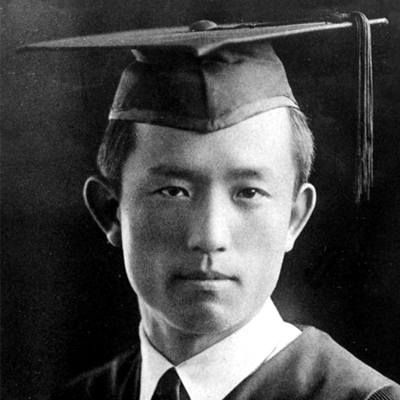
On February 16, 2025, poet Yun Dong-ju will receive an honorary doctorate from Doshisha University in Japan. Today marks the 80th anniversary of the poet Yun Dong-ju's martyrdom. He was a young man of 28 at the time of his martyrdom. He is the most beloved and well-known great figure among Korean poets. In Japan, groups of Yun Dong-ju enthusiasts who read and commemorate his poetry are gradually increasing. The first reason given, unexpectedly, was that he was a Christian. The South Korean government posthumously awarded poet Yun Dong-ju the Order of Merit for National Foundation, Independence Medal, in 1990, recognizing him as an independence activist. The record of his meritorious service from the Ministry of Patriots and Veterans Affairs is as follows:
Record of Meritorious Service
Included Information: Record of Meritorious Service for Independence Activists, Vol. 9 (published in 1991)
He was from Cheongjin (淸津), Hamgyeongbuk-do.
After graduating from Myeongdong School (明東學校), an ethnic school in Dongsamseong (東三省), China, in 1936, he entered Gwangmyeong Middle School (光明中學校) and laid the foundation for anti-Japanese national spirit through his poetic works.
In 1938, after entering Yonhi College (延禧專門學校), he discussed national spirit and the independence of his homeland with Song Mong-gyu (宋夢奎) and others, and promoted the anti-Japanese spirit of our people by publishing many anti-Japanese national poems such as <Seosi (序詩)>, <Byeolheneun Bam>, <Museoun Sigan>, and <Ttodareun Gohyang>.
In 1942, after entering the English Literature Department of Doshisha University (同志社) in Kyoto (京都), he met comrades such as Song Mong-gyu and Jang Seong-eon (張聖彦), and while engaging in activities such as opposing the forced conscription system of imperial Japan and publishing poetic works containing a spirit of resistance, he also strived to establish a national literary perspective and was dedicated to promoting national culture and fostering national consciousness when he was arrested by the Japanese police.
He was sentenced to two years in prison by the Kyoto District Court on March 31, 1944, and died in prison while serving his sentence.
In recognition of his meritorious service, the government posthumously awarded him the Order of Merit for National Foundation, Independence Medal, in 1990.
His grave is located in a public cemetery near Myeongdongchon, China, buried alongside his cousin, independence activist Song Mong-gyu.
Memorial facilities include the Monument to Independence Patriots in Dongjak-dong, the Yeoraesa Shrine for Martyred Patriots and the Memorial Tower for Martyred Patriots in Seongbuk-gu, the Yun Dong-ju Literature Museum in front of Jahamun in Jongno-gu, and the Yun Dong-ju Poetry Garden in Gwangyang-si, Jeollanam-do.
The following is an introduction to the content included in the
Korean Independence Movement Biographical Dictionary, which records the life of poet 윤동주 in more detail.
윤동주尹東柱
Clan: 파평 (坡平),
Other names, childhood name: 윤해환 (尹海煥), Pen name: 윤동주 (尹童舟), Japanese name: 평소동주 (平沼東柱)
Place of birth: China
Dates of birth and death: 1917. 12. 30. ~ 1945. 2. 16.
Movement affiliation: Student movement
Award (year): Order of Merit for National Foundation (1990)
Reference
Born on December 30, 1917, in Myeongdong Village, Hwaryong County, Gando Province (present-day Jilin Province), Manchuria, as the eldest son of Yoon Young-seok and Kim Yong. His 본관 (clan origin) is Papyeong, his childhood name was Yoon Hae-hwan, his pen name was Yoon Dong-ju, and his Japanese name was Hiranuma Tōjū. His father, Yoon Young-seok, studied new academics at Myeongdong School from 1909 and later studied abroad in Beijing and Tokyo.
In 1925, he entered Myeongdong Elementary School. While attending, he published a mimeographed magazine called 『Saemyeongdong』 with his classmates. After graduating in 1931, he entered Eunji Middle School, then transferred to Soongsil Middle School in 1935. While at Soongsil Middle School, he published "Gongsang" in the school magazine 『Soongsil Hwalcheon』, which was published by the student council. He also wrote poems such as "Namjjok Haneul," "Changgong," "Georieseo," and "Jogae Kkeopjil." However, when Soongsil Middle School was closed due to the issue of shrine worship, he transferred again to the 4th grade of the middle school department at Gwangmyeong Academy in Longjing. He published poems such as "Byeongari" and "Bitjaru" in the magazine 『Catholic Sonyeon』, which was published in Yanji, and wrote dozens of unpublished poems.
In 1938, he entered the Department of Literature at Yonhi College (延禧專門學校) with his maternal cousin, Song Mong-gyu (宋夢奎). While attending Yonhi College, he wrote poems such as "Sad People" and "Rainy Night." In 1939, he published prose pieces like "Shooting the Moon," "Last Words," and "My Brother's Impression" in the student section of 『Chosun Ilbo』. In 1941, he published "Prologue," "Another Hometown," "Cross," "Counting Stars at Night," and "Until Dawn Comes," and also contributed "Self-Portrait" and "New Path" to 『Munwoo (文友)』, a magazine published by the Department of Literature at Yonhi College.
After graduating from Yonhi College, he enrolled in the English Literature Department at Rikkyo University (立敎大學) in Japan in 1942, then transferred to the English Literature Department at Doshisha University (同志社大學). In late November 1942, while attending Doshisha University, he debated with Korean student Jang Seong-eon (張聖彦) about the Joseon Language Society arrests by the Joseon Government-General at the Takeda apartment in Tanakanagaharacho, Sakyo-ku, Kyoto City, where he resided. He then argued, "The destruction of culture is no different from the annihilation of a nation, and therefore we must strive for the promotion of Joseon culture." In mid-December of the following month, on a street near Ginkakuji in Sakyo-ku, Kyoto City, he emphasized, "We must reject individualistic ideology and ensure that the Korean people, to the very end, set aside personal interests to bring about the prosperity of the entire nation."
In early February 1943, at his residence in Takeda Apartment, he debated with Korean student Song Won-hwi-chung (松原輝忠) about the abolition of Korean language courses in domestic schools and encouraged the study of Korean. He then criticized the 'Naeseon Ilche' (Japan-Korea Unity) policy, emphasizing that "the achievement of independence is essential for the preservation of Korean culture and the development of the Korean people." In mid-February of the same month, addressing issues such as discrimination and oppression between Korea and Japan in domestic educational institutions and the employment situation of school graduates, he asserted that "independence is an urgent task for the happiness of the Korean people."
In mid-April 1943, at the home of Shimizu Eiichi (淸水榮一) in Tanaka Nagahara-cho, Sakyo-ku, Kyoto City (Song Mong-gyu's boarding house), he listened to Song Mong-gyu's account of ethnic discrimination and oppression in Korea and Manchuria, followed by discussions and debates. He then argued that "the conscription system in Korea will exert great power for the realization of Korean independence." In late April of the same month, at the Yase Amusement Park outside Kyoto, he told Rikkyo University student Baek In-jun (白仁俊) that "Koreans were previously unaware of weapons, but with the implementation of the conscription system, they have acquired new weapons and military knowledge. Therefore, when Japan faces defeat in the future Greater East Asia War, they must become excellent leaders and achieve independence by carrying out a national armed uprising." He also discussed the form of governance after independence, stating that "since Koreans have strong partisan and suspicious tendencies, a strong dictatorship by a military-trained individual is essential in the early stages of independence," and emphasized the need for each individual to focus on developing their capabilities to contribute to the realization of independence.
In early May 1943, he emphasized to Jang Seong-eon that "the excellence of Korean classical art should be pointed out, and in order to break the culturally stagnant state of Korea and promote its unique culture, there is no other way but to achieve independence." In late May of the same year, he asserted that "the Greater East Asia War must always be considered in relation to the issue of achieving Korean independence, and if this opportunity is missed, the possibility of Korea's independence in the near future will disappear, and eventually the Korean people will be assimilated into Japan and vanish, so we must anticipate Japan's defeat until the very end."
In late June 1943, while discussing India's independence movement led by Song Mong-gyu and Chandra Bose, they encouraged each other, saying, "It has not been long since Korea was conquered by Japan, and Japan's power is still strong, so it is not easy to find a great independence movement leader like Chandra Bose right now. On the other hand, the national consciousness is rather vibrant, so if Japan's military power is ever depleted and a good opportunity arises, a great figure like Chandra Bose will surely appear, and we must seize that opportunity to rise up for independence." Also, around the same time, he lent Jang Seong-eon his copy of 『조선사개설(朝鮮史槪說)』 (An Outline of Korean History) and urged him to study Korean history.
In mid-July 1943, he emphasized a nationalistic view of literature to Song Won-hwi-chung, stating that "literature must always be based on the pursuit of national happiness."
While engaged in these activities, he was caught by Japanese police surveillance. On July 14, 1943, just before he was about to return home after finishing his first semester, he was arrested by Japanese police and imprisoned at the Kamo River (鴨川) Police Station in Kyoto. On February 22, 1944, he was indicted for violating the so-called Public Order Maintenance Act.
On March 31, 1944, he was sentenced to two years in prison (with 120 days of pre-trial detention counted towards the sentence) for violating the so-called Public Order Maintenance Act at the Kyoto District Court. On April 1, his sentence was finalized, and he suffered imprisonment at the Kyoto Detention Center. Subsequently, on May 11, he was transferred to Fukuoka Prison, but he died the following year on February 16, 1945. There are also testimonies that he died from human experimentation by the Japanese during his incarceration at Fukuoka Prison.
After his death, his father, Yoon Young-seok, and his paternal cousin, Yoon Young-chun (尹永春), received his remains and cremated them at the Fukuoka crematorium. The funeral was held on March 6, 1945, in the front yard of his home in Yongjeong.
After liberation, in 1948, the posthumous poetry collection 『Sky, Wind, Stars, and Poetry』 was published.
The South Korean government posthumously awarded him the Order of Merit for National Foundation, Independence Medal, in 1990.
Here is an excerpt from an OhmyNews article by poet 이윤옥, who seeks out and records female independence activists and writes poetry.
Poet 윤동주 to receive honorary doctorate from Doshisha University in Japan
Across Japan, a wave of remembrance for 윤동주 on the 80th anniversary of his death... Events continue from the 16th to the 24th
At 12:30 PM on the 16th, a very special honorary doctorate conferment ceremony is scheduled to take place at the chapel of Doshisha University in Kyoto, Japan.
[c6f724aafb6a32e]Doshisha University, where poet 윤동주 (Yun Dong-ju, 1917-1945) attended, has chosen him as the first recipient of a posthumous degree since the university's establishment in 1875, as announced by President 小原 克博 (Katsuhiro Ohara).
"Even now, many high school students and tourists from Korea continuously visit the monument to Yun Dong-ju at our university. February 16, 2025, marks the 80th anniversary of Yun Dong-ju's passing. Doshisha University will celebrate its 150th anniversary in 2025, and we cannot forget that there was a time of war, and many students became victims of that era.
In 2025, as Japanese society reflects on the 80th anniversary of the post-war period, and as we commemorate the 30th anniversary of the establishment of the Yun Dong-ju monument, our university believes it must remember Yun Dong-ju's presence in that history, engrave the lessons of history in our hearts, and look forward to a new era. Therefore, in December 2024, we decided to award Yun Dong-ju an honorary doctorate in culture. (The award ceremony will be held on February 16, 2025)."
It is an honorary doctorate in culture, not an honorary doctorate in literature.
I participated in the 10th Rikkyo Meeting (詩人尹東柱を記念する立教の会) commemorating poet Yun Dong-ju in 2017 with two students.
There, Professor Omura Masuo, who first discovered Yun Dong-ju's grave, paid his respects, and has been dedicated to the study of Korean literature, encouraged us, saying we were doing good work with the students. Also, thanks to the consideration of Father Yoo Si-kyung of the Anglican Church, who played a decisive role in forming the group, and Shin Kyung-ho, the standing director of the Surim Cultural Foundation, we received help with accommodation for 2 nights and 3 days, transportation to Yasukuni Shrine, the War Memorial, and Tokyo Korean School, and a lecture on the topic of 'Mangwoo History and Culture Park and the Japanese Colonial Period'.
【1】 Tokyo: Rikkyo University
*Organizer: Rikkyo Meeting Commemorating Poet Yun Dong-ju (詩人尹東柱を記念する立教の会)
*When: February 23, 2025 (Sun) Part 1 Memorial Service and Poetry Reading
*Where: Rikkyo University Chapel (Ikebukuro Chapel), Part 2 Rikkyo University Campus Building 8, 1st floor, Room 8101, with a lecture by President Nishihara Renta (西原 廉太) on the theme "Thinking about the 80th Anniversary of Yun Dong-ju (尹東柱80周忌に想う)", etc.
【2】 Kyoto: Doshisha University
① Yun Dong-ju Honorary Doctorate of Culture Award Ceremony (尹東柱 名誉文化博士学位)
*When: February 16, 2025, 12:30 PM (Doshisha University Chapel (同志社礼拝堂))
*Organizer: Doshisha University
② 80th Anniversary of Yun Dong-ju's Death and 30th Anniversary of the Poetry Monument - Yun Dong-ju Memorial Service
Part 1 Wreath Laying Ceremony 13:30~ (In front of Yun Dong-ju's poetry monument on Doshisha University campus)
Part 2 Lecture 15:00~ (Doshisha University Chapel)
'Speaking of Yun Dong-ju:' President Kohara Katsuhiro (小原 克博) of Doshisha University
Organizers: Meeting to Remember Yun Dong-ju, Doshisha Korea Alumni Association, Doshisha Korea Research Center
③ 13th Joint Memorial Meeting for Poet Yun Dong-ju by Japanese, Korean, and Zainichi Korean Poets
February 17 (Mon) 16:00~ Wreath laying, poetry recitation, etc.
In front of Yun Dong-ju's poetry monument at Doshisha University
④ Kyoto University of the Arts Takahara Campus in front of 'Yun Dong-ju Yu-hon-ji-bi'
*When: February 14 (Fri): First memorial service in Kyoto
*Wreath laying and film screening <Takahara> screening, etc.
*Meeting to talk about Yun Dong-ju's poetry <In the Darkness Before Dawn> (Students of Professor Nakamura Jun (中村純)'s seminar, Department of Literary Expression)
【3】 Fukuoka: 80th Anniversary Memorial Ceremony for Poet Yun Dong-ju
*Organizer: Fukuoka Yun Dong-ju Poetry Reading Group (福岡・尹東柱の詩を読む会)
*When: February 24, 2025, 11:00 AM~
*Where: The memorial service will be held at Fukuoka Momochinishi Park (福岡 百道西公園, north of Fukuoka Ward Office)
*Yun Dong-ju's Poetry, Continued Reading 2025 (尹東柱の詩を読み継ぐ2025)
*When: February 24, 2025, 14:30~17:30
*Where: Kyushu University Nishijin Plaza Main Conference Room (九州大学西新プラザ大会議室:早良区西新2-16-23)
*Organizers: Fukuoka Yun Dong-ju Reading Group, Consulate General of the Republic of Korea in Fukuoka
▶ Inquiries about each Japanese meeting can be directed to the reporter.
The foundation of Yun Dong-ju's anti-Japanese resistance poetry is the massacre of Koreans during the Great Kanto Earthquake. His father, Yun Yeong-seok, and Yonhi College professor Lee Yang-ha were also students in Tokyo at the time. Kim So-wol, Lee Sang-hwa, Kim Dong-hwan, Kim Yeong-rang, Park Yong-cheol, Jang Ji-rak (Kim San), and others who left behind anti-Japanese resistance poems were students who witnessed the tragedy. Lee Yuk-sa studied in Japan from April 1924 to January 1925 before moving to China. Poet Shin Seok-jeong's elder brother, his cousin's husband, novelist Jeong Woo-hong, and Lee Ik-sang were all students in Tokyo.
Among the figures in the Mangwoo History and Culture Park's biographical series, the person related to Yun Dong-ju is the children's literature writer Sochun Kang Yong-yul. When the suppression of Hangeul was severe during his fourth year at Yeongsaeng High School, Kang Yong-yul stayed at his maternal cousin's house for a year and met Yun Dong-ju, who was a student at Eunjeon Middle School.
Tae-gyeong Kim Byeong-gi, a painter and a classmate of Lee Jung-seop at Pyongyang Jongno Elementary School, recalled his interactions with Yun Dong-ju during his time at Pyongyang Soongsil High School in his Pyeongchang-dong studio.
I met painter Kim Byeong-gi about 10 times, starting from the day of his invited lecture at the 100th anniversary drawing contest for Kim Byeong-gi and Lee Jung-seop. I was deeply immersed in the century-old stories from someone who had lived for over a century. From painter Tae-gyeong Kim Byeong-gi,
He spoke of his journey of communication and fellowship with poets Yi Sang, Baek Seok, Yun Dong-ju, and Ku Sang; novelists Kim Dong-in, Lee Hyo-seok, Hwang Sun-won, and Kim Yi-seok; painters Kim Gwan-ho, Gil Jin-seop, Lee Jung-seop, Moon Hak-soo, Lee Qae-dae, Kim Whan-ki, Yoo Young-kuk, Jang Wook-jin, and Kim Tschang-yeul; sculptor Cha Geun-ho; dancer Choi Seung-hee; and political figures Kim Il-sung, Syngman Rhee, Kim Dong-won, and Song Jin-woo.
Painter Kim Byung-ki's father was Kim Chan-young, the third student to study art in Japan after Go Hui-dong and Kim Gwan-ho. When Kim Chan-young was a painter and a member of the "Changjo" and "Pyeheo" groups, he used the pen name Kim Yu-bang. When he was collecting cultural assets, especially Goryeo celadon, on par with Gansong Jeon Hyeong-pil, he changed his name to Kim Deuk-young.
The tomb of Kim Byung-ki's stepmother, Jeong Chung-sil (Yun-ssi), who was rumored to be a great beauty and opened up Kim Byung-ki's path, remains in Mangwoo History and Culture Park. The reason Kim Byung-ki did not visit Mangwoo History and Culture Park was because of that stepmother's tomb. Next, I will introduce the story of that stepmother's diamond, the best in Joseon at the time, and the murder case, which was the catalyst for Kim Byung-ki's defection to the South in 1947.
댓글
( 0 / 500 )
신고내용
신고내용을 선택해주세요
회원비난/비하/욕설글 및 댓글도배성 게시물저작권 침해/불법자료 유출허위사실유포개인정보 유출.사생활 침해무단광고/홍보음란물 및 도박 불법 광고물범죄행위 관련 글불법행위 관련 소개물품 판매 및 사기글악성코드 및 스파이웨어 유포기타 사유 및 운영진 판단


비밀번호를 잊으셨나요?
Sign in with Google


All information provided by us is free of charge and is for the public good.