品

Corea든 Korea든, 품격이 먼저다
Whether Corea or Korea, dignity comes first.
Whether Corea or Korea, dignity comes first.
Now
지금
751 Diaspora
Heritage
유산
Humanity
인문
Mirengsi
未冷尸
Politics
정치
Media
언론

망우리 열전
칼럼
정종배
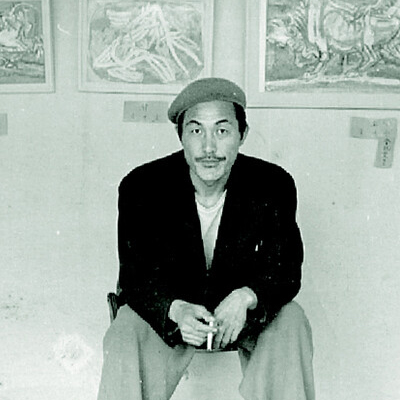
Lee Jung-seob (李仲燮, 1916~1956), Daehyang, one of the three great masters of Korean art [87d938a962028f7]

0
2024. 09. 05
Popularity, dramatic life, and relationships with family and friends: Lee Jung-seop (李仲燮, 1916~1956), one of Korea's three great masters, known as Daehyang (大鄕)
Today, September 6th, marks the 68th anniversary of the passing of painter Lee Jung-seop. I will visit his grave at Mangwoo History and Culture Park, reflecting on yesterday's unveiling ceremony for the Gu Sang Poet's Path in Yeouido and the process leading up to it. It was the Gu Sang-Lee Jung-seop Friendship Path. Lee Jung-seop was omitted.
On Saturday, May 21, 2016, from 10 AM to 5 PM, the Cheongri Eunhasuk Global Citizen School Art Competition was held. The Kim Byeong-gi Lee Jung-seop 100th Anniversary Drawing Competition, hosted by the Surim Cultural Foundation and organized by the Jungnang Cultural Research Institute, took place at the Kim Hee-soo Memorial Art Center and the National Institute of Forest Science.
About 100 students from Seoul Art Gifted High Schools such as Sangmyung High School, Seoul High School, and Cheongnyang High School participated. At 10 AM, at the Kim Hee-soo Memorial Art Center performance hall, painter Kim Byung-ki, a classmate of painter Lee Jung-seop at Pyongyang Jongno Normal School, spoke about his artistic philosophy spanning 100 years and national treasures such as artists who interacted with his friend Lee Jung-seop.
Ha Jung-woong, chairman of the Surim Cultural Foundation, lectured on his art collection of over 10,000 paintings donated to Korea, including artists like Lee Ufan, Jeon Hwan-hwang, Cho Yang-kyu, Song Young-ok, Chun Kyung-ja, Picasso, and Andy Warhol, as well as anecdotes about collecting paintings, and his spirit of patronage and service.
There was a lecture by Choi Yeol, an art critic who wrote "Lee Jung-seop's Biography," on 'Lee Jung-seop's Humanity and Artistry.' In July 2017, students visited the Gwangju Museum of Art and the Ha Jung-woong Art Museums in Gwangju and Yeongam as part of the Cheongri Eunhasuk Global Citizen School experience program.
Meanwhile, the Surim Cultural Foundation was established in 2009 by Kim Hee-soo (1924-2012), who served as the chairman of Chung-Ang University for 22 years. The Surim Cultural Foundation aims to promote education and culture in Korea, hosting and sponsoring over 40 events such as the 'Bukchon Music Festival, Surim Culture and Arts University Student Idea Contest, Surim Cultural Foundation Humanities Academy, Surim Literary Award, Imbangul Gugak Festival, Jeonju International Sori Festival, and Cheongri Eunhasuk Global Citizen School'.
I arranged an exchange with artist Kim Byung-ki and visited his studio. Ha Jung-woong, chairman of the Surim Cultural Foundation, Park Kyung-ran, dance teacher at Tokyo Korean School, and director Oh Choong-gong also joined us. Those who met artist Kim expressed their heartfelt gratitude, saying that time seemed to stand still for a while due to the overwhelming emotion, and they exchanged promises to meet artist Kim again.
While carefully appreciating the 'Choi Seung-hee Photo Exhibition' displayed at the Surim Cultural Foundation Donggyo Kim Hee-soo Memorial Art Hall, featuring the first person to create and perform Western-style modern dance techniques, who led the Korean dance scene before the August 15th liberation, he looked at Choi Seung-hee's photos and said, "She's so handsome," in the Pyeongan-do dialect, as if unfolding 70 years of the past before his eyes.

The white-haired boy continued to speak as if it were yesterday, recounting precious testimonies that no one else can now convey, such as the life of poet Baek Seok in Pyongyang after the establishment of the North Korean government, and memories of poet Yun Dong-ju's time at Soongsil High School. He spoke of his friendships with writers such as Oh Jang-hwan, Hwang Sun-won, Kim Gwang-seop, Kim Gwang-gyun, Jo Ji-hoon, and Park In-hwan. His meeting with poet Gu Sang was through painter Lee Jung-seop. Poet Gu Sang and painter Kim Byung-ki often met with Kim Gwang-gyun, Lee Jung-seop, Kim Yi-seok, Yang Myeong-mun, Cha Geun-ho, and others at 'Seoncheonjip' in Insa-dong, a regular haunt of painter Lee Dae-won, where they comforted each other through the difficulties before and after the Korean War, the relationship between North and South Korea before and after liberation, and discussed life and art. During the Korean War, as war painters and writers, they contemplated together to forge the destiny of their homeland and encouraged each other in their artistic endeavors.
He spoke of the handsome appearance of Daehyang Lee Jung-seop, poet Baek Seok, and Gu Sang. The three were recognized as handsome men by people.
Baek Seok used the rustic, intelligent, and naive Pyeongan-do dialect. He highly praised Baek Seok's life and art, which leaned neither to the North nor to the South.
He said that he still wants to emulate the warm smile of poet Gu Sang and his encounters, which did not distinguish between his seeker's life, poetry, and people. He smiled as he recounted how, when his friends teased him, saying that he and Lee Jung-seob had known each other longer, and that a rolling stone was dislodging a rooted one, poet Gu Sang would respond with a bright smile. In the autumn of 2018, he visited Gu Ja-myeong, the daughter of poet Gu Sang, her son-in-law Kim Eui-gyu, a sculptor, essayist Im Wan-suk, and novelist Hong Haeng-suk. Over dinner, he lost track of time, captivated by the amazing stories of a 103-year-old active painter who became a member of the National Academy of Arts at 101.
The birth dates of painter Lee Jung-seob (September 16, 1916) and painter Kim Byung-ki (April 10, 1916) were swapped and have only now been corrected. Before poet Ko Un wrote "Lee Jung-seob: His Art and Life," a biography of Lee Jung-seob, he recorded painter Kim Byung-ki's birthday, April 10, as Lee Jung-seob's birthday during a conversation with Kim Byung-ki, and it has been celebrated as such until now. In 2018, while serializing anecdotes of figures from Manguri Park in the monthly magazine "Small Book," I called Jeon Eun-ja, the curator of the Lee Jung-seob Art Museum in Seogwipo, and conveyed Kim Byung-ki's words. She was grateful, saying that they had been preparing for a special exhibition of Lee Jung-seob based on April 10, and that they would have to change all schedules to September 16. The only official document recording Lee Jung-seob's birth date, the Imperial Art School's student register, states "Born September 16, Taisho 5 (1916)" in the 'Date of Birth' section.
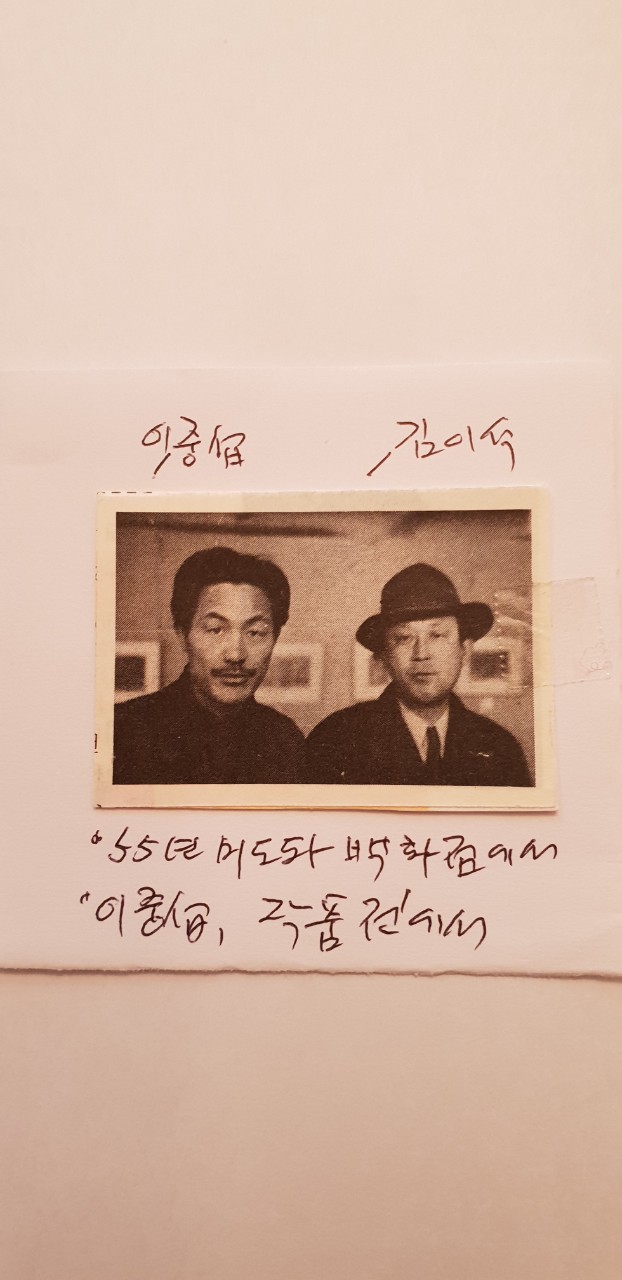
Lee Jung-seob is a Western-style painter considered one of the three great masters of modern Korean art, along with Park Soo-keun and Kwon Jin-kyu. Born as the second son in a wealthy farming family in Pyeongwon, Pyeongnam, he lost his father at the age of three and stayed at his maternal grandmother's house in Imun-ri, Pyongyang, at the age of eight, attending Pyongyang Jongno Public Elementary School. He entered Osan School in Jeongju, Pyeongbuk, took a leave of absence due to illness, and then re-enrolled, receiving art instruction from Im Yong-ryun and Baek Nam-soon, who were both educated abroad and were the first husband-and-wife painters.
Baek Nam-soon witnessed the atrocities as an international student during the Great Kanto Earthquake. Im Yong-ryun, a talented student who graduated at the top of his class from Yale University's art department, taught students an aesthetic sense based on local themes, which critically influenced Lee Jung-seob's artistic career. Around this time, he devoted himself to sketching, observing cows in the fields, and when he graduated from Osan School, he caused a stir by drawing the Korean Peninsula and a fireball flying from the Genkai Sea in the signature section of his album.
In 1937, he went to Japan and entered the Tokyo Imperial School of Fine Arts, then re-enrolled in Bunka Gakuin to study the free tendencies of 20th-century modernist art. During this time, he befriended 이정규, 김환기, 유영국, 김병기, 문학수, and others. From 1938, he participated in the Japanese abstract group, the Art Creators Association, and in 1941, he received the association's award, the Wonmyeong Joseon Art Award (Taeyang Award). That year, he formed the New Artists Association in Seoul with 김환기, 유영국, 문학수, and others, and held its inaugural exhibition. He wanted to study in France but was unable to due to his brother's opposition. He returned to Korea in 1943, and two years later, married Yamamoto Inamdeok, a junior from Bunka Gakuin, and settled in Wonsan, where he experienced the August 15 liberation.
In 1946, he joined the North Korean Artists' Alliance and, after painting the cover for his close friend, poet 구상's poetry collection 『응향凝香』, he suffered due to his involvement in 구상's incident. Afterwards, he taught painting at a free art class for underprivileged children. In the winter of 1950, he fled south with his family, following the retreating South Korean army, and lived as a refugee, moving between Busan, Seogwipo, and Tongyeong.
In 1952, he worked as a dockworker for the UN forces, collecting foreign cigarette packs to create silver foil paintings. As life became difficult, his wife left for Japan with their two sons, and he never saw her again, except for one trip to Japan the following year to meet her.
During his days of poverty and solitude, he participated in several group exhibitions as a war artist, and in 1953, he lived with 유강렬 in Tongyeong and held a solo exhibition of 40 works in a cafe. The following year, he moved to Seoul via Jinju, and at the invitation of 박생광, he went down to Jinju to work on his art.
While living in Nusang-dong, Seoul, he exhibited at the Korean Fine Arts Association Exhibition, co-hosted by the Ministry of National Defense and the Korean Fine Arts Association. In 1955, he held solo exhibitions at Midopa Gallery and the American Cultural Center in Daegu. In July of that year, he showed symptoms of mental illness and was admitted to St. Mary's Hospital in Daegu. Thanks to the care of his friends, he was transferred to several hospitals for treatment and improved somewhat, but after being discharged without permission, his condition worsened due to an irregular lifestyle, and he died at the Red Cross Hospital on September 6, 1956.
The ashes were divided into three parts: one was interred in Manguri Public Cemetery, one was given to his Japanese wife a year later by poet Ku Sang, and the third was kept by painter Park Ko-suk before being scattered in Jeongneung.
The pine trees covering the grave site were planted by his close friend, poet Ku Sang, in memory of the German folk song <Pine Tree> that Daeyang often sang.
One branch of a pine tree broke off in a typhoon last fall and was cut with a saw. We should proceed with planting a second pine tree. Perhaps we should create a park of friendship for Lee Jung-seop, Kim Yi-seok, Ku Sang, Cha Geun-ho, Park In-hwan, and others, and nurture that connection by managing the pine trees and planting replacement trees.
In 1957, a tombstone was erected, created by sculptor Cha Geun-ho. His representative works include <Children, Fish, and Crabs>, <Fighting Bull>, <White Bull>, and <Cockfight>.
댓글
( 0 / 500 )
신고내용
신고내용을 선택해주세요
회원비난/비하/욕설글 및 댓글도배성 게시물저작권 침해/불법자료 유출허위사실유포개인정보 유출.사생활 침해무단광고/홍보음란물 및 도박 불법 광고물범죄행위 관련 글불법행위 관련 소개물품 판매 및 사기글악성코드 및 스파이웨어 유포기타 사유 및 운영진 판단


비밀번호를 잊으셨나요?
Sign in with Google


All information provided by us is free of charge and is for the public good.