品

Corea든 Korea든, 품격은 이름보다 먼저다
Whatever the name—Corea or Korea—dignity comes first.
Whatever the name—Corea or Korea—dignity comes first.
Now
지금
751 Diaspora
Heritage
유산
Humanity
인문
Mirengsi
未冷尸
Politics
정치
Media
언론

망우리 열전
칼럼
정종배
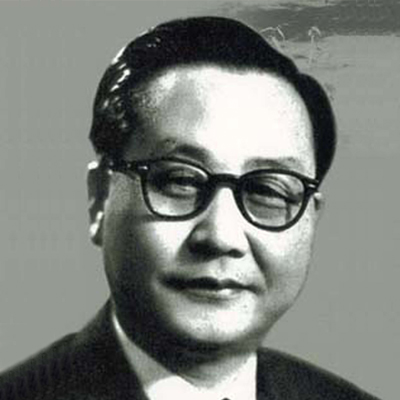
Kim Ho-jik (金浩稙, 1905~1959)

0
2024. 08. 31
Dr. Kim Ho-jik (金浩稙, 1905~1959), the "Bean Doctor," had 26 business cards when he became the first baptized member of The Church of Jesus Christ of Latter-day Saints in Korea.
This is the only private family burial plot within the Manguri Park cemetery. It is the closest celebrity grave to National Road 6 at Manguri Pass. Although it is also the closest from the bridge that crosses Manguri Pass, which was renamed from Ojakgyo to Nagimangugyo, to visit Kim Ho-jik's grave, one must enter Manguri Park from Manguro, climb the valley leading up the left mountain, turn left 20m before reaching the ridge, and then push through 50m of dense bushes to find the well-maintained burial site. When Manguri Park was renovated, the access road was cut, and a concrete retaining wall was built. An informational stone for the entrance to Dr. Kim Ho-jik's grave stands on the cliff. It is difficult to access when the trees are overgrown in summer. Although it is a private cemetery, it would be desirable for the relevant authorities to provide information and an access path.
Kim Ho-jik was born on April 16, 1905, in Byeokdong County, North Pyongan Province, as the son of a Hyanggyo (local Confucian school) principal. After attending Byeokdong Agricultural School, he graduated with honors from Suwon Higher Agricultural and Forestry School in March 1924 and gave the valedictorian speech. He worked as a natural history teacher at Jeonju Shinheung School, later specializing in biology. In 1930, he graduated from Tohoku University with a degree in biology, and from May of that year, he worked as a natural history teacher at Daegu Gyesung School, where he married Park Pil-geun, the younger sister of the vice-principal, Park Jeong-geun. He taught biology and nutrition at Ewha Women's Professional School in 1931 and Sookmyung Women's Professional School in 1939.
Kim Ho-jik was interested in our traditional diet and researched the relationship between the history, climate, and natural features of the Korean Peninsula and our diet. In other words, he investigated the nutritional value of our traditional foods, which have a long cultural and historical background. Meanwhile, he ecologically studied the relationship between our history, climate, and natural features and our diet, publishing "An Introduction to Korean Plants" in 1944. He highlighted the excellence of Korean food and proposed research methods for Korean food.
In September 1945, he dedicated himself to the reconstruction of Sookmyung Women's College, serving as its principal. In February 1946, he went through the National Suwon Agricultural Experiment Station, and in December 1947, he became the Vice President of the Agricultural Improvement Institute. In November 1948, he attended the 2nd FAO General Assembly as a representative of the Republic of Korea government.
In February 1949, he went to the United States as the first government-dispatched international student. In February 1950, he earned a Master of Nutritional Science (M.N.S.) degree from Cornell University, and after returning to Korea in 1951, he received a Ph.D. in Science from the same graduate school in September for his thesis "Nutritional Study of Soybean Protein." After returning to Korea, he was appointed president of Busan Fisheries University. In February 1953, he received the Presidential Award for his contributions to national nutrition enlightenment, improvement, and agricultural education dissemination. In March of the same year, he became a professor at Yonhee University. In March 1955, he was appointed Vice Minister of Education. In November 1956, he attended the 9th UNESCO General Conference held in New Delhi, India, as a government representative. He also served as a lecturer in biochemistry at Seoul National University Graduate School, a member of the National Academy of Sciences, an executive committee member of UNESCO Korea, a cultural committee member of Seoul Metropolitan Government, vice president of the Korean Society of Biological Sciences, president of the Korean Nutrition Society, president of the Do-ui Life Research Society, chairman of the Changsin Yukyeonghoe Foundation, and chairman of the Hangeul Society. At the time of his death, his business card listed 26 titles.
At that time, as a US-educated scholar with a Ph.D. in science, he must have been in a position where he had no choice but to engage in diverse and active social activities in religion, education, and society. This must have stemmed from his own will, practical ability, the power of his religious faith, and his ingrained spirit of service. He is a figure who offers a glimpse into the true nature of Korea's talent pool over 60 years ago. Wouldn't it have been better if he had focused on health and care, becoming a "Soybean Doctor," and widely spread his ideas? It is a great pity.
Before leaving Korea, 김호직, who was a Presbyterian elder, encountered the faith of The Church of Jesus Christ of Latter-day Saints, commonly known as the Mormon Church, through his school friend Oliver Wayman during his studies in the United States. On July 29, 1951, at the age of 46, he became the first Korean to be baptized into The Church of Jesus Christ of Latter-day Saints in the Susquehanna River. As he emerged from the water, a strong yet gentle voice echoed in his ears: "Feed my sheep." This became the guiding principle of his life. After returning to Korea in 1952, he worked as a nutritionist, educator, and pioneer of The Church of Jesus Christ of Latter-day Saints. The beginning of The Church of Jesus Christ of Latter-day Saints in Korea was when members of the Church, who were among the UN forces dispatched to Korea during the Korean War in June 1950, held worship services. Meetings were particularly active in Busan, where English study groups were advertised at various universities in Busan, leading to the formation of Bible study groups with interested young university students. After returning to Korea, 김호직 also actively participated in the Busan meetings.
After returning to Korea in 1951, he served as Vice Minister of Education, Dean of Busan Fisheries University (now Pukyong National University), and Dean of the College of Animal Husbandry at Konkuk University, fostering educational administration and future generations. He dedicated himself to research on the nutrition of soybeans and invented a fortified food, patent registration number 448, with soybeans as the main ingredient. In addition, he also conducted research on nutritional improvement through milk and meat. His writings include "A Study on Wheat Flour Fortification" and "A Study on Soy Protein." He received the Presidential Award in 1953 for his contributions to the enlightenment and improvement of national nutrition and the dissemination of agricultural education.
In 1957, he greatly contributed to the establishment of the foundation for The Church of Jesus Christ of Latter-day Saints, overcoming opposition from mainstream Protestantism. In 1959, he was invited to a seminar by the Food and Agriculture Organization of the United Nations and departed for India, but he collapsed due to high blood pressure and returned home in poor health. Later, on August 28, 1959, he attended a meeting of the Seoul City Board of Education and collapsed from a cerebral hemorrhage while debating the "issue of collecting miscellaneous fees from students," passing away on August 31, 1959, at Yonsei University Hospital.
During the funeral procession, which was held as a public funeral, traffic was controlled from Jongno to Dongdaemun. About 60 students from Konkuk University's Department of Animal Science, class of '59, held the ropes of the flower-decorated funeral bier from all sides and marched. Over 1,000 people, including government officials, attended the funeral held at Konkuk University Gymnasium. The ceremony was conducted according to Mormon rites. He was interred in the Manguri private cemetery, led by students.
The eldest son, 김신환 (1932-2019), followed his father's wishes and graduated from Seoul National University's Department of Biology. While studying abroad at the Sorbonne University in Paris, France, he belatedly discovered his passion for vocal music.
In 1957, he became the first Korean to win first prize at the Paris Vocal Competition, and the following year, he entered the Conservatoire National Supérieur de Musique et de Danse de Paris to begin his formal music studies. Known as the last successor of the Italian Bel Canto technique, he also gained fame as the first East Asian soloist at the La Scala Theatre in Milan, Italy, which opened in 1776. As a vocalist who laid the foundation for Korean opera, after returning to Korea, he served as a professor at Yeungnam University's College of Music, founded and became the first director of the Seoul Metropolitan Opera, served as chairman of the Seoul Arts Center, and was the first co-representative of the Korea Art Song Promotion Committee, striving for the development of Korean opera. He also received the Seoul Olympic Cultural Medal (1988), the Order of Merit of the Italian Republic (1992), and the Korea's Best Artist Award from the Korean Association of Art Critics (1995). He contributed to nurturing young talent by establishing the '김신환 International Competition' named after him. He was interred at the National Cemetery for his participation in the military band during the Korean War.
댓글
( 0 / 500 )
신고내용
신고내용을 선택해주세요
회원비난/비하/욕설글 및 댓글도배성 게시물저작권 침해/불법자료 유출허위사실유포개인정보 유출.사생활 침해무단광고/홍보음란물 및 도박 불법 광고물범죄행위 관련 글불법행위 관련 소개물품 판매 및 사기글악성코드 및 스파이웨어 유포기타 사유 및 운영진 판단


비밀번호를 잊으셨나요?
Sign in with Google


All information provided by us is free of charge and is for the public good.