品

Corea든 Korea든, 품격이 먼저다
Whether Corea or Korea, dignity comes first.
Whether Corea or Korea, dignity comes first.
Now
지금
751 Diaspora
Heritage
유산
Humanity
인문
Mirengsi
未冷尸
Politics
정치
Media
언론
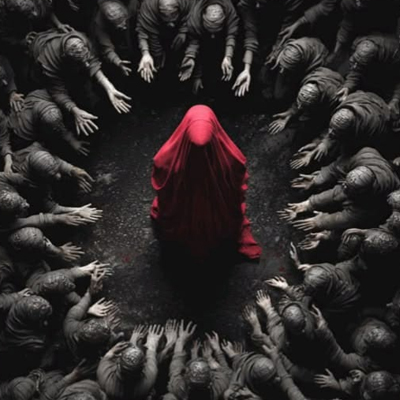
대한민국 헌법 제20조는 종교의 자유를 보장하고 국교(國敎)를 부인하는 정교분리의 원칙을 규정하고 있다.

아랑곳
칼럼
bunny365
1. Crossing the line of religion and politics... Tracing the origins of cults

0
2026. 11. 22
Article 20 of the Constitution of the Republic of Korea guarantees freedom of religion and stipulates the principle of separation of church and state, denying a state religion.
1. All citizens shall have freedom of religion.
2. No state religion shall be recognized, and religion and politics shall be separated.
The part of this constitutional provision that deserves attention is the 'separation of religion and politics.' This provision does not mean that religion should not 'interfere' in politics or that politics should not 'dominate' religion. The separation of religion and politics means preventing state power from leaning towards a specific religion, using religion as a means of governance, or, conversely, religious organizations from seizing political power. However, this does not strictly prohibit the 'political participation' of religion itself. Any religious person can express political opinions or participate in political activities. This is because that religious person, as a citizen of the Republic of Korea, is guaranteed freedom of expression, assembly, and association. The fact that the Republic of Korea is separated from religion means the religious neutrality of the state.
Although Christianity is currently dominant in the Republic of Korea, it is for the same reason that Korea does not establish Christianity as its state religion. This is because the state cannot grant special favors or discriminate against any religion. As of now, that is the case. The opposite is also true. It means that religious organizations are prohibited from directly exercising political power, and politics is prohibited from politically sponsoring a specific religion. However, this does not mean that religious people cannot express political opinions or participate in political activities.
Religious organizations and individuals have the freedom to express political positions or act according to their social conscience. Pastors, priests, and monks criticizing or speaking about political issues, and engaging in protests, rallies, and solidarity activities based on religious beliefs, fall within the scope of freedom of expression and freedom of assembly. There is a representative event in Korean politics where religion had a decisively 'good influence' on politics. On May 18, 1987, the truth of the Park Jong-cheol torture death case, which was almost buried by the Catholic Priests' Association for Justice, was revealed to the world.
Although the Park Jong-cheol torture death incident occurred on January 14, the Chun Doo-hwan regime mobilized the police and other forces to desperately conceal it. This incident almost failed to come to light, like other deaths of unknown cause or disappearances during the military dictatorship, but thanks to the efforts of many people, the details could be reported to the Catholic Priests' Association for Justice. The association then 'courageously' exposed the truth during the 7th anniversary mass of the May 18 Democratization Movement. The fact that the torture death of a brilliant student who legitimately entered Seoul National University could be so casually hidden was due to the public authority's praise of the dictatorship. The police, public officials, professors, and the media also collaborated with the dictatorial regime. It was as if the behavior of informants attacking their own people under the tyranny of the colonial government-general had become ingrained.
The Park Jong-cheol torture death incident, thus revealed to the world, became the decisive fuse for the June 10 Democracy Movement, and by eliciting Roh Tae-woo's June 29 Declaration, the Chun Doo-hwan regime came to an end. Following this incident, the Catholic Priests' Association for Justice during the 1987 June 10 Democracy Movement is considered a symbolic 'dissident group' that stood against the Chun Doo-hwan dictatorial regime. However, one might question whether the actions of the Priests' Association for Justice at the time constituted 'intervention' in politics. In fact, the Priests' Association for Justice made conscientious revelations when the military dictatorship and democratic forces were in a tense standoff, thereby critically influencing the outcome of that struggle. Nevertheless, the Priests' Association for Justice is a prime example of conscientious religious individuals engaging in social participation against the Chun Doo-hwan military dictatorship. At the same time, their activities can be seen as based on the freedom of expression, freedom of assembly, and freedom of religion guaranteed by the Constitution.
The 'priests' who resisted power did not directly exercise political power by leveraging their religion, Catholicism, but merely raised voices of criticism and resistance. Therefore, the majority of scholars and legal professionals interpret their activities not as a violation of the Constitution, but rather as an embodiment of the constitutional spirit. In particular, the Priests' Association for Justice never received any benefits or compensation for their political activities. They simply listened to the voices of conscience and justice, demonstrating practice and action in the face of injustice.
Thus, there was a time when religion had a positive influence on Korean politics. Now, let's fast forward to 2025. Around the time of Yoon Suk-yeol's impeachment, an unidentified group of far-right Christians held loud megaphone protests every weekend in Gwanghwamun. Carrying Korean and American flags, they sang hymns and military songs, continuously protesting in favor of former President Yoon Suk-yeol's martial law and against his impeachment.
In fact, it hasn't been long since a group of far-right forces, collectively known as the 'Taegukgi Corps,' appeared on the streets. The term 'Taegukgi Corps' first gained popular use during conservative rallies held in places like Gwanghwamun during the 2016 impeachment crisis of former President Park Geun-hye. Participants in these protests primarily carried the Taegukgi (Korean flag) and shouted slogans against impeachment and for the protection of the conservative government, with some of them linked to far-right Christian organizations.
Their presence became even more prominent, especially in rallies held around Gwanghwamun from early 2017, when Park Geun-hye's impeachment trial was underway. At that time, only a few groups led rallies by combining religious messages with political claims. They continued their activities by holding rallies whenever major political issues arose. Therefore, the Taegukgi Corps, as a far-right force, can be seen as first appearing at Gwanghwamun rallies roughly from late 2016 to early 2017.
In fact, at this time, the far-right forces represented by the Taegukgi Corps were not equated with Christian forces. The Taegukgi Corps at that time was a concept encompassing a broad range of far-right conservative public. It included various strata such as retired elderly people, opponents of Park Geun-hye's impeachment, security-first advocates, and some military personnel, and not all of them were far-right Christian forces. It is inaccurate to completely equate the far-right forces of the Taegukgi Corps with right-leaning Christian forces. However, it is possible to understand both forces as a closely intertwined political-cultural current. Both sides shared deep empathy and solidarity regarding values such as strengthening the ROK-US alliance, opposing Park Geun-hye's impeachment, and 'demonizing' progressive forces.
However, the actions and methods of practice of both sides were quite different. Far-right Christian forces emphasize actions based on religious mission and the propagation of religious messages rather than political objectives. On the other hand, the Taegeukgi Corps focuses on more direct and combative political actions. In fact, it's six of one, half a dozen of the other, but it's the fault of religious people, not non-Christians, that it has become difficult to distinguish between pseudo-religions that use the name of Christianity and historical, legitimate Christianity.
However, it didn't take long for far-right Christian forces to emerge as the 'masters' of the asphalt. The unique sense of solidarity, camaraderie, and strong religious homogeneity mediated by God became their most powerful weapon when they fought on the asphalt. Because of this, far-right Protestant groups virtually led the rally stage during the anti-Park Geun-hye impeachment protests. Forces from Sarang Jeil Church led by Pastor Jun Kwang-hoon, the Puritan Spiritual Training Center, and others imbued the 'Taegeukgi rallies' with a religious color, and subsequently, slogans like 'Taegeukgi Corps = Jesus Korea' appeared, leading to a gradual 'fusion' of the two.
Both the Taegeukgi Corps and far-right Christian forces identify the Moon Jae-in government, the left, North Korea, Islam, the Anti-Discrimination Act, and homosexuality as common enemies, justifying extreme speeches and radical actions. In this regard, their far-right ideological solidarity is quite strong. However, strictly speaking, the Taegeukgi Corps is not synonymous with far-right Christian forces. Not all Taegeukgi Corps members are far-right Christians, and not all far-right Christian forces participated in the Taegeukgi rallies. Nevertheless, looking at the nature of the rallies, it can be seen that far-right Christian forces dominated the asphalt, being called almost a 'byword' for the Taegeukgi Corps.
Jeon Kwang-hoon, considered the 'leader' of the far-right Christian forces, first made a full-fledged appearance at the Gwanghwamun rally under the title of pastor on August 15, 2019, during the Liberation Day rally. On that day, he made political statements at a large conservative rally held in Gwanghwamun Square, urging support for the Liberty Korea Party, which led to his arrest on charges of violating the Public Official Election Act. Even before that, Jeon Kwang-hoon had been active in conservative Protestant circles and made political statements, but it was through the 2019 Gwanghwamun rally that he began his publicly prominent political activities. Subsequently, he established himself as a symbolic figure of the Gwanghwamun rallies, advocating slogans such as 'Moon Jae-in's Resignation.'
The far-right Christian forces, represented by Jeon Kwang-hoon, are currently deeply entrenched in South Korean politics. They still ardently support former President Yoon Suk-yeol, who was impeached under martial law, and a strong bond of solidarity has formed with Kim Moon-soo, the People Power Party's presidential candidate to which Yoon belonged. Candidate Kim Moon-soo ultimately did not declare a complete break with Pastor Jeon Kwang-hoon until the end of the 21st presidential election. This is because if he lost the election, he would have to return to Pastor Jeon Kwang-hoon and continue the street protests. The evidence of religion infiltrating South Korean politics is not limited to the far-right Christian forces led by Jeon Kwang-hoon. A religious group called Shincheonji is also casting a dark shadow and tentacles over politics.
Shincheonji Church of Jesus, the Temple of the Tabernacle of the Testimony, or Shincheonji for short, is a new religious movement of Protestant origin founded by Lee Man-hee on March 14, 1984. Mainstream Protestant denominations in Korea classify it as a cult due to its eschatological doctrines and the deification of its leader. However, allegations of Shincheonji's involvement with former President Yoon Suk-yeol were raised multiple times around the 2022 20th presidential election. In January 2022, approximately 50 days before the presidential election, it was revealed through internal Shincheonji Telegram conversations and recordings that then-candidate Yoon Suk-yeol had a private meeting with a Mr. Lee, a close associate of Shincheonji leader Lee Man-hee, at a high-end Korean restaurant in Mapo-gu, Seoul.
Ms. Lee is known to be a Shincheonji follower and the president of a prominent women's organization, who frequently had private meetings with Lee Man-hee. High-ranking Shincheonji officials stated that these meetings were at Lee Man-hee's direction. According to testimonies from former Shincheonji executives, Lee Man-hee believed that candidate Yoon Suk-yeol, during his tenure as Prosecutor General, had twice prevented search and seizure operations against Shincheonji, considering it a 'favor' and thus ordered organized election interference as a way to reciprocate.
Consequently, suspicions arose that Shincheonji established an organization called the 'Foreign Policy Department' internally and encouraged followers nationwide to join the People Power Party, thereby inducing support for candidate Yoon. In response, the Democratic Party of Korea strongly criticized the alleged collusion between President Yoon and Shincheonji, urging judicial authorities to conduct a thorough investigation. In particular, they raised concerns about former President Yoon preventing search and seizure operations against Shincheonji during his time as Prosecutor General and the contact made just before the presidential election.
Shincheonji strongly refuted these allegations, calling them 'clear falsehoods.' They also stated that the Gyeonggi Nambu Provincial Police Agency had ruled 'no charges' regarding Shincheonji's alleged involvement in the presidential election in August 2022, and based on this, they hinted at legal action against some media reports.
The 'allegations of involvement' between Shincheonji and former President Yoon Suk-yeol continue as a political dispute without a clear legal conclusion. Evidence regarding the relationship between Shincheonji and former President Yoon primarily relies on tips and media reports, requiring factual verification. Nevertheless, the suspicion that there was a 'collusive relationship' between Shincheonji, a 'heretical group' in the religious community, and former President Yoon since his tenure as Prosecutor General, must be thoroughly investigated.
Furthermore, around May 2025, suspicions of collusion between former President Yoon Suk-yeol and the Unification Church (Family Federation for World Peace and Unification) are also being raised. In particular, the controversy has spread with the revelation of expensive gifts received by First Lady Kim Keon-hee and indications of requests for special favors from the Unification Church.
First, Mr. Yoon, the former head of the Unification Church's global headquarters, is accused of attempting to deliver expensive gifts, including a Chanel bag and a diamond necklace, to Kim Keon-hee through the shaman 'Geonjinbeopsa' Jeon Seong-bae. Prosecutors are investigating the possibility that these gifts were part of a solicitation related to the Unification Church's vested interests.
In particular, former director Yoon is suspected of having influenced the significant expansion of the Korean government's Official Development Assistance (ODA) loan support limit from the existing $700 million to $3 billion while promoting the Cambodia Mekong River development project. Prosecutors are investigating whether former director Yoon delivered gifts to Kim Keon-hee and made requests during this process. Prosecutors secured a statement that former director Yoon received approval from Unification Church President Hak Ja Han when delivering gifts to Kim Keon-hee, and have banned President Han from leaving the country. The Unification Church has distanced itself from these allegations, stating that it was "an individual's private action."
As such, the shadows of various religious groups, including far-right Christian forces, Shincheonji, and the Unification Church, loom over Korean politics. This clearly violates the constitutional principle of separation of politics and religion. There have been instances where specific religious groups have approached politicians to lobby with money or goods, or attempted to place politics under the influence of religion by making "deals" to deliver "a huge number of votes" in pursuit of their "private interests." This is an irrational and selfish act that stands in stark contrast to the "democratization struggle" of the Catholic Priests' Association for Justice during the June 10th Uprising.
Thus, the actions of certain religions to intervene in or exert influence on politics over the past few years clearly violate the constitutional spirit of 'separation of church and state'. Why has our politics suddenly shown such a tendency to fall under the influence of religion or to collude with it? The origin of this can be traced back to the Japanese colonial period.
In the next episode, we will delve into the historical roots of how cults in Korea have been exploited by politics and how cults have attempted to intervene in and exert influence over politics.
댓글
( 0 / 500 )
대동단결
6
종교의 자유와 정교분리는 서로 다른 문제입니다. 종교인이 사회적 불의에 저항하고 민주주의를 지키기 위해 목소리를 내는 것은 헌법 정신의 실천이지만, 종교 조직이 정치 권력과 결탁해 사적 이익을 추구하는 것은 전혀 다른 차원의 문제입니다. 종교의 사회적 책임과 정치적 탐욕을 명확히 구분해야 합니다.
( 0 / 500 )
라이언
5
박종철 고문치사 사건을 세상에 알린 천주교정의구현사제단의 역할과 오늘날 극우 종교 세력의 행태를 비교한 대목이 인상적입니다. 같은 종교의 이름으로 한쪽은 민주주의를 지키고, 다른 한쪽은 권력과 결탁해 민주주의를 흔들고 있습니다. 결국 종교의 가치는 교리가 아니라 행동으로 증명되는 것입니다.
( 0 / 500 )
doong_A
4
신앙이 정치적 신념과 결합할 수는 있지만, 종교 지도자가 신도들의 신앙심을 이용해 특정 정치인을 지지하게 만들거나 조직적인 표 동원을 시도한다면 그것은 종교의 자유를 넘어 민주주의의 문제입니다. 특히 신천지와 통일교 등의 정치권 유착 의혹은 정파적 이해관계를 떠나 철저히 규명해야 합니다.
( 0 / 500 )
曲筆
4
우리 사회에서 사이비종교가 정치권에 접근하는 이유는 결국 권력의 보호와 조직의 이익 때문일 것입니다. 정치인은 표를 얻기 위해 종교 조직을 이용하고, 종교 지도자는 정치적 영향력을 통해 자신의 조직을 보호하려 합니다. 이런 상호 거래가 반복되는 한 정교분리는 헌법 속 문구에 머물 수밖에 없습니다.
( 0 / 500 )
minsoo
4
종교가 정치에 미치는 영향력을 무조건 부정할 필요는 없습니다. 중요한 것은 그 영향력이 공동체의 양심과 정의를 향하는가, 아니면 교주와 조직의 사익을 향하는가 하는 점입니다. 일제강점기부터 이어진 종교와 권력의 유착 역사를 추적하겠다는 다음 글이 기대됩니다. 사이비종교의 역사적 뿌리와 정치권의 책임까지 함께 밝혀 주기를 바랍니다.
( 0 / 500 )
nadan
3
정교분리는 종교의 정치 참여를 막는 원칙이 아니라 종교와 국가 권력이 서로를 사유화하지 못하도록 하는 민주주의의 안전장치입니다. 신앙을 앞세워 정치 권력을 거래하고 신도들을 정치적 동원 수단으로 삼는 행태는 더 이상 종교의 자유라는 이름으로 보호받아서는 안 됩니다.
( 0 / 500 )
황금사과
3
종교단체의 조직력과 정치권의 권력욕이 결합하면 민주주의에 심각한 위협이 됩니다. 종교 지도자는 신도들의 표를 무기로 정치권에 영향력을 행사하고, 정치인은 선거 승리를 위해 종교 조직의 요구를 외면하지 못합니다. 이 악순환을 끊으려면 정치권부터 종교 유착의 실태를 투명하게 밝혀야 합니다.
( 0 / 500 )
jinyoung82
1
민주화 시대의 종교는 권력에 맞서 약자의 편에 서기도 했습니다. 그런데 지금 일부 종교 지도자들은 권력의 편에 서서 신도들을 동원하고 정치적 영향력을 행사하려 합니다. 종교가 사회의 양심이 아니라 정치적 이해집단으로 전락했다는 사실이 참으로 안타깝습니다.
( 0 / 500 )
신고내용
신고내용을 선택해주세요
회원비난/비하/욕설글 및 댓글도배성 게시물저작권 침해/불법자료 유출허위사실유포개인정보 유출.사생활 침해무단광고/홍보음란물 및 도박 불법 광고물범죄행위 관련 글불법행위 관련 소개물품 판매 및 사기글악성코드 및 스파이웨어 유포기타 사유 및 운영진 판단


비밀번호를 잊으셨나요?
Sign in with Google


All information provided by us is free of charge and is for the public good.