品

Corea든 Korea든, 품격이 먼저다
Whether Corea or Korea, dignity comes first.
Whether Corea or Korea, dignity comes first.
Now
지금
751 Diaspora
Heritage
유산
Humanity
인문
Mirengsi
未冷尸
Politics
정치
Media
언론
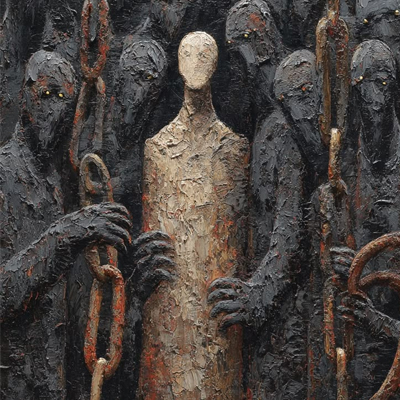
민주당이 신천지 교인들의 집단 가입 정황을 자체 조사로 상당 부분 확인

아랑곳
칼럼
Korman
The paradox of Korean politics, which has failed to break the chain of collusion between religion and politics

0
2026. 11. 05
- 민주당이 신천지 교인의 집단 가입 정황을 확인하고도 '3자 비밀연합 증거 없음'만을 강조하며 세부 보고를 취소한 것은, 당의 이미지 관리와 계파 갈등 봉합에 급급한 정치적 계산으로 보인다.
- 이는 여야를 막론하고 사이비 종교의 조직적 정치 개입에 대한 한국 정당들의 구조적 취약성과 선택적 침묵을 드러내며, 당원 주권과 민주적 의사결정의 기반이 오염되는 현실을 방치하고 있다.
- 정당들은 단기적 이익에 따라 조직표를 활용하거나 상대 계파 공격에 문제를 이용할 뿐, 이중당적 검증 시스템 부재 등 제도적 미비점을 방치하며 근본적 해결 의지를 보이지 않는다.
- 사이비 종교의 정치세력화는 합리적 공론장을 왜곡하고 특정 세력의 이해관계가 당의 노선에 영향을 미쳐 민주주의의 질적 저하를 초래하므로, 제도적 개혁과 정당의 명확한 결단이 시급하다.
The incident where the Democratic Party, despite largely confirming evidence of mass membership by Shincheonji followers through its own investigation, canceled a detailed report and apologized at the November 3, 2026, general meeting of lawmakers, with Chairman Kim Min-seok only emphasizing 'no evidence of a secret three-party alliance,' goes beyond simple factional conflict within the party. This case once again exposes the structural vulnerability of political-religious collusion that Korean political parties have long neglected. In the People Power Party, it has already been confirmed through investigation that at least 50,000 Shincheonji members joined en masse, leading to the indictment of General Assembly President Lee Man-hee and others. Similar scale and circumstances have been reported in the Democratic Party, and the party itself has admitted that 'a significant degree of collective membership has been confirmed.' Nevertheless, both parties repeatedly prioritize factional interests or short-term image management rather than fundamentally resolving this issue.
The politicization and incitement mechanisms of cults
The reasons why cults actively intervene in politics are clear. These groups, which have low social trust, have a strong desire to gain 'legitimacy' and exert real influence through organized personnel. The patterns repeatedly shown by Shincheonji and the Unification Church go beyond simple political participation by a faith community. They mobilize followers under strict organizational discipline, secure the status of party members with voting rights and responsible party members through proxy payment of party dues or mass party entry, and then manipulate bloc votes in primaries and national conventions. Experts sometimes describe this as a 'crocodile and crocodile bird' relationship. The political establishment seeks to utilize highly mobilized forces, while religious organizations seek political protection and vested interests.
In such a structure, incitement works even more effectively. When religious authority and organizational commands are combined, individual will is diluted, and directives to support a specific candidate or faction are accepted as an extension of faith. The 'Pilates Project' style allocation method confirmed in the People Power Party, and the concentrated regional and mass party membership situations reported in connection with the Democratic Party, show that this mechanism operates regardless of party affiliation. The problem is that these do not merely stop at mobilizing votes, but can distort the party's decision-making process itself. Especially in situations like primaries, where a small number of organized votes can determine the outcome, the mobilization power of tens of thousands of people can easily become a decisive variable.
Contradictions and structural vulnerabilities of the party system
The membership roster system of Korean political parties is designed to make it difficult to prevent such infiltration. Although the total number of party members exceeds 10 million, the proportion of those who actually pay party dues is low, and there is virtually no system to verify dual party membership in real time. The structure where one can obtain primary voting rights by paying only a small amount of party dues is extremely vulnerable to organized mobilization. If a specific religious group mobilizes tens of thousands of people, it can change the landscape of a national convention or regional primary. In a situation where cross-verification between the National Election Commission and political parties is not properly carried out, 'ghost members' whose names are only on the roster and organizationally introduced members are mixed. This structure is also the result of political parties prioritizing quantitative expansion while neglecting qualitative management.
The Democratic Party's recent response succinctly illustrates this contradiction. While acknowledging the circumstances of collective enrollment, denying only the frame of a 'secret alliance for a specific candidate' and not disclosing details is interpreted as a political calculation to minimize damage to the party's image and internal division. The People Power Party also often postponed thorough roster maintenance and accountability at the party level, even in the face of facts confirmed by investigations. Both ruling and opposition parties repeatedly adopt the attitude of saying 'it doesn't exist in our party' or dismissing it as a 'political conspiracy,' while the reality that the foundation of party member sovereignty and democratic decision-making is being contaminated is neglected.
The selective silence of the political establishment and its cost
Another reason political parties fail to properly block the political empowerment of cults is short-term self-interest. When organizational votes are needed in primaries, or when there is collusion mediated by local grievances and interests, politicians are reluctant to draw a clear line. Conversely, when attacking opposing factions, they actively exploit this issue. The scene where Representative Kim Min-seok brought up the Shincheonji frame at the party convention and it backfired, and the pro-Chung faction demanded disclosure while worrying about damaging the party's overall image, is a typical example of this contradiction. As a result, factional power struggles take precedence over fact-finding and institutional improvement, and the public comes to believe that no party can fundamentally solve this problem.
When cult propaganda infiltrates the political sphere, the public forum becomes even more distorted. Mobilization based on religious absolutes makes rational debate difficult and increases the possibility that the interests of specific groups will influence party lines or nominations. This threatens 'free and fair decision-making,' the minimum condition for democracy. Past examples, such as the Japanese Aum Shinrikyo cult forming a political party, and the recurring controversies related to the Unification Church and Shincheonji in Korea, show that this danger is not a temporary happening. Especially when internal hierarchies and disciplinary mechanisms are at play, individuals' political judgments are virtually eliminated and easily replaced by collective mobilization.
Tasks to break the chain of collusion between politics and religion
To break this chain, institutional reforms are needed beyond the moral decisions of individual parties. Priority should be given to establishing an automatic dual-party membership verification system, strengthening cross-verification of responsible party members and rights-holding party members before primaries, and disclosing membership lists and establishing sanction standards when organized party entry is suspected. At the same time, political parties themselves must strengthen the verification of the substantive intent of party membership and clearly define measures such as expulsion from the party if organized mobilization by religious groups is confirmed. It is also important that investigative agencies consistently investigate collusion between politics and religion, regardless of party affiliation. An effective monitoring system must also be established to prevent proxy registrations or proxy payment of party dues during the party member recruitment process.
The Democratic Party's current incident and the People Power Party's past cases show that Korean political parties still only view this issue as an 'external attack' or 'material for internal factional struggles.' As long as the ties between politics and religion are not severed, the politicization and incitement by cults will inevitably repeat, and the cost will be the erosion of party member sovereignty and the qualitative decline of democracy. What is needed now is not a resolution that prioritizes factional interests, but a decisive action to clean up contaminated party membership lists and institutionally clarify the boundaries between politics and religion. The longer this decision is delayed, the deeper the trust in Korean politics will sink. Allowing the organized infiltration of cults ultimately weakens both the autonomy of political parties themselves and the public's political right to choose.
댓글
( 0 / 500 )
ssabi
7
정치와 종교의 분리는 헌법에 명시된 원칙이지만, 현실 정치에서는 조직표와 정치적 이해관계 앞에 그 원칙이 흔들리고 있습니다. 특정 종교의 문제가 아니라 정당 민주주의의 문제로 접근해야 합니다. 당원 가입부터 경선까지 외부 조직의 부당한 개입을 차단할 제도적 장치를 마련해야 합니다.
( 0 / 500 )
民衆改革
8
김민석 대표의 사과가 논란의 종결이 되어서는 안 됩니다. 3자 비밀연합의 증거가 없다는 것과 신천지의 집단 가입 정황이 존재한다는 것은 별개의 문제입니다. 무엇이 확인됐고 무엇이 확인되지 않았는지 조사 결과를 투명하게 공개하는 것이 신뢰 회복의 출발점입니다.
( 0 / 500 )
오리온
6
종교의 자유와 종교단체의 조직적 정치 개입은 엄연히 구분해야 합니다. 개인이 자신의 신념에 따라 정당을 지지하는 것은 자유지만, 조직의 지시로 당원 가입과 경선에 개입하는 것은 정당 민주주의를 훼손하는 행위입니다. 여야를 막론하고 철저한 진상 규명이 필요합니다.
( 0 / 500 )
Oscar_W
5
신천지 문제를 특정 정당이나 계파의 공격 수단으로 소비해서는 해결할 수 없습니다. 국민의힘에서 제기된 의혹과 민주당에서 확인된 집단 가입 정황을 동일한 원칙으로 조사해야 합니다. 정치적 유불리를 따지는 순간 정교유착은 계속될 수밖에 없습니다.
( 0 / 500 )
silkroad
4
신천지 문제의 핵심은 종교 자체가 아니라 폐쇄적인 조직력을 이용해 정치적 영향력을 확대하려는 행태입니다. 당원 가입과 당비 납부, 경선 참여까지 조직적으로 개입했다면 그 책임을 철저히 물어야 합니다. 정치권과 종교조직의 부적절한 거래가 반복되지 않도록 수사와 제도 개선이 함께 이뤄져야 합니다.
( 0 / 500 )
byoungkook
4
국민의힘의 정교유착을 비판하려면 민주당부터 깨끗해야 합니다. 우리 편의 잘못은 덮고 상대의 잘못만 공격하는 이중잣대로는 국민의 신뢰를 얻을 수 없습니다. 조사 결과를 숨기거나 책임을 회피하지 말고, 당원 주권을 훼손한 문제부터 철저히 바로잡으십시오.
( 0 / 500 )
orange_papa
3
민주당이 언제까지 계파 싸움과 내부 정치에 매몰될 겁니까? 국민이 민주당에 기대하는 것은 자리 나눠 먹기나 책임 회피가 아니라 원칙과 개혁입니다. 잘못이 드러났다면 인정하고 바로잡으십시오. 이런 문제조차 정리하지 못하면 국민의 신뢰를 회복하기 어렵습니다.
( 0 / 500 )
파스텔
1
신앙을 앞세워 신도들의 정치적 판단을 통제하고 특정 정당이나 후보를 조직적으로 밀어주는 행태는 반드시 근절해야 합니다. 종교 지도자의 지시가 신도 개인의 정치적 자유보다 앞설 수는 없습니다. 종교의 이름으로 정치에 개입하는 행위를 더 이상 용납해서는 안 됩니다.
( 0 / 500 )
kaka
1
민주당 내 신천지 집단 가입 의혹과 관련된 의원들은 더 이상 침묵하거나 계파 논리 뒤에 숨지 마십시오. 사실이 아니라면 명확한 근거로 해명하고, 관련성이 있다면 책임 있는 태도로 진실을 밝혀야 합니다. 당의 신뢰보다 개인의 정치적 이해관계가 앞설 수는 없습니다.
( 0 / 500 )
신고내용
신고내용을 선택해주세요
회원비난/비하/욕설글 및 댓글도배성 게시물저작권 침해/불법자료 유출허위사실유포개인정보 유출.사생활 침해무단광고/홍보음란물 및 도박 불법 광고물범죄행위 관련 글불법행위 관련 소개물품 판매 및 사기글악성코드 및 스파이웨어 유포기타 사유 및 운영진 판단


비밀번호를 잊으셨나요?
Sign in with Google


All information provided by us is free of charge and is for the public good.