品

Corea든 Korea든, 품격이 먼저다
Whether Corea or Korea, dignity comes first.
Whether Corea or Korea, dignity comes first.
Now
지금
751 Diaspora
Heritage
유산
Humanity
인문
Mirengsi
未冷尸
Politics
정치
Media
언론
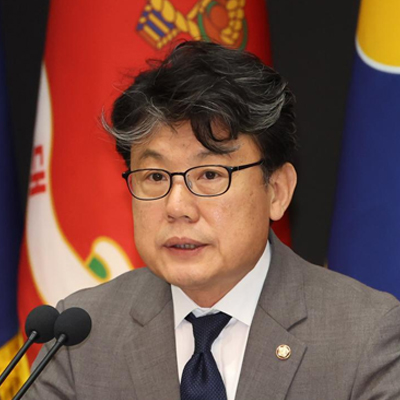
진성준 국회 국방위원장이 자신의 미국 비자 신청이 거부됐다는 사실을 공개했다.

아랑곳
칼럼
cosign
Jin Sung-joon, Chairman of the National Defense Committee, denied US visa

0
2026. 10. 31
- 더불어민주당 진성준 국방위원장의 미국 비자 거부는 정청래 의원 사례에 이은 연속적 조치로, 단순한 개인 비자 문제가 아닌 한미 관계의 미묘한 이상 기류를 나타낸다.
- 미국은 과거 반미 전력이 있는 민주당 중진 의원들의 방미를 막음으로써, 동맹 신뢰성에 대한 선별적 관리 의도를 드러내며 한국 특정 정치 세력에 대한 경고 메시지를 보내는 것으로 해석된다.
- 이는 동맹의 근본을 흔드는 고강도 제재는 아니지만, 한국 국회의 공식 의정 활동을 가로막는 정치적 신호로 작용하여 국내 여야 간 대미 외교 실패 공방을 증폭시키고 있다.
- 미국이 비자 심사를 통해 동맹 내 특정 정치 세력에 대한 '길들이기'를 시도한다는 국내 해석이 지배적이며, 이는 한미동맹이 군사적 협력을 넘어 정치적 신뢰와 상호 존중의 문제로 재정의되고 있음을 시사한다.
The meaning of the continuous signals following Jeong Cheong-rae and the unusual atmosphere between South Korea and the US
On October 28, 2026, Jin Sung-joon, a member of the National Assembly's National Defense Committee belonging to the Democratic Party of Korea, publicly announced that his US visa application had been denied, causing a stir in both political circles and diplomatic authorities. He was scheduled to lead a delegation from the National Defense Committee to the US from November 1 to 5 to visit the US Indo-Pacific Command in Hawaii and discuss ways to strengthen South Korea-US security cooperation and develop the alliance with key figures such as Commander Samuel Paparo, and the commanders of the Pacific Fleet and Air Force. The meeting schedule had already been confirmed, but he received a clear notification of 'Refused' from the US side. Through Facebook and a press release, Chairman Jin expressed strong regret, stating, "The US visa denial for a member of the National Assembly elected by the people of the Republic of Korea and the chairman of the National Defense Committee of an allied nation's parliament is an act that disregards the status of the National Assembly and undermines mutual respect and trust, which are the foundations of the South Korea-US alliance." He particularly pointed out that it was "even more difficult to understand this action" given that he had officially visited the same Pacific Command in March 2014, when he was a member of the 19th National Assembly's National Defense Committee. The visa applied for was an A-2 official visa for official duties.
This incident, coupled with the case of former Democratic Party leader Jeong Cheong-rae earlier this month, caused an even greater stir. Representative Jeong Cheong-rae, a member of the National Assembly's Foreign Affairs and Unification Committee, applied for a US visa for a parliamentary inspection of the Korean Embassy in the US, but the status remained 'Under Review' until just before his departure, effectively canceling his visit to the US and forcing him to change his itinerary to Europe. In Jin Sung-joon's case, it was perceived as a stronger measure because it was an explicit refusal, not a delay or hold. The opposition party launched an offensive, calling it an 'unprecedented situation, serious South Korea-US relations,' while the ruling party and some progressive forces expressed backlash, saying, 'Is this a repeat of taming Korea?' and 'Are they demanding blind obedience?' The Ministry of Foreign Affairs stated that individual visa screenings are handled confidentially in accordance with US domestic law and procedures, and that the process may not yet be fully concluded, adding that they are in close consultation with the US side. The US side did not disclose specific reasons.
Both Jin Sung-joon and Jung Chung-rae are veteran members of the Democratic Party, and it is suggested that their past anti-American activities may have influenced their visa applications. Jin Sung-joon was convicted of violating the National Security Act in 1989 for allegedly leading an organization called 'Uibyeonghoe' within the army during his military service. The verdict at the time reportedly contained statements that viewed the U.S. forces that entered Korea immediately after the August 15 liberation as 'occupying forces stationed in the southern part of the Korean Peninsula,' the South Korean military as imperialist mercenaries whose operational control was seized by the U.S. military, and the U.S. Forces Korea as an obstacle to unification that posed a military threat to North Korea. It also included claims that North Korea's support was necessary for a nationwide armed revolution. His sentence was commuted by the Army High Military Court and he was later pardoned, but the U.S. reportedly requested the submission of related court records. Jung Chung-rae also has a history of anti-American protests and incidents related to the U.S. Embassy in the 1980s, and despite having visited the U.S. in the past, his visa was denied this time. Former U.S. diplomat Henry Haggard described it as 'very unusual' for official visits by South Korean lawmakers to be disrupted by visa issues, suggesting that the review of applicants with criminal records may have been applied more strictly than before. However, he also pointed out that blocking an official visit is unusual.
The intensity of this measure can be assessed as quite high from a symbolic and political perspective. The refusal of a courtesy visa for the chairman of a key ally's parliamentary defense committee, leading an official delegation to visit a core U.S. military command, is seen as more than just an individual entry restriction; it's perceived as an obstruction of official parliamentary activities. Domestically, the 'unusual ROK-U.S. dynamic' narrative has strengthened, with the opposition interpreting it as a sign of the current government's diplomatic failure with the U.S., and some members of the ruling party viewing it as unilateral pressure from the U.S., leading to ongoing debate. Conversely, in terms of practical alliance operation, its impact is limited. Meetings through government channels, such as between Defense Minister Kang Shin-chul and U.S. Secretary of War Pete Hegseth, are proceeding separately, and broader military cooperation, including discussions on OPCON transfer and SCM schedule adjustments, is being maintained. While there have been scheduling disruptions, such as the SCM being held across two years for the first time in 28 years, these are separate issues not directly linked to the visa problem. Ultimately, this incident can be seen not as a high-intensity sanction that shakes the foundations of the alliance, but rather as a 'strong signal' that fuels controversy over trust erosion and amplifies domestic political debate.
The interpretation that this is a form of 'conditioning,' given that it's a consecutive case following Jeong Cheong-rae, gains credibility. Both individuals are key figures in the Democratic Party and share a history of anti-American and progressive activities. This suggests an intention by the U.S. to selectively manage the alliance reliability of specific political factions through visa screening. The fact that visits previously possible were blocked this time, and that the intensity escalated from Jeong Cheong-rae (delay/hold) to Jin Sung-joon (explicit refusal), is difficult to view as mere coincidence. This situation is intertwined with a deepening 'unusual ROK-U.S. dynamic' since the inauguration of the current Lee Jae-myung government, compounded by issues such as the pace of OPCON transfer, disagreements over alliance operation methods, past and present stances of some progressive figures, and visa/status issues related to the National Intelligence Service. While the U.S. typically maintains a stance of 'case-by-case review, national security first,' domestic interpretations that blocking key figures of official delegations consecutively carries a political message beyond administrative disruption are gaining traction.
It is difficult to definitively determine the United States' intentions towards South Korea, as the official reasons have not been disclosed. There are two main possible interpretations. The first is a technical and legal tightening. This could be the result of stricter scrutiny applied to individuals with security-related criminal records, such as violations of the National Security Act. The U.S. has stated that it prioritizes national security and public safety in visa screenings and reviews all applications individually. A former U.S. diplomat also considered this more likely but noted that blocking an official visit is unusual. The second is a political signal and leverage. By preventing visits to the U.S. by Democratic figures with specific backgrounds, it sends a message questioning their reliability as an allied partner while also serving as a low-cost means of pressure. The latter interpretation is gaining traction in South Korea, given that it is selectively applied rather than uniformly to all Korean officials. It cannot be ruled out that disagreements surrounding the transfer of wartime operational control (OPCON), the direction of North Korea policy, and past remarks by some individuals since the inauguration of the Lee Jae-myung administration may have provoked U.S. caution.
This issue is being perceived as more than just a personal visa problem; it symbolizes a subtle crack in the ROK-U.S. relationship. In domestic politics, the ruling and opposition parties are engaging in a battle of different narratives, attempting to capitalize on the situation politically, and diplomatically, the controversy over damaged trust is likely to persist. As discussions with the Ministry of Foreign Affairs continue, attention is focused on how further developments will unfold. Along with discussions on OPCON transfer, SCM schedules, and issues related to the National Intelligence Service, this incident is expected to remain a major issue in domestic politics and diplomacy for some time. If the U.S. continues to express its caution towards specific political forces through soft power like visas while maintaining the alliance, there is also room for the debate over sovereignty and autonomy to further expand within South Korea. Ultimately, the essence of this incident lies in the reinterpretation of the ROK-U.S. alliance as a matter of political trust and mutual respect, beyond just a military cooperation relationship.
댓글
( 0 / 500 )
kang5
9
동맹이라는 이름이 일방적인 기준과 복종을 요구하는 수단이 되어서는 안 됩니다. 대한민국 국회의원이 공식적인 의정활동을 위해 미국을 방문하는 일조차 제약받는다면 그 자체로 심각한 문제입니다. 동맹일수록 서로의 주권과 자존심을 존중해야 합니다.
( 0 / 500 )
박진주
7
비자 발급으로 일단락되었지만 정청래 의원에 이어 진성준 위원장까지 비슷한 상황을 겪었다는 점은 그냥 지나칠 일이 아닙니다. 중요한 것은 미국의 의중을 추측하는 데 그치지 않고 실제 외교 현장에서 확인하는 것입니다. 진 위원장이 대한민국의 안보 주권과 국익을 중심에 두고 충실한 협의를 하고 돌아오기를 기대합니다.
( 0 / 500 )
kanaria
7
동맹은 한쪽이 다른 쪽에 복종하는 관계가 아니다. 대한민국 국민이 선출한 국회의원이 공식적인 의정활동을 위해 방문하는데 비자 문제로 제동이 걸렸다면 미국은 그 사유를 명확히 설명할 필요가 있다. 안보를 이유로 하더라도 동맹국에 대한 최소한의 예의와 상호 존중은 지켜야 한다.
( 0 / 500 )
moon82
6
비자가 뒤늦게 발급된 것은 다행이지만, 애초에 왜 이런 상황이 발생했는지에 대한 의문은 여전히 남습니다. 단순한 행정 절차였다면 그 과정과 기준을 설명할 수 있어야 합니다. 동맹국 국회의 공식 활동이 불필요한 논란에 휘말리지 않도록 양국의 외교적 소통이 필요합니다.
( 0 / 500 )
大東
5
정청래 의원에 이어 진성준 의원까지 비자 문제에 부딪혔다면 우연인지 의도된 신호인지 면밀히 살펴야 합니다. 미국의 안보 심사 권한은 존중하더라도 대한민국의 외교적 위상과 국회의 권한까지 가볍게 취급해서는 안 됩니다.
( 0 / 500 )
五感滿足
4
미국이 과거의 정치적 행적을 문제 삼는다면 그 기준부터 명확히 해야 합니다. 대한민국은 미국의 승인을 받아야만 자주적인 외교와 안보 정책을 펼칠 수 있는 나라가 아닙니다. 동맹은 상호 신뢰 위에서 유지되어야지 일방의 평가와 통제로 유지되는 것이 아닙니다.
( 0 / 500 )
youngsoo
4
이번 일을 통해 한미동맹의 의미를 다시 생각하게 됩니다. 동맹은 미국의 안보 전략에 한국이 일방적으로 맞추는 관계가 아닙니다. 전작권 전환이나 대북 정책 등 서로 견해가 다른 사안도 당당하게 논의할 수 있어야 합니다. 이번 방미가 상호 존중을 확인하는 계기가 되기를 바랍니다..
( 0 / 500 )
minho7
3
결국 비자가 발급되었군요. 다행스러운 일이지만 처음부터 원만하게 처리될 수 있었던 사안이 왜 막판까지 이어졌는지는 짚어볼 필요가 있습니다. 정청래 의원에 이어 진성준 위원장까지 비자 문제가 불거진 과정은 한미 간 외교적 소통과 신뢰의 현주소를 돌아보게 합니다
( 0 / 500 )
nara87
3
이번 사건에서 우리가 주목해야 할 것은 진성준 개인의 미국 방문 여부가 아니다. 대한민국의 외교와 안보 정책을 스스로 결정할 수 있는 국가인가 하는 문제다. 한미동맹은 소중하지만 동맹을 유지하기 위해 우리의 주권적 판단까지 양보해서는 안 된다. 이제는 동맹의 이름으로 무엇을 요구받고 있는지 냉정하게 살펴볼 때다.
( 0 / 500 )
liberal
2
이재명 정부가 전작권 전환과 자주국방을 추진하는 과정에서 미국의 불편한 기류가 나타나는 것은 아닌지 냉정하게 분석할 필요가 있습니다. 동맹을 훼손하지 않으면서도 우리의 국익과 주권을 지키는 것이 진정한 외교입니다. 무조건적인 저자세가 능사는 아닙니다.
( 0 / 500 )
rarara
1
비자 발급으로 일단락되었다고 해서 이번 사안의 의미까지 사라지는 것은 아닙니다. 공식 방미단의 국방위원장이 출국 직전까지 입국 문제를 겪었다는 사실 자체가 남았습니다. 양국은 동맹이라는 이름에 걸맞게 상호 존중과 신뢰가 무엇인지 다시 생각해야 합니다.
( 0 / 500 )
신고내용
신고내용을 선택해주세요
회원비난/비하/욕설글 및 댓글도배성 게시물저작권 침해/불법자료 유출허위사실유포개인정보 유출.사생활 침해무단광고/홍보음란물 및 도박 불법 광고물범죄행위 관련 글불법행위 관련 소개물품 판매 및 사기글악성코드 및 스파이웨어 유포기타 사유 및 운영진 판단


비밀번호를 잊으셨나요?
Sign in with Google


All information provided by us is free of charge and is for the public good.