品

Corea든 Korea든, 품격은 이름보다 먼저다
Whatever the name—Corea or Korea—dignity comes first.
Whatever the name—Corea or Korea—dignity comes first.
Now
지금
751 Diaspora
Heritage
유산
Humanity
인문
Mirengsi
未冷尸
Politics
정치
Media
언론
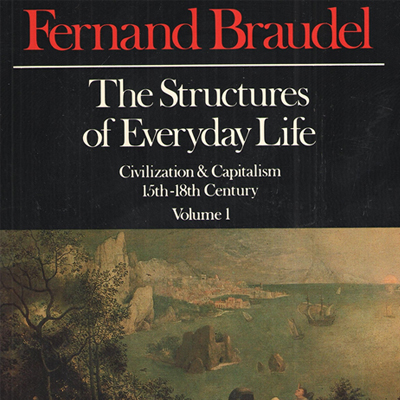
아날학파들은 진리는 전체라고 믿는 사람들이다. 그들은 ‘전체사(histoire totale)’와 학제 간 연구를 원한다.

아랑곳
칼럼
baba77
The methodology for North Korean studies should be found in the Annales School.

0
2026. 10. 05
- 이 글은 북한 연구가 김일성 어록 등 표면적 자료에만 치중하는 '내재적 접근'의 한계를 지적하며, 프랑스 아날학파의 방법론을 대안으로 제시합니다.
- 아날학파는 사건 중심의 역사 서술을 비판하고, 지리, 사회, 경제, 심성 등 다양한 요소를 통합적으로 분석하여 역사의 근본적인 구조와 장기적 흐름을 파악해야 한다고 주장합니다.
- 필자는 북한의 현실을 이해하기 위해서는 수령의 발언이 아닌 지리적 제약, 경제적 국면, 주민의 심성, 국제적 종속성 등 다층적이고 구조적인 접근이 필수적임을 강조하며, 기존 북한 연구의 위선과 무능을 강하게 비판합니다.
- 결론적으로, 북한 연구는 표면적인 문헌 해석을 넘어 아날학파의 관점에서 북한 사회의 심층적 구조와 맥락을 탐구하는 '문제사'적 접근으로 전환해야 한다는 강력한 메시지를 전달합니다.
Braudel, the great French historian, a representative of the Annales School, despises Rankean positivist historians who are confined to archives, transcribing the sayings of kings and calling that history. One must understand how hypocritical and fictitious it is to transcribe the sayings of Kim Il-sung, the king of the fake North Korean socialist state, and to transcribe documents published by Kim Il-sung's subordinates, calling it an "immanent approach." The immanent approach is closer to document worship, borrowing the name of methodology. It is the act of entering the leader's self-narration under the pretext of understanding North Korea, and then translating that self-narration back into academic language. After the "immanent approach" introduced by Song Du-yul from Germany in the late 1980s became a trend in Korean North Korean studies, the "immanent critical approach" advocated by Lee Jong-seok, while shifting its emphasis slightly, has not entirely escaped the same trap. Nazism also has a self-contained logic of Aryan nationalism and the concept of Lebensraum, and the Greater East Asia Co-Prosperity Sphere could also have legitimacy from an internal Japanese perspective. If one first acknowledges only the internal logic of a system and then criticizes it from that basis, the criticism always comes a beat late and is one layer thin.
The Annales School detests Rankean positivism, which dominated historiography, that is, "event history (histoire événementielle)" which describes events chronologically, focusing on states, wars, diplomacy, and great figures. The Annales School criticizes such historians for being misled by documents and failing to see the deep structures that define the majority of people in society and their lives. Editorials in the Rodong Sinmun, Kim Il-sung's collected works, party congress resolutions, and New Year's addresses are the crudest forms of event history. They are not history but the self-promotion of power, and meticulously annotating them is not the work of a historian but of a court scribe. The Annales School calls history "problem history (histoire-problème)." A historian should not be someone who collects historical materials and lists facts, but someone who formulates questions and searches for and interprets historical materials to answer those questions. Historical narrative is not storytelling but problem-solving. We must uncover why North Korea became a devilish cripple, not construct anything from the words that savage cripple utters. The question should change like this: not what the leader said, but why those words became the only audible frequency in society for decades. Not the sentences of Juche ideology, but what were the limits of geographical isolation, the wartime mobilization system, the repetition of famine, the rear supply chain of China and Russia, and what the residents "could think" that made those sentences possible.
The Annales School historians believe that truth is holistic. They advocate for 'total history' (histoire totale) and interdisciplinary research. They view society as a totality where politics, economy, society, and culture are intertwined, and to understand this, they actively adopt methods from geomantic human historical geography (Vidal de la Blache's human geography), sociology (Durkheim), economics, psychology, and linguistics. They expand the scope of historical sources beyond official documents to include land registers, parish records, price records, agricultural tools, place names, landscapes, and folk beliefs. Applying this to North Korean studies would overturn the hierarchy of historical sources. Instead of Kim Jong-un's on-site guidance, the gaps in distribution ledgers, market prices, defector migration routes, cross-border smuggling items, the altitude limits for corn and potato cultivation, the number of freezing days for the Yalu and Tumen Rivers, the mountainous terrain of Hamgyong Province, the plains of Pyeongan Province and the mouth of the Taedong River, logistics between Sinuiju and Dandong, and the Rajin-Khasan railway become more profound historical sources. Official documents are merely surface foam. The structure lies within the land, ships, bodies, and prices.
They speak of 'histoire des mentalités' (history of mentalities). This involves analyzing ethnicity, culture, and the limits of thought shared by an era. Its origins can be traced to Tocqueville's 'Democracy in America,' where he psychologically analyzed the excessive materialism, egalitarianism, and obsession with success among American immigrants. Bloch's 'The Royal Touch' (1924) analyzed collective ways of thinking through the phenomenon of the belief that the king's touch could cure scrofula, which persisted for centuries. Febvre's 'The Problem of Unbelief in the Sixteenth Century: The Religion of Rabelais' (1942) explored the limits of what people in a given era 'could think.' The greatest sin Febvre warned against was anachronism: not to project 20th-century atheism and rationalism onto the 16th century. The same warning is needed in North Korean studies. We must explore the limits of what North Koreans can think. Why does the leader remain like a healing king? Why does the language of rebellion not easily form even in the face of famine? Why does the phrase 'our style of socialism' swallow reality instead of explaining its collapse? The history of mentalities is not a device to sympathize with the residents. It is the work of deconstructing the Kim Il-sung myth into a structure of collective belief and asking how that belief is reproduced on the rhythm of fear, isolation, and rationing.
Fernand Braudel, who led the second generation of the Annales School, was the one who systematized the Annales methodology. His masterpiece, 'The Mediterranean and the Mediterranean World in the Age of Philip II' (1949), was largely conceived and written from memory in a German prisoner-of-war camp. Where there were no books, he thought of space, not documents. North Korean scholars like Lee Jong-seok and Seo Dong-man, with pre-modern diligence, scoured North Korean newspapers and documents, and their achievements earned them positions as Director and Chief of Staff of the National Intelligence Service. If artificial intelligence were tasked with organizing such North Korean official documents, it could complete in just 10 minutes what would take them 7-8 years, provided it is well-trained and the documents are made accessible. Intrinsic North Korean studies were impoverished, incompetent, and hypocritical. This was because they mistook the authority of document organization for the authority of methodology.
Braudel divides historical time into three layers. The deepest layer is 'longue durée'. This is geographical time, changing over centuries, almost static, like mountain ranges, plains, seas, climate, and natural transportation infrastructure. Braudel called this 'géohistoire', and believed that humans live within this structure and cannot easily escape its limitations. When politics is added to this, it becomes geopolitics. The northern part of the Korean Peninsula is, in itself, a prison of longue durée. High mountains, short summers, cold winters, limited arable land, and its location hanging at the back of the continent, unlike the south which is open to the sea. The Amnok and Duman rivers are both rivers and fences, and Baekdu and Gaema Plateaus are mountains of worship and at the same time walls that prevent movement. Pyongyang became the center of governance, situated in the lower basin of the Daedong River, but that center is merely the center of the northern basin, not the center of the entire Korean Peninsula. There is no need to dismiss feng shui as superstition. The human geography that Annales speaks of is precisely the study of the constraints and possibilities of that land. North Korea's isolation is not merely a choice of ideology, but the result of poor transportation, limited agricultural productivity, and dependence on continental powers that have long defined that land, now clothed in ideology.
The middle layer is the 'conjoncture'. It is a socio-economic time that moves in decades, like cycles of prices, population, production, and trade. North Korea's conjoncture has progressed through post-war reconstruction and heavy industry mobilization, foreign debt and trade isolation in the 1970s, the Arduous March in the 1990s, the spread of jangmadang (markets) and the penetration of dollar/yuan economies since the 2000s, and the deepening of sanctions against North Korea and dependence on China. If this conjoncture is explained by the leader's decisions, history becomes a myth. The real clock of the conjoncture is the decrease and aging of the population, nutritional status, chronic shortages of coal and electricity, resource allocation between military and civilian life, and the seasonality of border smuggling. The most superficial layer is the 'événement'. It is a short and dramatic time, like battles, treaties, and decisions of political leaders. Braudel compared events to foam or dust on the surface of the sea, arguing that while they are noticeable, they cannot explain the deep currents of history. The three-part structure of 『The Mediterranean』 (environment, destiny of groups, events) corresponds to these three layers. Nuclear tests, missile launches, party congresses, and summits are foam. This is not to deny the foam. It is to say, do not navigate by only looking at the foam without knowing the ocean currents.
In his late masterpiece, 『Civilization and Capitalism, 15th-18th Century』 (1979, 3 volumes), Braudel also divided economic activity into three layers. At the bottom is 'material life', consisting of the repetition of daily activities such as food, housing, clothing, and technology. Above that is the 'market economy', where transparent and competitive exchange takes place. And at the very top is 'capitalism', which gains profit through monopolies, long-distance trade, and finance. For Braudel, capitalism is not identical to the market economy; rather, it is an 'anti-market' realm that avoids market competition and is predatory. If North Korea is placed within this framework, official socialism largely loses its explanatory power. At the bottom layer, there is the material life of survival that continues even after the collapse of the rationing system. In the middle layer, there is an imperfect market formed by jangmadang, donju (private financiers), and smuggling. And at the very top, there is an anti-market predatory economy monopolized by party, military, and security agencies through foreign currency earning, privileged trade, and sanction evasion. The leader's economy is not socialism that denies the market, but a deformed anti-market that maintains a monopoly at the top while neglecting the market at the bottom.
Furthermore, Braudel expanded the national economy and domestic supply chains to the world, proposing the concept of 'économie-monde' (world-economy). This concept describes an economic space hierarchically connected with a central city as its axis, comprising a core, semi-periphery, and periphery. Venice, Antwerp, Genoa, Amsterdam, and London were at its center. This concept directly influenced Immanuel Wallerstein's world-system theory. If this concept is applied to Northeast Asia, North Korea is a wretched nation living as a subordinate system to China and Russia. Pyongyang is not the center of the world economy, and even Pyongyang's privileged class parasitizes on the logistics of Beijing, Moscow, and Dandong. The structure of exchanging coal, minerals, labor, and illegal transshipment for food, energy, parts, and foreign currency directly contradicts the term Juche. Juche is rhetoric that conceals long-term dependency. The moment an intrinsic approach seriously records that rhetoric, the research has already participated in the self-deception of the periphery.
Therefore, the task of North Korean studies is not the intrinsic reconstruction of Kim Il-sung's sayings. It is to tie together the constraints of the land, the rhythm of the climate, the cycle of hunger, the prices of the black market, the density of the border, the limits of mentality, and the position of the peripheral economy-world into a single problem. Annales treated kings and treaties as froth not because they ignored politics, but to see the ground on which politics stood. If North Korean studies still remain at annotating the leader's writings, it is not scholarship but an extension of the court. Documents can be organized by artificial intelligence. Historians must question the structures that those documents conceal. The methodology of North Korean studies must restart at that point, from the geographical history, mentalities history, and total history of the Annales School.
댓글
( 0 / 500 )
비단
8
북한 연구를 지도자의 발언과 공식 문헌 중심으로만 접근해서는 체제의 실체를 충분히 설명하기 어렵다는 지적에 공감합니다. 특히 지리·기후·식량·시장·국경 교역 같은 장기 구조를 함께 봐야 북한의 변화와 지속성을 제대로 이해할 수 있다고 봅니다.
( 0 / 500 )
joon73
7
브로델의 장기지속 개념을 북한 연구에 적용한 것이 흥미롭습니다. 핵실험이나 당 대회 같은 사건보다 식량 생산력, 교통망, 중국과 러시아에 대한 의존, 장마당의 확산 같은 구조를 먼저 살펴보자는 문제의식은 북한학의 시야를 넓혀줄 수 있겠습니다.
( 0 / 500 )
santa
6
다만 내재적 접근을 문헌 숭배와 동일시하는 데에는 조금 더 신중할 필요가 있다고 생각합니다. 체제 내부의 논리를 이해하는 것과 그것을 옹호하는 것은 다른 문제이기 때문입니다. 아날학파적 구조 분석과 내재적 접근을 대립시키기보다 서로 보완하는 방법론으로 발전시키는 것도 가능하지 않을까요.
( 0 / 500 )
moonlight
5
특히 북한 주민의 ‘심성’을 연구 대상으로 삼아야 한다는 부분이 인상적입니다. 수령의 선전 문구 자체보다 주민들이 왜 그것을 받아들이고, 때로는 믿는 척하며 살아가는지를 살펴봐야 합니다. 공포와 생존, 가족관계와 시장경제가 어떻게 정치적 의식을 형성했는지를 보는 것이 중요해 보입니다.
( 0 / 500 )
筆才
5
결국 북한을 이해하려면 김정은의 말을 북한 그 자체로 착각해서는 안 된다는 이야기로 읽힙니다. 산과 강, 농업과 인구, 국경과 물류, 장마당과 환율, 주민들의 생활세계까지 연결해서 봐야 합니다. 북한이라는 체제를 ‘말’이 아니라 ‘구조’로 읽자는 제안이 상당히 설득력 있습니다.
( 0 / 500 )
joongsub
5
브로델의 세 가지 시간 개념은 북한을 바라보는 데 상당히 유용해 보입니다. 지도자의 교체나 미사일 발사 같은 사건보다 산악지형과 농업조건이라는 장기구조, 장마당과 대외교역이라는 중기변화를 함께 놓고 보면 북한의 변화가 훨씬 입체적으로 보일 것 같습니다.
( 0 / 500 )
nahyun89
4
북한의 폐쇄성을 단순히 김일성·김정일·김정은의 독재적 선택만으로 설명하는 것도 한계가 있습니다. 지정학적 위치와 전쟁 경험, 중국·러시아와의 관계, 식량과 에너지 문제까지 겹쳐 있다는 점에서 체제의 구조적 조건을 함께 분석해야 한다는 주장에 공감합니다.
( 0 / 500 )
한상길
4
북한 연구가 문헌의 양으로 학문의 깊이를 증명하던 단계에서 벗어날 필요가 있다는 주장에는 일리가 있습니다. 다만 문헌을 버리는 것이 아니라 문헌을 구조 분석의 한 자료로 위치시켜야 할 것입니다. 결국 중요한 것은 자료의 양이 아니라 어떤 질문을 던지고 무엇을 설명하느냐라고 봅니다.
( 0 / 500 )
강남77
2
북한을 연구하면서 북한 당국이 생산한 자료에 지나치게 의존하면 결국 북한이 자신을 설명하는 방식에서 벗어나기 어렵습니다. 공식 담론과 실제 주민생활 사이의 간극을 측정하는 것이 오히려 중요한 연구 과제가 아닐까 합니다.
( 0 / 500 )
Ellie
2
심성사적 접근이 북한 연구에서 특히 중요하다고 생각합니다. 주민들이 무엇을 믿는가만 묻기보다 무엇을 믿지 않으면 살아가기 어려운가를 물어야 합니다. 공개적인 충성과 내면의 생각 사이에 존재하는 거대한 간극까지 연구 대상으로 삼아야 북한 사회가 보일 것입니다.
( 0 / 500 )
신고내용
신고내용을 선택해주세요
회원비난/비하/욕설글 및 댓글도배성 게시물저작권 침해/불법자료 유출허위사실유포개인정보 유출.사생활 침해무단광고/홍보음란물 및 도박 불법 광고물범죄행위 관련 글불법행위 관련 소개물품 판매 및 사기글악성코드 및 스파이웨어 유포기타 사유 및 운영진 판단


비밀번호를 잊으셨나요?
Sign in with Google


All information provided by us is free of charge and is for the public good.