品

Corea든 Korea든, 품격이 먼저다
Whether Corea or Korea, dignity comes first.
Whether Corea or Korea, dignity comes first.
Now
지금
751 Diaspora
Heritage
유산
Humanity
인문
Mirengsi
未冷尸
Politics
정치
Media
언론
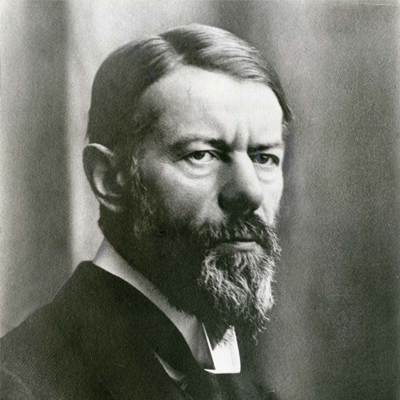
막스 베버(Max Weber, 1864~1920)는 칼 마르크스, 에밀 뒤르켐과 함께 현대 사회학을 정립한 거장으로 꼽히는 독일의 사회학자이자 정치경제학자다.

정책 이슈
칼럼
baba77
The Return of the Nation-State and the Economics of National Interest

0
2026. 11. 12
- While the influx of migrant workers brings short-term economic benefits, it can lead to a weakening of national identity and increased social costs in the long run.
- Max Weber interpreted economic phenomena not merely through market logic, but as a power struggle between nations based on human will to power and collective cultural consciousness.
- National policy, guided by 'ethics of responsibility,' must prioritize the long-term interests of its citizens and the nation's survival, which simultaneously demands adherence to the two principles of 'national interest' and 'guaranteeing immigrant human rights.'
- The issue of migrant workers requires strategic decisions that consider the nation's sustainable development and security, going beyond humanitarian concerns or corporate cost calculations.
- President Lee Jae-myung's remarks should be interpreted not as narrow xenophobia, but as a realistic perspective centered on national interests.
The 'Migrant Worker' Debate Through the Lens of Max Weber
In 476 AD, the person who deposed Romulus Augustulus, the last emperor of the Western Roman Empire, was not a conqueror who invaded from beyond the borders. It was Odoacer, a Germanic officer in the Roman army. Rome did not fall because its walls collapsed, but because it entrusted the defense of its walls to others. The father of the last emperor, Orestes, was a Germanic Roman from Pannonia, who once worked as a secretary (notarius) in Attila's court.
In the late empire, as the population declined and rural areas emptied due to plagues and wars, Roman landowners accepted Germanic immigrants from the border regions to cultivate their lands. The Germanic people had a 'Roman Dream.' The wealthy empire hired Germanic tribes as 'allies (foederati)' instead of expensive citizen soldiers. The Goths crossing the Danube in 376 with Emperor Valens' permission was also a calculation by the empire, which desired labor and military forces. However, the Goths, suffering from exploitation, rebelled, and Emperor Valens died in the Battle of Adrianople in 378. Landowners gained cheap labor, and the state gained cheap military forces. While the tasks of cultivating land and guarding the borders passed to those who were not assimilated into the empire, Rome gradually lost its ability to defend itself. Alaric, who sacked Rome in 410, was also once a commander of allied forces hired by Rome. The Western Roman Empire collapsed after decades of these accumulated 'convenient choices.'
I have long supported the influx of foreign labor. I believed that opening our doors in the face of a demographic cliff was a rational choice for an open economy like South Korea. What changed my mind was Germany. When I was working at the German Chamber of Commerce, I told a German corporate director that I respected Germany's decision to accept Syrian refugees. He replied, “Hwang, you're naive. It's not so much a human rights issue as it is about securing cheap labor.” In 2015, Daimler CEO Dieter Zetsche said that if refugees were well-received, it could lay the foundation for the next economic miracle, just as Gastarbeiter led West Germany's revival. It resembled the calculations made by Roman landlords. Ten years later, Germany is experiencing growth stagnation and social conflict. In this scene, I reread Max Weber's warning from 130 years ago.
I believe Max Weber saw more deeply than Karl Marx. Weber did not interpret economic phenomena solely through economic variables such as market and labor organization, and productivity. He analyzed economics through human psychology, the cultural consciousness that expands into groups, and human pride stemming from Nietzschean will to power. Deeply influenced by Nietzsche, Weber saw through that at the pinnacle of knowledge lies not truth but will to power, and at the pinnacle of money lies not wealth but will to power. This is because every human being living a finite time wishes to become the alpha chimpanzee in the forest, or more elegantly, a lone wolf commanding the pack, or more philosophically, Zarathustra's Übermensch who proclaimed, 'Man is something that must be overcome.' Even the CEO of the world's largest company could not escape this biological power instinct. For Weber, economics was not the realm of merchants clicking abacus beads, but the realm of power struggles between individuals, between groups, and between nations. It is perfectly natural for a nation to pursue its national interests. For a nation to pretend to be good is an excellent way to pursue national interests through the means of international public opinion, but for a nation to actually be good is foolish. That is the nature of a nation.
In the 1890s, Weber criticized the Junker landowners east of the Elbe River. For the Junkers, Polish seasonal workers were the most 'rational' labor force, being cheap and requiring no responsibility. However, German agricultural workers left for the west and the New World, and the eastern rural areas became empty. Large farms survived by relying on cheap labor instead of innovation. Weber warned that if this trend continued, the eastern region would become Polonized, and Germany's identity would be shaken. He argued that the Junkers' short-term interests infringed upon the nation's long-term interests. He proposed a 'internal colonization' policy to close the eastern border to seasonal workers and have the state purchase large farms to settle independent farmers. This resembles the farmland survey and agricultural reforms promoted by the Lee Jae-myung administration.
In his inaugural lecture at the University of Freiburg in 1895, "The Nation-State and National Economic Policy," Weber went a step further. As a descriptive and analytical discipline, economics has no borders. However, the moment a value judgment is made on policy, that judgment is inevitably bound by the criterion of the interests of one's own nation. Weber is often remembered only as a proponent of 'value neutrality,' but the value neutrality he demanded was limited to academic analysis. Moreover, Weber believed that even scholarship becomes entangled with values from the moment one chooses what to research. Perfect value neutrality, he argued, exists only in theory. State policy is a choice, and choices require criteria. And in a nation-state, Weber's position was that these criteria are the long-term survival and power of the state. In the same lecture, he said that what we should pass on to our descendants is not merely peace and comfort to be enjoyed, but an endless struggle for the survival and development of the nation. He also said that it is not time that makes a person old, but that one is young as long as one can feel great passion. The same applies to a nation. However, our country is now rapidly aging.
Weber was a thorough political realist. In his late lecture, "Politics as a Vocation" (1919), he borrowed from Machiavelli, citing citizens who valued the greatness of their homeland Florence more than the salvation of their own souls as exemplars for politicians. He then divided political ethics into two types: 'ethics of conviction,' which justifies oneself through the purity of one's intentions, and 'ethics of responsibility,' which takes responsibility for the consequences of one's actions. Individuals can live by the ethics of conviction, but those responsible for the nation must be judged by the ethics of responsibility. Even if a door is opened with good intentions, if the community weakens as a result, it is a failure for which the politician must take responsibility. Weber's framework still applies to Germany today. In 2015, companies calculated their own ledgers. However, the integration of the labor market took much longer than expected. According to the German Institute for Employment Research (IAB), the employment rate of Syrian refugees reached only 61% seven years after their arrival, with a clear gap between men (73%) and women (29%). In the meantime, local governments and taxpayers bore the costs of language education, housing, and welfare. Profits were privatized, and costs were socialized. Ruud Koopmans, a Dutch migration researcher, points out that while a group that arrived at a specific time might eventually pay more in taxes than they cost, if all refugees, including new arrivals, are considered, the finances remain in deficit.
The stagnation of the German economy is the result of a combination of factors, including the energy crisis, competition with China, and delays in digital investment. However, my assessment is that underlying this is an industrial practice that has postponed productivity innovation by relying on the supply of cheap labor. Cultural conflicts also stem from the same root. As the Swiss writer Max Frisch said about the Gastarbeiter era, 'We called for labor, and people came.' A society that calculates people only as factors of production, not as members of the community, ends up paying the cost of integration belatedly and more expensively. Roman landlords, Prussian Junkers, and German entrepreneurs in 2015 made the same calculation. It was rational for their immediate ledgers. However, the bill on the last page of that ledger was always received by the state.
President Lee Jae-myung stated at a cabinet meeting on October 27 that foreign workers, even if brought in to work, remit their wages to their home countries, which does not significantly benefit the national economy. The word 'all' is an exaggeration. In a 2025 survey, the proportion of remittances to income for non-professional employment (E-9) foreigners was 56.5%. However, the question raised by this remark has the same structure as Weber's question.
First, there is a discrepancy between private costs and social costs. It is rational to use migrant workers where there is a labor shortage. However, if low-wage labor continues to be supplied, the incentive to invest in mechanization and economies of scale weakens, and a low-productivity structure becomes entrenched.
Second, there is the regional circulation of income. Remittance is a legitimate right. However, if the goal is to address rural decline, the short-term rotational employment permit system is designed to prevent settlement. The limited contribution to the region is a result of the system.
Third, there is food security. If agriculture is viewed as a security industry, entrusting core labor to the policies of sending countries itself is a vulnerability. The experience of seasonal workers being blocked from entering during the pandemic demonstrates this.
After the Cold War, the zeitgeist of globalization taught that everyone benefits if labor and capital flow to where they are most efficient. That era is fading. Amidst the US-China hegemonic competition, semiconductors, food, and energy are once again discussed in the language of security. The US, China, and Europe have all turned to self-centered industrial policies. The standard of 'national interest' that Weber spoke of has once again become central to international politics.
In this era, immigration policy cannot be judged solely on humanitarian grounds or corporate cost calculations. Deciding who to accept, how many, and under what conditions is a strategic decision for national interest. This falls under the ethics of responsibility, not the ethics of conviction. Nationalism and national interest are inherently core agendas of conservative parties. For the People Power Party to criticize President Lee Jae-myung on this issue is a comedy. President Lee Jae-myung's remarks should be interpreted not as narrow xenophobia, but as an expression of realism that thinks in terms of nation-states. The 'nation' referred to here is not limited to bloodline. It encompasses the entire community that works together, pays taxes, and shares a future in this land. It is the sum total of people who share the destiny of the nation and possess both rights and responsibilities.
Basing decisions on national interest does not mean that the human rights of migrant workers become conditional. While the decision to allow entry is a matter of national sovereignty, once a person is accepted, their rights are not subject to negotiation. Labor without guaranteed rights is cheap labor, and cheap labor delays innovation. Discriminated immigrants return as a cost to social integration. We must remember what happened when Rome failed to embrace its allies as citizens and only used them as mercenaries. A cold calculation of national interest demands strict selection when opening the door, and a clear guarantee of rights once inside.
It is a legitimate policy question to ask who benefits from reliance on migrant labor and what it leaves for the nation in the long term. What Korea needs now is not individual ledgers, but politics that lays out a sustainable national balance sheet. That is the warning Weber left 130 years ago, and it is the standard we must hold onto again in an era of declining globalization.
댓글
( 0 / 500 )
do_hyun
7
이 글의 핵심은 이주노동자를 반대하자는 것이 아니라 값싼 노동력에 의존하는 경제구조가 국가의 장기적 경쟁력을 훼손할 수 있다는 경고라고 생각합니다. 기업의 단기적 이익과 국가의 지속 가능한 미래를 구분해야 한다는 베버의 통찰이 지금 우리에게도 유효합니다.
( 0 / 500 )
냥냥이님
5
노동력 부족을 외국인 노동자 유입으로만 해결하려는 것은 근본적인 대책이 아닙니다. 농업의 기계화와 생산성 향상, 청년층의 유입, 지역 정착 기반을 함께 고민해야 합니다. 이주노동자는 경제의 수단이 아니라 권리를 가진 사회 구성원이라는 점도 잊지 말아야 합니다.
( 0 / 500 )
edu91
5
세계화의 시대가 저물고 국가 간 경쟁이 다시 치열해지는 상황에서 국익을 중심으로 이주정책을 재설계하자는 주장은 충분히 설득력이 있습니다. 다만 국익이라는 명분이 인권을 침해하는 구실이 되어서는 안 됩니다. 엄격한 정책 설계와 철저한 권리 보장이 함께 가야 합니다.
( 0 / 500 )
purple
3
로마와 프로이센, 현대 독일의 사례를 통해 단기적인 경제적 편익이 장기적인 국가적 부담으로 전환되는 과정을 짚은 점이 인상적입니다. 기업은 이익을 계산하지만 국가는 공동체의 미래까지 계산해야 합니다. 지금 우리 정치가 반드시 고민해야 할 문제입니다.
( 0 / 500 )
바람
4
이재명 대통령의 발언을 단순히 반이민 정서나 배외주의로 몰아가는 것은 문제의 본질을 놓치는 일입니다. 외국인 노동력이 누구에게 이익을 주고, 그 비용과 편익이 사회 전체에 어떻게 배분되는지 따져보자는 것입니다. 국익과 인권, 경제적 효율성과 사회적 책임을 함께 다루는 성숙한 논쟁이 필요합니다.
( 0 / 500 )
Pink6
3
값싼 노동력은 기업에는 비용 절감이지만 국가에는 산업구조의 후퇴가 될 수도 있습니다. 당장의 인력난을 해결하는 데 급급하기보다 왜 국내 노동력이 농업과 제조업을 떠나는지, 생산성을 높일 방법은 무엇인지부터 따져야 합니다. 국가경제를 장기적인 관점에서 바라보라는 지적에 공감합니다.
( 0 / 500 )
김길규
3
이주노동자 문제를 선악의 구도로 접근해서는 답을 찾을 수 없습니다. 인도주의도 중요하고 기업의 현실도 이해해야 하지만, 무엇보다 국가의 지속 가능성이 정책 판단의 중심에 있어야 합니다. 국익을 따지는 것과 이주민의 인권을 존중하는 것은 결코 모순되지 않습니다.
( 0 / 500 )
타미르
2
베버의 책임윤리를 오늘날 이주노동 정책에 적용한 관점이 의미 있습니다. 정책은 좋은 의도만으로 평가받는 것이 아니라 실제로 어떤 결과를 낳았는지에 따라 평가받아야 합니다. 저임금 노동력 확보에 안주하면서 농업의 구조개혁을 미룬다면 그 책임은 결국 국가와 국민에게 돌아올 것입니다.
( 0 / 500 )
big_brother
1
대한민국이 인구절벽과 지방소멸을 동시에 겪고 있는 지금, 외국인 노동력은 단순한 인력 수급의 문제가 아닙니다. 지역사회에 정착할 사람을 받아들일 것인지, 일정 기간 일하고 떠나는 노동력으로 활용할 것인지 국가적 방향부터 정해야 합니다. 제도 없이 사람만 받아들이는 정책은 지속 가능하지 않습니다.
( 0 / 500 )
신고내용
신고내용을 선택해주세요
회원비난/비하/욕설글 및 댓글도배성 게시물저작권 침해/불법자료 유출허위사실유포개인정보 유출.사생활 침해무단광고/홍보음란물 및 도박 불법 광고물범죄행위 관련 글불법행위 관련 소개물품 판매 및 사기글악성코드 및 스파이웨어 유포기타 사유 및 운영진 판단


비밀번호를 잊으셨나요?
Sign in with Google


All information provided by us is free of charge and is for the public good.