品

Corea든 Korea든, 품격이 먼저다
Whether Corea or Korea, dignity comes first.
Whether Corea or Korea, dignity comes first.
Now
지금
751 Diaspora
Heritage
유산
Humanity
인문
Mirengsi
未冷尸
Politics
정치
Media
언론
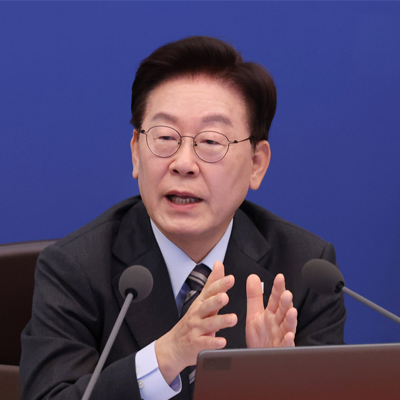
외국인 노동자 관련 대통령 발언 논란은 사실 자체가 아닌 진영 논리에 따라 해석이 극명하게 갈리며, 이는 정치 혐오와 냉소를 심화시키는 주된 원인이다.

정책 이슈
칼럼
wonderboy
President Lee Jae-myung's remarks and the media's frame war

0
2026. 10. 29
- The controversy surrounding the President's remarks on foreign workers is not about the facts themselves, but rather a stark division in interpretation based on partisan logic, which is a primary cause of deepening political animosity and cynicism.
- The President's remarks were intended as a practical policy to increase domestic employment to resolve unemployment and stimulate domestic consumption, but they were framed as hate speech due to distorted reporting by certain media and selective interpretation by different factions.
- Partisan logic selectively picks and chooses even identical statistics and policy proposals to its advantage, creating "two truths," and in this process, the complete restoration of facts and practical policy discussions disappear.
- Ultimately, policy discussions devolve into a "power play" prioritizing partisan interests and identity over factual consistency, hindering the resolution of practical issues like domestic employment and stimulating domestic consumption.
- To reduce political animosity and solve practical problems, it is essential to have practical standards and fact-based verification beyond partisan logic, and accurate reporting by the media and rational judgment by citizens are crucial.
What we need is practicality, not tiptoeing around. The reason why the same statements and statistics are interpreted by one side as 'hatred' and by the other as 'legitimate policy judgment' is not because the facts are different, but because their political alignments are different. Factional logic can make the same data appear as both truth and falsehood, fostering hatred and cynicism towards politics itself in the process. President Lee Jae-myung's remarks regarding foreign workers at the State Council meeting on October 27, 2026, and the subsequent reports, rebuttals, and criticisms, clearly illustrate this structure.
The President, while discussing labor shortages in agriculture and livestock farming, said, “Even if we bring in foreign workers, it doesn’t significantly help the national economy because they send all their money home.” He then suggested that the government consider ways to increase domestic employment, even if it means subsidizing labor costs. The focus of his remarks was on resolving domestic unemployment, revitalizing domestic demand, and finding realistic solutions for rural labor shortages. His subsequent clarification on X was even clearer: “Considering their economic contribution, such as solving unemployment, promoting consumption, and boosting domestic demand, foreign workers who send money abroad do help the domestic economy, but they do not help 'significantly' more than domestic workers. Therefore, we should devise ways to increase domestic employment through labor cost subsidies.”
It was argued that criticizing the statement by assuming it meant 'not helpful' was excessive, despite the clear comparative nature of the remark within its context. It was a practical judgment that, in a situation of severe unemployment, domestic employment, which benefits the domestic economy more significantly, should be increased even through financial support. The Blue House also countered that it was inappropriate to cut off the context and lead to controversy over xenophobia.
However, some media outlets published headlines that omitted the word 'significantly,' reporting it as 'Foreign workers do not help the national economy.' Hankyoreh revised the headline after the President's request for correction and apology, but the frame that had already been established quickly spread into hate speech. Migrant worker organizations and some progressive parties and unions defined it as discrimination that would likely come from the far-right, criticizing that questioning remittances itself was a stigma. The Korean Confederation of Trade Unions condemned it as discriminatory, stating that the economic value created by migrant workers amounts to tens of trillions of won, and the Justice Party and others also took issue with the attitude of criticizing workers for remitting their wages. Conversely, those who supported the President believed that the media intentionally distorted the facts to destabilize the government. The same sentence, the same statistics, and the same policy proposal are interpreted by one side as a regression of human rights and multiculturalism, and by the other side as an attempt to protect domestic employment and domestic demand.
This difference stems not from a difference in facts, but from the interpretive rules of each camp. For one camp, emphasizing the contribution of foreign workers and reacting sensitively to discrimination frames is part of their identity. Therefore, even a comparison like 'not significantly helpful' sounds dangerous, and the exaggerated expression 'all remittances' immediately becomes evidence of hatred. For the other camp, prioritizing domestic unemployment, labor shortages in rural areas, and the outflow of wages abroad is their identity. Therefore, they emphasize comparative rhetoric, highlight media manipulation of headlines, and defend the policy intent of the remarks. Each camp predetermines what to see and what to ignore.
In the 2025 Survey on Immigrant Status and Employment, the figures showing that the proportion of domestic and international remittances to total income for all foreigners is 25.5% and living expenses are 37.3% become evidence for one side to prove the exaggeration of the President's remarks, while for the other side, the remittance proportion of 56.5% and living expenses of 20.3% for non-professional employment (E-9) visa holders are used to support the argument that the domestic economic effect is limited. The same data functions as two truths. Each camp selects the numbers that are favorable to them and separates or downplays the unfavorable numbers from the context.
From a practical standpoint, the judgment changes. Foreign workers maintain production in industries that Koreans avoid, keep businesses afloat, and spend part of their housing and living expenses domestically. Evaluating this contribution solely by remittances is incomplete. At the same time, the comparison that remittances are high in certain industries and that the domestic consumption and employment multiplier is lower compared to domestic employment is statistically grounded. The government's plan to increase domestic employment by subsidizing labor costs is a policy issue that requires a comprehensive assessment of fiscal burden, employment displacement effects, productivity, and tax revenue, not an identity issue of whether it is xenophobia or not.
The structure of rural and livestock industries already relies heavily on foreign labor to maintain their operations. Rather than simply filling labor shortages while keeping this structure intact, the proposal to increase domestic jobs and circulate wages within the country, even by mobilizing financial means such as labor cost subsidies, is practical. From a nationalist perspective, this is closer to a self-reliant measure that strengthens the internal circulation of the economy, reduces foreign dependence, and prioritizes domestic employment. The concern that if a significant portion of wages flows overseas, production occurs but the domestic demand effect is limited, aligns with a perspective that prioritizes national economic effects.
Hesitation hinders this practical calculation. On one side, it's difficult to advocate for prioritizing domestic employment for fear of being framed as discriminatory, and on the other side, it's difficult to acknowledge exaggerations and limitations in statements for fear of being used to criticize the government. As a result, policy discussions turn into a signaling competition between factions, and real issues like rural labor shortages and domestic unemployment are pushed aside. The reason why factional logic allows for both truth and falsehood is that the criterion for verification is not factual consistency but the interests and identity of the faction.
When the media omits key words from headlines, it distorts facts. When the president exaggerates by saying "all of it," that too is a factual limitation. However, each camp tends to magnify the distortions of one side while downplaying the limitations of the other, or vice versa. If this selective verification is repeated, citizens find it difficult to fully trust either side. The more politics becomes a battle of frames rather than a battle of facts, the greater the aversion to politics itself. Cynicism spreads, thinking 'everyone just speaks to their own advantage anyway,' and taking sides becomes more important than practical judgment. In this controversy, some reports prioritized a frame of aversion over accurate quotation, and some defenses blamed the media alone for the problem of exaggerated expressions. Both sides strengthened their camp's logic, but the restoration of facts and the practicality of policies were weakened.
What we need are practical standards. We must consider what measures will reduce domestic unemployment, maintain rural workplaces, and increase domestic demand circulation. We need to calculate both the production contribution of foreign workers and the outflow due to remittances, and compare the financial efficiency and employment effects of labor cost subsidies. In this process, we must be able to point out exaggerations in statements as exaggerations, and distortions in media headlines as distortions. The moment facts are adjusted to avoid appearing to betray one side's identity, policy becomes a product of playing to the gallery. The reason the same issue is interpreted so differently is not because the facts are ambiguous, but because factions have already set the rules for interpreting facts. Only by temporarily setting aside those rules and prioritizing practical calculations can we reduce the factional logic that makes both truth and falsehood possible, and the resulting aversion to politics.
When the value of labor and its economic effects, as well as domestic employment and domestic demand, take precedence over nationality, the debate can shift from a wasteful framework to a discussion that solves real problems. Instead of pitting the employment of citizens against that of foreigners, the policy objective should be to resolve structural issues in the domestic labor market—wages and working conditions in undesirable industries, limitations of domestic demand circulation, and efficiency of financial support. When the media accurately quotes statements, explains context, and verifies the validity of claims, and when citizens prioritize practical calculations over partisan signals, animosity towards politics decreases, and factual debate becomes possible. Ultimately, what is needed is not division, but the restoration of facts and practical judgment. When that standard is established, the two goals of job expansion and social integration can be pursued together.
댓글
( 0 / 500 )
jongman69
9
대통령의 발언은 국내 고용과 내수 활성화라는 정책적 문제의식에서 출발한 것으로 보입니다. 그렇다고 외국인 노동자의 기여를 과소평가하거나 “전부 다 송금한다”는 식의 과장까지 정당화되는 것은 아닙니다. 언론은 발언을 정확하게 전달하고, 정부는 정책의 실효성을 데이터로 입증해야 합니다.
( 0 / 500 )
alpha_k
7
대통령의 발언에서 핵심 단어 하나를 빼고 전혀 다른 의미의 제목을 만드는 순간, 보도는 사실 전달이 아니라 여론 형성이 된다. 정부를 비판할 수는 있지만, 비판하려고 사실을 재구성해서는 안 된다. 언론의 자유에는 정확하게 보도해야 할 책임도 함께 따르는 것이다.
( 0 / 500 )
santa
6
같은 통계를 놓고도 자기 진영에 유리한 숫자만 골라 전혀 다른 결론을 내리는 현실이 안타깝습니다. 언론이 맥락을 잘라 자극적인 제목을 만들었다면 비판받아야 하고, 대통령의 표현에 과장이 있었다면 그 역시 지적받아야 합니다. 진영의 논리보다 사실의 복원이 먼저입니다.
( 0 / 500 )
joongchul
5
지금 우리에게 필요한 것은 외국인 노동자와 내국인 노동자를 대립시키는 논쟁이 아니라, 국내 일자리를 늘리고 농촌 인력난을 해결할 실질적인 대책입니다. 인건비 지원이 효과가 있다면 추진하고, 효과가 없다면 수정하면 됩니다.
( 0 / 500 )
kangchul
5
외국인 노동자의 권리를 존중하는 것과 내국인 고용을 우선적으로 확대하는 정책은 서로 모순되지 않습니다. 국내 실업과 농촌 인력난을 해결하려는 정책적 고민을 무조건 혐오로 규정한다면 건설적인 논의는 불가능합니다. 감정적 낙인보다 구체적인 통계와 정책 효과로 토론해야 합니다.
( 0 / 500 )
joon76
4
대통령의 말 한마디를 기다렸다는 듯 왜곡하거나 확대해 정부를 흔들려는 보도가 있다면 언론의 책임을 엄중히 물어야 합니다. 다만 정부를 지지한다는 이유로 대통령 발언의 한계까지 무조건 감싸서도 안 됩니다. 정확한 사실을 바탕으로 비판할 것은 비판하고 지킬 것은 지키는 것이야말로 성숙한 지지이며, 언론의 프레임에 휘둘리지 않는 길입니다.
( 0 / 500 )
hummer
3
이재명 대통령을 흔들기 위한 프레임인지 아닌지는 언론의 의도를 추측하는 것만으로 판단할 수 없다. 실제 발언과 보도 제목을 비교하고, 생략된 맥락이 의미를 어떻게 바꾸었는지 따져보면 된다. 정부에 대한 비판도 사실에 근거해야 설득력이 있다. 왜곡된 비판은 결국 언론 스스로의 신뢰를 무너뜨린다.
( 0 / 500 )
minjoo88
1
정치적 진영이 사실을 판단하는 기준이 되어 버리면 결국 국민만 피해를 봅니다. 외국인 노동자의 생산 기여도 인정하고 국내 고용 확대의 필요성도 인정하면 될 일입니다. 중요한 것은 누가 말했느냐가 아니라 그 정책이 국민의 삶을 실제로 개선하느냐입니다.
( 0 / 500 )
신고내용
신고내용을 선택해주세요
회원비난/비하/욕설글 및 댓글도배성 게시물저작권 침해/불법자료 유출허위사실유포개인정보 유출.사생활 침해무단광고/홍보음란물 및 도박 불법 광고물범죄행위 관련 글불법행위 관련 소개물품 판매 및 사기글악성코드 및 스파이웨어 유포기타 사유 및 운영진 판단


비밀번호를 잊으셨나요?
Sign in with Google


All information provided by us is free of charge and is for the public good.