品

Corea든 Korea든, 품격이 먼저다
Whether Corea or Korea, dignity comes first.
Whether Corea or Korea, dignity comes first.
Now
지금
751 Diaspora
Heritage
유산
Humanity
인문
Mirengsi
未冷尸
Politics
정치
Media
언론
이원영 (국토미래연구소장, 시민인권위 공동위원장)의 기고글

정책 이슈
칼럼
blueSky
Where is the party leader who called for a 'windfall tax'? —A comprehensive survey of farmland should learn from Sejong's public law.

0
2026. 10. 28
- The government has shown a conciliatory attitude towards the financial sector, which reaps massive interest profits from high interest rates, and high-priced homeowners, hesitating and backing down from reform.
- Conversely, through a comprehensive survey of farmland, it first took a hardline stance against vulnerable groups, such as elderly farmers, causing anxiety, and only belatedly began to address the situation when faced with criticism.
- This reveals that the sharp edge of reform is directed not at powerful vested interests but at the vulnerable, and that there is a lack of social consensus and consideration for the vulnerable in the policy implementation process.
- Like King Sejong, opposing views should be treated not merely as resistance but as information for policy improvement, requiring a deliberative process that listens to the voices of the vulnerable.
- Ultimately, investigating only farmers without reforming the financial system, including the real estate collateral loan structure, which is the root cause of farmland speculation, is ignoring the essence of the problem.
Last year, domestic banks recorded 60.4 trillion won in interest income, exceeding 60 trillion won for the first time in history. A significant portion of bank profits still comes from interest. Around the same time, a complaint emerged from a rural area where an octogenarian, who had entrusted five 'majigi' (a unit of land) of rice paddies to someone else, was suspected of speculation. This happened as the government conducted a full survey of all agricultural land nationwide for the first time since its establishment. Placing these two scenes side by side, one cannot help but ask: Who is the target of this government's reform efforts?
The Vanished Windfall Tax
In November 2023, Democratic Party leader Lee Jae-myung proposed imposing a windfall tax on banks and oil companies that had made record profits due to high interest rates. This was a valid point. Banks' profits came not only from good management but also from public decisions like the benchmark interest rate and the credit creation structure, and the burden was entirely passed on to indebted households and small business owners. In fact, bank loans have aspects similar to currency issuance, and a large part of their profits comes from the trust system built by society. A considerable portion should rightfully be recovered as public wealth. However, the bill introduced four days later had already retreated from a 'tax' to a 'contribution.' After the general election the following year, the Democratic Party adjusted the pace of the windfall tax and shifted towards tax cuts.
After becoming president, the education tax rate on profits exceeding 1 trillion won for large financial institutions was doubled. However, 1.3 trillion won is only about 2% of 60 trillion won in interest income, and it is a general tax that goes into education finance. The true meaning of the windfall tax lay in its principle: that excess profits generated from public conditions like interest rates do not belong solely to banks, and that the financial structure of accumulating wealth by collateralizing land and houses needed to be changed. That question faded from the president's lips. Even the education tax was adjusted by the government after the financial sector submitted an opinion against it.
Property Tax, Despite Good Alternatives
Property taxes were no different. The value of land and houses, which increased due to the community's efforts, should be returned to society at an appropriate rate, commensurate with the increase. It is the shared wealth of the community. The President stated that property taxes in our country are low, and in July, after disclosing the issues in advance, he directly presided over a national debate. However, the reform plan to reduce the basic deduction for comprehensive real estate tax on non-resident single-home owners from 1.2 billion won to 900 million won on August 3rd was restored to its original state in just 29 days. There is a reason why property tax reform has repeatedly failed for over 30 years. It is the complaint, “The tax is right, but I don't have the cash.” Asking retirees, for whom a single house is their entire asset, to pay millions of won in cash every year is effectively telling them to sell their house and leave. So far, the answer has been reductions such as deductions for the elderly, long-term ownership deductions, and special provisions for single-home owners. The more they were cut, the less tax revenue was collected, and fairness collapsed.
There is another way. Instead of cutting taxes, defer them. In a column for the citizen media outlet Mindlle last September, I proposed post-payment of property taxes. The idea is to record the annually assessed property tax in an account and settle it all at once upon sale or inheritance, and to offer a discount equivalent to the national bond interest rate to those who pay in advance. Massachusetts, Texas, and Illinois in the US, British Columbia in Canada, Denmark, and Ireland already use this method for the elderly and others. This way, since there is no immediate cash outflow, tax rates can be properly raised. The effect of curbing speculation actually increases, because the more land that is not used and only waits for its value to rise, the more debt accumulates to be settled. For the suffering of those who own assets, there are sophisticated alternatives that can alleviate the burden without cutting taxes. Nevertheless, the government did not choose that path. It merely backed down when there was opposition.
Drones came first for farmers.
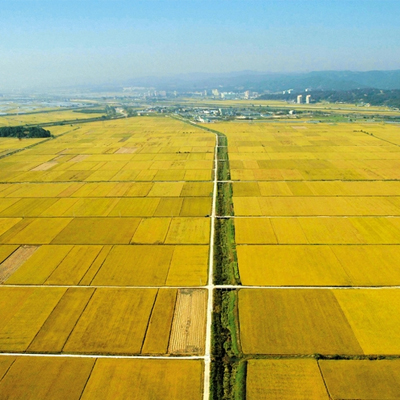
Farmland was the exact opposite. After the President's directive was issued at a cabinet meeting on February 24, an investigation began in May. In the basic survey in July, 2.84 million parcels, or 27% of the 10.13 million target parcels, were classified as suspected violations. The in-depth investigation will continue until December, and if a violation is confirmed, a disposal obligation may be imposed. If the disposal order is not followed, an enforcement fine amounting to 25% of the land value may be levied.
Those who entrusted their land because they were too old to farm, and those who inherited land from their parents, were suddenly classified as suspected violators. Even if they wanted to sell, there were no buyers, and applying to sell to the farmland bank resulted in long waiting lists. The weakest link is the tenant farmer. If landowners stop renting to avoid disposal, tenant farmers who have already sown seeds risk having to abandon their crops without harvesting. Therefore, what should be asked is not who the owner is, but whether farming continues on that land. Land left idle for speculative purposes should be strictly dealt with. However, if land where farming continues, entrusted to neighbors, is forced into disposal, driving out cultivators, then the investigation aimed at upholding the principle of 'farmers owning their land' would ironically end up disrupting cultivation.
The president's initial response to this anxiety was that the principle of 'farmers owning their land' is a constitutional mandate, and he would push through to the end. He also stated that speculative forces were spreading false propaganda. The policy for a special measures act to protect well-intentioned farmers only emerged on October 8th. It stated that inherited farmland, customary leases by the elderly, land difficult to farm, and farmland with complex ownership relations would be excluded from disposal. Then, on October 26th, the president explained that the scope of the full investigation had been broadened at the minister's suggestion, and clarified that there was no intention to seize farmland or impose disadvantageous dispositions. He added that the original intent was to identify speculative farmland near the Seoul metropolitan area, and to look into cases where people declared they would farm but did not, rather than inherited land or land farmed for generations. While he initially declared a direct breakthrough as his own decision, the impression remained that it became the minister's suggestion when opposition grew. Retirees with property taxes and elderly farmers with farmland are in the same situation. Their assets are tied up in land, and they have no cash on hand. However, for the wealthy, they considered ways to reduce or defer taxes and then backed down when faced with opposition, while for farmers, although exceptions were made with a special measures act, the investigation and suspicion classification came first. This shows that the direction of reform has wavered.
Sand and concrete
The nature of the three policies is different. The windfall tax and property tax involve creating or amending taxes, while the farmland survey is about enforcing existing laws. It cannot be immediately called a double standard to be cautious about introducing new taxes and resolute in enforcing laws. However, there is a point of comparison. Does the government amend systems in response to some groups' opposition, while upholding principles without change for others' circumstances, only to belatedly create exceptions? The financial sector's opinions led to adjustments in the tax base, and the opposition from high-priced housing owners resulted in the restoration of the original reform plan. The anxieties of elderly farmers and tenant farmers were initially met with accusations of 'incitement,' but were later partially addressed by a special measures act. As the President said, vested interests are united like concrete, while the vulnerable are scattered like grains of sand. Yet, the government retreated in the face of that concrete and started resolutely on the sand, only to make belated adjustments.
In 1430, why did King Sejong stop?
Even 600 years ago, there were reforms concerning farmland. King Sejong tried to change the Dapheomsonshilbeop (a tax system prone to manipulation by officials) to the Gongbeop (a fixed-rate tax system). In 1430, when the Ministry of Taxation proposed a plan to collect 10 du per gyeol of land, King Sejong ordered officials to ask for opinions from both officials and poor citizens. Over five months, 172,806 people responded, with 98,657 (57%) in favor, which was a majority. However, King Sejong did not implement it. While fertile regions like Jeolla and Gyeongsang supported it, barren areas like Pyeongan and Hamgil overwhelmingly opposed it. King Sejong did not view this opposition as an enemy but as information. It was a signal that a uniform fixed tax ignoring differences in land quality was problematic.
In 1436, the Jeonjesangjeongso was established for further review, and in 1437, when a new proposal met opposition, it was halted. It was first tested in Gyeongsang, Jeolla, and Chungcheong provinces. Fourteen years later, in 1444, the Gongbeop was completed, classifying land quality into six grades and the year's farming conditions into nine grades. Of course, the survey at the time heavily involved officials and was different from today's one-person, one-vote system. However, the spirit is clear. King Sejong did not use public opinion as a license for implementation but as a question to understand the reasons for opposition. He even interpreted the opposition from the most barren lands as a blueprint for improving the system.
The wisdom of 'later' for farmland too
The problem with farmland also stems from uniformity. Speculative farmland in the Seoul metropolitan area and inherited farmland in depopulated areas are not the same land. The neighbors in the village know the difference better than a drone from the central government.
First, standards come first. We need to establish standards to distinguish bona fide farmers through a special act, and until then, the disposal process should be halted.
Second, judgment should be left to the local level. Let the city/county/district farmland committee and village-level deliberation decide whether to dispose of the land. Just as Sejong divided land into six grades, a differentiated design is needed to distinguish between speculative purposes and customary leasing.
Third, let's choose settlement instead of disposal. Even if farmland cannot be directly cultivated but actual cultivation continues, do not force disposal; instead, transfer it to the farmland bank for lease entrustment to protect the cultivators. Instead, for every year the owner does not directly cultivate, a certain percentage of the publicly assessed land value is recorded as a non-cultivation burden. This burden is settled all at once during sale or inheritance and transferred to the farmland management fund. Elderly farmers do not need to pay cash immediately or sell their land at a low price, and tenant farmers continue to farm. On the other hand, the longer the land is idle, the more the settlement amount accumulates, thus curbing speculative expectations. We neither reduce nor expel, but postpone and settle.
Such wisdom comes not from a bureaucrat's desk but from deliberation in a citizens' assembly. That is exactly what Sejong did over 14 years.
Leaving the money supply untouched
A fundamental question remains. Where does the money for farmland speculation come from? As revealed during the LH scandal, speculative funds came from loans secured by land. Banks create money using land as collateral, and that money, in turn, pushes up land prices. Investigating farmers who own land while leaving the financial institutions that provide money for land untouched is like draining water from a puddle while leaving the water source intact. To eradicate speculation, the focus must be on the financial structure that earns 60 trillion won in interest. The windfall tax that party leader Lee Jae-myung advocated was right at that doorstep.
I ask again. Where is the party leader who advocated for a windfall tax? He remains silent in the face of the banks' structure, backs down in the face of opposition from homeowners, and, after initially pushing through against an octogenarian farmer's rice paddies, belatedly created an exception. If the tip of the sword that dulls against the strong and sharpens against the weak is meant to resolve issues, then it is reform that has lost its way. Sejong stopped in the face of 57% approval. This government started without even asking the farmers, only to amend its plans after facing backlash. What a government of popular sovereignty can learn from Sejong is not grand. It is to listen to the opposition of the powerless first.
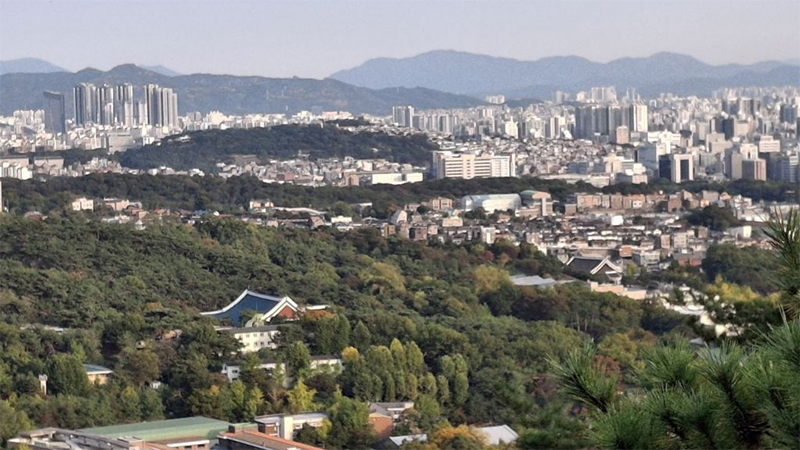
Cheong Wa Dae as seen from Inwangsan. What could President Lee Jae-myung be thinking? Photo by Lee Won-young.
댓글
( 0 / 500 )
jinyoung82
4
횡재세와 보유세 앞에서는 한발 물러서면서 농지 전수조사에는 정면 돌파를 외쳤다는 지적이 뼈아픕니다. 개혁의 정당성은 원칙을 얼마나 강하게 외치느냐가 아니라, 그 원칙을 누구에게 어떻게 적용하느냐에서 드러납니다. 세종이 반대의 이유를 제도 개선의 단서로 삼았듯, 정부도 약자의 목소리부터 들어야 합니다.
( 0 / 500 )
jungjoon
5
투기를 근절하자는 원칙에 반대할 사람은 많지 않을 것입니다. 그러나 투기꾼과 평생 농사를 지어 온 고령 농민을 같은 잣대로 의심해서는 안 됩니다. 농지를 실제로 경작하는 임차농의 생계까지 위협한다면 개혁의 목적과 결과가 어긋날 수 있습니다.
( 0 / 500 )
원빈
4
세종의 공법에서 배워야 할 것은 백성의 의견을 물었다는 사실이 아닙니다. 찬성이 과반을 넘었는데도 지역마다 다른 현실을 살펴 시행을 미루고 제도를 다시 설계했다는 점입니다. 국민주권정부라면 국민의 지지를 정책 추진의 면허로 삼을 것이 아니라, 반대하는 사람들의 사정에서 제도의 허점을 찾아야 합니다.
( 0 / 500 )
textan
6
농지 투기 근절과 금융·부동산 불로소득 개선이라는 정책의 방향까지 부정할 필요는 없다고 봅니다. 이재명 정부가 마주한 현실적인 제약과 정책의 취지를 충분히 살피지 않은 채 후퇴와 강경 대응만을 부각하면 비판이 지나치게 단선적으로 흐를 수 있습니다.
( 0 / 500 )
dongjoo
7
개혁의 필요성을 강조하는 것과 정부의 모든 정책을 비판적으로 바라보는 것은 구분해야 합니다. 횡재세와 보유세는 사회적 합의와 입법 과정이 필요하고, 농지 전수조사는 헌법상 경자유전 원칙을 실현하기 위한 법 집행이라는 차이가 있습니다.
( 0 / 500 )
jongman69
5
은행의 이자이익과 농민의 농지를 함께 놓고 보니 개혁의 우선순위라는 질문이 선명해집니다. 토지 투기를 막으려면 땅을 이용한 금융과 불로소득의 구조까지 들여다봐야 합니다. 자금이 만들어지고 투기로 흘러가는 통로는 그대로 둔 채 소유자부터 조사한다면 문제의 일부만 건드리는 셈입니다.
( 0 / 500 )
santa
4
세종의 지혜를 강조하는 데 동의하지만, 오늘의 정부가 처한 복잡한 조건도 함께 고려해야 합니다. 건설적인 비판은 개혁을 부정하는 것이 아니라 개혁이 올바른 방향으로 나아가도록 돕는 것이어야 합니다.
( 0 / 500 )
hyundong
4
개혁의 출발점은 약자의 재산을 조사하는 데 그치지 않고 불로소득이 만들어지는 구조를 바꾸는 데 있어야 합니다. 억울한 사람이 생기지 않도록 차이를 정교하게 구분하는 데서 진정한 법치가 완성됩니다.
( 0 / 500 )
황금사과
5
정책마다 출발점과 제약 조건이 다른 만큼 단순히 강자에게 약하고 약자에게 강하다고 단정하는 것은 신중해야 합니다. 이재명 정부에 필요한 것은 무조건적인 옹호도 전면적인 부정도 아닌, 개혁의 취지를 지키면서 현장의 문제를 바로잡도록 돕는 비판이라고 생각합니다.
( 0 / 500 )
minsuk
3
개혁을 바라는 마음이 클수록 개혁을 추진하는 정부에 대한 비판도 신중해야 한다고 생각합니다. 이재명 정부가 금융권의 초과이익 환수와 부동산 불로소득 문제를 외면했다고 단정하기보다는, 실제로 추진한 조치와 아직 해결하지 못한 과제를 구분해 평가할 필요가 있습니다.
( 0 / 500 )
kim_minsoo
3
이 글은 문제 제기 자체에는 의미가 있지만, 이재명 정부의 정책을 지나치게 한 방향에서 해석한 것은 아닌지 아쉽습니다. 횡재세와 보유세는 조세 형평성과 경제적 파급효과, 국민적 합의를 함께 고려해야 하는 문제이고, 농지 전수조사는 헌법의 경자유전 원칙을 현실에서 구현하려는 과제입니다.
( 0 / 500 )
Jupiter
2
정책 추진 과정의 미비점을 지적할 수는 있지만, 이를 곧바로 개혁 의지의 후퇴나 약자에 대한 강경함으로 연결하는 것은 성급합니다. 비판은 정책의 한계를 짚되 그 취지와 현실적 제약도 함께 살펴야 합니다.
( 0 / 500 )
신고내용
신고내용을 선택해주세요
회원비난/비하/욕설글 및 댓글도배성 게시물저작권 침해/불법자료 유출허위사실유포개인정보 유출.사생활 침해무단광고/홍보음란물 및 도박 불법 광고물범죄행위 관련 글불법행위 관련 소개물품 판매 및 사기글악성코드 및 스파이웨어 유포기타 사유 및 운영진 판단


비밀번호를 잊으셨나요?
Sign in with Google


All information provided by us is free of charge and is for the public good.