品

Corea든 Korea든, 품격이 먼저다
Whether Corea or Korea, dignity comes first.
Whether Corea or Korea, dignity comes first.
Now
지금
751 Diaspora
Heritage
유산
Humanity
인문
Mirengsi
未冷尸
Politics
정치
Media
언론
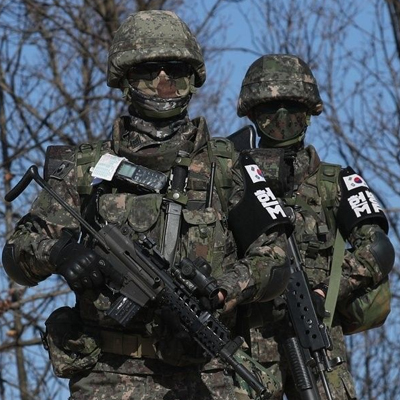
2026년 7월 육군 1군단 GP·GOP에서 공용화기에 실탄을 장전하지 않은 비삽탄 상태로 경계를 선 사실이 드러났다.

정책 이슈
칼럼
英雄本色
The wire is non-loaded, the reprimand is just a piece of paper

0
2026. 10. 12
- The "empty rifle alert" incident isn't just about ammunition; it exposes procedural legitimacy issues in changing frontline readiness standards and a failure of control by higher command.
- The Ministry of National Defense's institutional warning and corrective measures avoid core questions, sidestepping the essence of command responsibility and perpetuating the practice of shifting blame to individuals.
- Especially concerning is the institutional warning given to the Ground Operations Commander, despite his short tenure and widespread control failures, as it avoids command responsibility and sets a precedent for impunity in future similar cases.
- Individual tactical judgment and the legitimacy of command procedures are separate; repeated actions to reduce alert armament under the guise of safety and efficiency risk fostering a culture where combat readiness gradually weakens.
- This action, seemingly predetermined to evade responsibility, undermines the principle of command accountability without disclosing necessary information or conducting a clear investigation, potentially leading to future military laxity.
In July 2026, it was revealed that the 1st Army Corps GP/GOP was on guard duty without live ammunition loaded in its crew-served weapons. The Ministry of National Defense reviewed the frontline ammunition carrying procedures in August, and the results were released on October 5. The core of this issue is not the equation that an empty gun means combat ineffectiveness, but rather who could lower the standards for frontline combat readiness and through what procedures, whether the higher command line controlled the fact that it was lowered, and to what extent the practice of attributing the results to individual responsibility can be pursued. The Ministry of National Defense's approach of ending the matter with only institutional warnings and system improvements does not answer these three questions.
The confirmed scope is not limited to the 1st Corps. As a result of the August inspection, cases of unloaded ammunition were found in the 1st, 2nd, 3rd, and 5th Corps and the 2nd Marine Division. It was reported in late July that the 1st Corps had been on guard duty without live ammunition in crew-served weapons such as K6 and K4 in the GP/GOP during the first half of this year, and later even in personal weapons. Corps Commander Han Ki-seong was relieved of his duties on August 3. The 2nd and 5th Corps had some crew-served weapons unloaded, and the 3rd Corps' case was under the pretext of a one-month guard duty improvement trial starting in June. Many of these cases overlap with the period after 2024, when North Korea declared two hostile states and continued to lay landmines south of the Military Demarcation Line. The Ministry of National Defense decided to issue institutional warnings to the 1st and 2nd Corps, the 22nd Division under the 3rd Corps, and the Ground Operations Command, and to issue an improvement disposition to the Joint Chiefs of Staff for the purpose of supplementing the work system. The 5th Corps was excluded because it changed its guidelines at the direction of the corps commander. It was decided not to impose individual disciplinary action, including on Han Ki-seong. The reason given was that it was difficult to pinpoint the timing and there were many people involved, making it difficult to identify individuals.
The exclusion of the 5th Corps, on the contrary, shows the standard. The Ministry of National Defense itself distinguished between the state of unloaded ammunition and the procedure that created that state. While a corps commander has room to adjust ammunition carrying based on conditions, it must be based on operational grounds or a review by the Ground Operations Command, and any changes must be reported. They viewed units that implemented it without official documents differently from units that implemented it by changing guidelines. Therefore, the remaining fault is not just 'was there no ammunition?' but 'did they unilaterally change the standard?'
Han Ki-seong's explanation at the National Assembly audit on October 8th should be understood in that context. He stated that the term 'empty gun' was inappropriate, as the ammunition box was attached to the firearm and only the first round was not in the feeding position. He explained that the introduction of remote K6 and K4 systems increased the burden of safety checks and reduced personnel, and that the extended real-time inspection time due to misfire prevention procedures led to the judgment that removing live ammunition from the chambers of other firearms would not hinder readiness. He admitted that he did not report this to the Ground Operations Command. The state of ammunition not being in the unit and only the first round being lowered are different. The on-site circumstances, such as the burden of equipment checks, are also worth considering. However, tactical rationality and the legitimacy of command procedures are separate issues. Even if the judgment was valid, it does not lead to the conclusion that reporting was unnecessary. Joint Chiefs of Staff Chairman Jin Young-seung confirmed at the same National Assembly audit that the guidelines were revised due to problems, and that all frontline units currently maintain loaded ammunition. Post-facto restoration does not retroactively justify the lack of reporting at the time.
A more serious issue here is the audit's finding that similar incidents occurred across the entire front line, but the Ground Operations Command and the Joint Chiefs of Staff were unaware. In a military organization, this is one of two things. If they truly didn't know, then control failed; if they knew but did nothing, it was neglect. The explanation that an organization that reports everything to its superiors was completely unaware of the alert status of all frontline corps is inherently difficult to understand. The position at the apex of this control failure is precisely the Ground Operations Commander. General Lee Sang-ryeol, the Ground Operations Commander, is an artillery officer from ROTC Class 31. He was promoted to Lieutenant General in November 2025 and appointed as the 3rd Corps Commander, then promoted to General in April 2026, approximately five months later, and appointed as the Ground Operations Commander. The fact that he is the first non-Korea Military Academy artillery general is not a flaw in itself. Criticisms based on his background are weak and incorrect. It is also impossible to conclude that he was promoted due to political considerations based solely on public information. The strong criticism lies elsewhere: whether the appointment of an officer with only five months of experience as a Lieutenant General to a position that commands most of the Army's personnel and equipment and serves as the component commander for combined ground forces in peacetime was thoroughly vetted and ensured continuity. The standard is not the name of the school, but rather frontline operations, large-scale combined operations, crisis management, and unit control.
It becomes even clearer that the failure of control in that position should not end with an institutional warning. The 3rd Corps' June blank-firing demonstration occurred after he left the corps, so there is no basis to conclude that it was a direct order from him. However, the fact that ammunition control after April was part of his Ground Operations Command duties remains. In addition, a separate link that requires verification is the case of the expandable baton. According to a JoongAng Ilbo report, when he was the 3rd Corps Commander, he approved a directive from a subordinate division that allowed guards at the guard post to carry only expandable batons without rifles, and the 21st and 22nd Divisions operated under this directive until it was withdrawn on January 3rd. On January 3rd, JoongAng Ilbo and Chosun Ilbo also reported that a division in Yanggu had ordered the use of expandable batons instead of firearms at guard posts and even the removal of challenge phrases, but withdrew it after controversy. The Joint Chiefs of Staff explained that it was a directive allowing non-lethal means at the discretion of a general-level officer in some units, excluding contact areas. The scope of approval and the original text are not yet public documents. However, if the facts are as reported in the original news, the question naturally arises whether measures to lower guard armament for reasons of safety and efficiency were repeated under the same chain of command. Individual measures can each have their own reasons. When accumulated, it becomes a culture of lowering readiness one step at a time.
Forward GP/GOPs cannot be viewed the same as rear guard posts. The logic of security lies in the continuous chain of detection, identification, reporting, warning, and immediate response. As surveillance systems increase, the question of whether detection and firing can be separated merely emerges as a doctrinal issue; such separation is not permitted at the discretion of a corps commander. It is also wrong to present accident prevention and immediate response as an either/or choice. If future standards are needed, readiness levels can be formalized for each state, such as peacetime blank firing with immediate access to ammunition, loading during tension, and full readiness upon signs of infiltration. The authority for such formalization is not individual commanders but the standards of the Joint Chiefs of Staff and the implementation control of the Ground Operations Command. Neither 'it's the AI era, so blank guns are fine' without verification, nor 'it's always been loaded, so it should always be loaded in all situations' are doctrines. The metric is simple: how many seconds from detection to the first shot? If the state is changed without measuring that number, it becomes a custom, not a judgment.
An institutional warning is useful for improving the system. It does not replace the principle that authority comes with responsibility. Command responsibility is not limited to direct orders. It includes what was approved, what was reported, what should have been confirmed, and whether abnormal signs were corrected. If this list disappears due to administrative convenience, making it difficult to identify individuals, the next corps commander could also lower standards with a single sentence claiming it was a tactical decision. Conversely, severe disciplinary action for everyone leads to inaction. The stages can be divided: intentional violations and concealment warrant severe disciplinary action; independent changes without reporting warrant command responsibility; negligence in supervision warrants a warning or reprimand; and pure systemic confusion warrants only an institutional warning. This disposition pushed everything into the very last category.
In particular, the handling of Han Ki-seong makes this vacuum even more prominent. He was removed from duty on August 3rd, even before the fact-finding investigation was properly concluded, after the fact that it was a blank round became known at the end of July and was compounded by the mistaken identification of a US drone. He effectively took responsibility with his face exposed. However, in October, when the results of the all-military audit were released, it was decided not to even request individual disciplinary action. The reason that it is difficult to pinpoint the timing and that there are many people involved does not apply only to the 1st Corps. In a situation where the same thing was repeated on all fronts and the Ground Operations Command either did not know or neglected it, the method of excluding only Han Ki-seong early and grouping the rest and the higher command line with an institutional warning is unconvincing. The question naturally arises whether the all-military audit was conducted with the possibility of the Ground Operations Command's command responsibility being implicated in mind, and a line was drawn with a lenient punishment. Han Ki-seong's face was exposed by his removal from duty, but he was excluded from the disciplinary request, and the Ground Operations Command, which failed to control, remained the recipient of a paper warning. Neither of these leads to the conclusion that no one is responsible.
The 12.3 incident and this case share the same flaw: writing the conclusion first. Cho Seong-hyun, then commander of the 1st Security Group, became a symbol of resistance by blocking Seogang Bridge, received the Samiljang Order of National Security Merit in September 2025, and was indicted in June 2026 by the special prosecutor for engaging in important duties related to rebellion. Lee Sang-hyun, then commander of the 1st Special Forces Brigade, was initially rumored to have not issued live ammunition, but after a phone call ordering the removal of a lawmaker was played in court, he was dismissed on January 30. If medals and exonerations are placed before factual verification, the narrative collapses when records follow. This institutional warning shows the same impatience.
The necessary data has already been narrowed down. The initial implementation date for each corps, applicable firearms, and documents for instruction, approval, reporting, and withdrawal. Ammunition control from the Joint Chiefs of Staff to the battalion level. The initial firing times for loaded and unloaded weapons. The original truncheon guidelines and withdrawal orders. The reasons for the promotion review of the general after five months. Without this, an institutional warning is an explanation, not an investigation.
The future military can move beyond the dichotomy of empty guns or loaded ones. The standard for combat readiness should not be left to the arbitrary judgment of individual commanders. Decentralization and autonomy are established when there is readiness by state and real-time control. If the same thing happened repeatedly across the entire front, and the Ground Operations Command didn't know, and that ignorance ended with a single warning, then the precedent the next corps commander will see when setting standards is not accountability but impunity. The disposition, which seems to first exclude Han Ki-seong and then avoid the possibility of the fallout reaching higher command responsibility in the audit results, makes that precedent even clearer.
댓글
( 0 / 500 )
pandora
8
전방의 전투준비태세를 임의로 낮췄다면 누가 지시했고 누가 승인했으며 누가 감독했는지 끝까지 밝혀야 합니다. 현장 지휘관 한 명을 직무에서 배제하고 전군의 통제 실패는 기관경고로 마무리한다면 책임 행정이 아니라 책임 회피라는 비판을 피하기 어렵습니다.
( 0 / 500 )
Omegaman
7
전투준비태세는 보고서에 적힌 문구가 아니라 실제 상황에서 얼마나 신속하게 대응할 수 있느냐로 증명됩니다. 비삽탄과 삽탄의 차이를 감정적으로 논쟁할 것이 아니라 최초 대응 시간과 작전 효과를 실측하고, 그 기준을 공식 규정으로 만들어야 합니다. 군의 자율은 규정 안에서 보장하고, 규정을 바꾼 지휘관에게는 그에 상응하는 책임을 물어야 합니다.
( 0 / 500 )
doong_A
5
군에서 보고 체계는 단순한 서류 절차가 아니라 지휘와 통제의 근간입니다. 전방 여러 군단에서 비슷한 일이 반복됐는데 상급 부대가 몰랐다는 사실부터 철저히 규명해야 합니다. 몰랐다면 감독 실패이고, 알고도 방치했다면 더 무거운 문제입니다.
( 0 / 500 )
DinDin
5
군의 신뢰는 강한 구호나 장비의 숫자만으로 지켜지지 않습니다. 규정이 현장에서 어떻게 바뀌었는지, 지휘관이 무엇을 보고받았는지, 실제 대응 능력이 얼마나 유지됐는지를 자료로 입증해야 합니다. 기관경고 한 장으로 끝낼 일이 아니라 전방 대비태세와 지휘 책임 전반을 다시 점검할 사안입니다
( 0 / 500 )
모모짱
4
비삽탄이 언제나 잘못이라는 식의 단순한 접근보다 중요한 것은 누가 어떤 근거로 전투준비태세를 변경했느냐는 것입니다. 현장의 안전 문제와 병력 부족을 검토하되, 변경 기준과 보고 절차는 공식화해야 합니다. 자율에는 반드시 책임과 검증이 따라야 합니다.
( 0 / 500 )
88Lee
4
한기성 군단장은 먼저 직무에서 배제됐는데 전군 감사 뒤에는 개인 징계 요구조차 없었다는 대목이 석연치 않습니다. 왜 처음에는 책임을 물었고 나중에는 아무도 책임지지 않게 됐는지 설명해야 합니다. 국민이 납득할 수 있는 일관된 조사와 처분이 필요합니다.
( 0 / 500 )
kimyoon
4
전방 경계는 단 한 번의 판단 착오도 국민의 생명과 직결될 수 있는 문제입니다. 비삽탄이 불가피했다면 그 근거와 승인 절차를 공개하고, 문제가 있었다면 지휘선 전체의 책임을 따져야 합니다. 현장 지휘관에게만 책임을 묻고 상급 지휘부는 경고장 한 장으로 끝내는 관행부터 바꿔야 합니다.
( 0 / 500 )
중섭
3
군대에서 보고하지 않아도 되는 지휘관의 재량이 어디까지인지 이번 기회에 명확히 해야 합니다. 전방 여러 군단에서 비슷한 사례가 확인됐다면 개인의 우발적 판단만으로 설명하기 어렵습니다. 명령과 보고, 감독 체계가 어떻게 작동했는지 밝혀야 같은 일이 반복되지 않습니다.
( 0 / 500 )
革命77
2
병력 부족과 장비 관리 부담이 현실적인 문제라는 점은 인정합니다. 그러나 그것이 전투준비태세를 임의로 낮추는 근거가 될 수는 없습니다. 안전과 즉각 대응 능력을 함께 확보할 방법을 군 전체가 마련해야 합니다. 현장의 어려움을 제도 개선으로 해결하지 않고 사후 문책으로 덮는다면 군의 미래도 없습니다.
( 0 / 500 )
닥터82
1
직무 배제는 신속하게 하면서 최종 책임 규명은 흐지부지한다면 누가 그 결정을 신뢰하겠습니까? 한기성 개인의 잘잘못을 넘어 지작사와 합참이 무엇을 알고 있었고 무엇을 확인했는지 공개해야 합니다. 책임의 크기는 계급에 따라 달라져서는 안 되며, 조사 기준도 처음부터 끝까지 일관돼야 합니다.
( 0 / 500 )
신고내용
신고내용을 선택해주세요
회원비난/비하/욕설글 및 댓글도배성 게시물저작권 침해/불법자료 유출허위사실유포개인정보 유출.사생활 침해무단광고/홍보음란물 및 도박 불법 광고물범죄행위 관련 글불법행위 관련 소개물품 판매 및 사기글악성코드 및 스파이웨어 유포기타 사유 및 운영진 판단


비밀번호를 잊으셨나요?
Sign in with Google


All information provided by us is free of charge and is for the public good.