品

Corea든 Korea든, 품격은 이름보다 먼저다
Whatever the name—Corea or Korea—dignity comes first.
Whatever the name—Corea or Korea—dignity comes first.
Now
지금
751 Diaspora
Heritage
유산
Humanity
인문
Mirengsi
未冷尸
Politics
정치
Media
언론
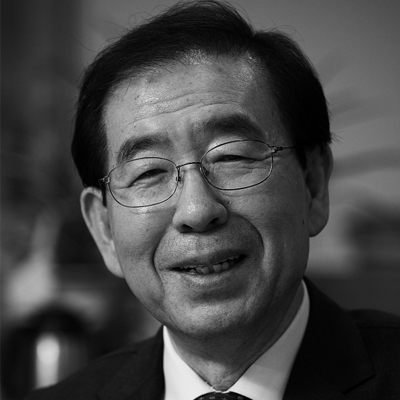
이원영 (국토미래연구소장, 시민인권위 공동위원장)의 기고글 입니다.

정책 이슈
칼럼
blueSky
Investigate the deaths of two public figures, Park Won-soon and Shin Jong-oh, according to international standards

0
2026. 10. 07
- Korean society tends to avoid uncovering the truth behind the suspicious deaths of public figures, often concluding investigations with "no criminal charges" and citing "respect for the deceased's honor and the family's grief."
- The National Human Rights Commission showed inconsistent behavior: in the Park Won-soon case, it pushed for an ex officio investigation while the probe was ongoing, effectively branding the deceased as guilty, yet in the Shin Jong-oh case, it refused to investigate, citing the conclusion of the investigation and the deceased's lack of fundamental rights.
- Such actions by state agencies reveal an unwillingness to publicly investigate the circumstances of deaths, thereby neglecting the state's obligation to investigate suspicious deaths as required by the Minnesota Protocol, an international human rights standard.
- To uncover the truth behind the suspicious deaths of public figures, urgent legal and institutional improvements are needed to mandate independent autopsies and public investigations regardless of family consent, ensure transparent proceedings by independent, unbiased bodies, and adhere to international human rights standards.
Every time a public figure meets a sudden or suspicious death, Korean society repeats the same scene. The police close the investigation with a single line: 'No criminal charges found.' The head of the institution remains silent. And the phrase 'the honor of the deceased and the grief of the bereaved family must be respected' silences the voices seeking the truth. Mayor Park Won-soon of Seoul in July 2020, Judge Shin Jong-oh of the Seoul High Court in May 2026. The nature and context of these two deaths are different. However, when these two cases are placed side by side, a strange symmetry emerges. The same National Human Rights Commission went too far once against the deceased, and once did not move an inch for the deceased. The directions were opposite, but the results were the same. The truth was sealed.
The Park Won-soon Case — An Uninvestigated Death
Let's retrace what happened after Mayor Park Won-soon's death. According to a statement released in May by the Citizens' Group for Truth Investigation into Park Won-soon, more than 290 organizations issued a joint statement less than a day after the complaint was filed. The media amplified that voice without verification. He passed away without ever officially responding to the allegations against him. Voices demanding factual verification were blocked under the name of 'secondary victimization.'
In the midst of this frenzy was the National Human Rights Commission. The National Human Rights Commission Act stipulates that the Commission cannot investigate cases that are under investigation. This was a case where a complaint had already been filed. Nevertheless, then-Chairperson Choi Young-ae pushed ahead with an investigation through the bypass of an ex officio investigation, and issued a judgment that virtually branded the deceased, who could not defend himself, as guilty. The citizens' group points out that during the Human Rights Commission's investigation, there were numerous testimonies from Seoul City employees supporting Mayor Park's position, and the key evidence claimed by the complainant was never submitted. These facts were barely reported at the time.
On October 2022, the Citizens' Human Rights Committee reported former Chairman Choi to the Corruption Investigation Office for High-ranking Officials (CIO) on charges of abuse of power. The CIO did not even properly investigate the complainant for over a year. What was not investigated was something else entirely: his death itself. The family's agreement to cremation was merely a choice regarding the funeral method and cannot replace an autopsy to determine the cause of death. The mayor is a public figure, and his death is a public event. However, the state did not inquire into the circumstances of his death under the pretext of 'courtesy.' The state, while delving into the deceased's alleged crimes ex officio, buried his death behind the family's choice.
Why did this happen? The state must answer.
Judge Shin Jong-oh Case — The National Human Rights Commission Refused to Investigate, Claiming the Investigation Was Over
Six years later, the same institution showed a completely opposite face. Judge Shin Jong-oh was the presiding judge in the appellate trial of Kim Keon-hee's Deutsch Motors stock manipulation case. On April 28, 2026, he sentenced her to four years in prison, and eight days later, on May 5, he was found dead inside the courthouse where he worked. The police virtually closed the case, stating 'no criminal suspicion.' There has been no official confirmation of an independent autopsy to date. Chief Justice Cho Hee-dae has not issued any public statement regarding the cause of death or structural reasons for over four months.
Something needs to be clarified. There is no confirmed causal relationship between his death and a specific trial, and this article does not assert one. The fact that circumstances of external pressure and threats were mentioned even before the verdict, and that the mass reassignment of cases and the '6·3·3' standard due to the establishment of a special court for insurrection cases overloaded judges, are all questions that need to be answered. These are not conclusions. Precisely for this reason, an investigation is necessary. In the face of unconfirmed facts, what the state should do is not remain silent but investigate.
On June 24, I filed a petition with the National Human Rights Commission. The respondents were the Commissioner General of the National Police Agency and the Chief Justice of the Supreme Court. The petition requested a determination on whether concluding an investigation without an independent autopsy violated international human rights standards, and whether the Chief Justice's failure to take any action to clarify the cause of death of a judge under his jurisdiction and address structural causes constituted dereliction of duty. The Human Rights Commission dismissed this petition on August 18. There were two reasons. One was that the deceased cannot be a direct subject of constitutional fundamental rights, and the other was that it was inappropriate for the Human Rights Commission to investigate as it disputed the appropriateness of the police investigation results.
Both arguments missed the core of the petition. The petition did not dispute the fundamental rights of the deceased. It asked whether the living state fulfilled its duty to investigate. It also did not dispute the rightness or wrongness of the investigation results. It asked about the procedure: whether an autopsy was performed, and if not, whether that complied with international standards. The Human Rights Commission did not answer what was asked by answering what was not asked. Nowhere in the decision is there any mention of the Minnesota Protocol, which was the basis of the petition.
Two faces of the Human Rights Commission, one outcome
When overlapping the two cases, the logic of the National Human Rights Commission can be summarized as follows: In the Park Won-soon case, the Human Rights Commission investigated even though the investigation was ongoing. In the Shin Jong-oh case, it did not investigate because the investigation had concluded. In the Park Won-soon case, the deceased was investigated in a state where he could not defend himself. In the Shin Jong-oh case, the deceased was not investigated on the grounds that he was not a subject of fundamental rights. The dead were investigated because they had no right to defense, and the dead were ignored because they had no fundamental rights. The standards wavered, but one thing was consistent: the state never publicly clarified the cause of death in either case. The police, with a brief announcement, the Chief Justice, with silence, and the Human Rights Commission, with overreach and dismissal, all said the same thing: 'We do not want to know about this death.'
What do international standards require?
The Minnesota Protocol (revised 2016), published by the Office of the United Nations High Commissioner for Human Rights, clearly answers this question. Article 2(c) stipulates that even if there is no allegation that the state caused or failed to prevent a death, the state has a general obligation to investigate all suspicious deaths. Article 15 states that the state's obligation to investigate is triggered when a reasonable claim of a potentially unlawful death is made. Article 17 requires that all investigations be prompt, effective, thorough, independent, impartial, and transparent. The Protocol also considers that investigations into potentially unlawful deaths are almost always supported by an autopsy.
The presiding judge of the biggest political trial of the time died in the courthouse building eight days after the verdict. That fact alone provides sufficient grounds for reasonable doubt. The situation does not change even if there was a suicide note. A suicide note is the last words of the deceased, not objective evidence of the circumstances of death. How it was written under what pressure, and what caused the death can only be confirmed through an independent investigation. And this obligation exists independently of the wishes of the bereaved family. The state's obligation to investigate is neither created by the family's permission nor extinguished by their silence. Hiding the death of a public figure behind the family's choice is to shift the burden that the state should bear onto those in the weakest position. This standard applies equally to the death six years ago. The incumbent mayor of Seoul died immediately after being accused. That death falls under the 'suspicious death' mentioned in Article 2(c). That case, which was closed without an autopsy, should be reopened in light of international standards.
Addressing anticipated counterarguments
First, there is concern that a public investigation could cause further pain to the bereaved family. This is a valid concern. However, the answer lies not in abandoning the investigation but in the manner of the investigation. It is sufficient to protect the family's privacy and time for mourning, notify them of the investigation's progress, and guarantee their right to express their opinions. However, the decision of whether to initiate an investigation should not be left to the family's veto power. The Park Won-soon case showed that the term 'secondary victimization' can be used not to protect someone but to suppress questions. The language of protection should not become a tool of silence.
Second, there is the question of whether it is truly beneficial to expend national resources on the death of every public figure. The investigation is not about every death. It is about deaths where power and institutions are intertwined, and reasonable doubts have been raised. When such deaths are neglected, what collapses is not just the peace of mind of one bereaved family, but the trust in the entire national system. In a country where a judge, whose single ruling can determine life and property, dies in their own courthouse, and yet the circumstances are not questioned, how can any judge rule according to their conscience in the face of pressure?
What is needed is a mechanism, not a declaration.
In the case of Judge Shin Jong-oh, there is a path that can be taken right now. As guided by the National Human Rights Commission's decision, an administrative appeal or administrative lawsuit can be filed within 90 days (November 15th) from the date the decision was received. The National Assembly's Legislation and Judiciary Committee and the Public Administration and Security Committee should scrutinize the failure to conduct an autopsy and the non-compliance with international standards during the parliamentary inspection. An international channel to inform the UN Special Rapporteur on extrajudicial, summary or arbitrary executions about this case is also open. However, with a system where citizens have to run around with petitions for each case, the same incidents will repeat. It must be prevented through institutional means.
First, a legal trigger for public investigations into the suspicious deaths of public figures must be created. In cases of public figures' deaths where reasonable doubts are raised, independent autopsies and public investigations should be initiated regardless of the consent of the bereaved family. The conditions for initiating an investigation, the responsible entity, and the deadline should also be specified in law.
Second, the investigating body must be an independent institution with no vested interest in the case. The limitations of 'self-investigation,' where the judiciary investigates judicial matters and the Human Rights Commission investigates Human Rights Commission matters, have already been exposed. The 'Sovereign Truth-Finding Institution' that I have proposed is the alternative. It is a permanent institution that combines the legislative power of the National Assembly and the oversight power of citizens, and has investigative powers to access national information. Citizens selected by lottery monitor the transparency of the investigation process and participate in the adoption of the final report. Just as the goal of a Public Inquiry in the UK is to reveal the truth, not to punish, the purpose of this institution should also be to ascertain the truth, not to condemn.
Third, the National Human Rights Commission must not ignore international human rights standards. The National Human Rights Commission Act must be amended so that petitions disputing violations of international human rights standards are not dismissed on formalistic grounds such as 'conclusion of investigation' or 'the deceased's status as a subject of fundamental rights.' Human rights are not defined solely by domestic law. Internationally recognized standards constitute the content of human rights. If a human rights commission does not even review those standards, its name is meaningless.
Fourth, procedures for protecting bereaved families must be included in the investigation process. Guaranteeing the bereaved family's right to state their opinion, protect their privacy, and be notified of the investigation's progress as legal rights is the way to prevent further harm. Preventing the investigation is not the way.
Conclusion
The declaration of the 'Park Won-soon Truth-Finding Citizens' Group' asks this question: Did we walk in the right direction towards the truth that day? Six years later, in the face of Judge Shin Jong-oh's death, that question has returned. The answer is still 'no.' The dead do not speak. Therefore, the state must ask on their behalf: What led him to that place, could the system have protected him, and why couldn't it? Not hiding that question behind the grief of the bereaved family, not dismissing it with formalistic logic, not leaving it to the whirlwind of public opinion. That is the only respect the state can offer to the deceased, the bereaved family, and the sovereign people. The record continues.
댓글
( 0 / 500 )
komando
8
두 사건의 정치적 성격이나 당사자에 대한 평가와 별개로, 국가가 의문스러운 죽음을 얼마나 독립적이고 투명하게 조사했는지는 따져볼 문제라고 봅니다. 특히 국제기준을 적용하자는 주장은 누구의 편을 드는 것이 아니라 국가의 조사 책임을 묻는 원칙의 문제라는 점에서 설득력이 있습니다.
( 0 / 500 )
64Marco
6
박원순 사건과 신종오 판사 사건을 같은 잣대로 보자는 취지가 인상적입니다. 누구에게 유리하느냐에 따라 조사 기준이 달라진다면 인권과 진실규명이라는 말 자체가 정치적 도구가 됩니다. 죽은 사람이 말할 수 없기 때문에 오히려 국가는 더 엄격하고 신중해야 한다는 지적에 공감합니다.
( 0 / 500 )
kim_minsoo
5
가장 중요한 대목은 ‘수사 결과가 마음에 드느냐’가 아니라 ‘제대로 조사했느냐’를 묻고 있다는 점입니다. 부검 여부, 독립성, 조사 과정의 투명성 같은 절차적 기준을 확인하자는 것이라면 정치적 진영논리를 떠나 논의할 가치가 충분합니다. 의혹을 사실로 만들지 않으면서도 의문을 묻어버리지 않는 태도가 필요합니다.
( 0 / 500 )
曲筆
5
공인의 죽음은 개인의 죽음인 동시에 공적 영역과 연결된 사건일 수 있습니다. 그렇다고 의혹만으로 특정인을 범죄자로 몰아서도 안 됩니다. 결국 필요한 것은 양쪽 모두에게 동일하게 적용되는 조사 절차입니다. 박원순이든 신종오든, 누구에게나 같은 기준을 적용하자는 것이 이 글의 핵심으로 읽힙니다.
( 0 / 500 )
동형
5
특히 사법부 구성원이 법원이라는 공간에서 갑작스럽게 사망했다면 사법부 스스로의 설명 책임도 중요합니다. 특정 재판과 죽음을 섣불리 연결해서는 안 되지만, 그렇다고 아무런 관계가 없다고 단정해서도 안 됩니다. 사실관계를 밝히는 것이 음모론을 막는 가장 확실한 방법입니다.
( 0 / 500 )
핑크오렌지
4
인권의 이름으로 누군가를 일방적으로 규정하는 것도 문제이고, 반대로 ‘수사가 끝났다’는 이유만으로 더 이상 질문하지 않는 것도 문제입니다. 진실규명은 유죄를 만들기 위한 절차가 아니라 사실을 확인하기 위한 절차여야 합니다. 정치적 유불리를 내려놓고 독립적 조사와 기록 공개라는 원칙부터 세워야 한다고 봅니다.
( 0 / 500 )
아들사랑
3
이 글에서 가장 설득력 있는 부분은 ‘누구를 옹호하느냐’보다 ‘국가가 어떤 절차를 밟았느냐’를 묻는 대목입니다. 박원순 사건이든 신종오 판사 사건이든 동일한 국제기준을 적용해야 합니다. 진영에 따라 진실규명의 기준이 달라져서는 안 됩니다.
( 0 / 500 )
pyo2000
3
죽은 사람에게는 더 이상 자기 입장을 설명할 기회가 없습니다. 그래서 국가기관의 조사에는 살아 있는 사람보다 오히려 더 높은 수준의 객관성과 독립성이 요구된다고 생각합니다. 의혹을 확대하자는 것이 아니라, 의혹을 사실과 구분하기 위해서라도 철저한 조사가 필요합니다.
( 0 / 500 )
woo
2
우리가 원하는 것이 고인을 둘러싼 또 하나의 정치적 공방인가, 아니면 누구에게나 적용되는 진실규명 시스템인가. 저는 후자라고 생각합니다. 살아 있을 때의 정치적 입장과 죽은 뒤의 조사 원칙은 분리해서 다뤄야 국가의 기준이 바로 설 수 있습니다.
( 0 / 500 )
신고내용
신고내용을 선택해주세요
회원비난/비하/욕설글 및 댓글도배성 게시물저작권 침해/불법자료 유출허위사실유포개인정보 유출.사생활 침해무단광고/홍보음란물 및 도박 불법 광고물범죄행위 관련 글불법행위 관련 소개물품 판매 및 사기글악성코드 및 스파이웨어 유포기타 사유 및 운영진 판단


비밀번호를 잊으셨나요?
Sign in with Google


All information provided by us is free of charge and is for the public good.