品

Corea든 Korea든, 품격은 이름보다 먼저다
Whatever the name—Corea or Korea—dignity comes first.
Whatever the name—Corea or Korea—dignity comes first.
Now
지금
751 Diaspora
Heritage
유산
Humanity
인문
Mirengsi
未冷尸
Politics
정치
Media
언론
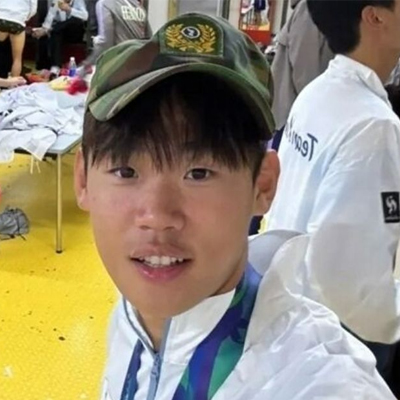
축구 아시안게임 대표인 박승수는 우승 후 라커룸에서 전역모를 쓴 사진을 올렸다.

정책 이슈
칼럼
Savant
After an Asian Games gold medal, is military service exemption an undeniable right?

0
2026. 10. 06
- The remarks made by Asian Games football gold medalists regarding their military service exemptions are not just a simple incident, but a serious blow to the symbolic value and fairness of military duty.
- Military exemptions are merely a policy tool granted by the state for specific achievements, not an automatic reward for individual rights or efforts, exposing the limitations of the anachronistic "national prestige" justification amidst double compensation controversies.
- Amidst the younger generation's sensitive public opinion regarding the inequality of military service, the careless remarks by exemption beneficiaries have hindered civic unity and threatened the very existence of the system.
- The state must recalculate the military exemption system to align with the realities of 2026 and the military structure, ensuring that the joy of exemption and the sacrifice of service are treated with fair weight within the same generation.
It is neither a right nor an automatic reward for effort. The gold medal at Toyota Stadium on the night of October 3, 2026, should have remained a record of the match. The Korean U-23 team defeated host Japan 1-0 to win their fourth consecutive Asian Games men's football title and seventh overall. The winning goal was scored by Um Ji-sung, and around twenty players, excluding three who had already completed their military service, earned the qualification to be incorporated as arts and sports personnel at that moment. Up to this point, it is the language of the game. It was immediately after that the record failed to lead to language of celebration. Captain Lee Ki-hyuk held up his gold medal and said, "I'm not going to the military," Yang Min-hyuk responded in a way that implied he played only for the reward of military exemption rather than the medal and trophy, and Park Seung-soo posted a photo of himself wearing a discharge cap in the locker room. An explanation followed that the cap was not something he brought himself but was thrown from the stands, and the next day, the captain and the Korea Football Association apologized. This is not an issue that can be simply dismissed with an apology.
전역모를 쓴 일은 출신의 해명과 무관하게 상징의 훼손이다. 근대국가의 대전제는 단순하다. 전쟁이 나면 국가를 위해 싸우고, 국가의 번영을 위해 세금을 낸다. 그 전제 위에서 국민은 통합된 시민이 되고 동일한 민족이 되며, 국가는 그 대가로 개인을 지킨다. 유대계 미국인 정치학자 한나 아렌트는 <인간의 조건>이라는 책에서 시민은 공동체를 지키기 위해서 전쟁을 할 준비가 있는 사람이아고 말했다. 복무와 납세는 사적 취향이 아니라 시민이 되는 조건이다. 그 조건의 표식을 금메달의 전리품처럼 쓰는 일은, 고대 그리스에서 신전을 훼손하거나 조선에서 조상을 모시는 신주단지에 오줌을 눈 일과 같은 결에 놓인다. 신전과 신주가 공동체의 신성함을 담았듯, 전역모는 그 의무를 이미 치른 사람의 표식이다. 의무를 피한 자리에서 그 모자를 기념 소품으로 쓰는 순간, 수신자에게 도착하는 문장은 하나다. 당신들의 18개월은 내가 피한 벌칙이었다.
Therefore, this issue cannot be simply overlooked. The purpose of punishment is not to condemn the character of a single athlete. It is to ensure that an exception remains an exception. Severe disciplinary action that the association can take, such as restricting eligibility for national representation, and public sanctions that question the political legitimacy of benefits, are possible. If there is no consequence for expressing the joy of exemption in official language and using the mark of service as a trophy, the next gold medal will be explained with the same sentence. If that consequence is not demanded, the resentment of young people who lost their ankles while working on landmines in the demilitarized zone will not be resolved. Military exemption and landmine accidents are two ends of the same generation. One receives a change in service type based on international competition results, while the other loses a body part while performing the same duty. If only gold medals are accumulated without balancing these two events, duty will only remain as a scene where it is imposed differently depending on the type of talent.
The letter of the law answers no to both. The arts and sports personnel guided by the Military Manpower Administration do not entail the extinguishment of military duty. They are supplementary service personnel who, after 4 weeks of basic military training, spend 34 months in their respective fields and complete 544 hours of public service utilizing their special skills. Although commonly referred to as 'exemption,' the accurate term is a change in the form of service. The criteria for inclusion are a top 3 finish in the Olympics or a 1st place finish in the Asian Games. The system's origin was not an individual right. After South Korea's performance lagged behind North Korea in the 1972 Munich Olympics, it was introduced in 1973 under the pretext of 'promoting national prestige.' The recognized competitions were once broad but significantly reduced after 1990, and the 2002 World Cup Round of 16 and the 2006 WBC Semifinals were briefly included but then removed again in 2008 due to fairness controversies. In 2018, it was even considered for abolition due to conflicts surrounding the selection of baseball national team members, but it was maintained based on the judgment that the annual number of inclusions was only dozens, so the military effect was small, but the morale-boosting effect was significant. In August 2026, the Military Manpower Administration announced that a plan to significantly reduce arts and sports personnel is being discussed as part of a review of the gradual reduction of supplementary service. This system is not a right open to everyone by the Constitution, but a policy lever that the state has attached to specific achievements. A lever goes down when the goal changes.
The saying that reward is proportional to effort is only half true. The victory in the final is clearly the result of effort. Despite being criticized for their completeness throughout the tournament, they achieved results in the final, and Yang Min-hyuk's final cross was part of that process. Not spending 18 months in the military during the early 20s, the peak of a player's career, is the difference between career discontinuity and continuity in sports with short prime periods. For Lee Ki-hyuk, that game was a reality with nine days left until enlistment. It is difficult to call it hypocrisy that military service issues motivate a player who travels between European and domestic stages. Fans, as they did in 2018 and 2022, have supported Asian Games football by overlapping 'gold medals' with 'solving the military service of resources that will lead to the A-team.' The fact that many of the congratulations poured into the community immediately after the victory mentioned military service first is simply the public disclosure of that common calculation.
However, reward is not a private possession automatically attached to the amount of effort. On the same night, other young people of the same age do not even have the track to enter that calculation. The vast majority of those subject to military service examinations are classified as active duty or supplementary service, and the door to becoming an arts or sports agent is open only to a very small number of Olympic medalists, Asian Games gold medalists, and designated art competitions. For young people who spend the same generation in factories and logistics centers, academies and research labs, and small and medium-sized enterprise production lines, the Asian Games final is an object of support, not an accessible competition. For them to turn military service into an 'opportunity to avoid it,' world-class physical capital, youth systems, luck, and the fact that the state has designated that sport as a policy target are simultaneously necessary. It is unfair to compare only the density of effort. Not because the day of a soccer prospect is not hard, but because the type of effort is pre-selected by the state. If the conditions for becoming a citizen are the same, the weight of those conditions must also be the same, regardless of the market price of talent.
The issue of money is intertwined here. Artistic and athletic personnel are not honorary positions without pay. Those incorporated into the system sign contracts with their affiliated clubs, compete in a market where transfer fees and salaries increase, and simultaneously fulfill the public service hours designated by the state. Park Seung-soo belongs to Newcastle, and Yang Min-hyuk belongs to Westerlo. A player who played 16 minutes in three games, or a player who performed poorly throughout the tournament but recorded an assist in the final, all fall under the same eligibility criteria under the current relaxed regulations. The market values talent, and the state adds a change in service form to the international performance of that talent. This is a double compensation. If this is to be called 'a natural reward for effort,' then it must be explained why this reward applies to gold medals in soccer, baseball, and swimming, but not to labor and academics of the same intensity, or to mine clearance. The old justification of promoting national prestige was persuasive in the Cold War report card of 1973. In 2026, when the professional market already values players at global standards, that justification becomes thin. The audience cheers at the Taegeukgi, but the party to the contract is the club.
Therefore, the place where this remark particularly resonated was not about malice. It was a place where young male public opinion was already sensitively heating up the inequality of military service. Arguments for conscripting women, abolishing artistic and athletic personnel, and debates over the fairness of alternative service are not new. The level of North Korean provocations and the tension in the DMZ area add a layer of security to this sensitivity. The fact that Assemblyman Ahn Cheol-soo criticized this behavior and spoke of reconsidering the Asian Games special exemption, and contrasted it with soldiers who lost their ankles to landmines, translates that sentiment into political language. This is also why a photo of someone wearing a discharge cap askew, regardless of the cap's origin, was interpreted as 'mimicking discharge.' Sharing the joy of not having to go to the military and using the symbols of those in the military as commemorative props are received differently by the audience. Just as temples and shrines protect the boundaries of a community, symbols of service also protect those boundaries. If boundaries are crossed with mockery, civic integration remains mere words.
The paradox also lies with the supporters. Fans who only watch soccer have long justified military service exemptions as extending a player's career. Even immediately after winning a gold medal, there were many 'congratulations on the exemption.' However, the moment the beneficiary articulates that calculation in the official language of the national team, even those who shared the calculation turn their backs. Fans may tolerate benefits as a means, but they do not tolerate a representative speaking of benefits as an end. National prestige remains the justification for the system, but the person's words erased that justification. An apology was necessary. Both the captain and the association acknowledged its weight. However, an apology does not change the structure. As long as junior representatives explain gold medals with the same sentences, the intensity of support will decrease, and the political lifespan of the exemption will shorten. The 2019 logic for maintaining the system, that its effect on military recruitment is small, is overturned the moment public opinion perceives it as 'mockery' rather than 'boosting morale.'
It is a door temporarily opened by the state for national prestige and competitiveness in sports, and to the majority who cannot stand before that door, it looks like a closed corridor. For athletes, it is the continuity of their livelihood and career, and for peers enlisting, it is a scene where the same duty is imposed differently depending on the type of talent. If both are not acknowledged simultaneously, this debate will always end in personal attacks. There is no need to belittle the efforts of athletes, nor to package the time of active duty as moral superiority. What is needed is the place of words and the place of institutions. The representative's mouth should speak of the weight of the game before the joy of the benefit, and the state must recalculate whether the justification from 1973 is still valid in the face of the market and military structure of 2026. That calculation must include the time of a young man who lost his ankle in a minefield with equal weight. If the joy of exemption and the scars of service do not meet within one generation, the statement that one becomes a citizen based on the premise of fighting and paying taxes becomes hollow. The condition of citizenship is to actively participate in politics that determines the fate of the community in the public square. The Asian Games military service privilege is the road to slavery.
댓글
( 0 / 500 )
yuna92
8
결국 병역 문제는 누가 더 훌륭한 청년인가를 가리는 경쟁이 되어서는 안 됩니다. 금메달을 딴 선수도, 묵묵히 군 복무를 마친 청년도 모두 존중받아야 합니다. 예외를 인정하는 제도라면 그 예외가 왜 필요한지 국민에게 계속 설명할 수 있어야 합니다.
( 0 / 500 )
난다랑
7
1970년대에 만들어진 국위선양 논리를 지금까지 그대로 적용하는 것이 과연 타당한지 따져봐야 합니다. 선수들의 국제 경쟁력을 지원하는 방법과 병역제도의 형평성을 확보하는 방법은 별개의 문제일 수 있습니다. 제도 개선 논의를 선수 개인에 대한 공격으로 축소해서는 안 됩니다.
( 0 / 500 )
genius74
7
병역특례를 선수 개인의 당연한 권리처럼 생각해서는 안 된다는 주장에 공감합니다. 금메달은 축하받아 마땅하지만, 그 혜택은 국가가 정한 예외적 제도이지 선수의 사적 소유물이 아닙니다. 특히 복무한 또래의 시간을 가볍게 만드는 표현은 신중했어야 합니다.
( 0 / 500 )
길준
6
선수들이 얼마나 피나는 훈련을 했는지는 충분히 인정해야 합니다. 그러나 노력했다고 해서 국가가 제공하는 특정한 혜택까지 당연히 개인의 권리가 되는 것은 아닙니다. 이번 논란은 선수 비난보다 병역특례라는 제도의 정당성을 다시 생각하게 만든다는 점에서 의미가 있습니다.
( 0 / 500 )
papa
6
아시안게임 금메달은 분명 대단한 성취입니다. 하지만 그 성취가 다른 청년의 병역의무보다 우선할 이유까지 자동으로 만들어 주지는 않습니다. 국가대표라는 이름으로 국민의 박수를 받은 만큼, 혜택을 대하는 태도에서도 공동체에 대한 책임이 필요합니다.
( 0 / 500 )
박병규
5
수많은 또래 청년들이 자신의 계획을 미루고 군 복무를 감당하는 현실에서 병역특례를 ‘면제받았다’는 식으로 희희낙락하는 모습은 충분히 비판받을 만합니다. 금메달이 선수의 모든 행동을 정당화하는 면죄부는 아닙니다. 국가대표라면 특혜를 대하는 태도도 달라야 합니다.
( 0 / 500 )
santa
5
전역모 논란에서 중요한 것은 모자를 누가 던졌느냐보다 그것이 어떻게 받아들여졌느냐라고 봅니다. 누군가에게 18개월은 지나간 시간이 아니라 청춘의 일부이고, 어떤 이는 복무 과정에서 몸까지 다쳤습니다. 혜택을 받은 사람이 그 무게를 헤아리는 태도가 필요합니다.
( 0 / 500 )
君王
4
병역특례를 받는 선수에게 비난을 퍼붓자는 이야기가 아닙니다. 문제는 국가가 마련한 예외적 제도를 당연한 개인 보상처럼 여기는 인식입니다. 특히 복무 중인 또래들이 어떻게 받아들일지를 생각한다면 표현과 행동에는 훨씬 더 큰 책임이 따라야 한다고 봅니다.
( 0 / 500 )
오동철
4
전역모를 쓰고 전역을 흉내 내는 행동은 장난으로 치부하기 어렵습니다. 누군가에게 전역모는 힘든 복무를 마쳤다는 증표이고, 누군가에게 군 복무는 여전히 현재진행형입니다. 병역의무를 피할 수 있게 된 기쁨을 표현하는 것과 다른 사람의 복무를 희화화하는 것은 분명히 구별해야 합니다.
( 0 / 500 )
nam_m9
4
금메달을 딴 것과 병역특례를 받은 것은 자랑할 일이지만, 그것을 마치 군 복무를 피한 훈장처럼 말해서는 안 됩니다. 특히 “군대 안 갑니다”라는 표현은 국가대표의 책임감과 거리가 멉니다. 혜택을 누릴수록 그 혜택의 무게부터 알아야 합니다.
( 0 / 500 )
최유미
4
선수들이 너무 어리석네요. 금메달이란 값진 결실이 분명 병역면제보다 그동안 자신들이 흘린 땀에 대한 대가라는 것을 알고 있을 텐데...
( 0 / 500 )
Miranda4k
3
이제는 예술·체육요원 제도를 폐지하는 방향을 진지하게 검토할 때라고 봅니다. 국제대회에서 좋은 성적을 냈다는 이유만으로 병역의무의 형태가 달라지는 것은 형평성 논란을 피하기 어렵습니다. 선수의 경력 보호는 병역특례가 아니라 별도의 제도로 해결해야 합니다.
( 0 / 500 )
대호
2
특정 선수들의 경솔한 발언 문제로만 끝내서는 안 됩니다. 같은 문제가 반복된다면 원인은 개인의 태도뿐 아니라 제도에도 있습니다. 병역은 국민의 의무라는 원칙을 분명히 세우고, 예술·체육요원 제도는 폐지하거나 최소한 전면 재검토하는 것이 필요하다고 생각합니다.
( 0 / 500 )
신고내용
신고내용을 선택해주세요
회원비난/비하/욕설글 및 댓글도배성 게시물저작권 침해/불법자료 유출허위사실유포개인정보 유출.사생활 침해무단광고/홍보음란물 및 도박 불법 광고물범죄행위 관련 글불법행위 관련 소개물품 판매 및 사기글악성코드 및 스파이웨어 유포기타 사유 및 운영진 판단


비밀번호를 잊으셨나요?
Sign in with Google


All information provided by us is free of charge and is for the public good.