品

Corea든 Korea든, 품격은 이름보다 먼저다
Whatever the name—Corea or Korea—dignity comes first.
Whatever the name—Corea or Korea—dignity comes first.
Now
지금
751 Diaspora
Heritage
유산
Humanity
인문
Mirengsi
未冷尸
Politics
정치
Media
언론
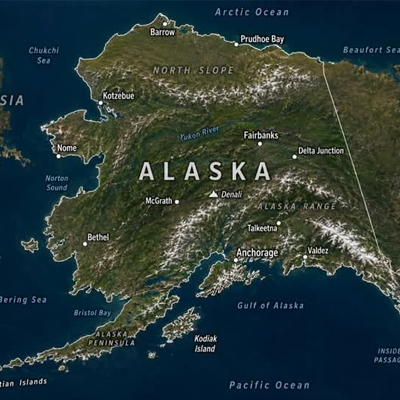
9월 30일 백악관은 한국의 대미 에너지 투자 2,000억 달러 패키지에 텍사스 가스복합화력, 대형 원전 8기, 그리고 알래스카 LNG가 포함된다고 발표했다.

정책 이슈
칼럼
cosign
Trump's Alaska LNG bill and Korea's conditional delay

0
2026. 10. 04
- Trump's pressure for investment in Alaska LNG is highly politically motivated, a unilateral demand that disregards the commercial rationality of existing agreements.
- Instead of an emotional response, Korea should use commercial rationality as a shield to renegotiate investment terms, price, volume, and risk allocation.
- The Alaska LNG project has historically been unrealized due to a lack of economic viability, and it still faces fundamental limitations like high costs and uncertain demand.
- Rather than succumbing to tariff threats and making unreasonable investments, Korea should approach this cautiously, based on its actual interests and commercial feasibility.
Trump's remarks on the 2nd are a typical pressure tactic, pushing unilateral announcements beyond the negotiated text back into tariff leverage. The political logic of the demand is clear, but its contractual and commercial validity is weak. What Korea needs to do now is not to emotionally reject or hastily sign, but to rewrite the price, volume, and risk allocation using the already agreed-upon 'commercial reasonableness' clause as a shield. Alaska LNG itself has remained a project on paper for decades for a reason, and that reason has not yet disappeared.
On September 30, the White House announced that Korea's $200 billion energy investment package in the U.S. would include a Texas gas-fired combined cycle power plant, eight large nuclear power plants, and Alaska LNG. Commerce Secretary Howard Lutnick specifically mentioned Alaska's share as over $50 billion. The Korean government immediately drew a line. Minister of Trade, Industry and Energy Kim Jung-kwan stated that the content in the agreement document was three sentences long, and that reviews would only commence upon confirmation of commercial reasonableness. He also said that he strongly objected to Lutnick, stating that the U.S. announcement went beyond the agreement. President Lee Jae-myung also stated that practical reviews would proceed on the premise that commercial viability is confirmed and domestic legal procedures are met. The wording in the joint fact sheet is closer to 'commence working, subject to commercial reasonableness.' It is not a confirmed investment.
Two days later, Trump filled that gap not by bridging it, but with pressure. “If they don’t want it, that’s fine. We’ll just charge more.” “Tell them if they don’t sign soon, we’ll double it.” He didn't specify what would be doubled, but in context, it's natural to interpret it as referring to the tariffs on the U.S., which were lowered from 25% to 15% last year, or the amount claimed within that package. At the same time, the White House confirmed that this announcement was 'historic' and that Alaskans were looking forward to its construction and completion. This is a scene where political schedules and state politics have overtaken commercial judgment.
So, is the demand reasonable? Not according to the usual practice of alliance management. Writing conditions into an agreement, and then publicly threatening penalties when the other party agrees to those conditions, undermines the very principles of negotiation. What Korea promised last year in exchange for tariff reductions was a certain amount of investment in the US and LNG purchases, not an unconditional investment in a specific pipeline whose commercial viability had not been confirmed. The maximum total investment and annual remittance limits are already on the negotiating table. Within that framework, it is the investor's right to choose which projects to pursue.
However, the logic of power is at play. For Trump, Alaska LNG is a symbol of the energy export narrative and Alaskan politics. Several presidents since the Carter administration have promised the commercialization of North Slope gas, only to be stopped repeatedly by costs and demand. If Asian buyers like Korea and Japan cannot be attracted, the pipeline will be delayed again. That's why he tries to subordinate commercial review to the political agenda with the phrase, 'If you don't sign, you'll get more.' This is consistent as a negotiation strategy, but it is not a contract condition that Korea should accept. If the standard of reasonableness is 'Does the US president want it?', then all demands become reasonable. If it is 'Is it a recoverable investment?', then this demand still lacks sufficient basis.
The business viability is even more sobering. The project structure seems simple. Gas from the Arctic North Slope is sent about 1,300 km via pipeline to Nikiski in the south, and a liquefaction facility with an annual capacity of 20 million tons is built to export to Asia. The total project cost proposed by the developer, Glenfarne, is $44.5 billion to $54.5 billion. The number the US initially presented to Korea was $67 billion, which later came down to $54 billion and then the low $50 billion range. This means the amount itself is a negotiating point.
Unit cost is at the heart of the problem. This scale corresponds to approximately $2.2 billion to $2.7 billion per million tons of annual production capacity. This is more than double the average construction cost of around $1 billion per million tons for US Gulf Coast LNG projects approved since 2022. The costs are divided into three main categories: $13.2 billion to $16.9 billion for pipelines, $7.7 billion to $9.2 billion for northern gas processing facilities, and $23.6 billion to $28.4 billion for the Nikiski liquefaction and shipping facilities. The Gulf Coast only needs to add liquefaction facilities on top of the existing shale gas pipeline network. Alaska, however, has to build entirely new gas field processing, a 1,300 km pipeline over permafrost, and a liquefaction terminal. The construction season is short, labor and logistics are expensive, and construction delays immediately translate into interest costs. This is the background for why Minister Kim Jung-kwan viewed this project as high-risk last year and stated that even the US understands its lack of commercial viability.
The demand side is also not yet closed. Japan, Korea, Taiwan, Thailand, and TotalEnergies have expressed non-binding purchase intentions for 13 million tons per year. This is far from the binding long-term sales contracts needed for financial procurement. Glenfarne had set the Final Investment Decision (FID) for the pipeline for 2026, the FID for export facilities for 2027, and initial exports for 2031, but the schedule has already been pushed back once due to not meeting purchase contract targets. The ownership structure is also 75% Glenfarne and 25% Alaska State. There is a precedent where majors like ExxonMobil, BP, and ConocoPhillips previously pursued this route but then abandoned it. This is not because of a lack of resources, but because the cost of bringing those resources to market erodes the selling price.
It's not without its advantages. The shipping route from Nikiski to Korea and Japan is shorter than departing from the Gulf and passing through Panama. It's true that freight costs and transportation risks are reduced. There's also the supply chain value of adding North America as another source, in addition to the Middle East, Australia, and Russia. The conditions proposed by the U.S. – economically viable long-term purchase agreements, priority access for Korea, reduced tariffs on steel and equipment, and participation of Korean companies in construction – can compensate for some of the investment recovery through other channels. If the profit and loss of investments in the U.S. are settled in an umbrella-like manner rather than project by project, a structure where the more profitable Texas gas combined cycle power plant (government estimated $22.3 billion investment, 1.9-2.0 times recovery over 20 years) partially covers Alaska's deficit is also possible. However, that's not proof that Alaska is self-sustaining, but rather closer to meaning that the profits from other businesses are subsidizing a political project. If Korea's domestic LNG demand stagnates or decreases due to changes in industrial and demographic structure, the long-term purchase obligation becomes a contract to bear expensive gas.
It's appropriate to divide the response into three layers.
First, re-establish the wording. The entirety of the agreement is the initiation of a review conditioned on commercial rationality and domestic legal procedures. This sentence must be fixed as the standard for parliamentary reports, investment reviews, and external explanations. Trump's public statements are political messages, not contract amendments. The minimum defense is for Minister Kim to document the objections he has already made through official channels, so that reinterpretations of 'agreement' are not repeated later.
Second, convert the numbers into conditions. Instead of completely blocking participation, Korea sets the price of participation. The investment cap should not be the $50 billion mentioned by the US, but rather a figure calculated backward from Korea's affordable annual remittance limit and a total of $200 billion. Preconditions must include the equity ratio, minimum profit guarantee, who bears cost overruns, penalties for construction delays, a cap on long-term purchase prices (reflecting freight savings compared to Gulf FOB), and a mandatory percentage of Korean equipment and construction volume. Korea can simply adopt the financial practice of not committing funds to FID until binding purchase agreements cover a significant portion of the facility's capacity. If the US genuinely lowers costs through federal credit guarantees or tax credits, that effect should be reflected in the price; if not, the investment scale should be reduced, or participation should shift from equity to purchasing and equipment supply.
Third, accept the tariff threat as a whole package. If 'double' means the restoration of a 15% tariff, it's not just an issue with the Alaska project, but a renegotiation of the entire tariff agreement from last year. Since automobiles, parts, and electronics are already under the 15% regime, it is more advantageous for Korea to maintain negotiating power by bundling the Texas power plant, nuclear power, equipment tariffs, and LNG purchases together, rather than rejecting Alaska in isolation. A structure where Korean capital simultaneously takes on 8 nuclear power plants (estimated at about $120 billion) and Alaska effectively nullifies the total cap. The correct order is to prioritize power generation projects with visible profits and technological participation, leaving Alaska as an option.
The tone of public response is also important. If we only push the narrative that 'the US is forcing us,' it becomes material for Trump's domestic politics. The narrative that 'the signed conditions are for commercial viability, and we will expedite that review' aligns with the text and also eases the pressure. While the review results should not be predetermined, the review criteria should be disclosed in advance: unit investment cost, binding sales contract ratio, cost overrun sharing, and competitiveness of domestic import prices. If these four are not met, it is rational for the investment scale to be reduced to near zero.
While Trump's demand is understood as a political bill to revive the Alaska project, there is no reason for Korea to accept it as is, given the agreement's wording and the project's cost. Alaska LNG has the real advantage of transportation distance, but there is no evidence yet that this advantage offsets the excess costs of pipelines and liquefaction facilities. Korea's response is not a rejection but a conditional delay. Money will not be invested until commercial viability is confirmed by numbers, and even if confirmed, it will only be invested under a structure where risks and equipment shares return to Korea. If this line is not maintained, tariffs may be temporarily lowered, but expensive gas and unrecovered investments will remain for longer.
댓글
( 0 / 500 )
GoldHunter
8
알래스카 LNG를 무조건 거부하자는 이야기가 아니라 상업성이 확인될 때까지 돈을 넣지 않는다는 원칙이 핵심이네요. 외교적 압박과 투자 판단을 분리해야 한다는 지적에 공감합니다.
( 0 / 500 )
minjoon
8
미국 대통령이 서명 시한을 정하고 비용을 두 배로 올리겠다고 압박한다고 해서 한국 기업과 정부가 경제성 검토를 생략할 이유는 없습니다. 결국 투자금은 국민과 기업의 돈이고, 회수 가능성을 따지는 것이 정상적인 절차입니다.
( 0 / 500 )
Hyejin
8
한국이 취할 수 있는 방법이 ‘예스냐 노냐’의 양자택일이 아니라는 점이 설득력 있습니다. 발전·원전·LNG·기자재 참여를 하나의 패키지로 묶고, 각각의 수익성과 위험을 따져 투자 규모를 조정하는 방식이 현실적인 협상 방법일 것 같습니다
( 0 / 500 )
73s_kim
6
결국 조건부 지연은 시간을 버는 전략이라고 봅니다. 상업성이 입증되면 참여하면 되고, 숫자가 나오지 않으면 규모를 줄이면 됩니다. 중요한 것은 정치적 압박 때문에 계약 조건이 바뀌지 않도록 처음 합의한 ‘상업적 합리성’이라는 기준을 끝까지 유지하는 것입니다.
( 0 / 500 )
windy
5
트럼프의 발언과 실제 계약 문구를 구분해야 한다는 지적이 중요합니다. 대통령의 공개 발언이 아무리 강해도 투자계약의 조건을 대신할 수는 없습니다. 한국은 감정적으로 맞설 필요도 없지만, 이미 합의한 조건을 임의로 확대 해석하는 것도 받아들일 필요가 없습니다.
( 0 / 500 )
silkroad
4
LNG 확보라는 에너지 안보 논리와 특정 사업에 대한 지분 투자는 서로 다른 문제입니다. 미국산 LNG를 장기 구매하는 것과 알래스카 프로젝트의 건설비 위험까지 한국이 부담하는 것은 전혀 다른 선택입니다. 이 둘을 분리해서 협상할 필요가 있습니다.
( 0 / 500 )
크리스
3
특히 눈여겨볼 부분은 알래스카 LNG의 높은 건설비입니다. 파이프라인과 액화시설을 모두 새로 만들어야 하는 구조라면 단순히 미국산 LNG라는 이유만으로 장기계약을 맺어서는 안 됩니다. 가격과 위험 배분을 먼저 따져야 합니다.
( 0 / 500 )
lalaland
3
미국과의 에너지 협력을 지속하면서도 한국의 투자 심사 기준을 지키는 것이 관건입니다. 특히 비용 초과와 공기 지연을 누가 부담하는지, 장기 구매가격이 경쟁력이 있는지부터 따져야 합니다. 동맹과 투자는 중요하지만 결국 계약은 숫자로 판단해야 합니다.
( 0 / 500 )
아리
3
알래스카 LNG 문제에서 가장 중요한 것은 ‘미국에 얼마나 협조하느냐’가 아니라 ‘한국이 어떤 조건으로 참여하느냐’인 것 같습니다. 관세를 피하기 위해 수익성이 불분명한 사업에 투자한다면 결국 관세보다 더 큰 비용을 치를 수도 있습니다
( 0 / 500 )
Jane
2
‘대미 투자 2,000억 달러’라는 큰 숫자에 매몰되면 개별 사업의 손익이 가려질 수 있습니다. 투자금은 총액보다 어디에 들어가고 누가 위험을 부담하며 언제 회수하는지가 중요합니다. 알래스카 LNG도 이 원칙에서 예외가 되어서는 안 됩니다.
( 0 / 500 )
신고내용
신고내용을 선택해주세요
회원비난/비하/욕설글 및 댓글도배성 게시물저작권 침해/불법자료 유출허위사실유포개인정보 유출.사생활 침해무단광고/홍보음란물 및 도박 불법 광고물범죄행위 관련 글불법행위 관련 소개물품 판매 및 사기글악성코드 및 스파이웨어 유포기타 사유 및 운영진 판단


비밀번호를 잊으셨나요?
Sign in with Google


All information provided by us is free of charge and is for the public good.