品

Corea든 Korea든, 품격은 이름보다 먼저다
Whatever the name—Corea or Korea—dignity comes first.
Whatever the name—Corea or Korea—dignity comes first.
Now
지금
751 Diaspora
Heritage
유산
Humanity
인문
Mirengsi
未冷尸
Politics
정치
Media
언론
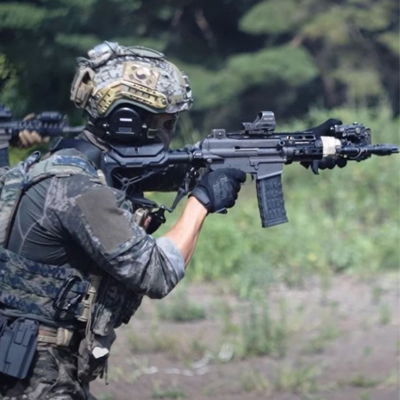
폭발은 이번 달 21일 오전, 서부전선 25사단 관할 DMZ에서 일어났다. 유엔사 현장 조사를 앞두고 우리 군이 수색로를 개척하던 중이었다.

정책 이슈
칼럼
英雄本色
Reasons for pushing the military into an unconfirmed minefield

0
2026. 09. 30
- JCS's official announcement, while appearing to be a notice of accident management, is actually a statement made amidst intense political debate.
- With the source of the landmines at the accident site difficult to ascertain, conservative forces are framing it as a North Korean act, using it as a political tool to criticize the current government's security posture.
- DMZ operations are not solely decided by the ROK military; they occur within the complex dynamics of UNC and the ROK-US alliance, raising fundamental questions about the ROK military's independent judgment.
- This incident could lead to deeper alliance dependence, linked to the OPCON transfer, and leaves questions about the ROK military command's authority and responsibility to adjust or reject UNC demands.
The data released by the Joint Chiefs of Staff on September 26 is written in the military's most familiar language. It states that our military and the UNC jointly secured a maneuver route and surveyed the operational environment in connection with the suspected mine explosion in the DMZ, that a TF from the Vice Chairman of the Joint Chiefs of Staff, the UNC Military Armistice Commission, investigative agencies, and about 20 operational personnel were deployed, that some of the soldiers who participated in the operation on the 21st voluntarily joined, that the safety of the movement route and the status of surveillance and communication were confirmed, that a joint investigation has been prepared with the safety of the soldiers secured, and that the results will be transparently explained, and a request for caution as exposure of the schedule would threaten safety. If you only look at the sentences, it's a notice of accident resolution. However, the place where this short notice was issued is already at the heart of politics.
The explosion occurred on the morning of the 21st of this month in the DMZ under the jurisdiction of the 25th Division on the western front. Our military was clearing a search path ahead of the UNC's on-site investigation. 18 soldiers wearing mine detectors, protective suits, and overshoes entered, and the leading sergeant was injured first, and the search battalion commander, who was trying to rescue him, was more seriously injured in the second explosion. One person suffered a severe injury, equivalent to an ankle amputation. The Joint Chiefs of Staff stated that the accident site was near the Military Demarcation Line and repeatedly said that they would investigate, keeping all possibilities open, including North Korean mines, lost mines, and remaining South Korean mines. Fragments were sent to the National Forensic Service, and body cams were sent for internal military analysis. The deployment on the 26th was not the main investigation but an environmental check for the main investigation.
In the same division, there was another silence the next morning. A captain working at the division headquarters was found dead in his quarters. The military said he was not directly involved in the search operation but worked on operational planning, and there were no signs of foul play. The cause of death has not yet been determined. This death cannot be definitively concluded as evidence of the accident. However, when a person injured on site and a person found dead in their quarters overlap in the same division, within the same 48 hours, politics does not leave that overlap alone. The opposition party hints at internal unrest and cover-up, and the military blocks it by stating low relevance. The way an unconfirmed death is attached to a confirmed explosion is precisely the typical path by which political strife swallows an incident.
At the forefront of that path are the People Power Party and the conservative public opinion surrounding it. Immediately after the accident, Yoo Yong-won's office leaked information that it was near a minefield, Na Kyung-won held an emergency press conference, and Han Dong-hoon continued a one-person protest in front of the Ministry of National Defense until Chuseok. "Finding evidence is a race against time," "Are you going to fight after the holidays even if there's a war?" The frame is consistent. North Korea crossed the Military Demarcation Line and planted mines, the government and military knew but delayed, and not opening the site before the heavy rain was a dereliction of duty. With the added symbolism of the first serious injury south of the Military Demarcation Line in 11 years since the 2015 wooden box mine incident, the conservative security narrative almost automatically kicked in. The soldiers' ankles are packaged in humanitarian language, but the real target is the Lee Jae-myung government's North Korea and security posture. The indiscriminate statements made by some conservative forces, including the People Power Party, regarding military operations within the DMZ, and their premature claims and attempts to instigate political strife, should be avoided. In the future, we must be wary of the possibility that this is linked to the US's move to strengthen the UNC, combining existing practices and systems, in conjunction with the transfer of wartime operational control.
The reason this pressure is dangerous is due to the nature of the site. The accident site is tens of meters, or according to reports, 50 to 100 meters south of the Military Demarcation Line. It is within the range of small arms fire, and there is insufficient cover. The access road itself is not guaranteed to be safe. The accident on the 21st happened precisely when that road was being opened. To now demand 'immediate re-entry' is like asking to reopen a road that has already been breached, to fit a political schedule. The主体 of re-entry is not those shouting slogans. The troops most familiar with the site are the reconnaissance battalion, and its commander is absent due to serious injuries. Pushing a unit whose commander has fallen back into the same suspicious area is not an operation, but a political redeployment.
When the opposition party pushes for "Go in now before the evidence disappears," the ruling party and the military respond with "We cannot go in until procedures and safety are secured." Both sides speak of soldiers, but soldiers are a pretext for both. One side tries to seize the time for evidence, the other for procedures. The Democratic Party and the Presidential Office's responses of "using bloodied soldiers for political strife" and "there is no cover-up" are merely the opposite side of that confrontation. The promise of a swift and thorough investigation made during an overseas trip also serves to reject the opposition's demand for immediate disclosure. The Joint Chiefs of Staff's security warning is also dual-edged. It is a military warning not to show the enemy the route, and also an administrative warning not to let domestic politics disrupt the rhythm of the field. However, it has already been disrupted.
The offensive to hastily conclude that the source of the landmine was a North Korean wooden box mine is in the same context. The military is keeping all possibilities open: remnants of our own forces, loss, and North Korean emplacement (possibility). What Minister Kang Shin-cheol said was not "it's our mine," but rather "we don't rule out any possibility" and "we cannot currently confirm the congruence between the suspected minefield and the accident site." It is also difficult to determine the source based solely on the nature of the injuries. The 2015 wooden box mine caused injuries where legs were blown off, while this time, serious injuries occurred despite wearing protective gear. A military official also explained that it would be difficult to sustain such trauma with only our military's M14 mine if overshoes were worn. There is currently no basis to conclude that the possibility of it being our own mine is high, nor is there a basis to definitively state that it was a North Korean wooden box mine. To accuse, without evidence, that "no warning shots were fired while they crossed over and planted them" is not an investigation but incitement.
The real question to ask is elsewhere. Why was a search route opened at that dangerous spot, at that time? The reason given by the military is clear. It was to create an access route ahead of the UN Command's on-site investigation. To confirm North Korea's topographical changes and suspected mine-laying with the UN Command, a path was needed, and an accident occurred when our military opened that path first. If so, the point that politics should focus on is not 'why didn't they go in before Chuseok?' but 'why did that path have to be opened for the UN Command investigation?', and 'could the ROK military command have adjusted or refused that request?'
The DMZ is not a space solely for the ROK military. It is overlaid with an armistice agreement system, the UN Command, and a supervisory structure where the US military effectively holds the core. Helicopter deployment, joint task forces, and the main investigation schedule are all shared with the UN Command. With wartime operational control not yet transferred, every incident in the DMZ can be intertwined with the needs of the ROK-US alliance. In a phase where North Korea has declared two hostile states and is fortifying its border, if South Korea independently verifies and responds to minefields, the initiative for tension management shifts to Seoul. Conversely, if an accident occurs, the investigation is delayed, and political disputes escalate, the logic that 'it is still too dangerous for the ROK military alone' and 'cooperation with the UN Command and US military is essential' is strengthened. From the perspective that views the withdrawal of US Forces Korea and the transfer of wartime operational control as a national task, this accident has the effect of reconfirming alliance dependence. This is not a confirmation but an interpretation. However, the institutions that make this interpretation possible are already on the ground.
Within the military, there is a continuity in routinely handling the ROK-US alliance and UNC channels. 'Investigation after securing safety' is a measure to protect service members, and it can also be a technique to align the rhythm of the investigation with alliance schedules and internal hierarchy. The explanation that the operation on the 21st was to 'create conditions' for the UNC investigation itself demonstrates that hierarchy. Although it is our land, the ROK military is the one that first opens the way, and the UNC is the one that shares the authority of the official investigation. Service members step on it, and the agreement system participates in the judgment. It is possible to place this request for on-site verification on the trend where the UNC has been trying to re-emphasize its armistice management function. What has been confirmed is simpler. The primary driving force behind the dangerous operation was not slogans on the street, but the ROK military's creation of conditions aligned with the UNC schedule. The reason why the command could not readjust that schedule has not yet been explained. Leadership that protects subordinates sometimes includes refusal.
The safety, transparency, and security repeatedly mentioned in the JCS data are closer to official language that obscures that cycle. The necessary order is clear. Emotional North Korea-related conclusions before determining the source, inflammatory criticism of the Chuseok schedule, and demands to send injured units back on the same path must be set aside. Instead, we must ask: Did the UNC on-site verification absolutely have to be at that point, in that manner? Does the ROK military actually have the authority to negotiate, delay, or refuse that request? In the space where wartime operational control and armistice management overlap, who ultimately decides whether our service members enter? As long as the military continues to be pushed into unconfirmed minefields, explosions can happen again, and those explosions will again become political disputes. The explosion on the 21st, the silence on the 22nd, and the announcement on the 26th merely show that South Korea has not yet fully answered the question of whether the land our service members tread is opened and closed solely by the judgment of our military.
댓글
( 0 / 500 )
滿俊
8
이번 사건에서 가장 중요한 것은 지뢰가 북한 것인지 아군 것인지부터 단정하는 일이 아니라, 왜 그 위험지역에 장병들이 들어가야 했는지를 밝히는 것이라고 봅니다. 유엔사 조사 준비 과정이었다면 누가 어떤 판단으로 작전을 승인했는지, 안전성 검토는 충분했는지부터 투명하게 설명해야 합니다.
( 0 / 500 )
Tahiti83
8
증거가 중요하다는 말 자체는 맞지만, 미확인 지뢰지대에 사람을 다시 투입하는 것이 증거 확보의 유일한 방법인 것처럼 주장해서는 안 된다. 군사작전의 판단을 정치 일정에 맞추라는 식의 요구가 과연 장병을 보호하는 안보인가 묻고 싶다.
( 0 / 500 )
james_kang
7
장병들이 이미 지뢰 폭발로 크게 다친 상황에서 한동훈과 국민의힘이 해야 할 일은 현장에 들어가라고 재촉하는 것이 아니라 안전한 조사와 정확한 진상규명을 요구하는 것 아닌가. 안보를 말하면서 정작 장병의 생명을 정치적 압박의 수단으로 삼아서는 안 된다.
( 0 / 500 )
cyberpunk
6
장병 두 명이 피해를 입은 직후라면 정치권이 먼저 해야 할 일은 책임 공방이 아니라 현장 안전과 사실 확인이어야 합니다. 특히 이미 사고가 난 수색로에 다시 들어가라고 압박하는 것은 신중해야 합니다. 증거 확보도 중요하지만 장병의 생명보다 앞설 수는 없습니다.
( 0 / 500 )
hannam
5
이번 글에서 가장 눈에 들어오는 대목은 ‘지뢰의 출처’보다 지휘체계와 의사결정 구조를 묻는 부분입니다. DMZ라는 특수한 공간에서 한국군과 유엔사의 역할이 어떻게 나뉘고, 위험한 작전의 최종 판단권이 누구에게 있는지 국민에게 설명할 필요가 있습니다.
( 0 / 500 )
park72
4
한동훈이 연일 즉각 조사를 요구하지만, DMZ 현장은 일반적인 사건 현장과 다르다. 추가 지뢰 가능성과 북한의 감시·사격 위험까지 고려해야 한다. 정치인이 국방부 앞에서 목소리를 높이는 것과 현장 지휘관이 병사의 생명을 걸고 작전을 결정하는 것은 전혀 다른 문제다.
( 0 / 500 )
elite85
4
국민의힘이 정말 장병들을 위한다면 ‘왜 지금 당장 안 들어가느냐’는 정치적 구호보다 누가 어떤 절차로 작전을 결정했고 위험평가는 적절했는지를 따져야 한다. 사고 원인이 북한 지뢰인지조차 조사 과정에서 확인되는 상황에서 정치권이 먼저 결론을 만들어서는 안 된다.
( 0 / 500 )
오리온74
4
북한 매설 가능성도, 아군 잔존 가능성도 아직 조사 중이라면 정치권이 먼저 결론을 만들어서는 안 됩니다. 안보 문제일수록 사실보다 정치적 프레임이 앞서면 결국 피해를 보는 것은 현장의 장병들입니다. 조사 결과를 기다리면서 동시에 작전 승인 과정은 철저히 따져야 합니다.
( 0 / 500 )
pkpk62
3
안보는 목소리의 크기로 증명되는 것이 아니다. 이미 세 명의 장병이 다친 현장에 또다시 사람을 밀어 넣으라고 압박하는 것보다, 안전 확보 후 증거를 보존하고 책임 소재를 밝히는 것이 군을 존중하는 태도다. 장병의 희생을 정치적 공세의 연료로 사용하는 정치는 이제 그만했으면 한다.
( 0 / 500 )
남일준
1
전작권이나 유엔사 문제까지 연결하는 부분은 앞으로 더 많은 사실 확인이 필요하겠지만, 적어도 하나의 질문은 분명합니다. 우리 장병이 목숨을 걸고 들어가는 공간에서 ‘누가, 왜, 어떤 절차로 들어가게 했는가’를 국민이 알 권리가 있다는 것입니다. 이번 사고를 단순한 지뢰 폭발 사고로만 끝내서는 안 됩니다.
( 0 / 500 )
신고내용
신고내용을 선택해주세요
회원비난/비하/욕설글 및 댓글도배성 게시물저작권 침해/불법자료 유출허위사실유포개인정보 유출.사생활 침해무단광고/홍보음란물 및 도박 불법 광고물범죄행위 관련 글불법행위 관련 소개물품 판매 및 사기글악성코드 및 스파이웨어 유포기타 사유 및 운영진 판단


비밀번호를 잊으셨나요?
Sign in with Google


All information provided by us is free of charge and is for the public good.