品

Corea든 Korea든, 품격은 이름보다 먼저다
Whatever the name—Corea or Korea—dignity comes first.
Whatever the name—Corea or Korea—dignity comes first.
Now
지금
751 Diaspora
Heritage
유산
Humanity
인문
Mirengsi
未冷尸
Politics
정치
Media
언론
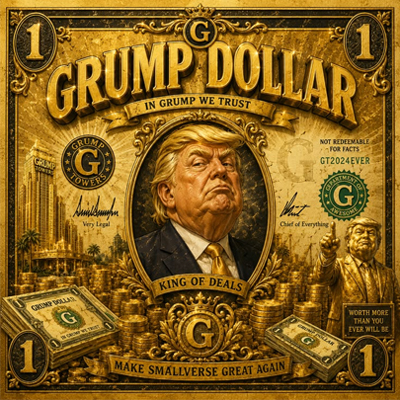
2025년 한미가 만든 3,500억 달러 패키지를 한 문장으로 줄이면, 미국은 한국산 제품에 대한 관세를 무기로 들고, 한국에게 ‘시장 접근을 유지하려면 현금을 들고 오라’는 것이다

정책 이슈
칼럼
HumanX
The reality of the $350 billion US-Korea package

0
2026. 09. 26
- The US is leveraging Korea's trade surplus to impose tariffs or demand specific business investments, which is akin to "conditional remittances" tied to market access.
- Korea promised $200 billion in strategic industry investments and $150 billion in shipbuilding cooperation in exchange for reduced auto tariffs, but the power to select investment projects and the profit-sharing structure are skewed in favor of the US.
- Many projects proposed by the US lack commercial viability and exceed Korea's capacity, with the US pressuring for upfront execution, thereby increasing Korea's financial burden.
- Korea finds it difficult to refuse US demands due to the immediate risks of tariff hikes and deteriorating security relations, but accepting commercially unviable projects goes beyond the essence of an alliance.
- Therefore, rather than accepting all projects proposed by the US, Korea must protect its minimal sovereignty by ensuring commercial viability and the participation of Korean companies.
To summarize the $350 billion package created by Korea and the US in 2025 in one sentence, the US is using tariffs on Korean products as a weapon, telling Korea to 'bring cash if you want to maintain market access.' In exchange for lowering tariffs on automobiles and parts from 25% to 15%, Korea promised $200 billion in cash for strategic industries and $150 billion for shipbuilding cooperation. The deadline for selecting projects is January 2029, when Trump's term ends, and the cash portion is to be deposited in installments with an annual limit of $20 billion.
Calling this structure 'investment cooperation' is the language of diplomatic documents. Looking at the content, a more accurate term would be 'conditional remittance' secured by market access. The logic presented by the US is simple: since Korea has a surplus from exports to the US, either a portion of that surplus should be collected in the form of tariffs, or it should be invested in projects designated by the US. The outward appearance of this binary choice is negotiation. Internally, if you refuse, it's tariffs; if you accept, it's cash.
This choice is close to an imposition, as revealed by three facts.
First, Korea does not have the final authority to choose what to buy. According to the MOU of November 14, 2025, the $200 billion projects are recommended by an investment committee chaired by the US Secretary of Commerce and chosen by the US President. The consultative committee, chaired by the Korean Minister of Industry, can provide opinions in advance. The phrase 'only commercially reasonable investments are recommended' is included. However, it is clear who interprets the threshold for recommendation and who gives the final approval. The party paying the money and the party choosing the goods are different.
Second, it is not an equal joint venture in terms of profit distribution. Before repayment of principal and interest, it's 50-50 between Korea and the US. After repayment, it's 1 for Korea and 9 for the US. There is a safeguard that allows for adjustment of the ratio if recovery seems difficult within 20 years. Nevertheless, the basic design is clear. The high-risk initial phase is split evenly, while the profitable later phase is taken by the US. In September 2026, the US went a step further. Reports emerged that the US was weakening the umbrella-type SPV (a structure where losses from one project are covered by profits from another) that Korea proposed, and trying to change it to project-specific profit and loss. If that happens, 'commercial reasonableness' will remain just a phrase, and the holes from failing projects will remain in Korea's account.
Third, the projects favored by the US and those that Korea can handle are at odds. As of September 2026, the first project being discussed, the Texas Encinal Gas Combined Cycle, has a total project cost of approximately $22.3 billion and a capacity of about 6.3 GW. There is a justification for AI data center power demand. However, the project cost increased from $19.8 billion to $22.3 billion, after the US requested $25 billion. The eight large nuclear power plants in the US, which are being discussed as the second project, cost approximately $15 billion each, totaling about $120 billion. The US is talking about Westinghouse AP1000 and a minority stake (5-10%), while Korea is talking about at least two KEPCO APR-1400s and a 15% stake and board membership. Alaska LNG, a key project for Trump, is considered by Korea to have low commercial viability. Nevertheless, it repeatedly comes up at the negotiating table. Although there are reports that the Louisiana LNG terminal, Midwest carbon capture, and spent nuclear fuel recycling have been removed from consideration, even with the remaining three projects, the $200 billion limit is tight.
여기에 선집행 압박이 겹친다. 미국은 연 200억 달러 한도의 상당액을 2026년 말까지 먼저 보내라고 한다. 한국은 올해 소액, 내년부터 본집행을 상정했다. 이재명 대통령이 9월 18일 “동의하기 어려운 부분이 있다”고 한 지점이 바로 회수·배분·손실이다. 같은 주 미 국무부는 외교장관 회담 자료에서 신속한 이행을 앞세우고 반도체 협력을 거론했다. 협상이 늘어지면 관세 카드가 다시 보인다. MOU에도 납입을 안 하면 이자를 미국이 가져가고, 관세가 오를 수 있다고 적혀 있다.
The funding story also aligns with this picture. The government says it "will not touch foreign exchange reserves." That's true. Official procurement comes from interest and dividends earned by the Bank of Korea and KIC from managing foreign currency assets, and the shortfall is covered by government-guaranteed dollar bonds from the Korea-US Strategic Investment Corporation (KUIC). The corporation's capital of 2 trillion won is not principal but an operational and guarantee buffer. However, even if the principal is not reduced, the profits that would have increased the original holdings will go to US projects. What Korea is putting forth is not "idle money" but the future increase in public foreign currency assets. This is a different account from the National Pension Service or corporate retained earnings.
The $150 billion for shipbuilding is a bit different. It's not a lump-sum cash payment, but rather direct investment by Korean companies in the US, guarantees, and ship financing. HD Hyundai Heavy Industries, Samsung Heavy Industries, Hanwha Ocean, and the Export-Import Bank of Korea, Korea Development Bank, Korea Trade Insurance Corporation, and Korea Ocean Business Corporation formed a consultative body in June 2026. Hanwha's Philadelphia shipyard is symbolically mentioned. This axis offers Korean companies the opportunity to secure work. The government has also explained that the profits from the shipbuilding sector will accrue to Korean companies. Therefore, covering the entire package with the single word 'extortion' is an exaggeration. However, for the $200 billion cash axis, that expression is not an exaggeration in many respects. The pressure for selection rights, allocation, advance execution, and transfer of bad assets is concentrated there.
So why is it difficult for Korea to refuse? Economic figures alone cannot explain it. This is because the political and military structure gives weight to the tariff card.
The ROK-US alliance is not the backdrop for a trade agreement, but the foundation of the negotiations. The joint fact sheet from the same period included a 3.5% increase in defense spending as a percentage of GDP, the purchase of $25 billion worth of US weapons by 2030, and expanded support for US Forces Korea. The US included its support for Korea's peaceful uranium enrichment and spent nuclear fuel reprocessing procedures, and approval for the construction of nuclear-powered attack submarines in the same document. Trade and security are on the same table. If tariffs are rejected, automobile and parts exports will be hit first. Following that are heavier items such as alliance management, wartime operational control, extended deterrence, and deterrence against North Korea. The Korean government's repeated statement that 'we won't do it if there's no commercial rationality' means that while it understands this foundation, it cannot lift the entire foundation.
Trump-style deals make this foundation even more explicit. They view alliances not as a communal obligation, but as a contract where the bill is due immediately. Japan's promise of a larger package also put pressure on the Korean negotiating team. The comparison that 'other countries have paid, so if Korea doesn't, tariffs will return' is at play. Domestic politics are the same. If tariffs rise, export-oriented large corporations and their partners, employment, and growth rates are seen first. The long-term failures of the investment package are seen later. The election cycle makes it difficult to overcome the latter.
So the question, 'Should we succumb to this extortion?' is not a moral issue, but a question of who pays the price of refusal. The price of refusal is immediate. The 15% tariff could revert to 25%, semiconductor treatment could falter, and the door to shipbuilding cooperation could narrow. The clauses regarding nuclear submarines and enrichment in the alliance document could also be politically reinterpreted. The price of acceptance is dispersed: a limit of $20 billion per year, over 10 years, foreign exchange operating profits, public bonds, and the failure of individual projects. It's less noticeable. That's why nations often lose in such deals.
To make it a choice rather than submission, the criterion is whether Korea adheres to the mechanisms it has already secured in documents in actual contracts. This includes the explicit mention of the $20 billion annual limit, the quantification of commercial rationality—whether the revenue returning to Korea covers the principal and interest—the maintenance of an umbrella-type SPV, Korean project managers, the participation of Korean companies in equipment and EPC, the exclusion of projects with no visible recovery like Alaska, and the refusal of advance execution. If this list is omitted, the 15% tariff will be received, but the $200 billion will become seed money for US domestic political projects with a low probability of recovery. This is also the point where President Lee Jae-myung put the brakes on the working agreement. It is true that putting the brakes on increases tariff risks. If the brakes are not applied, only the form of the risk changes.
The minimum sovereignty Korea can exercise in this deal is not to say 'no' entirely, but to insist on not doing certain projects. The current structure does not have the power to overturn tariffs and alliances all at once. However, it is not the destiny of an alliance to pour public foreign exchange profits into every project chosen by the US president. An alliance is a transaction of stationing and deterrence, not a contract to cover the losses of Texas power plants and Alaska pipelines with Korean finances.
In summary, the US intends to recoup the benefits of South Korean exports through either tariffs or cash. The form of this recoupment has taken the shape of MOUs, special laws, and public corporations. South Korea, facing both tariffs and security concerns, finds it difficult to close the door. However, accepting commercially unviable projects after opening the door is not an alliance, but rather a transfer. The issue for September 2026 is already on that borderline. Whether or not there is capitulation will be determined not by the large sum of 350 billion, but by the recoupment clauses in the first and second contracts to be signed in the future.
댓글
( 0 / 500 )
오리온
10
핵심은 3,500억 달러라는 숫자 자체보다 그 돈을 누가 고르고, 어떤 조건으로 집행하며, 손실이 발생했을 때 누가 부담하느냐에 있는 것 같습니다. 투자협력이라는 외교적 표현 뒤의 계약 구조를 꼼꼼히 따져봐야 한다는 지적에 공감합니다.
( 0 / 500 )
홍해
8
동맹국의 시장 접근을 관세로 압박하고 거액의 투자를 요구하는 방식은 정상적인 경제협력이라기보다 힘의 우위를 이용한 거래에 가깝습니다. 동맹이라면 상대국의 부담과 위험까지 일방적으로 떠넘기는 방식이 아니라 상호 이익을 전제로 해야 합니다.
( 0 / 500 )
토트넘
6
미국이 한국에 요구하는 사업의 선정권은 미국이 쥐고 위험과 자금 부담은 한국이 떠안는 구조라면 공정한 투자협력이라고 보기 어렵습니다. 동맹이라는 이름 아래 경제적 부담을 일방적으로 요구하는 관행은 재검토할 필요가 있습니다.
( 0 / 500 )
Pink6
5
트럼프식 거래 외교는 동맹마저 관세와 돈의 계산서로 바꾸어 버린다는 점에서 우려스럽습니다. 안보와 신뢰를 공유해야 할 동맹국에 시장 접근을 지렛대로 거액의 투자를 압박한다면, 단기적인 이익은 얻을 수 있어도 동맹의 상호 신뢰에는 부담이 될 수 있습니다.
( 0 / 500 )
poly
5
관세를 먼저 꺼내 들고 상대국에 대규모 투자를 요구하는 방식이 과연 자유로운 협상이라고 할 수 있는지 묻게 됩니다. 특히 투자 대상의 선정권과 수익 배분, 손실 위험까지 따져보면 힘이 센 나라가 협상력을 이용해 부담을 전가하는 구조가 될 수 있습니다. 트럼프 정부는 동맹을 거래의 대상으로만 바라보는 접근에서 벗어날 필요가 있습니다.
( 0 / 500 )
김길규
4
관세를 피하기 위해 투자하는 것과 상업적으로 타당한 사업에 투자하는 것은 전혀 다른 문제입니다. 한미동맹을 유지하는 것과 미국이 원하는 사업의 위험까지 한국이 떠안는 것은 구분해야 합니다. 결국 개별 사업의 수익성과 회수 가능성이 가장 중요한 기준이 되어야겠습니다
( 0 / 500 )
bigBOY
4
숫자가 3,500억 달러에 이르다 보니 자칫 총액만 보고 판단하기 쉽지만, 실제로 중요한 것은 자금의 성격과 위험의 귀속인 것 같습니다. 특히 2,000억 달러와 1,500억 달러를 구분해 살펴봐야 한다는 지적이 설득력 있게 다가옵니다.
( 0 / 500 )
sarang2948
3
특히 ‘돈을 내는 쪽과 사업을 고르는 쪽이 다르다’는 대목이 눈에 들어옵니다. 투자 규모가 아무리 커도 선정권과 손실 부담이 한쪽에 치우친다면 문제가 될 수 있습니다. MOU의 문구보다 실제 계약에서 한국의 통제권과 안전장치가 어떻게 보장되는지 지켜봐야겠습니다.
( 0 / 500 )
mama
3
관세를 낮춰주는 대신 막대한 현금성 투자를 요구하고, 여기에 안보 문제까지 협상 테이블에 올리는 방식은 동맹국 사이의 신뢰를 약화시킬 수 있습니다. 미국이 진정한 동맹을 강조한다면 상대국을 압박해 비용을 떠넘기기보다 서로의 경제적 이해와 주권을 존중하는 협상부터 해야 합니다.
( 0 / 500 )
rarara
2
투자협력이라는 이름만 보면 양국이 함께 이익을 나누는 사업처럼 보이지만, 실제 계약에서는 자본 제공자와 의사결정권자, 위험 부담자가 누구인지 따져봐야 합니다. 결국 외교적 수사보다 숫자와 계약 조항을 봐야 한다는 글의 문제의식에 공감합니다.
( 0 / 500 )
kangnam
1
결국 협상의 핵심은 ‘굴복이냐 거부냐’의 이분법보다 조건을 어디까지 지켜내느냐에 있다고 봅니다. 관세와 동맹이라는 현실적 제약 속에서도 연간 집행한도, 사업 선정권, 손실 부담, 수익 배분, 한국 기업 참여 같은 조건을 계약서에 얼마나 구체적으로 담느냐가 앞으로의 결과를 좌우할 것 같습니다.
( 0 / 500 )
최진수
0
조선 협력과 2,000억 달러 투자축을 동일한 성격으로 묶어서는 안 된다는 구분도 중요해 보입니다. 한국 기업이 실제 수주와 사업 기회를 확보할 수 있는 투자는 의미가 있지만, 수익성이 불확실한 사업에 공적 외화자산의 운용수익을 투입하는 문제는 훨씬 엄격하게 검증해야 합니다.
( 0 / 500 )
신고내용
신고내용을 선택해주세요
회원비난/비하/욕설글 및 댓글도배성 게시물저작권 침해/불법자료 유출허위사실유포개인정보 유출.사생활 침해무단광고/홍보음란물 및 도박 불법 광고물범죄행위 관련 글불법행위 관련 소개물품 판매 및 사기글악성코드 및 스파이웨어 유포기타 사유 및 운영진 판단


비밀번호를 잊으셨나요?
Sign in with Google


All information provided by us is free of charge and is for the public good.