品

Corea든 Korea든, 품격은 이름보다 먼저다
Whatever the name—Corea or Korea—dignity comes first.
Whatever the name—Corea or Korea—dignity comes first.
Now
지금
751 Diaspora
Heritage
유산
Humanity
인문
Mirengsi
未冷尸
Politics
정치
Media
언론
이 글은 LA의 이승우 변호사가 기고해 주신 글입니다.

정책 이슈
칼럼
blueSky
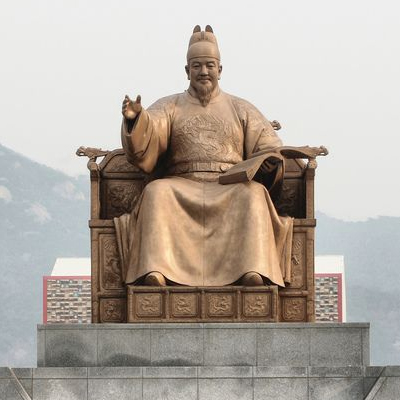
King Sejong's tax reform, 'Jeonbun Yukdeungbeop and Yeonbun Gudeungbeop': Wisdom the current government should learn from

0
2026. 09. 23
- Good intentions alone don't guarantee successful policies; every policy has unforeseen side effects and ripple effects, requiring a cautious approach.
- King Sejong, during tax reform, reconsidered the nationwide validity of policies by gathering public opinion and analyzing regional responses, then gradually perfected the system by piloting it and addressing issues.
- The current government should emulate Sejong's wisdom by using big data and AI to meticulously verify the secondary and tertiary effects of policies, and flexibly revise them based on pilot results.
- Policy success isn't about government claims, but about objectively proving with data that citizens' lives have genuinely improved.
The wisdom the current government should learn from 'Jeonbun 6-deungbeop and Yeonbun 9-deungbeop'
Policies do not succeed with good intentions alone. Measures to curb housing prices raise jeonse and monthly rents, and while raising taxes may seem to increase tax revenue, people change their buying and investment behaviors, leading to completely different results. Every policy has side effects and ripple effects. So what should the government do? I want to find the answer in King Sejong's tax reform 600 years ago.
The land tax in the early Joseon Dynasty followed the Dapheom-sonsilbeop, where officials directly investigated the crop yield of fields to determine the tax amount. The intention to collect more during abundant harvests and less during poor harvests was rational. However, there were too many fields to investigate, and above all, the subjective judgment of the officials evaluating the crop yield determined the tax amount. For the people, how officials viewed their fields became as important as farming well. A system intended to care for the people ended up tying them to the discretion of officials.
King Sejong sought to reduce this discretion and impose taxes based on objective criteria. The alternative was the Gongbeop (tribute law). In 1430, King Sejong sought opinions on the Gongbeop not only from officials but also from ordinary citizens. Of the 172,806 participants, 98,657 approved, and 74,149 opposed. With approximately 57% in favor, it was a number that could have been implemented by today's majority rule.
King Sejong looked at the distribution behind the numbers. In Gyeongsang-do and Jeolla-do, there were 65,864 in favor and 664 opposed, but in Hamgil-do and Pyeongan-do, there were 1,410 in favor and 35,912 opposed. The same system had completely opposite meanings depending on the region. A policy that is good on a national average is not necessarily good for all regions. King Sejong stopped there.
In 1436, he established the Jeonje Sangjeongso to professionally research the tax system, and in 1437, he attempted to implement the Sangjeong Gongbeop nationwide. However, when local officials and the Saganwon strongly opposed, King Sejong backed down again. He valued the content of the opposing opinions more heavily than the prestige of a decision already made.
The method has changed. In 1438, it was first implemented in Gyeongsang-do and Jeolla-do, and the following year it was expanded to Chungcheong-do. In today's terms, it was a pilot program. When it was actually implemented, problems that were not visible on paper, such as a greater tax burden than expected, emerged, and the system was revised each time. It was not until 1444 that the basic framework of the Jeonbun Yukdeungbeop (Six-Grade Land Tax System) and Yeonbun Gudeungbeop (Nine-Grade Crop Yield System) was finalized.
The Jeonbun Yukdeungbeop divided land fertility into six grades, and the Yeonbun Gudeungbeop divided annual crop yields into nine grades, collecting 20 du per gyeol in the best harvest year and 4 du in the worst famine year. This system incorporated two realities: that the productivity of each piece of land differs, and that conditions vary from year to year. This system was not perfect either. Human judgment was still needed to determine crop yields, and land surveying had to follow, so nationwide implementation was not completed until 1489 during King Seongjong's reign. Therefore, the core of this reform lies not in a 'successful system' but in the process of creating the system.
Real estate is an area where policy experiments are particularly difficult. If property taxes are changed, the behavior of owners changes; if loans are tightened, the timing and ability to purchase change; and if the sales market is suppressed, demand shifts to monthly and yearly rentals. Supply measures take several years to bear fruit.
The current government's position is to stabilize the market by combining regulations, supply, and taxation. As of September 2026, the market is not simple; apartment prices in some areas like Gangnam and Seocho have fallen, but Seoul as a whole continues its long-term upward trend. It is too early to definitively declare the entire policy a success or failure. However, one can ask: were the secondary and tertiary effects sufficiently verified before implementation?
The property tax debate is similar. Proponents of strengthening argue for curbing excessive ownership and increasing tax equity, while those advocating caution worry about rent pass-through, the burden on retirees, and the preference for 'one good property.' Decisions should not be made by listening to only one side's logic. We need to move beyond debating whether the objective is right and actually confirm what is happening.
The rise in jeonse and monthly rent should also be analyzed by separating the causes. This is because supply and move-in volume, interest rates, loan regulations, the lease system, and changes in the number of households all act simultaneously. The government's job is neither to defend its policies nor to hastily admit failure. It is to reveal with data how much and what has had an impact.
In the United States, states are called "laboratories of democracy." One state tries something first, sees the results, and other states either follow or avoid it. The idea of including a sunset clause in laws so that they automatically expire if they are ineffective is based on the same principle. Today's government has big data and AI, which King Sejong could never have imagined. It has become much easier to apply policies to a specific region or target first, publicly announce the expected effects, and compare them with the actual results. If the results are different, they can be corrected. Policy revision is not a defeat. Stubbornly adhering to a mistake even after knowing it is a bigger problem.
In modern times, it's impossible to verify policy validity over a long period, as King Sejong did. In times of economic crisis or disaster, when time is of the essence, we cannot spend months on review. What we can learn from King Sejong is not slow administration, but caution against unverified convictions. King Sejong was a monarch with more power than any president today. Even he did not push through tax policies based solely on his own ideas. He listened first, started small, reconsidered the results, corrected mistakes if they occurred, and expanded only after verification. He understood that good ideas and actual policy outcomes could differ.
Politicians want to prove that their policies are right, but what the Lee Jae-myung administration needs to prove is not its own righteousness, but the fact that the lives of the people have actually improved. This is the lesson that Sejong's Gongbeop reform still teaches us, 600 years later.
댓글
( 0 / 500 )
Bio2274
8
세종의 공법 개혁에서 정말 배울 점은 제도 자체보다 과정에 있다고 봅니다. 백성의 의견을 듣고, 지역별 차이를 살피고, 시범 시행을 거쳐 수정한 뒤 전국으로 확대했습니다. 오늘의 정책도 이 원칙을 되살릴 필요가 있습니다.
( 0 / 500 )
kimyoon
6
정책은 의도보다 결과가 중요하고, 결과는 현장에서 확인해야 한다는 글의 취지에 공감합니다. 특히 부동산처럼 이해관계가 복잡한 분야에서는 한 번의 대책으로 모든 문제를 해결하려 하기보다 지역별·계층별 영향을 세밀하게 측정하는 접근이 필요해 보입니다.
( 0 / 500 )
중섭
5
세종이 17만 명이 넘는 백성의 의견을 듣고도 단순히 찬반 숫자만 보고 결정하지 않았다는 대목이 인상적입니다. 평균적인 여론 뒤에 숨어 있는 지역별 차이를 살핀 것이야말로 오늘날 데이터 행정에도 그대로 적용할 수 있는 지혜라고 생각합니다.
( 0 / 500 )
ssabi
5
정책을 수정하는 것을 실패로 보는 정치문화부터 바뀌어야 합니다. 시행해 보고 예상과 다른 결과가 나타나면 데이터를 근거로 고치는 것이 오히려 책임 있는 행정입니다. 세종의 공법 논의가 14년이나 걸렸다는 사실이 정책의 신중함을 잘 보여줍니다
( 0 / 500 )
이만재
5
이 글의 핵심은 현 정부를 무조건 비판하거나 옹호하는 데 있지 않고, 정책을 검증하는 방법을 제시한 데 있다고 봅니다. 좋은 정책도 부작용은 생길 수 있습니다. 중요한 것은 현장의 신호를 얼마나 빨리 발견하고 합리적으로 수정하느냐일 것입니다.
( 0 / 500 )
民衆改革
4
세종의 공법에서 가장 현대적인 부분은 ‘정답을 미리 정해놓지 않는 행정’이 아니었을까 싶습니다. 시행 전에 의견을 듣고, 시행하면서 문제를 발견하고, 다시 제도를 고쳤습니다. 정책은 완성된 답을 내려주는 일이 아니라 현실과 끊임없이 조정하는 과정이라는 생각이 듭니다.
( 0 / 500 )
토트넘
3
전국 평균만 보면 놓치는 것이 많다는 지적에 공감합니다. 같은 부동산 정책이라도 서울과 지방, 실수요자와 다주택자, 청년과 은퇴자에게 미치는 영향은 다를 수밖에 없습니다. 세종이 지역별 민심의 차이를 살폈듯 정책 효과도 세분화해서 봐야 합니다.
( 0 / 500 )
Elastic9
3
특히 ‘시범 시행’이라는 접근이 지금의 행정에서도 중요하다고 봅니다. 모든 국민에게 한꺼번에 적용하기 전에 일부 지역이나 대상에서 검증하고 부작용을 확인하는 방식이라면 정책의 사회적 비용도 크게 줄일 수 있을 것입니다.
( 0 / 500 )
Rose
1
세종은 왕권이 강했던 시대의 군주였지만 자신의 판단을 끝까지 고집하지 않았습니다. 오히려 반대 의견 속에 정책의 허점을 찾으려 했습니다. 오늘날 민주주의 정부가 오히려 이보다 못한 모습을 보여서는 안 된다는 생각이 듭니다.
( 0 / 500 )
신고내용
신고내용을 선택해주세요
회원비난/비하/욕설글 및 댓글도배성 게시물저작권 침해/불법자료 유출허위사실유포개인정보 유출.사생활 침해무단광고/홍보음란물 및 도박 불법 광고물범죄행위 관련 글불법행위 관련 소개물품 판매 및 사기글악성코드 및 스파이웨어 유포기타 사유 및 운영진 판단


비밀번호를 잊으셨나요?
Sign in with Google


All information provided by us is free of charge and is for the public good.