品

Corea든 Korea든, 품격은 이름보다 먼저다
Whatever the name—Corea or Korea—dignity comes first.
Whatever the name—Corea or Korea—dignity comes first.
Now
지금
751 Diaspora
Heritage
유산
Humanity
인문
Mirengsi
未冷尸
Politics
정치
Media
언론

정책 이슈
칼럼
英雄本色
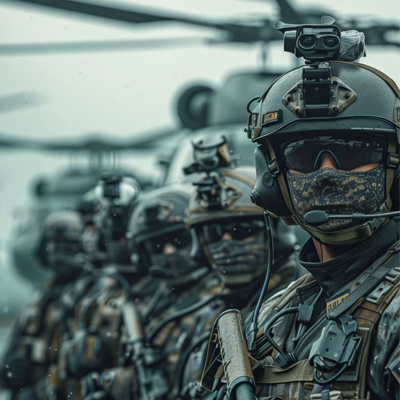
Don't put everything into the two words 'troop deployment'.

0
2026. 09. 20
- President Lee Jae-myung's statement clearly outlined a principle: no troop deployment for war intervention, but essential activities to protect citizens and ships are necessary.
- Troop deployment shouldn't be seen merely as military intervention; we must separate the realistic need to protect energy transport routes, vital to our economy, from our responsibility as a sovereign nation.
- Energy security requires a multi-layered approach: diplomatic efforts, economic diversification, and military protection strictly limited to safeguarding our ships, with Cheonghae Unit activities rigorously controlled within this scope.
- Deploying Korean troops to the US-Iran war is an abandonment of sovereignty and invites unnecessary retaliation, undermining the essence of our alliance; therefore, public opposition should be wisely leveraged as a negotiating tool by the government.
- Ultimately, the message is that by regaining wartime operational control and achieving self-reliant defense, we must become a nation that protects its own interests and the safety of its people, rather than being drawn into others' wars.
The words presented by President Lee Jae-myung at the press conference on September 18th were brief, but they contained the stance the nation should take. There will be no troop deployment that involves or intervenes in war. There will be no such deployment, whether of troops or assets, and that principle has been maintained so far and will not change in the future. At the same time, minimal activities are necessary to protect our merchant ships, oil transport routes, and the lives and safety of our citizens, and the government is considering strengthening the activities of the Cheonghae Unit already deployed in the Gulf of Aden.
Why shouldn't everything be put into the two words 'troop deployment'?
If these two sentences are bundled together as 'troop deployment,' thinking stops there. Sending combat troops as a party to a war and protecting our citizens and ships on dangerous routes are not the same thing. Other countries also move military resources for their ships and routes, and actual armed conflicts, like with the Houthis, sometimes occur. However, that risk and the status of being a party to a war are not the same. If we fail to distinguish, South Korea will either become an auxiliary force in someone else's war or a country that stands by and watches even if its energy lifeline is cut off. Neither is a choice a sovereign nation should make.
If oil doesn't come in, can the country run on condemnation alone?
Hormuz is not a geopolitics textbook but the breathing room for the Korean economy. About one-fifth of the world's seaborne crude oil passes through this narrow strait, and roughly 70% of Korea's crude oil imports depend on the Middle East, with almost all of that volume passing through this strait. A significant amount of LNG is also tied to the same region. If oil prices rise, import costs swell, leading to a chain reaction in naphtha, petrochemicals, transportation, and inflation. With the prolonged US-Iran conflict in 2026, restricted passage through the strait, and overlapping risks in the Red Sea, the question 'Is it enough to just condemn the US?' becomes not an abstract one but a matter for factories and gas stations. That said, it's not an argument to subtly open the door to war intervention. We must imagine a situation where oil doesn't come in, but that imagination should not become a justification for joining a war.
Solutions for energy security must be considered in three layers. Diplomatically, Korea must voice its concerns as a party in peace treaties, guaranteed passage, and multilateral maritime security consultations. Economically, dependence on the Middle East must be reduced, import sources diversified, and stockpiling and alternative routes institutionalized. Militarily, like the Cheonghae Unit, which is already deployed for anti-piracy and escort missions, minimal defense limited to protecting our vessels must be maintained. If the third layer is expanded without the first two, it becomes intervention in war, and if the first two are done while abandoning the third, the country becomes one that abandons its sailors and oil tankers. The minimal activity the president spoke of is precisely that upper limit.
The Cheonghae Unit is a unit that has been escorting our ships in the Gulf of Aden since 2009. It has parliamentary approval, and its operational area is, in principle, the Gulf of Aden. The recent reinforcement of the Wang Geon-ham's defenses in response to drone threats is a reaction to the reality of that sea area, not an indication that it has become a fleet participating in the Strait of Hormuz conflict. The moment this unit is repackaged into a combined combat formation, its justification, legal basis, and the safety of its service members are all shaken. Reinforcement is possible, but the purpose, area, command authority, and rules of engagement must be firmly established in documents reflecting our sovereignty.
Why Korean troops should not be sent to the US-Iran war
The reasons why Korean troops should not be sent to the US-Iran war are not merely emotional. This conflict is neither a war in which Korea was attacked nor one in which the UN requested collective security from Korea. A system where an alliance's request automatically defines justice does not complement the alliance but rather outsources sovereignty. Although the 2003 deployment to Iraq was packaged as 'reconstruction' and 'alliance,' the political ownership of the war always remained with the United States, and once on the stage, the initiative for withdrawal diminished. The moment our service members are assigned under foreign military command, their lives are tied to the needs of another country's operations, not to the Constitution and the National Assembly. For a country that has not even fully regained wartime operational control to deploy troops to another foreign command system in the Middle East is a double delegation of sovereignty.
The exponential nature of retaliation cannot be ignored. Iran and the Houthis are already using merchant ships in the straits and the Red Sea, as well as regional facilities, as leverage. The moment Korea puts its name on a combined combat formation, its national ships, diplomatic missions, and expatriates will be added to the retaliation list. It's a paradox where the troops sent to protect end up expanding the scope of what needs protection. 'Reconnaissance,' 'mine clearance,' 'technical support,' and 'non-combat assets' are not inherently evil, but if the purpose clause is vague, they can all be interpreted as war support. Permissible activities should be limited to defensive escorting of our national flag, our sailors, and our cargo, and offensive actions, blockades, and support for regime change must be completely blocked. Dispatching troops is not a statement; it's the bodies of young people. Sacrificing even one life in a war with unclear justification is putting the face of an alliance above life itself.
So that slogans don't erode negotiating power
Opposition must also be wise. Strong domestic opposition can become a real card for the government when it's in a tug-of-war with Washington. Saying, 'Our people do not allow it,' lowers the domestic cost of refusal and increases external persuasiveness. Therefore, the task of opposing troop dispatch is not about shouting, but about design. We must pool our strength to increase negotiating power, minimize losses, uphold principles, and secure practical gains. The habit of covering up all structures with an outdated 'anti-American' line every time an issue arises kills that design. The precision that distinguishes ship protection from war involvement disappears, and with it, the persuasiveness the government could use as a basis for refusal.
Standing against imperialism is not about shouting slogans. It is about Korea becoming a nation that no longer aligns its military with the war schedules of other countries. The front line that the people must fight on is not the trenches of the Middle East, but the threshold of parliamentary consent, the act of legally binding the purpose, area, command, and withdrawal conditions of troop dispatch, changing the energy dependence structure, and freeing the transfer of wartime operational control from being a political hostage. Anti-imperialism is not about sending one more warship, but about creating a country that doesn't have to send any.
Why I support Lee Jae-myung's line
The reason I support Lee Jae-myung's line is that he has repeatedly and publicly stated his commitment to non-intervention in war, leaving no room for ambiguity. However, support should not be blind. The public must verify whether the strengthening of the Cheonghae Unit is an extension of the Aden Gulf escort or an indirect entry into the Hormuz joint operation, whether the command is with the Korean Joint Chiefs of Staff or effectively transferred to a foreign command, and whether the rules of engagement are limited to defending our ships or broadly opened under the guise of 'freedom of navigation.' Even a slight shift in the boundary can collapse the principle.
The ultimate goal is wartime operational control and self-reliant defense.
The reason we repeatedly find ourselves on such a precipice is not simply because an alliance exists. There's a difference between the alliance itself and a structure where the alliance effectively preempts the use of the Korean military. Debates about overseas troop deployments are always distorted when wartime operational control has not been fully returned. On the surface, it seems like a discussion of 'should we go?', but in reality, it's a test of 'are we a nation that can refuse?' Self-reliant defense is not just a slogan; it's a system that includes intelligence and surveillance, protection of sea lanes, missile and drone defense, energy reserves, defense industry, and the institutional ability to filter alliance requests through constitutional procedures. Even a smart, strong military is only half-effective if it lacks wartime operational control or if its troops are again placed under foreign command overseas.
Therefore, the conclusion of this situation is clear. There will be no sending of Korean combat troops to the US-Iran war. Nor will our merchant ships, sailors, and crude oil be neglected. We will not merely consume opposition as a slogan, but organize it into public pressure to support the government's refusal. The ultimate destination of that pressure is not participation in the Middle East conflict, but the recovery of wartime operational control and self-reliant defense. A nation that does not sacrifice its youth in others' wars, a nation that protects its own ships and oil routes, a nation that manages its alliances but does not surrender its sovereignty to them. The line drawn by Lee Jae-myung is the entrance to that theory. If we fail to guard the entrance, the path will again open to others' operational roads, but if we guard the entrance, Korea will become a party to its own destiny, not a supporting actor in war.
댓글
( 0 / 500 )
Sally
9
‘파병’이라는 단어 하나로 전투병 파견과 자국 선박 보호를 똑같이 취급해서는 안 된다는 지적에 공감합니다. 중요한 것은 병력을 보내느냐의 문제가 아니라 어떤 목적과 임무, 지휘체계와 교전규칙으로 보내느냐인 것 같습니다. 그 경계를 명확히 하는 것이 국익과 장병 안전을 함께 지키는 길이라고 봅니다.
( 0 / 500 )
dondon
8
이재명 정부가 보여주는 국정의 핵심은 결국 민생과 개혁을 함께 놓지 않겠다는 것이라고 봅니다. 특히 이번 기자회견에서 전쟁 개입은 분명히 선을 긋고 국민과 국적 선박의 안전은 챙기겠다는 원칙을 밝힌 것은 국익을 중심에 둔 현실적인 접근이라고 생각합니다.
( 0 / 500 )
sol7
6
단순히 미국을 따라갈 것인가, 반대할 것인가의 이분법으로 접근해서는 안 됩니다. 한국은 에너지 수입국이고 해상교통로에 경제의 상당 부분을 의존하고 있습니다. 전쟁에는 개입하지 않으면서도 우리 선박과 국민을 보호할 수 있는 외교·경제·군사적 방안을 동시에 마련해야 합니다.
( 0 / 500 )
열화
6
청해부대 강화가 필요하다면 더욱 투명해야 합니다. 작전구역은 어디인지, 임무는 무엇인지, 지휘권은 누구에게 있는지, 교전규칙은 어디까지인지 국민이 알 수 있어야 합니다. ‘우리 선박 보호’라는 명분이 어느 순간 다른 나라의 군사작전을 지원하는 것으로 확대되지 않도록 처음부터 선을 분명히 그어야 합니다.
( 0 / 500 )
東方77
5
말보다 결과로 평가받겠다는 정부의 방향에 공감합니다. 부동산 안정, 국토균형발전, 검찰개혁 등 쉽지 않은 과제일수록 선명한 구호보다 실제 국민 삶이 달라지는 결과가 중요합니다. 대통령이 밝힌 ‘민생·개혁·통합’의 기조가 흔들림 없이 정책으로 이어지길 바랍니다.
( 0 / 500 )
nayana
5
특히 “보내지 않을 수 있는 나라를 만드는 것이 자주국방”이라는 대목이 인상적입니다. 자주국방은 아무와도 협력하지 않는다는 뜻이 아니라, 동맹이 있어도 최종적인 병력 운용과 전쟁 참여 여부를 우리 헌법과 국회의 통제 아래 결정할 수 있는 능력을 갖추는 것이라고 생각합니다.
( 0 / 500 )
Kublai
4
동맹과 주권은 서로 충돌하는 개념이 아니라고 생각합니다. 오히려 건강한 동맹이라면 각자의 국가적 판단과 국민적 동의를 존중해야 합니다. 미국과의 협력은 유지하더라도 한국군의 생명과 국가의 전쟁 참여 여부까지 자동으로 맡겨서는 안 됩니다. 이번 논쟁을 계기로 전작권, 자주국방, 에너지 안보를 함께 논의해야 한다는 글의 문제의식에 공감합니다.
( 0 / 500 )
김영헌
4
전쟁에 참여하지 않는 것과 국민과 국적 선박을 위험에 방치하는 것은 전혀 다른 문제입니다. 그래서 더 어려운 것이고, 더 정교한 국가전략이 필요한 것 같습니다. 외교적으로는 긴장을 낮추고, 경제적으로는 에너지 공급망을 다변화하고, 군사적으로는 방어 임무에 한정하는 세 가지 축을 함께 가져가야 한다는 주장에 공감합니다.
( 0 / 500 )
moon
3
외교·안보에서도 무조건적인 편승보다 대한민국의 국익과 국민 안전을 우선하는 원칙이 필요합니다. 전쟁에는 관여하지 않되 우리 국민과 선박을 보호하겠다는 입장은 동맹과 주권을 함께 고려한 정책 방향으로 볼 수 있습니다.
( 0 / 500 )
hannam
3
결국 핵심은 ‘파병 찬반’이라는 구호보다 누가 결정하고, 무엇을 위해 보내며, 어디까지 임무를 수행하고, 언제 철수할 것인가를 국민이 따져 묻는 데 있다고 봅니다. 동맹은 중요하지만 동맹의 이름으로 모든 군사적 선택을 자동화해서는 안 됩니다.
( 0 / 500 )
청춘
2
이번 논쟁이 주권과 국방의 관계를 다시 생각하는 계기가 되었으면 합니다. 이제 중요한 것은 이 원칙을 실제 정책과 제도로 끝까지 지켜내는 일이라고 봅니다.
( 0 / 500 )
신고내용
신고내용을 선택해주세요
회원비난/비하/욕설글 및 댓글도배성 게시물저작권 침해/불법자료 유출허위사실유포개인정보 유출.사생활 침해무단광고/홍보음란물 및 도박 불법 광고물범죄행위 관련 글불법행위 관련 소개물품 판매 및 사기글악성코드 및 스파이웨어 유포기타 사유 및 운영진 판단


비밀번호를 잊으셨나요?
Sign in with Google


All information provided by us is free of charge and is for the public good.