品

Corea든 Korea든, 품격은 이름보다 먼저다
Whatever the name—Corea or Korea—dignity comes first.
Whatever the name—Corea or Korea—dignity comes first.
Now
지금
751 Diaspora
Heritage
유산
Humanity
인문
Mirengsi
未冷尸
Politics
정치
Media
언론
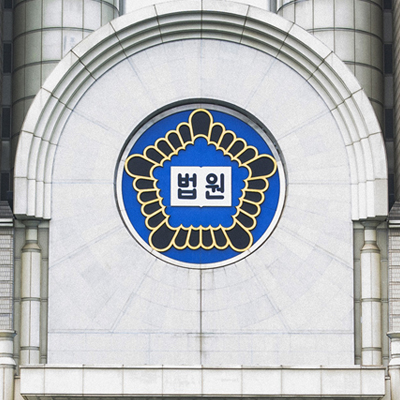
2026년 8월 31일, 감사원이 공개한 대법원 정기감사 결과를 발표했다.

정책 이슈
칼럼
Dr_Pepper
Names of encouragement, faces of public funds

0
2026. 09. 02
- The Supreme Court has been illegally paying cash to justices and others for years, violating budget execution guidelines, a practice that has continued under a different name even after the past judicial scandal.
- The National Court Administration claims the incentive payments are legitimate but refuses to provide supporting documents, which is merely sophistry to avoid transparent execution of public funds and evade responsibility.
- The highest judicial body violating its own prohibitions and wasting budget funds is a severe manifestation of moral insensitivity, misusing judicial independence as an excuse for budget execution.
- This double standard—demanding strict legal application from the public while engaging in undocumented cash payments themselves—erodes the judiciary's authority and public trust.
- The audit results show that this is not merely an isolated deviation but a recurrence of pervasive privilege and unethical practices within the judiciary, shaking the very foundation of judicial justice.
On August 31, 2026, the Board of Audit and Inspection's regular audit of the Supreme Court revealed that the highest judicial body, which is supposed to interpret laws and teach the legality of public funds, had for years been regularly paying cash to Supreme Court justices and the head of the National Court Administration, in violation of its own budget execution guidelines. From 2022 to September 2025, 1.299 billion won was disbursed as incentive payments. Twelve Supreme Court justices were already receiving 5.12 million won per month in special activity expenses, and separately, an average of about 2 million won was handed over in cash twice a month until April 2024. For some periods, an additional 1 million to 1.5 million won was added.
The head of the National Court Administration received an average of 3 million won per month during the same period, and thereafter 2 million to 4 million won. As of 2024, the annual payment per Supreme Court justice was similar, ranging from 26.5 million won to 30.5 million won. The Chief Justice himself did not receive any. However, the security and protocol team and the official residence security guards separately received regular payments of 1.5 million to 2.8 million won per month, totaling approximately 160 million won. The Board of Audit and Inspection viewed the National Court Administration as the executive body, but the actual payments were made by the Chief Justice.
More serious than the mere listing of numbers is the violation of the prohibition clause. The Supreme Court's budget execution guidelines stipulate that incentive payments should be made to excellent departments and employees, and prohibit monthly or regular payments without legal basis. In the past, the National Court Administration provided special activity funds to Supreme Court justices for the purpose of collecting judicial and trial information, but this was discontinued after 2019. In place of the discontinued funds, incentive payments categorized as 'other operating expenses' were introduced. From 2022 to 2025, approximately 4.5 billion won was allocated solely for incentive payments. Only the name and account changed; the reality of regular cash payments continued. After May 2024, the payment dates and amounts were slightly varied for each Supreme Court justice to outwardly appear as if they were not monthly fixed amounts. However, the total annual amount did not significantly change. The form was adjusted, but the substance remained. What started as a direct violation of the prohibition clause later shifted to merely avoiding the appearance of a prohibition.
The Supreme Court Administration's explanation is familiar. It stated that the purpose was to encourage the justices and research judges involved in trials before and after the sittings of small panels or the full bench, and that it considered the burden on the Chief Justice of concurrently managing judicial administration, external affairs, and trial support. It also said it would accept the audit results. However, when asked to provide details of expenditures and supporting documents, it replied that it was difficult to submit them because the materials were not prepared. This is like giving cash without keeping records, and then claiming there are no materials when asked later. If it's impossible to verify where public funds went after the fact, then it's not encouragement but an unverifiable sophistry. The logic that good intentions negate the need for proof is not accepted anywhere in public service. If a lower agency made the same statement, the court would read it as an excuse and an illogical argument. The core of this incident is that the Supreme Court, the highest judicial body, allowed itself that excuse.
This reveals a moral insensitivity. Supreme Court justices are the ultimate interpreters of the nation's laws. For years, they received regular cash payments prohibited by budget execution guidelines, yet there is no sign that they rigorously scrutinized this prohibition as they would apply it to their own cases. Those in a position to judge the budget abuses and misuse of public funds by other agencies remained silent about the cash coming to them. Silence is close to consent. This is not a mistake of one or two months, but a repetition that has continued since 2022. Repetition becomes custom, and custom erodes conscience. The statement that trials are difficult and therefore encouragement is needed is not, in itself, a wrong sentence. However, there is no reason why encouragement should be a monthly cash payment without legal basis. It could be publicly given to excellent employees, with supporting documents, and within limits. Distributing cash without doing even that minimum is a privilege disguised as encouragement. Privilege always presents itself as a necessity. This idea stems from the complacent legitimacy of the South Korean judiciary, which was a colonial power institution. Emotionally, these anachronistic ideas could persist, and still do, by using the excuse of their role in monitoring and controlling the public, rather than serving as a convenient administrative body for the people.
The lack of conscience becomes clearer in the parallel budget execution. In the same audit, it was confirmed that 650 million won was additionally paid for operating system upgrades already included in the computer equipment maintenance contract, citing a verbal agreement. In the process of purchasing PCs from 2022 to 2025, replacement units already purchased in the previous year were bought again, or spare parts were secured without reasonable grounds. As of the end of 2025, there were 6,131 PCs, 2,983 printers, and 559 scanners remaining as spare parts. This is enough for about one-third of the court's 18,669 personnel. In 2025, when the unit price of printer contracts decreased, the purchase volume was increased by 1,055 units to exhaust the budget. For travel expenses for auction case status surveys, 94.5% of the samples were estimated to be in excess of regulations or duplicated. Cases were also discovered where over 100 million won worth of alcohol was purchased with business promotion expenses without clarifying its purpose, and where books were received first without a contract, a post-contract was made, and then manuscript fees and review fees were indirectly paid to affiliated judges. Spare parts warehouses and cash incentives coexist in the same institution during the same period. Interpreting this merely as a practical error is to whitewash budget waste and privilege with administrative jargon.
A more uncomfortable point is the discontinuity of memory. The suspicion that the National Court Administration, around 2015, recovered public relations-related budgets in cash and distributed them as incentives to chief judges and high-ranking judges, had already been revealed once during the judicial abuse investigation. The core of that incident was also the fixed-amount payment of public funds to individuals in cash. If, after nearly 10 years, only the name remains as an incentive and the account has merely changed to 'other operating expenses,' then this is not learning but the reproduction of a habit. This audit, on the contrary, proves what the judiciary reflected on at that time. If they had reflected, undocumented cash would not reappear. If they had reflected, they would not have used the technique of scattering the payment dates to maintain prohibited monthly payments. Reflection is not a matter of words, but a matter of ledgers. Reflection without ledgers is not reflection.
The judiciary is an independent body under the Constitution. Its independence is a mechanism to prevent external pressure on trials, not a privilege that makes budget execution an unexaminable area. There are institutional limitations, such as the fact that only accounting audits, not job performance audits, are possible under the Board of Audit and Inspection Act. There is also a gap, as there have been no regular audits since 2021. For an institution that knows these limitations and gaps to not leave evidence is to use these limitations as a shield. The Board of Audit and Inspection's action was a notice of caution. No recovery, individual disciplinary action, or referral for investigation was at the forefront. This is the ceiling for accounting audits of independent bodies. However, a low ceiling does not mean that the conscience of the floor also lowers. Whether individual Supreme Court justices designed the envelopes is a separate issue. If the recipients do not raise an issue, that silence becomes the system. What is required of the highest judges is not just legal knowledge. It is the sensibility to hesitate in the face of public funds. When that sensibility disappears, all that remains is the veneer of authority.
The results of this audit are not a blanket condemnation that the entire judiciary is corrupt. It is something more common and more dangerous. It is the attitude of continuing prohibited acts by changing their form, explaining the intent when asked, claiming no records exist, accepting the results but ending accountability with a warning. We call this 'moral insensitivity.' Two severely developmentally disabled individuals ate a 1,500 won ice cream without paying, their parents apologized to the store owner and paid 100,000 won in compensation, and the owner did not want punishment, but the police charged them with joint theft because 'the two acted together.' A nation that demands receipts from its citizens is a nation of joint corruption that leaves no receipts for itself. Unconscionable behavior does not only appear in grand crimes. It appears in accepting money that cannot be received, calling it a custom, citing hard work when explanations are lacking, and choosing cash to avoid scrutiny. The independence of trials and budgetary accountability are not in conflict. Those who circulated cash and erased evidence did not protect independence; rather, they emptied the ledger of conscience under the guise of independence. Even if the case is closed with a warning, what remains open is that void. Filling that void begins not with the Audit Board's statement, but with breaking the silence in places where cash is received.
댓글
( 0 / 500 )
64Marco
8
대법원의 독립은 예산 집행의 불투명성까지 보호하는 방패가 될 수 없습니다. 법을 판단하는 최고기관일수록 국민 세금 앞에서 더 엄격해야 합니다. 증빙 없는 현금 지급을 관행으로 반복했다면, 이는 단순한 행정 실수가 아니라 사법부 스스로의 신뢰를 훼손한 문제라고 생각합니다.
( 0 / 500 )
Emily
10
“반성은 말이 아니라 장부의 문제”라는 지적에 깊이 공감합니다. 과거 논란 이후에도 계정과 이름만 바꿔 비슷한 방식의 현금 지급이 이어졌다면 학습과 개선이 아니라 관행의 재생산입니다. 사법부가 국민에게 요구하는 기준을 먼저 자신에게 적용해야 합니다.
( 0 / 500 )
marinboy
8
지급일과 액수만 달리해 월정액이 아닌 것처럼 보이게 했다면 더욱 심각합니다. 규정의 취지를 지키는 대신 규정의 외형만 피하려 한 것이기 때문입니다. 법의 정신을 해석하는 사람들이 법의 빈틈을 이용했다는 의심을 받지 않도록 철저한 설명과 책임이 필요합니다.
( 0 / 500 )
曲筆
7
국민에게는 작은 돈에도 영수증과 증빙을 요구하면서, 최고 사법기관은 수년간 현금을 지급하고 자료가 없다고 답한다면 누가 납득하겠습니까. 사법부의 권위는 높은 법정과 직위에서 나오는 것이 아니라, 공금 앞에서 스스로 더 엄격할 때 비로소 인정받을 수 있습니다.
( 0 / 500 )
CJY
6
이번 문제의 핵심은 사법부 전체를 부패 집단으로 낙인찍는 데 있지 않습니다. 금지된 관행을 형식만 바꿔 유지하고, 문제가 제기되면 취지를 내세우며 책임을 최소화하는 태도에 있습니다. 독립과 투명성은 충돌하지 않습니다. 오히려 투명해야 독립도 국민의 신뢰를 얻습니다.
( 0 / 500 )
강창국
5
대법원이 스스로 만든 예산 집행지침조차 제대로 지키지 못했다면, 국민에게 법과 원칙을 말할 자격이 있는지 되묻게 됩니다. 사법부의 독립은 존중받아야 하지만, 그 독립이 회계의 불투명성과 책임 회피까지 보장하는 특권이 되어서는 안 됩니다.
( 0 / 500 )
hero76
5
현금으로 지급하고 증빙은 남기지 않았으며, 문제가 되자 “노고를 격려하기 위한 것”이라고 설명하는 모습은 매우 실망스럽습니다. 취지가 아무리 좋더라도 공금 집행에는 반드시 절차와 기록이 따라야 합니다. 법치의 출발은 예외 없는 자기 절제입니다.
( 0 / 500 )
전봉준
4
반복된 예산 낭비와 불투명한 현금 지급을 단순한 실무 착오로 치부할 수는 없습니다. 예비품을 과도하게 쌓아두고, 계약과 절차를 뒤늦게 처리하면서도 책임이 가벼운 주의 조치에 그친다면 같은 관행은 언제든 다시 반복될 수 있습니다.
( 0 / 500 )
이준호
3
이 글이 지적하듯 가장 위험한 것은 거대한 범죄보다 일상화된 특권 의식일 것입니다. 규정 위반을 관행이라 부르고, 현금 지급을 격려라 포장하며, 증빙이 없다는 말로 검증을 피하는 순간 공공기관의 양심은 무너집니다. 사법부부터 그 공백을 메워야 합니다.
( 0 / 500 )
yuna92
1
사법부가 진정 국민의 신뢰를 회복하려면 감사 결과를 ‘수용한다’는 말만으로는 부족합니다. 어떤 돈이 누구에게 왜 지급됐는지, 왜 증빙이 남지 않았는지 투명하게 공개하고 재발 방지책을 제도화해야 합니다. 침묵과 관행으로는 신뢰를 되찾을 수 없습니다.
( 0 / 500 )
신고내용
신고내용을 선택해주세요
회원비난/비하/욕설글 및 댓글도배성 게시물저작권 침해/불법자료 유출허위사실유포개인정보 유출.사생활 침해무단광고/홍보음란물 및 도박 불법 광고물범죄행위 관련 글불법행위 관련 소개물품 판매 및 사기글악성코드 및 스파이웨어 유포기타 사유 및 운영진 판단


비밀번호를 잊으셨나요?
Sign in with Google


All information provided by us is free of charge and is for the public good.