品

Corea든 Korea든, 품격이 먼저다
Whether Corea or Korea, dignity comes first.
Whether Corea or Korea, dignity comes first.
Now
지금
751 Diaspora
Heritage
유산
Humanity
인문
Mirengsi
未冷尸
Politics
정치
Media
언론
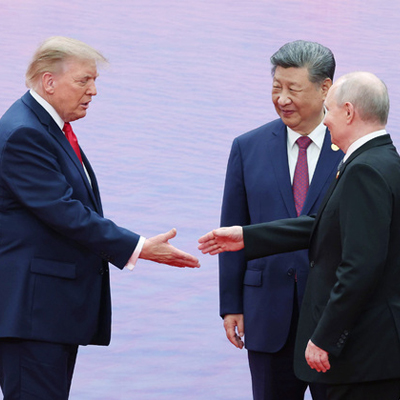
중국 심천(深圳)에서 열린 미·중·러 3국 정상회담은 역사상 처음으로 세 정상이 한 테이블에 앉은 상징적 사건이었다.

천하天下
칼럼
Sage72
The Emptiness of the Shenzhen Talks and the Korean Peninsula's Autonomous Choice

0
2026. 11. 24
- The US-China-Russia trilateral summit, while framed as a "declaration for peace," was in reality an empty agreement where major powers merely reaffirmed their existing privileges and shirked their responsibilities.
- The declaration strongly revealed a self-exonerating nature, reflecting only the interests of the major powers without offering practical solutions for key international issues such as UN reform, nuclear risk reduction, and limiting ICC jurisdiction.
- The Korean Peninsula issue was marginalized as a result of power-sharing among major powers, with the parties directly involved excluded, reaffirming the risk that Korea's voice would not be institutionally reflected and would be handled according to the intentions of the major powers.
- Korea must move beyond its peripheral status by strengthening its autonomous security capabilities, institutionalizing multilateral and multi-layered diplomacy, and securing an independent space for inter-Korean relations, acting as a subject rather than an object of major power agreements.
- Ultimately, this summit left Korea with the urgent task of strengthening its practical capabilities and diplomatic power to avoid becoming a mere item on the menu of major power politics.
The trilateral summit between the US, China, and Russia, held in Shenzhen, China, on November 19, 2026, was a symbolic event, marking the first time the three leaders sat at the same table. President Trump declared, “We are making history,” and Presidents Xi Jinping and Putin also emphasized its significance. However, the only outcome was a four-point document titled 'US-China-Russia Leaders' Declaration for Peace.' It merely covered UN reform, increased refined oil production and supply, limitations on the jurisdiction of the International Criminal Court, and dialogue to reduce nuclear risks. Neither the war in Ukraine, the war in Iran, nor the Korean Peninsula issue led to concrete agreements.
This declaration is closer to a document that reconfirms the privileges already held by the three great powers, while absolving them of their corresponding obligations. The condition under which the multilateral order granted permanent seats to great powers after 1945 was that 'privileges come with responsibilities.' In Shenzhen, that condition disappeared. The Korean Peninsula is relegated to the periphery of this hollow agreement. It effectively reconfirmed a structure where great powers can determine the fate of the Korean Peninsula, with the parties directly involved excluded.
Declaration: Privileges Remain, Obligations Erased
The first item in the declaration is UN reform. The three countries, as permanent members, stated they would reform the UN. However, they still retain the veto power that has paralyzed the UN Security Council. The structure remains the same as when a resolution condemning Russia's invasion of Ukraine in 2022 was rejected by a single Russian veto. The argument that they will fix it with the very hand that broke it lacks credibility.
The nuclear item is even clearer. The phrase 'a nuclear war cannot be won and must never be fought' was jointly issued by Reagan and Gorbachev in Geneva in 1985. At that time, that statement led to the Intermediate-Range Nuclear Forces Treaty and strategic nuclear reductions. This declaration merely borrowed the phrase. With New START having ended without a successor treaty, there is no mention of warhead numbers or negotiation schedules. The three countries, which possess about 90% of the world's nuclear warheads, only promised to reduce 'risks' regarding their own nuclear weapons. While claiming to prevent proliferation, they did not mention North Korea, which withdrew from the treaty and developed nuclear weapons.
The ICC clause is a self-exemption clause. It emphasizes the consent of states and the immunity of state officials, prohibiting abuse of jurisdiction. Article 27 of the Rome Statute stipulates that the status of a head of state does not exempt them from criminal responsibility. The inclusion of this clause by all three countries, none of which are ICC members, is an attempt to legally nullify the arrest warrant for Putin and Trump's ICC sanctions. The clause on increasing refined oil production is also self-deception by the parties who caused the war that blocked the Strait of Hormuz and attacked Ukrainian oil refineries, claiming they will supply oil 'for all countries.'
The geopolitical position of the Korean Peninsula
The geopolitical position of the Korean Peninsula is a result of the division of power among great powers after 1945. The division, which began at Yalta and Potsdam, was solidified by the armistice agreement of the Korean War, and on top of that, the ROK-US alliance, USFK, and North Korea's dependence on China and Russia overlapped to create the current structure. The propaganda talks show that this structure is still functioning. The three great powers merely confirmed the status quo without infringing on each other's core interests, leaving room to deal with the fate of the periphery, the Korean Peninsula, regardless of the will of the parties involved.
This is why concerns about a 'second Yalta' were raised before the talks. Chinese state media reported that the Korean Peninsula issue was discussed, but not a single line was included in the joint declaration. There was no mention of North Korea's denuclearization or a peace regime on the Korean Peninsula. President Lee Jae-myung emphasized peace on the Korean Peninsula and the resumption of dialogue through successive contacts with Xi Jinping, Trump, and Putin, but Korea's voice was not institutionally reflected at the great power table. Russia has already shown an attitude of treating North Korea as a de facto nuclear-weapon state, and China has avoided explicit denuclearization. Coupled with the Trump administration's domestic political weaknesses, the possibility of a compromise for North Korea-US dialogue being reached without excluding Korea still remains.
Direction of independent diplomatic strategy
In this situation, the strategy Korea should adopt is not to become an object of great power consensus. First, it is the substantial strengthening of independent security capabilities. The transfer of wartime operational control is not merely symbolic; it is the minimum physical foundation that allows us to exercise a veto when great powers exclusively deal with issues on the Korean Peninsula. While maintaining the ROK-US alliance, we must move away from a structure that relies solely on extended deterrence and secure our own strategic assets, such as nuclear-powered submarines and precision strike capabilities. The presence of US forces in Korea acts as a deterrent, but it should not become a fixed structure that restricts Korea's strategic autonomy.
Second, it is the institutionalization of multilateral and multi-layered diplomacy. While maintaining the alliance with the United States as one axis, a balance is needed to structurally manage economic and supply chain cooperation with China and not completely sever ties with Russia. The conclusion of follow-up negotiations on the Korea-China FTA for services and investment in Shenzhen is a starting point in this direction. However, this should not be limited to the role of a 'mediator between great powers.' We must expand multilateral frameworks with ASEAN, India, Europe, etc., to ensure that issues on the Korean Peninsula are not solely discussed at a US-China-Russia trilateral table. Diversifying supply chain security and technological cooperation is not just an economic issue; it is also a diplomatic means to reduce security dependence.
Third, it is securing an independent space for inter-Korean relations. When great powers treat North Korea's nuclear program only as a 'risk management' issue, what Korea can do is maintain inter-Korean trust-building and dialogue channels as party-centric as possible. The key is not to abandon the ultimate goal of denuclearization, but to ensure that its path is not unilaterally determined by great power consensus. We need an approach that creates space to resume private exchanges and humanitarian cooperation, and through that, regains the initiative in dialogue.
Breaking away from the periphery
Contrary to the rhetoric that the Yalta Conference 'made history,' it was an event that reaffirmed the privileges of the post-1945 order while emptying it of its obligations. The Korean Peninsula has repeatedly been objectified at the periphery of that order. What is needed now is the practical capacity to break away from that periphery and diplomacy that ensures our voice is institutionally reflected at the table of great powers. Preventing great power politics, where privilege and obligation are separated, from once again making the Korean Peninsula a menu item at that table – that is the task this conference has left us. Strengthening autonomous capabilities, multi-layered diplomacy, and restoring inter-Korean relations are realistic answers to that task.
댓글
( 0 / 500 )
나진혁
9
강대국 정상들이 평화를 말하면서 정작 한반도 당사국의 목소리는 빠져 있다는 점이 가장 우려스럽습니다. 한반도의 운명을 남이 결정하도록 방치해서는 안 됩니다. 외교의 주도권은 결국 우리가 확보해야 합니다.
( 0 / 500 )
gen44
7
1945년 이후 한반도는 강대국의 이해관계에 따라 수없이 흔들렸습니다. 이제는 과거의 분단 질서를 반복하지 않도록 자주적인 외교 역량을 키워야 합니다. 동맹은 필요하지만 종속은 안 됩니다.
( 0 / 500 )
박진택
6
이번 회담이 우리에게 던지는 교훈은 분명합니다. 강대국은 자국의 이익을 위해 움직이고, 국제정치에서 힘없는 나라의 목소리는 저절로 보장되지 않습니다. 이재명 정부가 말뿐인 균형외교를 넘어 실질적인 국익 중심 외교를 보여주기를 기대합니다.
( 0 / 500 )
Ryan90
6
핵 위험을 줄이겠다는 선언에 정작 북한 핵 문제에 대한 구체적인 언급이 없다는 것은 모순입니다. 강대국들이 비핵화보다 핵을 보유한 국가들끼리의 현상 관리에 관심을 두는 것은 아닌지 경계해야 합니다.
( 0 / 500 )
Ellie
5
미국과 중국, 러시아가 한반도 문제를 자기들끼리 논의하는 상황은 결코 남의 일이 아닙니다. 한국이 외교적 발언권과 실질적인 안보 역량을 갖추지 못하면 언제든 협상 테이블의 당사자가 아니라 협상 대상이 될 수 있습니다.
( 0 / 500 )
poopoo
4
자주외교는 반미도 친중도 아닙니다. 국익을 기준으로 판단하고 어떤 강대국에도 우리의 선택권을 내주지 않는 것이 진정한 자주외교입니다. 한미동맹을 지키면서도 외교적 자율성을 확대하는 전략이 필요합니다.
( 0 / 500 )
ai840
4
전시작전통제권 환수는 더 이상 미룰 수 없는 과제입니다. 안보를 동맹에 의존하는 것과 안보의 최종 결정권까지 맡기는 것은 다른 문제입니다. 스스로 판단하고 책임질 수 있는 국가적 역량을 갖춰야 합니다.
( 0 / 500 )
tongtong
1
남북관계 역시 미국과 중국의 협상 결과만 기다리는 수동적 자세에서 벗어나야 합니다. 비핵화 원칙은 유지하되 인도적 지원과 민간 교류, 군사적 긴장 완화를 위한 독자적인 대화 공간부터 만들어야 합니다.
( 0 / 500 )
신고내용
신고내용을 선택해주세요
회원비난/비하/욕설글 및 댓글도배성 게시물저작권 침해/불법자료 유출허위사실유포개인정보 유출.사생활 침해무단광고/홍보음란물 및 도박 불법 광고물범죄행위 관련 글불법행위 관련 소개물품 판매 및 사기글악성코드 및 스파이웨어 유포기타 사유 및 운영진 판단


비밀번호를 잊으셨나요?
Sign in with Google


All information provided by us is free of charge and is for the public good.