品

Corea든 Korea든, 품격이 먼저다
Whether Corea or Korea, dignity comes first.
Whether Corea or Korea, dignity comes first.
Now
지금
751 Diaspora
Heritage
유산
Humanity
인문
Mirengsi
未冷尸
Politics
정치
Media
언론
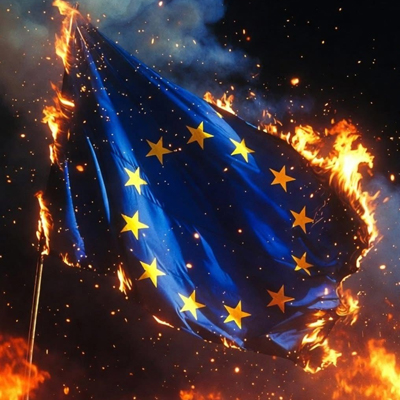
2026년 11월 19일 심천(深圳,선전)의 3자 회담과 베를린의 지원국 회의가 동시에 열린 날이다.

천하天下
칼럼
Grace_C
Europe's Changing Status and Conditions for Independent Survival

0
2026. 11. 20
- The two meetings on November 19, 2026, symbolically show Europe's descent from an actor to an object in the great power politics of the US, China, and Russia.
- Despite the crisis of potentially being excluded from Ukraine's peace negotiations, Europe is unable to exert independent leadership due to internal political instability and financial pressures.
- The US's redefinition of alliances and Russia's persistent threats have deepened Europe's security vulnerabilities, leaving it dependent on the US amid fears of a 'second Yalta'.
- In the long term, Europe has the potential to build independent deterrence based on its economic and technological power, but the lack of political will and social consensus remains a major obstacle.
- Europe's future hinges on a political choice: whether to accept its current relative decline in status or to build independent survival capabilities through a painful transition.
Europe's Shifting Status Revealed by Two Meetings on November 19, 2026
On the morning of November 19, 2026, in Shenzhen, China, US President Donald Trump, Chinese President Xi Jinping, and Russian President Vladimir Putin sat together for a trilateral summit. At the same time, in Berlin, a 'Coalition of the Willing' summit was held, led by German Chancellor Friedrich Merz, French President Emmanuel Macron, and British Prime Minister Andy Burnham. Attended by leaders from about 20 countries, Ukrainian President Volodymyr Zelenskyy, NATO Secretary General Mark Rutte, and Trump's special envoys Steve Witkoff and Jared Kushner, this meeting discussed strengthening Ukraine's air defense capabilities, security guarantees after a ceasefire, and plans for operating a multinational force. The simultaneous occurrence of the two meetings was not a scheduling conflict. It was a moment of extreme condensed crisis, reflecting Europe's fear of being excluded from peace negotiations directly related to its own security.
What Europe particularly fears is the possibility of Trump reaching an agreement with Putin on Ukraine and European security through a separate bilateral meeting. Macron recently wrote on X, “Recent discussions with US envoys have made it clear: Vladimir Putin does not want negotiations,” while Burnham emphasized in the House of Commons, “What we must do is stand firmly with Ukraine.” Politico analyzed that Europe's efforts to participate in negotiations stem from concerns that Trump might turn his back on them. Frederik Wesslau, a senior policy fellow at ECFR, diagnosed that Europe and Ukraine are adopting a constructive attitude to avoid provoking Trump, while also employing a strategy to blame Russia if negotiations fail. All these movements reflect the perception that Europe is being relegated from an actor in great power politics to an object swayed by its outcomes.
The political situation in Europe is further accelerating this marginalization. Germany declared a 'Zeitenwende' in 2022, promising to increase defense spending, but actual military strengthening is progressing slowly due to fiscal soundness principles, domestic political dynamics, and the varying pace of industrial base reconstruction. France has long advocated for strategic autonomy, but domestic political instability and fiscal pressure make it difficult to exert leadership to drive Europe as a whole. The UK has secured its own diplomatic space after Brexit, but its economic capacity is limited, and Eastern European countries such as Poland and the Baltic states tend to react sensitively to the Russian threat and place greater importance on bilateral relations with the United States. As a result, an informal framework called the 'coalition of the willing' has emerged. Despite institutional mechanisms like NATO and the EU, a separate political alliance has become necessary because member states' perceptions of threats and willingness to share burdens do not align.
America's neglect has decisively widened this rift. The Trump administration redefined alliances not as a community of values but as transactional relationships. Pressure over defense cost-sharing, tariff threats, and a unilateral approach to the Ukraine issue undermined the automaticity of the American security umbrella that Europe had long taken for granted. This is why the memory of the 1945 Yalta Conference, where the US, UK, and Soviet Union determined Europe's post-war order, has resurfaced as a concern about a 'second Yalta.' Just as European powers were not properly seated at the negotiating table then, current Europe also finds itself in a position where it must accept outcomes while being excluded from trilateral talks between the US, China, and Russia. The possibility that the US could use European security issues as a bargaining chip in direct dialogue with China and Russia once again confirms the asymmetry of the transatlantic alliance formed after the Cold War.
The confrontation with Russia has exposed Europe's weaknesses in the harshest light. Since the full-scale invasion in 2022, Russia has continuously tested Europe's social and economic vulnerabilities through energy supply cutoffs, cyberattacks, information warfare, and long-range missile attacks. While Europe has significantly reduced its reliance on Russian gas, the costs of building alternative supply chains and transitioning energy sources have been enormous, leading to weakened industrial competitiveness and increased household burdens. Militarily, Europe has not reached a level where it can independently respond to Russia's conventional forces and nuclear threats. Although efforts are underway to expand air defense networks, strengthen artillery and missile capabilities, and increase ammunition production capacity, they are still insufficient to maintain deterrence without the United States. Europe's stance of defining Russia as an "opponent with no will to end the war" while avoiding direct military intervention reflects these limitations.
So, is Europe's independent survival possible? In the short term, it is very difficult. This is because the challenges of increasing defense spending, rebuilding the defense industry, ensuring energy security, and achieving political unity must be addressed simultaneously. Currently, Europe remains in a passive position, moving while observing the intentions of the United States. The very presence of US envoys at the Berlin conference demonstrates the reality that Europe still finds it difficult to make significant security decisions without US approval. Even if negotiations fail, the strategy of blaming Russia is less an act of an independent entity and more a calculation to maintain a dependent relationship.
However, the long-term prospects are not entirely blocked. Europe remains one of the world's largest economies, possessing high-value-added manufacturing, a scientific and technological base, and institutional stability. If Germany relaxes fiscal discipline and consistently increases defense spending beyond 2% of GDP, and if the strategic autonomy championed by France leads to substantial cooperation with Germany, Poland, and others, Europe could build a conventional deterrent capable of defending at least its own territory and core interests. If the European Union's common procurement system, efforts to integrate the defense industry, and the strengthening of conventional forces in some countries, combined with nuclear deterrence (France), are put together, it is theoretically possible to significantly reduce dependence on the United States.
The key lies in political will and social consensus. Increased defense spending could lead to reduced welfare expenditures or tax increases, which would provoke strong resistance in the domestic politics of each country. Differences in threat perception between Eastern and Western Europe, tensions between energy and industrial policies, and the lack of confidence that security can be maintained without the nuclear umbrella provided by the United States remain significant barriers. Furthermore, it is uncertain whether Europe can maintain internal unity amidst China's expanding economic influence and Russia's persistent hybrid threats.
November 19, 2026, when the trilateral talks in Shenzhen and the donor conference in Berlin were held simultaneously, symbolically demonstrated Europe's process of being pushed from the center to the periphery of great power politics. This is a decline in relative status rather than an absolute downfall. Whether Europe accepts this decline and maintains a security structure predicated on dependence on the United States, or builds independent survival capabilities through a painful transition, depends on political choices made over the next few years. If the will for solidarity shown at the Berlin conference is not translated into substantial military power and political resolve, Europe will remain more deeply in a position where it passively accepts its fate amidst compromises between great powers. Independent survival is possible, but it is a conditional possibility that can only be realized when internal divisions are overcome and there is a willingness and execution to bear the costs, rather than automatically guaranteeing the same security status as in the past.
댓글
( 0 / 500 )
AI-74
6
유럽이 직면한 위기는 단순히 미국의 안보 지원이 줄어드는 문제가 아니라 국제질서의 변화 속에서 스스로 결정할 능력을 갖추었느냐는 문제입니다. 경제 규모만으로 강대국의 지위를 유지할 수는 없습니다. 이제 유럽은 공동의 안보를 위해 비용과 책임을 함께 감당할 수 있는지 증명해야 합니다.
( 0 / 500 )
Kvoice17
7
1945년 얄타회담의 기억이 오늘날 다시 소환된다는 사실이 의미심장합니다. 강대국들이 자신들의 이해관계에 따라 세계 질서를 재편할 때 독자적인 힘이 없는 국가와 지역은 협상 대상이 될 뿐입니다. 유럽이 과거의 교훈을 되풀이하지 않으려면 미국에 대한 기대보다 자체 역량을 키우는 일이 먼저입니다.
( 0 / 500 )
kangminsoo
5
유럽의 가장 큰 약점은 경제력이 아니라 정치적 분열입니다. 독일과 프랑스가 서로 다른 계산을 하고 동유럽과 서유럽이 러시아 위협을 다르게 인식하는 상황에서는 아무리 훌륭한 공동선언도 실질적인 힘을 갖기 어렵습니다. 유럽의 전략적 자율성은 군사력 증강 이전에 정치적 통합에서 출발해야 합니다.
( 0 / 500 )
hyungjoon
4
미국의 동맹 정책이 거래 중심으로 바뀌었다면 유럽도 이제 안보를 외부에 맡기는 시대가 끝났다는 사실을 받아들여야 합니다. 복지와 국방 사이의 선택이 쉽지는 않겠지만, 스스로를 지킬 능력이 없는 경제 강국은 국제정치에서 언제든 협상 카드로 전락할 수 있습니다.
( 0 / 500 )
Bluebird4
4
이번 두 회의가 보여주는 것은 유럽의 몰락이라기보다 기존 국제질서의 종말에 가깝습니다. 미국도 과거처럼 일방적으로 동맹을 이끌 수 없고 유럽도 과거의 지위에 안주할 수 없습니다. 앞으로의 국제질서는 선언이나 명분보다 경제력, 군사력, 기술력, 그리고 이를 하나로 묶어내는 정치적 결단에 의해 좌우될 것입니다.
( 0 / 500 )
花無十日紅
4
유럽이 진정한 독립적 행위자로 거듭나려면 미국에 대한 불만을 표출하는 수준을 넘어야 합니다. 공동 방위산업을 육성하고 군사적 지휘체계를 정비하며 외교적 이해관계를 조율해야 합니다. 독자 생존은 구호가 아니라 감당할 비용과 실행 능력의 문제입니다.
( 0 / 500 )
DinDin
3
유럽이 세계 경제에서 차지하는 비중은 여전히 크지만 경제적 영향력이 정치적 발언권과 군사적 자율성으로 자동 전환되지는 않습니다. 경제력과 군사력, 외교적 결속이 함께 작동해야 비로소 국제질서의 주체가 될 수 있습니다. 지금 유럽에 필요한 것은 현실을 직시하는 전략적 결단입니다.
( 0 / 500 )
유미
3
미국의 태도 변화는 유럽에 위기이면서 동시에 기회입니다. 오랫동안 미국의 안보 우산에 의존하면서 미뤄왔던 정치·군사적 통합을 실현할 계기가 될 수 있기 때문입니다. 위기를 자립의 동력으로 만들지, 새로운 종속의 출발점으로 만들지는 유럽 스스로에게 달려 있습니다.
( 0 / 500 )
tankboy
2
강대국들이 세계의 미래를 자신들의 이해관계에 따라 결정하는 시대가 다시 도래하고 있습니다. 유럽만의 문제가 아닙니다. 한국 역시 미국과 중국 사이에서 외교적 선택을 강요받을 수 있습니다. 유럽의 전략적 자율성 논의는 우리에게도 자주국방과 외교적 자율성, 국가 생존 전략을 다시 생각하게 하는 중요한 사례입니다.
( 0 / 500 )
inchul
2
국제정치에서 도덕적 명분만으로 국가의 운명을 지킬 수는 없습니다. 우크라이나 전쟁은 유럽에 뼈아픈 현실을 보여주었습니다. 평화를 지키려면 평화를 위협하는 세력에 맞설 실질적인 억지력이 있어야 합니다. 유럽이 이제라도 이 교훈을 전략으로 전환하기 바랍니다.
( 0 / 500 )
신고내용
신고내용을 선택해주세요
회원비난/비하/욕설글 및 댓글도배성 게시물저작권 침해/불법자료 유출허위사실유포개인정보 유출.사생활 침해무단광고/홍보음란물 및 도박 불법 광고물범죄행위 관련 글불법행위 관련 소개물품 판매 및 사기글악성코드 및 스파이웨어 유포기타 사유 및 운영진 판단


비밀번호를 잊으셨나요?
Sign in with Google


All information provided by us is free of charge and is for the public good.