品

Corea든 Korea든, 품격이 먼저다
Whether Corea or Korea, dignity comes first.
Whether Corea or Korea, dignity comes first.
Now
지금
751 Diaspora
Heritage
유산
Humanity
인문
Mirengsi
未冷尸
Politics
정치
Media
언론
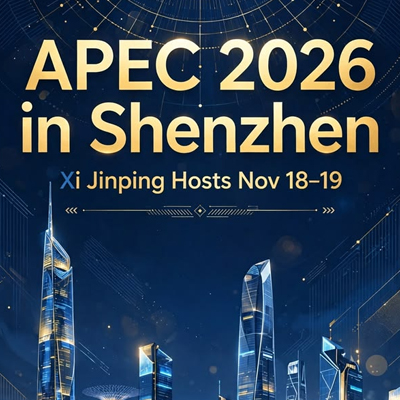
2026년 11월 18~19일 중국 광둥성 선전에서 열리는 아시아태평양경제협력체(APEC) 정상회의

천하天下
칼럼
Sage72
First US-China-Russia Trilateral Summit on the occasion of APEC in Shenzhen

0
2026. 11. 17
- The 2026 APEC summit in Shenzhen, featuring a trilateral meeting between the US, China, and Russia, shifted its focus beyond regional economic cooperation, with nuclear non-proliferation among the world's three largest nuclear powers and discussions on the Middle East emerging as key agenda items.
- The US seeks diplomatic achievements by prioritizing nuclear disarmament and the Iran conflict, while China emphasizes multilateralism to dispel "second Yalta" concerns and build an image of a China-led order, and Russia aims to reconfirm its status as an equal great power through discussions on ending the Ukraine war, each with their own strategic intentions.
- There are clear differences in each country's stance on the Ukraine war, with the US seeking to exclude it from the trilateral table while Russia aims to make it a key agenda item, and China avoiding direct involvement; similarly, on the Iran issue, given complex interests like energy stability and maintaining influence, the meeting is likely to result in symbolic encounters and message exchanges rather than concrete agreements.
- Ultimately, this meeting is more akin to a stage where the three great powers confirm their respective priorities and project an image of a multipolar order, raising concerns that the denuclearization and peace issues on the Korean Peninsula may be relegated to a lower priority among the great powers' agendas.
A symbolic table prioritizing nuclear issues and the Middle East among major powers
The Asia-Pacific Economic Cooperation (APEC) summit, scheduled to be held in Shenzhen, Guangdong Province, China, on November 18-19, 2026, is originally a multilateral forum to discuss regional economic cooperation, trade, innovation, and common prosperity. However, with the confirmation of the first-ever trilateral summit between U.S. President Donald Trump, Chinese President Xi Jinping, and Russian President Vladimir Putin on the 19th, the focus of the meeting has shifted significantly. This meeting, officially confirmed by the Chinese Ministry of Foreign Affairs following the White House and the Kremlin, is an unprecedented event where the leaders of the world's three major nuclear powers gather in one place. However, with the U.S. repeatedly stating that it does not expect a joint agreement, the key points of interest are who this meeting is for and how each country's positions on the wars in Ukraine and Iran diverge.
United States: Nuclear non-proliferation, Iran, and Ukraine are separate tracks
The Trump administration has set nuclear disarmament (non-proliferation) and the war in Iran as the core agenda items for the talks. With the New START treaty, the last strategic arms reduction treaty between the U.S. and Russia, having expired on February 5, 2026, removing legal limits on the nuclear arsenals of both countries, Trump wants a new framework that includes China. China's nuclear warheads are estimated to be over 600 and are projected to increase to 1,000 by 2030. Trump defines this as 'very dangerous proliferation' and intends to use trilateral dialogue as a starting point. The calculation is that the symbolic meeting itself is meaningful given the need for diplomatic achievements after the midterm elections.
The war in Iran (the conflict between the US/Israel and Iran) is on the agenda. Amid ongoing instability in the Strait of Hormuz and fluctuating energy prices, Trump seeks to leverage or pressure China and Russia's influence regarding Iran. Conversely, a US official explicitly stated that the war in Ukraine will not be discussed at the trilateral table, citing that Ukraine negotiations are ongoing in a separate track with Kyiv and Moscow, and China has not been directly involved in that process. A separate bilateral meeting between Trump and Putin is also not officially scheduled at this time. This aligns with the US explanation that the trilateral meeting is limited to an 'entry point' level, with no expectation of reaching an agreement.
China: Emphasizing multilateralism, dispelling 'Second Yalta' concerns, cautious on nuclear negotiations
For Xi Jinping, hosting the APEC summit in Shenzhen is an opportunity to showcase China's global influence. While prioritizing economic agendas (trade, AI, supply chains, etc.), a strategy is evident to emphasize 'multilateralism' through trilateral meetings on security issues and to dispel concerns about a 'Second Yalta,' where major powers dictate the fate of third countries. China has consistently been reluctant to discuss the Ukraine war, citing its non-direct involvement in US-Russia consultations. This is a balancing act to maintain a strategic partnership with Russia while avoiding being perceived as a direct mediator or party.
China has traditionally been cautious on nuclear disarmament. It has repeatedly stated that direct participation in trilateral arms control negotiations is “neither fair nor realistic,” given its significantly smaller number of warheads compared to the US and Russia. The underlying principle is to maintain minimum deterrence and prioritize national security. Regarding Iran, while interested in stable energy supply chains and influence in the Middle East, China strongly prefers dialogue and de-escalation over aligning with unilateral US pressure. Ultimately, as the 'host' of the talks, China focuses on maximizing symbolic achievements and the image of a China-led reordering of the global order.
Russia: Affirming equal status, prioritizing Ukraine, flexible on nuclear and Iran
Putin wants to use this meeting to reconfirm Russia's status as a great power, on par with the US and China. The Kremlin wanted discussions on ending the war in Ukraine, and past proposals for trilateral meetings were made with that in mind. Even if the US excludes Ukraine from a trilateral table, there is a strong desire to maintain a ceasefire and negotiation framework through separate channels or bilateral contacts. After the expiration of New START, Putin proposed maintaining a temporary cap, but Trump rejected it and insisted on including China, leading to differing positions.
Regarding Iran, Russia maintains a military and diplomatic partnership. While keeping a certain distance from US pressure, there is room for flexible responses based on energy and security interests. Overall, Russia views the talks as an opportunity to advance its national security interests (including the Ukraine issue) and enhance its international standing.
Differences in each country's views on Ukraine and Iran
In the Ukraine war, the US emphasizes a 'separate track' and tries to exclude it from the trilateral agenda. Russia tries to bring it in as a core agenda item, and China avoids direct involvement, preferring a multilateral solution. Europe and Ukraine are highly wary of a situation where great powers make decisions without the parties involved.
In the Iran war, the US is active in putting it on the agenda, while China and Russia approach it from the perspective of energy stability, de-escalation, or maintaining their own influence. It is highly likely that the meeting will be limited to confirming each other's red lines and exchanging messages, rather than reaching concrete agreements.
Who is the meeting for, and the Korean Peninsula
In conclusion, this APEC in Shenzhen and the trilateral meeting held on its occasion are primarily for the interests of the three great powers: the US, China, and Russia. The starting point for nuclear stability, coordination of influence regarding the Middle East (Iran), and confirmation of symbolic status in a multipolar order are key. APEC's original economic agenda recedes into the background, and the political effect of the 'meeting itself' is greater than the achievement of agreements. China, as the host country, gains the greatest symbolic benefit, the US seeks diplomatic presence, and Russia aims to escape isolation and achieve parity.
At the Korean Peninsula level, President Lee Jae-myung is attending ASEAN and APEC to garner support for his peace coexistence and co-prosperity policies. However, the White House has stated that there is no possibility of a North Korea-U.S. summit as a propaganda opportunity, and the Blue House also views the possibility of North Korea's APEC participation or North Korea-U.S. contact as low. Concerns remain that Korean Peninsula issues could be discussed without South Korea's participation, like a 'second Yalta.' With the great powers' table focused on nuclear issues and the Middle East, there is a high possibility that denuclearization and peace on the Korean Peninsula will become a lower priority.
Ultimately, this meeting is less about an immediate solution to ending the war or achieving regional stability, and more about a stage where the three great powers confirm each other's priorities and project an image of a multipolar order. It is highly likely that symbolism and the exchange of messages will dominate over substantive agreements, and in that process, we must carefully observe how much the interests of third countries, including South Korea, will be reflected.
댓글
( 0 / 500 )
해바라기
7
국제정세를 움직이는 것은 명분보다 각국의 이해관계라는 사실을 다시 확인하게 됩니다. 세 강대국의 전략적 거래 속에서 한국의 국익과 한반도 평화가 소외되지 않도록 냉철한 현실 인식이 필요합니다.
( 0 / 500 )
겨울
6
푸틴에게는 국제적 고립 탈피의 기회이고, 시진핑에게는 세계 질서의 중심에 서는 기회이며, 트럼프에게는 외교적 성과를 과시하는 무대라는 분석에 공감합니다. 결국 각자의 국익이 충돌하는 자리입니다.
( 0 / 500 )
Appraiser
5
국제정세를 선악의 구도로만 바라보지 않고 각국의 전략적 이해와 한계를 구분해 분석한 글입니다. 특히 한반도 문제가 강대국 외교의 부속 의제로 전락하지 않도록 우리 정부가 주도권을 확보해야 한다는 결론에 깊이 공감합니다.
( 0 / 500 )
cook49
5
한국이 가장 경계해야 할 것은 강대국 간 담판으로 한반도 문제가 우리 의사와 무관하게 논의되는 상황입니다. 평화와 안보의 당사자는 대한민국이라는 원칙을 외교적으로 분명히 세워야 합니다.
( 0 / 500 )
相思一念
4
핵보유국 세 나라가 세계 평화를 논의한다는 사실 자체가 역설적입니다. 핵무기를 가장 많이 가진 나라들이 군축의 책임을 회피하거나 서로에게 떠넘긴다면 국제사회의 핵 위협은 오히려 커질 수밖에 없습니다.
( 0 / 500 )
열린생각
3
APEC의 본래 취지는 경제협력과 공동번영인데, 강대국들의 핵과 지정학적 이해관계가 그 자리를 압도하는 현실이 씁쓸합니다. 특히 한반도 평화가 강대국들의 전략적 계산에서 뒷전으로 밀리지 않도록 정부의 치밀한 외교가 필요합니다.
( 0 / 500 )
민성92
2
이번 회담에서 가장 주목해야 할 것은 합의문보다 세 정상의 전략적 계산이라고 생각합니다. 미국은 핵 질서를, 중국은 국제적 위상을, 러시아는 고립 탈피를 추구한다는 분석에 공감합니다.
( 0 / 500 )
민규
1
강대국 중심의 국제정치는 결국 힘의 논리가 지배한다는 현실을 다시 보여줍니다. 한국은 미·중·러 어느 한쪽의 결정에 운명을 맡기지 않도록 독자적인 외교 역량과 협상력을 키워야 합니다. 강대국들이 핵과 안보를 논의하는 테이블에 정작 당사국과 주변국의 목소리는 빠져 있다는 사실이 우려스럽습니다.
( 0 / 500 )
신고내용
신고내용을 선택해주세요
회원비난/비하/욕설글 및 댓글도배성 게시물저작권 침해/불법자료 유출허위사실유포개인정보 유출.사생활 침해무단광고/홍보음란물 및 도박 불법 광고물범죄행위 관련 글불법행위 관련 소개물품 판매 및 사기글악성코드 및 스파이웨어 유포기타 사유 및 운영진 판단


비밀번호를 잊으셨나요?
Sign in with Google


All information provided by us is free of charge and is for the public good.