品

Corea든 Korea든, 품격이 먼저다
Whether Corea or Korea, dignity comes first.
Whether Corea or Korea, dignity comes first.
Now
지금
751 Diaspora
Heritage
유산
Humanity
인문
Mirengsi
未冷尸
Politics
정치
Media
언론
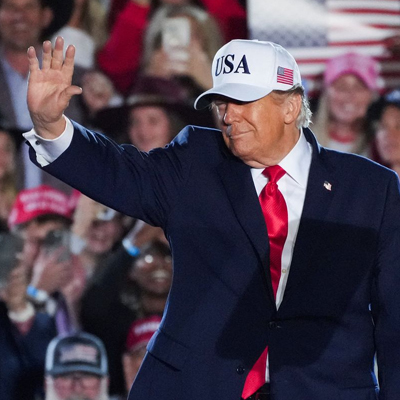
트럼프는 공개적으로 “미스터 비토”가 되겠다고 선언했다.

천하天下
칼럼
Grace_C
Trump's Miscalculation and Arrogance: On Midterm Election Day, Before the Results Were Out

0
2026. 11. 04
- Ahead of the 2026 US midterm elections, the Trump administration has devised a plan to push policies solely through executive power and neutralize congressional oversight, in anticipation of a Democratic takeover of Congress.
- Trump disregards polls and blindly trusts his political instincts, displaying an arrogant attitude of governing through vetoes and abuse of executive power rather than negotiating with Congress.
- This attempt to maximize executive power will disrupt the balance of the separation of powers, provoke backlash from courts and public opinion against excessive executive action, and ultimately lead to political gridlock and deepening conflict.
- The deep polarization and institutional dysfunction of US politics will weaken external credibility and policy continuity, and is expected to have an destabilizing impact on allies.
- Trump's "I am above the system" arrogance will not only push through short-term policies but also, in the long run, erode institutional trust and deepen the structural vulnerabilities of American politics.
On November 3, 2026, voting for the US midterm elections is underway. Although the results are not yet out, the pre-election landscape was already quite clear. The Reuters report on November 1 was not mere speculation. Since April, the White House has been considering pushing policies through executive action in preparation for the possibility of Democrats controlling Congress. Deputy Chief of Staff Steven Miller, OMB Director Russell Vought, and White House Counsel Will Scharf led the effort to compile measures that could be pursued without congressional approval in the areas of immigration, tariffs, housing costs, and federal spending. Specifically mentioned were additional tariffs on critical minerals and wind turbines, stricter visas for international students and temporary foreign workers, and reallocating priorities within already congressionally approved budgets or changing subsidy rules to increase the influence of political appointees. At the same time, preparations were underway to deal with investigations and subpoenas from a Democratic Congress. Federal agencies had already submitted unilateral actions and legal review materials, and Director Vought was exploring ways to circumvent Congress's power of the purse through existing budget reallocation and changes to subsidy regulations.
Trump publicly declared he would be “Mr. Veto.” In a New York Post podcast interview, he stated that if Democrats passed laws, he would veto all of them, and after a month or two, they would realize it was a waste of time and come to negotiate. While the Korean media's phrase “plan to ignore Congress” adds interpretation, the direction is clear. It's not about completely ignoring Congress, but rather pushing as much as possible through executive power in areas where Congress is not needed, and blocking necessary legislation with veto power. Already in his second term, Trump has aggressively used executive power in tariffs, immigration enforcement, and spending impoundments, and Director Vought has shown moves to effectively neutralize the 1974 Congressional Budget and Impoundment Control Act. Some “pocket rescissions” have faced legality challenges from the Government Accountability Office and the courts. This preparation is not just an emergency plan, but an expression of his determination to push his agenda regardless of the election results.
Trump's misjudgment lies in his consistent underestimation of opinion polls and political reality. Several models before the midterm elections indicated a high probability of Democrats taking the majority in the House, and the final Sabato's Crystal Ball assessment projected at least 239 Democratic seats (Leans Democratic) to 196 Republican seats (D+24) in the House. While the Senate race was tight, some models increasingly predicted a Democratic advantage. Democrats also held an advantage of around 8 points in the generic ballot. Despite this, Trump has consistently countered, claiming "the tide is turning" and dismissing it as "fake news."
There was a clear discrepancy between public statements and internal preparations, as the White House had been preparing for defeat for months. He toured the country appealing to Republicans to maintain their support, but his staff was preparing for a completely different political landscape in 2027. This discrepancy is not simply optimism, but stems from a habit of fitting reality to his own narrative. The argument that polls can be wrong is based on the experiences of 2016 and 2024, but the environment in 2026 was one where approval ratings had fallen to the low 30s amid inflation, tariffs, and the cost of overseas military action. In the latest Reuters/Ipsos poll (October 29-November 2), Trump's approval rating was 32%, almost the same as his recent low of 31%. The root of the miscalculation lies in the belief that his political intuition is superior to data.
The essence of Oman's approach is the mindset of "I can do without Congress." The U.S. Constitution clearly grants legislative power, budgetary authority, and oversight power to Congress. The President has veto power, executive orders, foreign policy, and military command, but cannot create new laws or make large-scale new expenditures at will. Tariffs must also be based on existing laws, such as the International Emergency Economic Powers Act, and are subject to judicial review. Already in his second term, excessive exercise of executive power has led to lawsuits and political backlash. If the Democratic Party controls the House or both chambers, investigative powers, subpoenas, and budgetary control will shift to the opposition. Trump's statement, "If you veto and veto, they will come to negotiate," is based on the calculation that it will be difficult for the Democratic Party to secure a two-thirds majority in both chambers.
However, if even bipartisan bills are all rejected, the risk of a government shutdown and worsening public opinion increases, and the courts are highly likely to again question excessive spending impoundment. This stance aligns with the inclinations of Trump himself and his close aides. They tend to view bureaucrats, Congress, and the media as a 'deep state' or obstacles, and seek to expand executive power as much as possible to achieve policy goals. As a result, attempts to significantly tilt the balance of the separation of powers towards the executive branch are repeated. This is not read as 'strong leadership,' but rather as arrogance attempting to subordinate institutions to one's will. Historically, just as Nixon's spending impoundment, coupled with impeachment investigations, led to the enactment of control laws, excessive expansion of executive power ultimately faces backlash.
The United States still maintains an overwhelming advantage in military, finance, technology, and soft power. However, there are clear signs of deepening internal divisions. While it is historically common for the ruling party to suffer significant losses in midterm elections, this time it appears to be the result of a combination of inflation and tariff shocks, the cost of overseas military actions, and declining approval ratings. If the Democratic Party gains control of Congress, the latter half of Trump's second term is likely to be filled with legislative paralysis and investigative offensives. If stalemates over budget bills are repeated, the very operation of the government will be shaken, and allied nations abroad will develop distrust, thinking, “U.S. domestic politics cause policies to change frequently.” If tariff and immigration policies are maintained solely by executive orders, they can easily be overturned by courts and subsequent administrations. This weakens America's external credibility and policy continuity.
From Korea's perspective, issues such as the US Forces Korea, defense costs, supply chains, and tariffs are all connected to this domestic political instability. The more Trump tries to push policies through by bypassing Congress, the more transactional and unstable agreements with allies become. It is possible to interpret the extreme polarization and institutional weakening within the US as one aspect of its relative decline. However, exaggerating this as the 'beginning of a downfall' could lead to the error of underestimating America's remaining capabilities and potential for recovery. The current situation is closer to a 'phase of deepening internal fatigue and political dysfunction within the empire.' While still strong externally, if domestic political paralysis prolongs, it becomes difficult to project that power consistently.
This strategy is partially feasible. Tariffs, immigration enforcement, reallocation of existing budgets, and foreign policy direction can be pushed to some extent without Congress. The veto power itself is a constitutional authority, and it is realistically difficult for the Democratic Party to secure a two-thirds majority. However, there are clear limitations. New large-scale legislation or spending is impossible. The forced suspension of already approved budget enforcement is subject to lawsuits, and some have already been ruled illegal. While the investigative powers of a Democratic Congress can be blocked by executive privilege, political and public opinion damage is unavoidable. Excessive abuse of executive power can also be checked by a conservative Supreme Court and easily reversed in the event of a change of administration in 2028. The changes to subsidy rules that Director Boat intends to pursue could strengthen political control, but they cannot avoid backlash from Congress and the courts. Ultimately, the outcome of this strategy is likely to be 'deepening gridlock and conflict' rather than 'governance.' The very preparation to bypass Congress reveals a distrust of institutions and a desire for concentrated power, which is close to arrogance that has lost its constitutional sense of balance. In a democratic country, preparing bypass routes in advance instead of accepting election results and negotiating shows a lack of institutional confidence.
Trump's arrogance stems from the belief that 'I am above the system.' While there were moments when that belief held true, the limits of it will soon be revealed after the midterm elections. As American politics descends into deeper paralysis and mutual distrust, the repercussions will be fully felt by its allies. It is more accurate to view this not as a problem of Trump personally, but as a scene where the polarized American political system reveals its own dysfunction. Attempts to maximize executive power may sustain some policies in the short term, but in the long term, they erode institutional trust and policy continuity. This phase, marked by misjudgment and arrogance, once again exposes the structural vulnerabilities of American politics. The ballot boxes have already been opened, and the results will soon tell how close this analysis was to reality.
댓글
( 0 / 500 )
minsoo
6
트럼프의 가장 큰 오판은 자신에 대한 지지가 미국 국민의 뜻 전체라고 착각하는 데 있습니다. 선거는 권력의 위임이지 무제한의 통치권을 부여하는 절차가 아닙니다. 의회를 우회하고 법과 제도를 자신의 의지에 종속시키려는 순간 민주주의의 근간은 흔들릴 수밖에 없습니다.
( 0 / 500 )
october
5
단순한 의석수 변화에 그치지 않을 것입니다. 공화당이 의회 다수당 지위를 잃는다면 트럼프의 정치적 장악력에도 균열이 생기고, 공화당 내부에서도 2028년 대선을 앞둔 권력 재편 논의가 본격화될 수 있습니다. 반대로 공화당이 의회를 지킨다면 트럼프식 통치에 대한 정치적 정당성을 주장할 것입니다.
( 0 / 500 )
komodo
6
어느 쪽이든 미국 정치의 향후 2년은 권력 재편과 당내 갈등이 핵심 변수가 될 것입니다. 미국 정치는 정책 경쟁을 넘어 권력기관 간 충돌이라는 새로운 국면에 들어설 가능성이 있습니다.
( 0 / 500 )
marin88
4
트럼프는 미국 대통령의 권한을 국민과 헌법으로부터 위임받은 책임이 아니라 자신의 정치적 목적을 위한 도구로 여기는 듯합니다. 공화당 역시 의회의 견제와 헌법적 책임을 외면한 채 대통령의 일방적 행보에 동조한다면 미국 민주주의의 훼손에 공동 책임을 져야 합니다.
( 0 / 500 )
滿俊
4
더 심각한 문제는 트럼프 개인보다 이를 견제하지 못하는 공화당입니다. 의회가 행정부를 감시하고 권력 남용을 막는 것은 정당을 초월한 헌법적 책무입니다. 정당의 이익을 국가의 원칙보다 앞세우는 정치가 계속된다면 미국 정치의 양극화와 제도적 불신은 더욱 깊어질 것입니다.
( 0 / 500 )
moondo
3
민주당이 하원 주도권을 확보한다면 트럼프 2기 국정 운영은 상당한 변화를 맞게 될 것입니다. 각종 정책에 대한 조사와 청문회가 확대되고 행정부의 독주에도 제동이 걸릴 수 있습니다. 다만 공화당이 상원을 유지한다면 입법 교착은 더욱 심해질 것입니다.
( 0 / 500 )
chuljoong
3
이번 중간선거의 진정한 의미는 공화당과 민주당의 의석 경쟁만이 아닙니다. 대통령의 권한에도 한계가 있다는 사실을 미국 시민들이 확인하는 과정입니다. 선거 결과를 받아들이지 않고 행정권으로 우회하려 한다면 그것은 정치적 리더십이 아니라 민주주의에 대한 도전입니다.
( 0 / 500 )
moon
2
미국 우선주의를 내세우면서 정작 미국의 민주주의 원칙과 동맹국의 신뢰를 훼손하는 것은 모순입니다. 관세와 방위비를 압박 수단으로 삼고 의회마저 우회하려는 정책은 미국의 장기적 국익에도 도움이 되기 어렵습니다. 공화당도 이제 대통령 개인에 대한 충성이 아니라 헌법과 국민에 대한 책임이 무엇인지 돌아봐야 합니다
( 0 / 500 )
김영헌
1
미국의 힘은 대통령 한 사람의 결단에서 나오는 것이 아니라 의회와 사법부, 시민사회가 서로 견제하는 제도적 안정성에서 나옵니다. 트럼프는 강한 미국을 만들겠다고 하지만 오히려 미국을 지탱해 온 제도적 신뢰를 무너뜨리고 있다는 점을 직시해야 합니다.
( 0 / 500 )
신고내용
신고내용을 선택해주세요
회원비난/비하/욕설글 및 댓글도배성 게시물저작권 침해/불법자료 유출허위사실유포개인정보 유출.사생활 침해무단광고/홍보음란물 및 도박 불법 광고물범죄행위 관련 글불법행위 관련 소개물품 판매 및 사기글악성코드 및 스파이웨어 유포기타 사유 및 운영진 판단


비밀번호를 잊으셨나요?
Sign in with Google


All information provided by us is free of charge and is for the public good.