品

Corea든 Korea든, 품격이 먼저다
Whether Corea or Korea, dignity comes first.
Whether Corea or Korea, dignity comes first.
Now
지금
751 Diaspora
Heritage
유산
Humanity
인문
Mirengsi
未冷尸
Politics
정치
Media
언론
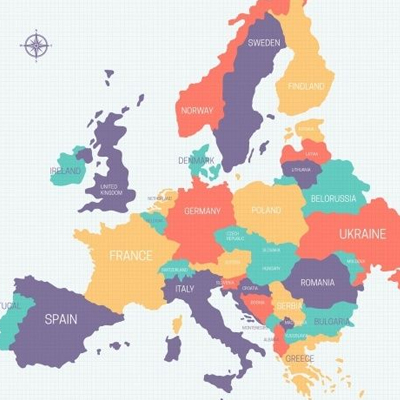
2017년 영국의 보수주의 컬럼니스트 더글라스 키어 머리(Douglas Kear Murray)는 『유럽의 죽음: 이민, 정체성, 이슬람』이라는 책을 출간하며 유럽 문명의 운명을 단호하게 선언했다.

천하天下
칼럼
Grace_C
Europe in 2026, as Douglas Kear Murray's warnings come true

0
2026. 10. 22
- Douglas Murray diagnoses Europe as committing "slow suicide" due to changing demographics from mass immigration and declining native birth rates, coupled with Europe's own loss of confidence in its identity.
- Europe's immigration policies have caused burdens on mainstream society and cultural clashes rather than economic benefits, while excessive self-reproach over colonialism and the Holocaust has weakened Europe's legitimacy.
- Around 900-1,000 "no-go zones" across Europe have weakened state authority and increased crime rates, with persistent patterns of issues like Islamist terrorism, sexual offenses, and gang violence.
- The riots in French suburbs were an explosion of social tension, born from parallel societies and integration failures combined with economic grievances, which European elites deny are linked to immigration, refusing to face reality.
- These issues are leading to the rise of far-right parties, but there are limits to reversing already entrenched parallel societies and crime patterns, and Europe's "presumption of guilt" still obstructs discussion of the problems.
In 2017, British conservative columnist Douglas Kear Murray published the book 'The Strange Death of Europe: Immigration, Identity, Islam,' in which he unequivocally declared the fate of European civilization. 'Europe is committing suicide. At least its leaders have decided to commit suicide.' The book, which begins with this sentence, is not merely a critique of immigration. It analyzes a dual crisis: the fundamental change in demographic composition due to large-scale immigration, particularly the influx of populations from Islamic countries, which began after World War II, coupled with declining birth rates among Europeans; and simultaneously, Europe's loss of faith in its own beliefs, traditions, and legitimacy. The 'strange death' Murray speaks of is not a violent collapse, but a slow demise combining cultural and demographic erosion with self-loathing.
Murray's core argument rests on two pillars. First, the 'guest worker' policy, initiated to fill post-war labor shortages, led to permanent settlement and family reunification, culminating in the 2015 refugee crisis. This process, he argues, primarily benefited immigrants economically, while imposing burdens on mainstream society in terms of housing, education, welfare, security, and cultural clashes. He specifically points to integration failures, the formation of parallel societies, terrorism, sexual violence (such as the Cologne incidents), the resurgence of anti-Semitism, and demographic projections. Second, and more fundamentally, is Europe's 'tyranny of guilt' and ontological fatigue. Excessive self-reproach over colonialism and the Holocaust has weakened Europe's legitimacy, and the decline of Christian and Enlightenment confidence has left a void, as if 'the story has ended.' Borrowing from Pascal Bruckner's arguments, Murray diagnoses Europe as the only civilization in the world that believes it deserves to be punished. Political correctness has prevented even discussing this issue, and elites have denied or glorified reality.
The spread of parallel societies and 'no-go zones'
Reports related to the European Conservatives and Reformists (ECR) Group in March 2026 and subsequent analyses estimated the existence of 900-1,000 'no-go zones' across Europe. These areas are characterized by high levels of crime and violence, parallel societies, and weakened state authority. Saint-Denis and Aubervilliers in France, La Castellane in Marseille, Molenbeek in Belgium, Rosengård in Malmö, Sweden, Neukölln in Berlin, Germany, and Chorweiler in Cologne are frequently cited as examples. The average proportion of the Muslim population in these areas was 29%, significantly higher than the EU average (approximately 4.9%), and the proportion of foreign-born residents was also considerably higher than the European average. The report noted that 63% of Islamist terrorist attackers in Europe between 2010 and 2025 had verifiable connections to such areas. This statistically supports the process by which certain urban spaces are transforming into areas effectively governed by different norms and orders, as Europe becomes 'a home for the whole world' rather than 'a home for Europeans,' as Murray stated.
In Sweden, the phrase 'it feels like working in a war zone' is repeatedly used by police and in on-site reports. Clan-based criminal organizations, gun violence, and 61 vulnerable areas are reported, symbolically highlighting the changes in Sweden, once considered one of the safest countries in Europe. Denmark attempted to manage public housing areas with a high proportion of non-Western immigrants through its 'Parallel Society Law,' but the EU Court of Justice, while pointing out potential discrimination, upheld the law itself. This shows that integration failure is not merely a policy failure but is becoming entrenched as spatial and normative segregation.
Continuation of terror and violence
According to the 2025 Europol TE-SAT report, out of 45 terrorist attacks reported in the EU, 24 were jihadist-related, with 9 executed, resulting in 5 deaths and 81 injuries. Jihadist terrorism remained the most lethal form. At the Berlin Pride event in July 2026, a German national of Lebanese descent drove a van into the crowd and then attacked with a knife, killing 1 person and injuring 29. The German Interior Ministry classified it as an Islamist terrorist attack. There was also an analysis that ISIS-affiliated organizations in the Sahel region were establishing logistics and personnel routes via Morocco and Spain, and several related cells were detected in Morocco and Spain in 2025-2026. This shows that the 'encounter with Islamist extremism' warned by the head has not completely disappeared since 2015, but rather continues through new channels.
Patterns of sexual offenses and group violence
Specific patterns are also repeated in sexual offense statistics. In Germany, there were 751 cases classified as gang rape in 2025, and among 1,087 suspects, 578 were foreign nationals. Syrians accounted for the largest number with 110, followed by Afghans with 64. In Austria, among 147 convictions for rape of minors in 2025, 53.1% (78 people) were foreign nationals, with Syria (18 people) and Afghanistan (11 people) accounting for the majority. This is 2.6 times the proportion of the foreign population (approximately 20%). In the UK, grooming gang scandals in Rotherham and Rochdale are still subjects of public debate, and in October 2026, three young Afghan nationals were convicted and sentenced to prison for sexually assaulting a 17-year-old woman in Bristol. They were arrested after attempting to flee to France after the incident. The security vacuum created by the 'difference in attitudes towards women among men from certain cultural backgrounds' and integration failures, as pointed out by the head through incidents like the Cologne attacks, continues to manifest in statistics and incidents.
Connection between French unrest and the banlieue
The French riots of October 2026 originated from protests in a high school in a working-class suburb north of Paris, citing teacher shortages and dilapidated facilities. These protests later expanded to include issues of cost of living and public services, spreading nationwide and escalating into looting, arson, and attacks on public buildings in some areas. Limoges City Hall was burned, shops were looted in Paris, Marseille, and Lyon, and arrests reached 2,400. While citizens from diverse backgrounds participated in the protests themselves, it was noted that a significant portion of the violence was linked to young people from the suburbs and opportunistic looting. The suburbs are typical spaces of the parallel societies and integration failures that Murray pointed out, and economic grievances acted as a catalyst, igniting existing tensions in these areas. While US Vice President Vance and Hungarian leaders directly linked the events to immigration and failed assimilation, the French government denied any connection to immigration, identifying far-left groups and criminal organizations as the main culprits. This debate itself is an extension of what Murray called "the refusal to speak the truth about reality."
Political Backlash and Elite Limitations
In the face of these realities, the rise of far-right parties appears not merely as populism, but as the political consequence of issues that mainstream politics has avoided for decades. The AfD's state election victories in Germany, Le Pen's lead in the French presidential election, and the strengthening of asylum procedures at the EU level all point in the same direction. However, there are limits to reversing already formed parallel societies, no-go zones, and statistically confirmed crime patterns. While there are belated movements, such as the European Parliament adopting a resolution to counter the Muslim Brotherhood's 'entryism,' the blockade of discussion created by the guilt, self-blame, and political correctness that the head pointed out remains strong.
댓글
( 0 / 500 )
대전아재
8
머리의 경고가 오늘날 유럽 사회의 여러 문제와 맞닿아 있다는 점은 주목할 만합니다. 이민 자체를 문제 삼기보다, 통합 정책의 실패와 치안 불안, 공동체의 정체성 약화를 외면해 온 정치권의 책임부터 따져야 합니다. 현실을 인정하지 않는다고 문제가 사라지는 것은 아닙니다.
( 0 / 500 )
한상길
6
다문화주의가 성공하려면 서로 다른 문화를 존중하는 것만큼이나 사회 구성원 모두가 지켜야 할 공통의 법과 규범이 확고해야 합니다. 동화와 통합의 책임을 이주민에게만 묻거나 주류 사회의 책임만 강조하는 양극단으로는 해법을 찾기 어렵습니다. 유럽의 경험을 냉정하게 살펴볼 필요가 있습니다.
( 0 / 500 )
555k
5
유럽의 이민 문제를 먼 나라 이야기로만 볼 수는 없습니다. 한국도 저출산과 고령화로 외국인 인력과 이민 확대가 불가피해지는 상황입니다. 중요한 것은 사람을 받아들이는 숫자만이 아니라, 우리 사회의 법과 질서, 공동체의 가치에 어떻게 함께할 것인지에 대한 원칙을 세우는 일입니다.
( 0 / 500 )
木石
4
유럽의 위기는 인구 구성의 변화만으로 설명할 수 없습니다. 저출산과 고령화, 불평등, 주거난, 복지 부담, 공동체 의식의 약화가 복합적으로 작용하고 있습니다. 이민자에 대한 일방적인 비난도, 통합 실패를 무조건 부정하는 태도도 문제를 해결하지 못합니다.
( 0 / 500 )
aladdin
4
한국도 유럽의 시행착오를 반면교사로 삼아 준비된 이민 정책을 마련해야 합니다. 정책의 성패는 유입 규모가 아니라 사회적 갈등을 예방하고 공동체의 신뢰를 유지할 역량에 달려 있습니다.
( 0 / 500 )
Jincheon
4
가장 우려스러운 대목은 이민 문제를 둘러싼 합리적인 비판마저 금기시하면서 시민들의 불만을 극우 정치세력의 몫으로 남겨두었다는 사실입니다. 민주주의는 불편한 현실을 토론할 자유에서 출발합니다. 문제를 제기하는 목소리를 억누르기보다 사실과 통계에 근거해 해법을 찾아야 합니다.
( 0 / 500 )
piccolo
3
이 글이 던지는 근본적인 질문은 유럽이 누구를 받아들일 것인가를 넘어, 어떤 사회적 원칙을 지키며 미래를 만들어 갈 것인가에 있습니다. 개방에는 책임이 따르고 관용에도 지켜야 할 경계가 있습니다. 다만 일부 지역의 사례나 범죄 통계를 전체 이민자와 무슬림에게 일반화하지 않도록 사실관계를 엄밀하게 검증하는 일도 반드시 필요합니다.
( 0 / 500 )
Hybridman
4
한국은 유럽의 위기를 보면서 개방과 관용에도 사회적 합의와 책임이 필요하다는 사실을 배워야 합니다. 이민자를 무조건 배척하는 것도 위험하지만, 통합 문제를 외면한 채 다양성만 강조하는 것 역시 무책임합니다. 이주민의 인권을 보호하는 동시에 한국 사회의 법질서와 문화적 기반을 존중하도록 돕는 정책이 필요합니다.
( 0 / 500 )
Michael7kim
3
유럽이 겪는 위기는 이민자의 유입 그 자체보다 사회 통합에 실패하고도 오랫동안 그 사실을 인정하지 못한 정치적 무능에서 비롯된 측면이 큽니다. 인권과 관용을 외치면서 정작 기존 시민들의 불안과 피해를 외면한다면 그것은 진정한 민주주의가 아닙니다. 원칙을 지키되 현실을 직시하는 용기가 필요합니다.
( 0 / 500 )
신고내용
신고내용을 선택해주세요
회원비난/비하/욕설글 및 댓글도배성 게시물저작권 침해/불법자료 유출허위사실유포개인정보 유출.사생활 침해무단광고/홍보음란물 및 도박 불법 광고물범죄행위 관련 글불법행위 관련 소개물품 판매 및 사기글악성코드 및 스파이웨어 유포기타 사유 및 운영진 판단


비밀번호를 잊으셨나요?
Sign in with Google


All information provided by us is free of charge and is for the public good.