品

Corea든 Korea든, 품격이 먼저다
Whether Corea or Korea, dignity comes first.
Whether Corea or Korea, dignity comes first.
Now
지금
751 Diaspora
Heritage
유산
Humanity
인문
Mirengsi
未冷尸
Politics
정치
Media
언론
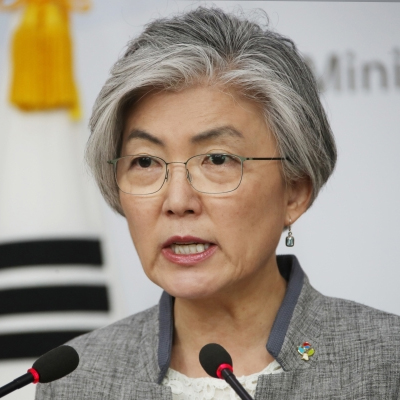
오늘날 대한민국의 외교관들은 어떤 마음으로 주재국 대사관에 앉아 있을까

천하天下
칼럼
baba77
Diplomacy and Imagination

0
2026. 10. 20
- Chicherin's example of overcoming international isolation through diplomatic imagination after the revolution, when Russia was isolated, offers insights for current Korean diplomacy facing difficult challenges.
- Chicherin, transcending his background and ideological leanings, pursued cooperation with Germany solely for national interest, demonstrating a 'cold imagination' that broke existing diplomatic frameworks and forged new paths.
- Korean diplomacy desperately needs 'diplomatic imagination' and a 'pragmatic approach' like Chicherin's to change the conditions themselves, rather than just managing the complex power dynamics between great powers and issues like North Korea.
- This raises a fundamental question: are current Korean diplomats, unconstrained by personal ambition or the government's stance, exercising the imagination to prioritize national interests and break through the current besieged situation?
People Living in Hotels
In 1918, revolutionary Russia was a landlocked country. British and French troops landed in northern ports, and Japanese and American forces entered Siberia. Japanese soldiers marched into Siberia carrying Seirogan. Choi Nam-seon and Lee Gwang-su were shocked by the sight of Japanese troops advancing into Europe, thinking that Asia might conquer Europe. Their admiration for Japan's Greater East Asia Co-Prosperity Sphere began here. Baek Seok went to Siberia to meet Natasha and a donkey. The Soviet Union existed only in Moscow. The vast continent of Siberia was an uncontrollable space, and the Soviet regime was merely a city-state floating in the sea of Siberia. Internally, civil war tore the country apart, and Komarovsky, the aristocratic businessman who raped Lara in Doctor Zhivago, was appointed Minister of Justice for the Far Eastern Republic, ruled by Admiral Kolchak, and headed east, while the White Army prepared to attack again. Externally, the blockade choked them. Lenin was anxious. He even grumbled that the revolution had come too soon.
Russian White émigré aristocrats who had fled to Paris and Berlin were in no hurry. They believed that the Bolshevik regime would soon collapse, so there was no need to find a permanent home. They stayed in hotels, not fully unpacking their bags, and drank wine at outdoor cafes in Paris. Nabokov, who wrote the famous Lolita, tried to help his father establish a government-in-exile in Berlin. At that time, the Soviet regime was not recognized by any country, the economy was stagnant, and diplomacy was trapped like a prisoner. By all accounts, there was no way out.
Diplomats brought from prison
At that time, the card Lenin's government played was not a weapon, but a person: Georgy Chicherin. He was imprisoned in Brixton Prison in London when the revolution broke out. Lenin once said, 'If you encounter a robber on the street at night, the best thing to do is to hand over your entire wallet.' Chicherin was, in many ways, an unlikely fit for the revolutionary government. He was born into an aristocratic family and was a pianist comparable to Rachmaninoff, a contemporary musician. He had worked in the foreign ministry of the imperial government and had long sided with the Mensheviks rather than the Bolsheviks. He was homosexual and belonged neither fully to the Romanov court nor to the underground organizations of revolutionaries. He even underwent electroshock therapy in a German hospital to 'cure' his homosexuality.
However, he possessed something the revolutionary government lacked. He was fluent in seven foreign languages, well-versed in Byzantine history and real economics, understood the logic of European courts and embassies from the inside, and knew how to draft diplomatic documents beautifully. The Bolshevik government pressured Britain, even offering two British spies in exchange, to secure his release, and in 1918, appointed him People's Commissar for Foreign Affairs. They didn't question his background, political alignment, or private life. They asked only one thing: Could this person extricate the country from its isolation?
The Imagination of Rapallo
In the spring of 1922, the European powers gathered in Genoa, Italy. Although the meeting was to discuss the post-war European economy, the West's main interest was in making revolutionary Russia repay the debts of the imperial era. Chicherin was an invited guest, but effectively sat in the defendant's dock. The Trans-Siberian Railway had been built with money from French capitalists. Bankers had sold Russian railway bonds at high interest rates, over 15% annually. When the Soviet Union defaulted, French householders threw themselves into the Seine or hanged themselves. Outside the conference hall, he painted a different picture. There was another isolated country like his: defeated Germany, bound by the Treaty of Versailles. Chicherin was particularly fluent in German.
While the conference was in session, Chicherin signed a treaty with the German delegation in Rapallo, a nearby resort. Germany is the mother of the Russian Revolution. World War I was essentially a war between Germany and Russia. Germany provided Lenin with political funds and a sealed train to get Russia out of the war. Lenin was essentially a German spy. Lenin's Soviet Union signed an armistice agreement in Brest-Litovsk just before World War I, which was essentially the Soviet Union's surrender document. The Soviet Union ceded one-third of its economic territory. Germany could reduce the Soviet Union at any time. That agreement gave the revolution room to breathe. These two countries, once archenemies, renounced war reparations and opened diplomatic relations. While those who had been besieging them were gathered in one place, the two besieged countries joined hands. Lenin desperately needed money from German capitalists to normalize the economy. This was extreme pragmatism.
Once the cracks appeared, they spread rapidly. In 1924, Britain, Italy, and France recognized the Soviet Union, followed by Japan in 1925. Trade and capital flowed in through this diplomatic opening, and Lenin's New Economic Policy (NEP) revived the dying economy. Construction machinery could be heard digging all over Moscow, bourgeois people from the previous era sold art and old books, and wives baked and sold bread at home. Clever people became nouveau riche through real estate investments or foreign exchange trading. Although the New Economic Policy had side effects, it allowed the Soviet Union to accumulate capital to grow into an industrial nation. With that capital, heavy industry was developed and tanks were built, which defeated the Nazis in World War II. The aristocrats who had kept their luggage packed in Parisian hotels eventually had to unpack it. The day of return never came.
Road not on the map
If you ask anyone what a diplomat needs, they will all come up with a similar list. History, geography, humanities, and multiple languages, not just English. These are all correct answers, but they are merely ingredients, not the finished product. Knowledge helps you read a map. Imagination helps you draw paths that aren't yet on the map. If Chicherin had only seen the negotiating table in Genoa, he would have fought over how much debt to reduce. He chose to change the table. Diplomatic imagination is not fantasy. It is a cool-headed imagination, possible because one accurately understands the other party's interests and the distribution of power. It is the ability to see the gaps between walls when everyone else only sees closed doors. That is why diplomacy becomes the act of making the impossible possible. The driving force behind it is passion and imagination. If administration is managing given conditions, diplomacy is changing the conditions themselves. There is only one question to ask. The reason for bringing up the story of Moscow a hundred years ago today is because of Korea's current position. The US-China tech hegemony competition, the weight and cost of the ROK-US alliance, and a still-closed North Korea. These are doors that will not open by merely managing the given conditions.
There is much talk about the Lee Jae-myung administration appointing centrist or conservative figures to diplomatic positions. However, as Chicherin's case shows, the issue is not one of political leaning. Appointing a Menshevik aristocrat, who was imprisoned, as the head of diplomacy was not an act of tolerance by the revolutionary government, but a choice for survival. There are three questions to ask, or rather, one. Does he have a strategy appropriate for this era? Does he have a clear concept of national interest? And does he love his country? These three questions ultimately converge into one. Does he have the power to imagine a path for a besieged nation? The great Florentine Machiavelli said in The Prince that a diplomat must even shake hands with the devil for the national interest, rather than for the happiness of his own soul. Those who waited without unpacking their bags at the hotel believed they saw reality accurately. However, history sided with one person who imagined reality differently. Diplomacy begins with such imagination.
Russian emigres living in hotels and diplomats who don't unpack their bags
A hundred years ago, Russian aristocrats staying in hotels in Paris and Berlin did not unpack their luggage. They believed that the Bolshevik regime would not last long. They thought they saw reality accurately. However, history sided with one person who imagined reality differently. Chicherin did not accept the negotiating table in Genoa as it was. He changed the table itself. He envisioned a path for two besieged countries to join hands, and that imagination eventually opened a breathing hole.
What are the feelings of South Korean diplomats sitting in their embassies today? Have they unpacked their hotel luggage, or is it still packed? The view from the window of the embassy resembles the conference hall in Genoa. The technological hegemony competition between the United States and China fills the negotiating table, the costs and bills of the ROK-US alliance accumulate, and the closed door of North Korea remains in place. In that position, the ambassador delivers messages from the home country, reports the reactions of the host country, handles protocol, and awaits the next personnel change. They seem more accustomed to managing given conditions than imagining changing the conditions themselves.
Kang Kyung-wha is sitting in that position. Having served as the Minister of Foreign Affairs in the Moon Jae-in administration, she went to Washington as the first ambassador to the US for the Lee Jae-myung administration. Her experience in multilateral diplomacy at the UN and her history as the first female minister were impressive. However, during her time as minister, she was often overshadowed by the Blue House. She was on an overseas trip during a critical phase of North Korea-US dialogue and was sometimes absent from meetings on major security decisions. Criticism of her weak presence overlapped with questions about her qualifications. Now, as ambassador, she stated in a parliamentary audit that there were limitations in high-level communication with the White House and that intelligence cooperation issues had not been resolved to the US's expectations. While Seoul was saying there were no problems with the alliance, the ambassador in Washington expressed frustration. This difference in temperature is not just a difference in on-site perception. It reveals the ambassador's position between the political message of the home country and the reality of the host country.
What is required of a diplomat is not their disposition. Chicherin was brought out of prison not because his Menshevik background or aristocratic lineage was tolerated, but because it was seen whether he could extricate a besieged country. The same should apply to Kang Kyung-wha. The problem is not that she came from the Moon Jae-in administration. The problem is whether she, or the government that sent her, has a strategy appropriate for this era, a clear concept of national interest, and loves her country. These three questions converge into one: Does she have the power to imagine a path for a besieged nation?
The problems of the Ministry of Foreign Affairs of the Republic of Korea go beyond individual qualifications. Many diplomats at embassies abroad live without unpacking their bags at the hotel. When the government changes, positions change, and as the number of special envoys increases, the positions for career diplomats decrease. When the 'one voice' from the presidential office comes down, other voices become dangerous. Instead of imagining how to change the table by accurately reading the interests and power dynamics of the other country, reporting and protocol aligned with the home country's stance become the safe choice. The small-nation complex still operates. There is a repeated pattern of preemptively anticipating the intentions of powerful nations, considering concessions even before demands are made, and shrinking back before making choices. Attachés spend their time on document copying and administrative tasks instead of core intelligence, yet receive high evaluations. There are moments when diplomatic missions appear not as the front line of national interest, but as spoils of power or a stop on a personal career path.
Machiavelli said that a diplomat must even shake hands with the devil for the national interest, rather than for the happiness of their own soul. Those who waited without unpacking their bags at the hotel believed they saw reality accurately. However, history sided with those who imagined reality differently. We must ask what kind of mindset South Korean diplomats have while sitting in their embassies abroad, whether they have unpacked their bags, or if they are still packed. There is only one thing to ask: Do they have the power to imagine a path for a besieged nation? Diplomacy begins with such imagination.
댓글
( 0 / 500 )
poo777
7
외교는 주어진 현실에 순응하는 기술이 아니라, 국익을 위해 현실의 조건을 바꾸는 능력이라는 대목이 인상적입니다. 인사에서 중요한 것은 출신이나 성향이 아니라 전략과 실력, 그리고 국가적 책임감이어야 합니다.
( 0 / 500 )
dongjoo
6
치체린의 사례는 외교에서 상상력이 얼마나 중요한지 잘 보여줍니다. 모두가 적이라고 생각하는 상대에게서도 공동의 이해관계를 발견하는 것, 그것이 외교의 본질일 것입니다. 강대국 사이에 놓인 대한민국에도 필요한 것은 눈치 보는 외교가 아니라 판을 읽고 길을 만드는 외교입니다.
( 0 / 500 )
달빛
5
강경화 대사의 과거 이력만으로 현재의 외교적 역할을 판단할 수는 없겠지만, 대사가 본국의 입장을 전달하는 데 그쳐서도 안 됩니다. 현지의 변화를 정확히 읽고 본국의 판단을 수정할 근거까지 제시할 수 있어야 합니다. 외교관의 진정한 가치는 바로 그 지점에서 드러납니다.
( 0 / 500 )
moran
5
호텔에 짐을 풀지 않은 망명객들의 이야기가 오늘날 우리 외교의 현실을 돌아보게 합니다. 정권의 임기는 유한하지만 국가의 이해관계는 지속됩니다. 외교관이 다음 인사와 정치적 평가를 걱정하느라 소신 있는 판단을 하지 못한다면 국익은 그만큼 멀어질 수밖에 없습니다.
( 0 / 500 )
길준
4
외교는 이념의 순도를 겨루는 자리가 아니라 국가의 생존과 미래를 설계하는 자리입니다. 때로는 생각이 다른 사람과도 손을 잡고, 불리한 조건에서도 새로운 출구를 찾아야 합니다. 백 년 전 치체린의 이야기가 오늘 우리에게 던지는 질문은 분명합니다. 대한민국 외교에는 주어진 질서를 관리할 사람만 필요한가, 아니면 새로운 길을 만들어 낼 사람도 필요한가?
( 0 / 500 )
Yeongwol
4
외교관에게 필요한 것은 정권의 언어를 반복하는 능력이 아니라 국제정세의 변화를 읽고 국익의 새로운 가능성을 찾아내는 능력입니다. 치체린의 사례는 외교가 인맥이나 이념보다 전략적 사고와 실질적 성과로 평가받아야 한다는 점을 일깨워 줍니다.
( 0 / 500 )
동해
3
외교에서 가장 위험한 것은 현실을 모르는 것이 아니라 현실은 원래 바꿀 수 없다고 믿는 것입니다. 모두가 불가능하다고 여겼던 상황에서도 새로운 이해관계를 발견하면 출구는 생깁니다. 역사를 공부하는 이유도 과거의 사건을 암기하기 위해서가 아니라 오늘의 한계를 넘어설 가능성을 찾기 위해서일 것입니다.
( 0 / 500 )
Rosemary
3
강대국 사이에 놓인 대한민국이 언제까지 동맹의 관성이나 상대국의 눈치에만 의존할 수는 없습니다. 미국과 중국의 경쟁이 심화할수록 필요한 것은 어느 한쪽의 요구를 기계적으로 따르는 태도가 아니라, 우리의 선택지를 넓히고 협상력을 키우는 외교적 상상력입니다.
( 0 / 500 )
오현철
2
치체린의 이야기를 오늘의 대한민국에 연결한 문제의식에 공감합니다. 외교는 상대를 설득하는 일이면서 동시에 우리 자신의 고정관념을 넘어서는 일이기도 합니다. 국익을 위해 누구와 협력하고 무엇을 양보하며 어디에서 물러서지 않을 것인지 판단하려면 역사적 통찰과 현실 감각, 그리고 미래를 그리는 상상력이 함께해야 합니다.
( 0 / 500 )
Jeong Byeon_72828
0
국민을 위해 무엇을 할 것인가에 절실한 체험이 있었는가 ? 좋은 부모 만나서 호위호식 외국유학한 자들이 진정 애국이 무엇인가를 뼈저리게느낀 경험이 있는가. 그리고 오래전부터 내면에 새겨온 가치관 인생 철학적 사유를 해왔는가 . 분단 문제 통일지향 진실된 고뇌를 거쳐야 좋은업적이 이루어질수있다고 봅니다. 나라와 국익을 위해 밤낮으로 수고하는 공직자들이여 원대한 상상력의 날개를 펴시라.
( 0 / 500 )
신고내용
신고내용을 선택해주세요
회원비난/비하/욕설글 및 댓글도배성 게시물저작권 침해/불법자료 유출허위사실유포개인정보 유출.사생활 침해무단광고/홍보음란물 및 도박 불법 광고물범죄행위 관련 글불법행위 관련 소개물품 판매 및 사기글악성코드 및 스파이웨어 유포기타 사유 및 운영진 판단


비밀번호를 잊으셨나요?
Sign in with Google


All information provided by us is free of charge and is for the public good.