品

Corea든 Korea든, 품격이 먼저다
Whether Corea or Korea, dignity comes first.
Whether Corea or Korea, dignity comes first.
Now
지금
751 Diaspora
Heritage
유산
Humanity
인문
Mirengsi
未冷尸
Politics
정치
Media
언론
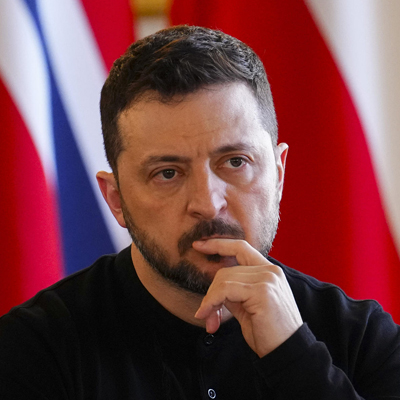
10월 8일 외교부가 박기창 주우크라이나 대사를 본국으로 소환하기로 한 결정한 후 이틀만인 10일 귀국했다

천하天下
칼럼
Sage72
Saying something is important and treating it as important are two different things.

0
2026. 10. 11
- The South Korean government's recall of its ambassador to Ukraine is a diplomatic protest against Ukraine's breach of agreement and unilateral actions, and a standard response to uphold Korea's diplomatic prestige.
- This isn't merely an emotional reaction; it's an attempt to manage security on the Korean Peninsula by reaffirming Korea's consistent principles of refusing lethal aid and providing humanitarian treatment for prisoners, especially given North Korea's involvement in the conflict.
- It's a cautious diplomatic message that rejects Ukraine's attempt to leverage the prisoner issue for arms aid negotiations, upholding Korea's national interests and principles while leaving room for dialogue rather than severing ties.
- This recall is interpreted as a strategic move to clarify that Ukraine's actions go beyond misunderstanding, constituting a series of agreement violations, and to strengthen Korea's position in future negotiations.
On October 8, two days after the Ministry of Foreign Affairs decided to recall Ambassador Park Ki-chang to Ukraine, he returned to Korea on the 10th. This is not a cold shoulder that ignores the desperation of a party to a war. It is a minimal measure not to ask the other party, who first broke the form of agreement, to keep that form only in words. The government added, “We hope that all pending issues between the two countries will be resolved smoothly and will continue discussions.” The sentence is an adjustment of the level, not a severance. The modifier that this is the first protest-related recall in 18 years since the ambassador to Japan was recalled over the Dokdo issue in 2008 is heavy, but that weight is not evidence of excess. The sequence of demanding an apology through a summons, and then recalling one's own ambassador when the apology does not meet the demanded level, is a standard step taken when diplomacy does not neglect its prestige.
If we re-examine the process, the position of the recall becomes clear. At the July summit, both sides agreed to treat North Korean prisoners of war in accordance with international law, humanitarian principles, and the free will of the parties concerned. The National Intelligence Service reported to the National Assembly that the non-disclosure was a consensus requested by the Ukrainian side from the beginning. It was a format in which the party concerned, fearing domestic criticism for abandoning the opportunity to exchange its own prisoners, first wanted a quiet process. Seoul was the one that kept that format. When Zelensky publicly announced the transfer of two prisoners to Korea at the UN General Assembly on September 23, President Lee Jae-myung expressed his regret with courtesy the next day. What came back was a denial of the agreement. After a public statement that made the words of the head of state of the other country false, a warning was issued from the presidential chief of staff's side to the effect that North Korea's experience in war would lead to preparations for actual conflict on the Korean Peninsula. On September 28, the First Vice Minister of Foreign Affairs summoned the Ukrainian Chargé d'Affaires to Korea to demand an explanation and an apology, and on October 2, the President stated that if they continued to deny the facts and refuse to apologize publicly, further measures would be taken. On October 6, Minister Cho Hyun said that he had received a message containing an apology, but that it differed from the demanded level, and two days later, the recall was decided. This is not a step taken out of emotion. It is the next step after a series of public disclosures, denials, mentions of war, and insufficient handling.
The fact that the same structure as the misjudgment on the front lines was repeated in diplomacy justifies the recall. Diplomacy towards Korea blatantly repeated that misjudgment. In August, Zelensky specifically mentioned Korea, stating he wanted air defense system support. The government effectively refused, citing the principle of prohibiting lethal weapon support. This refusal is not a cold shoulder. Sending Korean-made artillery and interceptors to a war where North Korean troops are fighting on the Russian side is not humanitarian aid; it is opening a path for the escalation of conflict on the Korean Peninsula. North Korea does not separate the use of those weapons from its experience in the war. The line of treating prisoner repatriation as humanitarian while refusing to send lethal weapons is the most consistent position a non-belligerent country can take. The National Intelligence Service analyzed that Ukraine seemed to have publicly announced the repatriation of prisoners to Korea, expecting weapon support, and that no such support was provided. After being refused help, Ukraine broke the confidentiality it had initially requested and used the prisoners as a card in a war of public opinion. Diplomacy that shames the party that kept its agreement to force a policy change is not negotiation. Prisoners are people, and repatriation is premised on the consent and safety of the individuals involved. The moment this is publicly used as leverage for air defense weapon negotiations, humanitarianism becomes an excuse and prisoners become props. If an air defense network is desperately needed, that public announcement was at the top of the list of things not to do.
The recall is the answer to that chain of events. The belated statement from the Ukrainian Ministry of Foreign Affairs that Korea is important and that they sincerely want to resolve the diplomatic misunderstanding is damage control, not an explanation. It means they spoke of importance only when pressure didn't work. The word 'misunderstanding' doesn't fit the facts. The request for confidentiality, unilateral disclosure, denial of agreement, and mention of war on the Korean Peninsula are not misunderstandings but a chain of actions. Actions can only be undone by an apology. Saying something is important and treating it as important are different. Defense cooperation, reconstruction, and non-lethal aid are only possible when trust remains. The party that first breaks that trust and delays an apology will suffer losses. Recalling one's ambassador is a measure that signals that the current issue has crossed the line of what can be handled through routine diplomacy, without severing relations. It is below designating someone as persona non grata or downgrading relations, and above summoning an ambassador. Choosing this middle ground aligns with the statement that they will not close the door. The condition of continuing consultations is not mere rhetoric. It means the purpose of the recall is to restore facts, not retaliation.
Zelensky grew up in a Jewish family from Kryvyi Rih. Many of his grandfather's family were victims of the Holocaust, and his grandfather fought against Germany as part of the Soviet army. The theory that he is a 'descendant of Jews who collaborated in the Kyiv massacre' does not align with his family history. The observation that wartime survivors transform according to circumstances is not a destiny of lineage, but rather the political psychology of a land repeatedly subjected to occupation and civil war. The contradiction of a Jewish comedian-turned-president incorporating the memory politics of Bandera and the UPA into the national narrative is more accurately interpreted as leverage management by a wartime regime, rather than a betrayal of his heritage. Russia started the war. However, after choosing full-scale resistance, the list of responsibilities for hundreds of thousands of young people and millions of refugees, along with the terms of a ceasefire agreement, lies before him. In that an exit could mean political death, there are some similarities in the form of incentives, even if the systems and individuals differ. One can deceive an opponent for survival. Reading this as leverage management rather than calling it innate is diplomacy. In that interpretation, the public display of prisoners is both a humanitarian issue and a card to draw the Korean Peninsula into an extended board of the European battlefield. If North Korea reacts strongly and Russia becomes more aggressive, it can extend the war and expand its own space under that pretext. It's a much smaller version of the same structure as Bandera seeing the German army as a door to independence.
The recall is a declaration that we will not accept that small plate. What Korea needs to do is not to morally condemn Zelensky or emotionally align with him. It is to prevent Kyiv from using tensions in Northeast Asia as leverage, while upholding the human rights of prisoners of war and the principles of international law. It is to restore the Moscow channel, but to ensure that this restoration is not misunderstood as taking sides. The ambassador's recall accomplishes these three tasks in one action. First, it confirms through action that the refusal of lethal weapons was not hostility towards Ukraine but rather management of the Korean Peninsula. In a war where the participation of North Korean troops has been confirmed, the transfer of South Korean air defense weapons would not affect Ukrainian airspace but would become a variable in the inter-Korean military standoff. Not opening that variable is not a betrayal of an alliance but the duty of a non-party nation. Second, maintaining confidentiality was in compliance with the format first requested by Ukraine, and demanding correction and apology in a situation where the requesting party broke it and accused the complying party of lying is a restoration of facts. The recall is a sign that this demand will not disappear with public statements. Third, the warning of additional measures stems from the judgment that the same tactics will be repeated if dignity is neglected. To an opponent who escalated the situation when the public release of prisoners of war failed to elicit weapons support, lines are not drawn by words alone. Fourth, the door to humanitarian aid has not been closed. The July principles of free will and international law remain. The government has maintained its position that it will accept prisoners of war if they wish to come to Korea and will not forcibly repatriate them. What has been closed is only the demand to change principles through threats.
The entrepreneur's observation contrasting vertical and dispersed corruption also explains the utility of summoning, when read not as ethnic disparagement but as a method for choosing negotiation partners. The transaction costs differ between a system where lobbying only needs to be directed at superiors, and one where even if something is given to a superior, it leaks out midway. If the goodwill of foreigners is easily exploited under weak institutions, the appropriate response for Seoul is not emotional trust but the solidification of procedures. The steps of confirming non-disclosure in writing, summoning if disclosure occurs, and recalling if denial occurs, represent that solidification. Instead of criticizing shrewdness, it is closer to balance to understand the circumstances from which shrewdness arises—the periphery, weak institutions, reliance on foreign powers, wartime survival—and to prevent those circumstances from crossing into the Korean Peninsula. Ethnicity can be a supplementary hypothesis for explanation, but it should not be a premise for diplomacy. The premise should be the point where the other party's incentives and our national interests overlap. The moment that point is missed, the party doing the planning is always the one desperate for survival.
댓글
( 0 / 500 )
choco
9
우크라이나의 절박한 처지는 충분히 이해하지만, 그렇다고 모든 행동이 정당화되는 것은 아닙니다. 한국도 북한군의 참전이라는 안보 현실을 고려해야 합니다. 인도주의적 지원과 살상 무기 지원은 구분되어야 하며, 포로 문제를 무기 지원의 지렛대로 삼아서도 안 됩니다. 국익과 원칙을 함께 지키는 외교가 필요합니다.
( 0 / 500 )
mok77
7
외교는 감정이 아니라 원칙과 국익으로 하는 것입니다. 이재명 정부가 합의와 신뢰의 문제를 가볍게 넘기지 않고 대사 소환이라는 외교적 조치로 분명한 입장을 밝힌 것은, 대한민국도 국제사회에서 존중받아야 할 주권국가라는 사실을 보여주는 결정입니다.
( 0 / 500 )
푸른하늘
5
외교는 선의만으로 유지되지 않습니다. 합의를 지키는 상대에게 일방적인 공개와 부인으로 대응한다면 신뢰는 무너질 수밖에 없습니다. 특히 전쟁 중인 국가라면 더욱 신중해야 합니다. 이번 대사 소환은 관계 단절이 아니라 잘못된 행동에는 분명한 책임을 물으면서도 대화의 문은 열어두는 현실적인 외교라고 봅니다.
( 0 / 500 )
이민준
5
우크라이나의 아픔을 이해하는 것과 우리 안보를 희생하는 것은 전혀 다른 문제입니다. 이재명 정부가 인도주의와 한반도 안보를 함께 고려하며 원칙을 지키려는 것은 당연한 책무입니다. 어떤 나라와의 관계에서도 대한민국의 국익과 국민의 안전이 우선되어야 합니다.
( 0 / 500 )
박동혁
4
전쟁의 고통을 겪는 우크라이나 국민에 대한 연대와 젤렌스키 정부의 외교적 행동에 대한 비판은 별개입니다. 우크라이나를 돕는 일과 한국의 안보를 위험에 빠뜨리지 않는 일은 양자택일의 문제가 아닙니다. 국제법과 인도주의를 지키되, 우리에게 일방적인 희생을 요구하는 압박에는 단호해야 한다는 글의 취지에 공감합니다.
( 0 / 500 )
재선
4
외교적 신뢰는 말로 쌓는 것이 아니라 약속을 지키는 행동으로 쌓는 것입니다. 합의가 제대로 존중되지 않았다면 정부가 분명하게 문제를 제기해야 합니다. 대화의 문은 열어두되 원칙을 훼손하는 행동에는 책임을 묻겠다는 이번 조치의 취지를 이해합니다.
( 0 / 500 )
서울아재
4
결국 외교의 신뢰는 말이 아니라 행동으로 증명됩니다. 한국과의 관계가 중요하다고 강조하면서 정작 합의와 상대국의 입장을 존중하지 않는다면 그 말은 공허합니다. 대사 소환은 강경함 자체가 목적이 아니라 앞으로의 협력이 어떤 원칙 위에서 이루어져야 하는지를 분명히 한 조치입니다. 국익을 지키면서도 협상의 여지를 남긴 균형감이 돋보입니다.
( 0 / 500 )
andrea72
3
강대국이든 전쟁 중인 국가든 대한민국을 일방적으로 대할 수는 없습니다. 국제적 연대도 상호 존중이 전제되어야 지속될 수 있습니다. 이재명 정부가 무조건적인 편들기나 감정적 대응 대신 외교적 절차를 통해 우리 입장을 전달한 점을 주목할 필요가 있습니다.
( 0 / 500 )
상민
1
국익을 지키는 외교는 때로 단호해야 하고, 평화를 지향하는 외교는 끝까지 대화의 가능성을 남겨야 합니다. 이번 대사 소환은 관계 단절이 아니라 신뢰 회복을 위한 원칙의 확인으로 볼 수 있습니다. 대한민국의 안보와 국제적 위상을 함께 고려하는 외교가 앞으로도 일관되게 이어지기를 바랍니다.
( 0 / 500 )
신고내용
신고내용을 선택해주세요
회원비난/비하/욕설글 및 댓글도배성 게시물저작권 침해/불법자료 유출허위사실유포개인정보 유출.사생활 침해무단광고/홍보음란물 및 도박 불법 광고물범죄행위 관련 글불법행위 관련 소개물품 판매 및 사기글악성코드 및 스파이웨어 유포기타 사유 및 운영진 판단


비밀번호를 잊으셨나요?
Sign in with Google


All information provided by us is free of charge and is for the public good.