品

Corea든 Korea든, 품격은 이름보다 먼저다
Whatever the name—Corea or Korea—dignity comes first.
Whatever the name—Corea or Korea—dignity comes first.
Now
지금
751 Diaspora
Heritage
유산
Humanity
인문
Mirengsi
未冷尸
Politics
정치
Media
언론
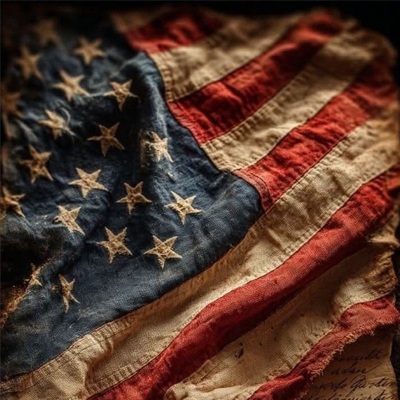
이제 마지막 남은 중심은 미국이다. 트럼프와 같은 미국 중심주의가 전면에 나온 것은, 역설적으로 미국의 중심이 흔들리고 있다는 신호다.

천하天下
칼럼
baba77
A World Without a Center and the Revival of Nationalism

0
2026. 10. 07
- This article moves from an individual's attachment to old things to a macroscopic insight into the rise and fall of empires and the cycle of civilization.
- The decline of empires leads to the weakening of universalism and the rise of nationalism, signifying a historical inevitability and a shift in order akin to gravity.
- In the current situation where the US-centric order is faltering, the article argues for preparing for the future by designing a new nationalism that combines self-reliance and openness, rather than insular nationalism.
- It emphasizes that the relics left by empires eventually become like ghosts, and that the current universal order is also not eternal, underscoring the importance of proactive survival strategies.
I am an amateur archaeologist, a lover of old things. I prefer Shostakovich's romance flowing from an old transistor radio to the latest Bluetooth speaker. I also prefer people I've known for a long time to newly met acquaintances. So, I am unlikely to get a divorce or find a new partner. My wife wants to throw away the books, magazines, and antiques I collected during my youth abroad, which are piled up in my room. However, knowing that this habit is what binds her and me, she has granted special autonomy to my den.
When I have the opportunity to travel to Rome or Istanbul for business, I seek out historical sites. Standing before marble buildings, I am amazed that the people of that time enjoyed a higher material standard of living than we do now. As the Roman Empire declined due to financial crises and population decrease, the city of Rome shrank into a rustic and poor town. Descendants of prestigious families who had produced senators for generations entered the Papal See at the Lateran Palace, becoming bishops to barely make a living. The splendid culture and wealth of Rome, the capital of the ancient world, and the military power that supported it, seemed to evaporate in an instant. It was then that I learned that the world does not always progress.
Where an empire recedes, what was there before rises again. In Gaul and Britain, Roman urban life and Latin administration thinned, and the indigenous order that lay dormant beneath them re-emerged. In North Africa, after the collapse of Roman urban and administrative order, Berber forces and later Islamic order filled the void. It wasn't that Rome 'disappeared,' but rather that when the center enforced by Rome collapsed, the periphery found its place again.
A similar thing happened after Britain lost its imperial status. The institutions, economic systems, overseas infrastructure, and remaining colonial ties that had been established to maintain the empire became more of a burden than a benefit. The pound block, naval power, and the hollow shell of the Commonwealth seemed majestic for a while, but in reality, they were a weight that crushed the vitality of mainland Britain. Stagnation was inevitable, and the British people began to live by reminiscing about the past. No one can guarantee that such a thing will not happen to the United States. If the United States loses its hegemonic position, its massive military, the lavish lives of Wall Street power elites, the luxury stores of Hollywood and Beverly Hills, and even government buildings, including the White House, could become dark, gloomy buildings due to the lack of maintenance costs. The architecture of an empire becomes a ghost the moment the empire's cash flow ceases.
You don't have to look far. Just look at Russian cities after the collapse of the Soviet Empire. The gray apartment complexes of the Brezhnev era, rusty playground equipment, dirty benches, and discarded needles next to them revealed the true face of a once-superpower. When the ideology and order imposed by an empire disappear, nationalism fills the void. This is not a matter of taste, but a gravity akin to the expansion and contraction of history. When the center expands, universalism gains traction, and when the center contracts, each nation rebuilds its own home.
North Korea was not exempt from that rule. One of the decisive reasons North Korea shifted from state socialism to a Kim Il-sung nationalist state was the disappearance of the Soviet Union as a central power. The basis for maintaining the regime shifted from world revolution to the myth of the nation. China and Vietnam turned to market economies after the collapse of the socialist center. North Korea could not go all the way down that path. Kim Jong-il, a dictator who loved movies, met with Hyundai's honorary chairman Chung Ju-yung, who visited North Korea in 1998, and showed interest in the development of Mount Kumgang and inter-Korean economic cooperation. He was not unaware of the achievements of the South Korean-style developmental state. He had already enacted the Joint Venture Law in 1984, designated the Rason Free Economic and Trade Zone in 1991, and later proposed cross-border cooperation initiatives such as Rason-Khasan. However, comprehensive reforms halted due to fear of regime collapse. The content of nationalism was filled not with bread, but with nuclear weapons. Using the 1994 Korean Peninsula nuclear crisis as leverage, North Korea secured the Geneva Agreed Framework and maintained a balance of power between the United States and China, buying time for its survival as a nation-state. Opening up was a pretense, and nuclear weapons were insurance.
Europe also shows the wandering that followed the shaking of its center. After the Cold War, European integration was an ambitious project. However, while bureaucracy thickened and political correctness, including discourses on homosexuality and human rights, rearranged the community's priorities, the foundations of industry and energy weakened. Its fragility was revealed only after being hit by the bombshell electricity and energy bills thrown by the Russia-Ukraine war. The EU is still stumbling, unable to find its direction on where to go and how to make a living. The signboard of universal civilization remains, but the cheap energy and security dividends that supported it have disappeared.
Now, the only remaining center is the United States. The emergence of American-centric nationalism, like Trump's, is, paradoxically, a sign that America's center is faltering. In its heyday, the United States claimed it could sacrifice its national interests and even the lives of its citizens for democratic morality and free-market order. For today's America, such talk is a luxury. The notion of raising tariffs if allies don't pay or invest gives an ominous feeling that perhaps we should cut our losses with the 'United States Inc.' When imperialism collapses, nationalism, like mushrooms after rain, emerges with a new feel. This is not a matter of good or evil, but of order.
In 410, when Alaric, the leader of the Visigothic mercenaries, plundered Rome, Augustine, the bishop of Hippo in North Africa, wrote 'The City of God.' He argued that God's kingdom would come in place of a fallen Rome. He knew that earthly empires are not eternal and sought to fill that void with a different order. Even as the US financial market booms with AI technological innovation, the fluctuations in government bond yields are unusual. Beneath the surface of prosperity, both maintenance costs and trust costs are simultaneously rising.
Pro-Japanese and pro-American media, who break out in hives at the slightest doubt about America's power, or those who revere the American president like a new modern emperor, will shout 'Long live America!' with a spirit of perseverance. However, in an era where the centrality of the United States is fading, we must consider what will fill that void. If it is nationalism, we must begin to design what kind of nationalism we will create.
What is needed is not a nationalism united by closure and resentment. It is not a British-style nostalgia that sits on the ruins of an empire and only recites the past, nor is it a North Korean-style survival nationalism that buys time with nuclear weapons. What can survive in a world without a center is a nationalism that simultaneously possesses the power to protect itself and the openness to deal with the outside world. A nation that entrusts its soul to the fleets of others and the ideologies of others, mimicking universality, will be the first to stop when that universality withdraws. Just as the marble of Rome becomes ruins and the ideology of the Soviet Union remains as gray apartments, the order of the United States is not eternal. What remains then are ultimately only the people who endure on their own land, in their own language, with their own institutions and their own industries. Whatever that endurance is called, the design must begin before the center completely collapses.
댓글
( 0 / 500 )
paran26
8
골동품과 유적을 좋아하는 개인적인 이야기에서 출발해 문명의 흥망성쇠와 국제질서의 변화까지 확장되는 흐름이 독특합니다. 결국 오래된 것을 들여다보는 이유도 현재가 영원하지 않다는 사실을 확인하기 위해서인지 모르겠습니다. 역사는 강대국에게도 예외를 두지 않는다는 점을 다시 생각하게 합니다.
( 0 / 500 )
joongsub
6
로마에서 소련까지 이어지는 사례를 통해 ‘중심의 쇠퇴가 주변의 재등장을 부른다’는 논리를 설명한 점이 인상적입니다. 결국 중요한 것은 미국의 쇠퇴를 예언하는 것이 아니라, 국제질서가 바뀌더라도 한국이 스스로 버틸 기반을 갖추고 있느냐는 질문인 것 같습니다.
( 0 / 500 )
기억속으로
5
민족주의를 폐쇄와 배타의 언어가 아니라 산업·국방·제도·개방을 함께 갖추는 자기보존의 원리로 보자는 대목에 공감합니다. 강대국에 기대는 것과 강대국과 협력하는 것은 전혀 다른 문제라는 생각도 듭니다.
( 0 / 500 )
나무77
5
다만 미국의 쇠퇴를 로마나 소련의 몰락과 동일선상에서 보는 데에는 신중할 필요가 있어 보입니다. 미국은 여전히 금융·기술·군사·동맹이라는 복합적인 힘을 갖고 있기 때문입니다. 오히려 이 글의 핵심은 미국이 반드시 무너진다는 예언보다, 어떤 상황에서도 자립할 수 있는 국가 역량을 갖추자는 주장으로 읽힙니다.
( 0 / 500 )
koa
5
제국의 쇠퇴를 단순한 패권국의 교체가 아니라 ‘중심의 약화와 주변의 재등장’이라는 구조로 설명한 것이 흥미롭습니다. 역사는 직선으로 진보하는 것이 아니라 팽창과 수축을 반복한다는 문제의식이 잘 드러납니다.
( 0 / 500 )
김기태
3
특히 북한을 ‘민족주의의 부활’이라는 관점에서 바라본 부분이 흥미롭습니다. 소련이라는 중심이 사라진 뒤 체제의 정당성을 민족과 핵에서 찾았다는 설명은 북한의 변화를 이해하는 하나의 중요한 분석틀이 될 수 있겠습니다.
( 0 / 500 )
남강82
3
‘중심이 완전히 꺼지기 전에 설계를 시작해야 한다’는 마지막 문장이 오래 남습니다. 민족주의를 과거의 영광을 되찾자는 구호가 아니라, 자기 언어와 제도와 산업을 지키면서 세계와 계속 거래할 수 있는 능력으로 정의한다면 지금 한국에도 상당히 중요한 질문이 될 것 같습니다.
( 0 / 500 )
nadan
3
로마의 폐허에서 시작해 소련과 북한, 유럽과 미국까지 연결한 시야가 넓습니다. 특히 강대국의 질서가 사라진 뒤 무엇이 그 자리를 채우느냐가 더 중요하다는 지적은 지금 국제정세를 바라보는 데도 생각할 거리를 줍니다.
( 0 / 500 )
박병규
2
민족주의가 반드시 폐쇄적이고 배타적인 이념일 필요는 없다는 주장에 주목하게 됩니다. 자기 나라의 산업과 국방을 지키면서도 외부와 적극적으로 교류하는 개방적 민족주의라면 기존의 민족주의와는 다른 새로운 개념으로 발전할 수도 있겠습니다.
( 0 / 500 )
신고내용
신고내용을 선택해주세요
회원비난/비하/욕설글 및 댓글도배성 게시물저작권 침해/불법자료 유출허위사실유포개인정보 유출.사생활 침해무단광고/홍보음란물 및 도박 불법 광고물범죄행위 관련 글불법행위 관련 소개물품 판매 및 사기글악성코드 및 스파이웨어 유포기타 사유 및 운영진 판단


비밀번호를 잊으셨나요?
Sign in with Google


All information provided by us is free of charge and is for the public good.