品

Corea든 Korea든, 품격은 이름보다 먼저다
Whatever the name—Corea or Korea—dignity comes first.
Whatever the name—Corea or Korea—dignity comes first.
Now
지금
751 Diaspora
Heritage
유산
Humanity
인문
Mirengsi
未冷尸
Politics
정치
Media
언론
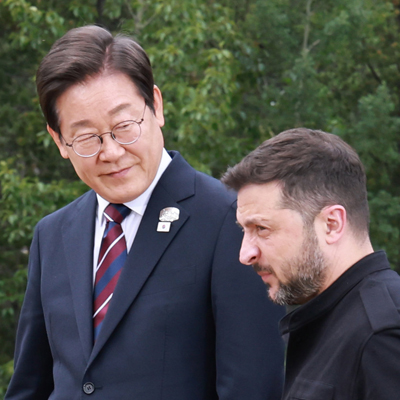
7월 나토 정상회의를 계기로 이재명 대통령과 젤렌스키가 첫 정상회담

천하天下
칼럼
Sage72
젤렌스키 외교가 스스로 닫은 문

0
2026. 10. 05
- Ukraine's deep-strike strategy against Russia led to Russian retaliation and increased damage to Kyiv, while diplomatic pressure on South Korea actually undermined trust.
- The Zelensky government repeatedly made diplomatic missteps, unilaterally disclosing an agreement to repatriate North Korean prisoners of war and threatening war on the Korean Peninsula when South Korea refused to provide lethal aid.
- The South Korean government consistently responded by refusing lethal aid, demanding adherence to agreements, and warning of further measures, aiming to protect stability on the Korean Peninsula and national prestige.
- Ukraine's diplomatic blunders shattered trust, led to self-isolation, and even jeopardized opportunities for much-needed support.
Ukraine's choices have not benefited it, neither on the front lines nor in its diplomacy towards Korea. Deep strikes against Russian oil facilities did not reduce the damage to the capital Kyiv, and the unilateral disclosure of the repatriation of North Korean prisoners of war only shattered the trust of a country desperately in need of air defense support. As the war drags on, external ammunition, air defense, and reconstruction funds become necessary, but the Zelensky government has turned those who could provide such aid into targets of pressure. The Lee Jae-myung government's response is not an emotional counterattack to that breakdown. It is a minimal measure to preserve the form of agreement and stability on the Korean Peninsula. The source of the misstep lies not in Seoul, but in Kyiv.
The limitations on the front lines have already been revealed in numbers. In mid-September, Ukraine launched over 1,000 drones towards Russia. Zelensky stated that they had struck key oil and logistics facilities, and that Russia should end the brutal war and choose peace. The words were peace, but the means were escalation. The Russian Ministry of Defense announced that it had intercepted over 1,100 drones, and the mayor of Moscow said that 450 drones flying towards the capital had been shot down. Although it was described as the largest scale ever, there was no evidence that Moscow's political center had been shaken. The pillars of fire from the oil refineries were news for a day, and the front line positions remained unchanged. The assumption that deep strikes would break Russia's will to wage war did not hold true, at least this autumn.
The response from the other side was not restraint, but an increase in the intensity of retaliation. Russia's jet-propelled drones increased from 350 in June to 2,800 in August, and with speeds of 400-600 kilometers per hour, reports followed that the interception rate had dropped from around 90 percent to 60 percent. Cheap and fast weapons began to routinely penetrate the capital's air defense network. On September 5, the National Security Service building was hit for the first time since the invasion, on the 27th, a building used as the Saudi Arabian ambassador's residence was damaged, and on the 28th, in broad daylight, the National Academy of Sciences was attacked, resulting in casualties. The area around Volodymyrska Street, where government buildings and embassies are concentrated, had previously been considered relatively untouched. A local expert's comment that there was an implicit line that state institutions would not be directly targeted to avoid escalation is also an assessment that this line has been broken.
This means that Ukraine's refinery strikes did not stop Russia's attacks on the capital. Instead, they drew targets to government and diplomatic facilities and bridges that had remained safe zones. The premise that provocation creates leverage collapses the moment the damage returns to Kyiv, not Moscow. As shown by the temporary suspension of air raids on Kyiv to coincide with the US envoy's schedule, the actual breathing room came from external political schedules, not the number of drones. What is needed in the fourth year of the war is not another deep strike, but diplomacy to manage the already skewed war of attrition.
Diplomacy towards South Korea blatantly repeated that misjudgment. When President Lee Jae-myung and Zelensky held their first summit on the occasion of the NATO summit in July, both sides agreed to deal with the issue of North Korean prisoners of war in accordance with international law, humanitarian principles, and the free will of the parties concerned. The South Korean government's position was to keep the repatriation plan confidential in accordance with that principle. Confidentiality was not a condition unilaterally imposed by South Korea. The National Intelligence Service reported to the National Assembly's Intelligence Committee that confidentiality was a consensus requested by the Ukrainian side from the beginning. The parties themselves wanted quiet handling for the safety and will of the prisoners, and the management of the repatriation process. South Korea was the one that adhered to that format.
In August, Zelensky specifically mentioned Korea, stating that he wanted support for air defense systems. The government virtually refused, citing its principle of prohibiting support for lethal weapons. This refusal is not a cold shoulder. Sending Korean-made artillery and interceptor systems to a war where North Korean troops are fighting on the Russian side is not humanitarian aid; it is opening a path for escalation on the Korean Peninsula. North Korea does not separate the use of those weapons from its experience in the war. The line of treating prisoner repatriation as humanitarian while not sending lethal weapons is the most consistent position a non-belligerent country can take. The doors for reconstruction, non-lethal aid, and humanitarian cooperation remain open within that line. What Korea closed was not artillery, but the entrance to escalation.
The Zelensky government twisted that line into a tool for pressure. In late September, it publicly announced the transfer of prisoners to Korea on the international stage. The National Intelligence Service analyzed that Ukraine likely disclosed this hoping for weapons support, and that no such support was provided. After being refused aid, Ukraine broke the confidentiality it had initially requested and used the prisoners as a card in a public relations battle. Diplomacy that shames the party that upheld an agreement to force a policy change is not negotiation. It is closer to betrayal. Prisoners are people, and repatriation is predicated on the consent and safety of the individuals involved. The moment this is publicly used as leverage in air defense weapon negotiations, humanitarianism becomes an excuse and prisoners become props. If what Ukraine desperately needs from Korea is an air defense network, then that public disclosure was at the very top of the list of things not to do.
On October 2, President Lee stated that Ukraine had requested confidentiality regarding the progress of the situation, but then unilaterally disclosed it. When the President of the Republic of Korea expressed regret with the utmost courtesy, Ukraine denied any agreement, effectively calling the head of state of a partner country a liar. When asked to acknowledge the agreement and apologize, Ukraine instead brought up the possibility of war on the Korean Peninsula, claiming that a military conflict between the North and South was imminent. This was against the backdrop of Budanov, the Chief of Staff of the Presidential Office, warning that North Korea's combat experience could lead to actual combat and conflict on the Korean Peninsula. Denying the words of the Korean President under the pretext of prisoner repatriation and talking about war on the Korean Peninsula is not a request for assistance. It is a threat. For a country seeking help to provoke security instability in a country that can provide help is an abandonment of the basics of diplomacy. The statement that further measures would be taken if the acknowledgment of facts and a public apology continued to be refused is not an overreaction. The declaration that this issue, concerning the dignity of the nation and its people, cannot be overlooked, is the minimum response any government should make. If a head of state, whose agreement has been denied and who has been told that war is being instigated, remains silent, then diplomacy collapses.
The Ukrainian Ministry of Foreign Affairs' belated statement that Korea is important and that they sincerely want to resolve the diplomatic misunderstanding is damage control, not an explanation. When pressure didn't work, they spoke of importance. The word "misunderstanding" doesn't fit the facts. The request for confidentiality, unilateral disclosure, denial of agreement, and mention of war on the Korean Peninsula are not misunderstandings but a series of actions. Actions are only retracted with an apology. Saying something is important and treating it as important are different. Defense cooperation, reconstruction, and non-lethal aid are only possible when trust remains. The party that first breaks that trust and delays an apology will suffer losses. Korea said it would treat prisoners humanely, would not send lethal weapons, and only drew a line at the breach of agreement, false denial, and mention of war on the Korean Peninsula. All three judgments are consistent. What is inconsistent is Kyiv's diplomacy, which returned rejection with betrayal.
The legitimacy of the Lee Jae-myung administration becomes even clearer here. First, refusing lethal weapons is not about hostility towards Ukraine, but about managing the Korean Peninsula. In a war where North Korean military involvement has been confirmed, the transfer of South Korean air defense weapons would not affect Ukrainian airspace, but rather the military standoff between North and South Korea. Not opening up that variable is not a departure from the alliance, but an obligation of a country that is not a direct party. Second, maintaining confidentiality is adhering to a format that Ukraine requested first. In a situation where the requesting party breaks it and accuses the adhering party of lying, demanding correction and apology is not an overreaction, but a restoration of facts. Third, the announcement of additional measures stems from the judgment that the same tactics will be repeated if the issue of dignity is neglected. To an opponent who escalated from publicizing prisoners of war to talking about war on the Korean Peninsula when weapon support was not forthcoming, lines are not drawn by words alone. Fourth, the door to humanitarian aid has not been closed. The July principles of free will and international law remain. What has been closed is only the demand to change principles through threats.
The Zelensky government's miscalculation was believing that a deep blow on the front lines would deter Russia, and that publicizing prisoners of war in diplomacy would break South Korea's weapons policy. Both disregarded the opponent's retaliation and constraints. Russia broke sacred ground and attacked bridges and universities, and South Korea responded to the denial of an agreement with demands for apology and additional measures. The result is the disappearance of Kyiv's safe zone and open conflict with a country that could provide help. What a capital whose public opinion is leaning towards negotiation needs is not another provocation. It is to acknowledge and apologize for the agreement it broke. As long as this order is reversed, Ukraine's escalatory diplomacy will not move either Russia or South Korea. What moves is only its own isolation. Not losing desperately needed help in a desperate way—that is almost the only diplomatic exit left for Kyiv now.
댓글
( 0 / 500 )
sarang2948
7
우크라이나가 전쟁에서 절박한 것은 이해하지만, 절박함이 모든 외교적 행동을 정당화하지는 않습니다. 특히 포로 문제처럼 인도주의적 성격이 강한 사안을 국가 간 무기 지원 문제와 연결하면 신뢰가 훼손될 수밖에 없습니다.
( 0 / 500 )
mama
9
우크라이나가 절박한 상황이라는 것과 외교적 합의를 지켜야 한다는 것은 별개의 문제라고 봅니다. 특히 포로 문제처럼 민감한 사안을 공개적인 압박 수단으로 활용하면 이후 어떤 협상에서도 신뢰를 쌓기 어려워집니다. 한국이 살상무기 지원을 거부하면서도 인도적·재건 지원의 문을 열어둔 것도 한반도 안보라는 현실을 고려한 선택으로 볼 수 있습니다.
( 0 / 500 )
namsun
8
한국이 우크라이나를 지원하는 방식은 반드시 한국의 안보 현실을 기준으로 판단해야 합니다. 재건과 인도적 지원은 협력하되 살상무기 제공에는 선을 긋는 방식이 한반도 상황에서는 충분히 설명 가능한 정책이라고 봅니다.
( 0 / 500 )
paran26
7
북한군 포로 문제는 정치적 거래의 대상이 아니라 국제법과 인도주의 원칙에 따라 다뤄야 할 사안이라고 생각합니다. 처음 합의된 비공개 원칙이 있었다면 그 약속을 지키는 것이 우선이고, 사실관계에 이견이 있다면 공개적인 공방보다 당사자 간 확인과 조정이 먼저였어야 합니다.
( 0 / 500 )
moonlight
5
한국도 감정적으로 대응하기보다 원칙을 분명히 하는 것이 중요합니다. 포로의 자유의사와 인도주의는 지키고, 한반도 확전을 초래할 수 있는 군사적 지원에는 신중해야 합니다. 지원과 참전은 전혀 다른 문제라는 점을 분명히 해야 합니다.
( 0 / 500 )
88kda
3
전쟁이 길어질수록 군사적 타격의 크기보다 외교적 신뢰가 중요해집니다. 러시아에 대한 장거리 공격이 곧바로 전쟁 수행 능력의 약화로 이어지는 것은 아니고, 한국에 대한 공개 압박 역시 방공무기 지원을 자동으로 끌어내는 수단이 될 수 없습니다.
( 0 / 500 )
woo
3
외교에서 합의의 내용만큼 중요한 것이 합의를 지키는 방식입니다. 비공개로 처리하기로 한 사안을 공개적으로 문제화했다면 그 경위부터 명확히 설명해야 합니다. 감정적 공방보다 사실관계를 먼저 확인해야 할 사안입니다.
( 0 / 500 )
이정훈90
3
가장 주목되는 부분은 한국의 무기 지원 거부를 우크라이나에 대한 적대와 동일시해서는 안 된다는 주장입니다. 북한이 러시아의 전쟁에 참전한 상황에서 한국이 살상무기 지원을 제한하는 데에는 한반도 안보라는 별도의 고려가 존재합니다. 우크라이나 지원과 한국의 직접적인 군사 개입 사이에는 분명한 경계가 필요합니다.
( 0 / 500 )
이준호
2
전쟁이 장기화될수록 우크라이나에는 무기만큼이나 국제사회의 신뢰와 외교적 지원이 중요합니다. 단기적인 압박으로 원하는 결과를 얻으려 하기보다 장기적으로 협력할 국가들과 신뢰를 유지하는 전략이 더욱 중요해 보입니다.
( 0 / 500 )
Daniel
2
결국 외교는 상대방을 압박해서 원하는 것을 얻는 기술만으로 이루어지지 않는다고 봅니다. 특히 도움이 필요한 국가일수록 지원국과의 신뢰를 관리하는 것이 중요합니다.
( 0 / 500 )
신고내용
신고내용을 선택해주세요
회원비난/비하/욕설글 및 댓글도배성 게시물저작권 침해/불법자료 유출허위사실유포개인정보 유출.사생활 침해무단광고/홍보음란물 및 도박 불법 광고물범죄행위 관련 글불법행위 관련 소개물품 판매 및 사기글악성코드 및 스파이웨어 유포기타 사유 및 운영진 판단


비밀번호를 잊으셨나요?
Sign in with Google


All information provided by us is free of charge and is for the public good.