品

Corea든 Korea든, 품격은 이름보다 먼저다
Whatever the name—Corea or Korea—dignity comes first.
Whatever the name—Corea or Korea—dignity comes first.
Now
지금
751 Diaspora
Heritage
유산
Humanity
인문
Mirengsi
未冷尸
Politics
정치
Media
언론
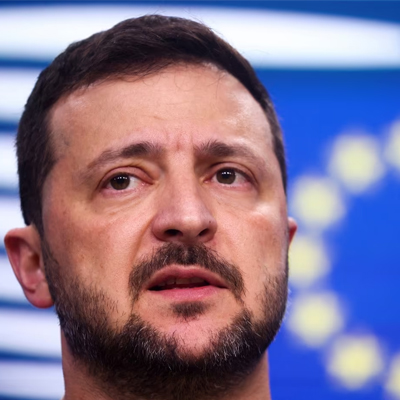
볼로디미르 올렉산드로비치 젤렌스키는 크리비리흐 출신 유대계 가정에서 자랐다.

천하天下
칼럼
baba77
Ukrainian ethnicity and Zelensky's cunning

0
2026. 09. 28
- While nationalism is avoided in modern political science due to its moral hazards and potential to undermine democracy, it remains a useful auxiliary lens for understanding the customs or survival techniques of certain nations that are difficult to explain through rationalism alone.
- The case of Stepan Bandera in Ukraine exemplifies how nationalism, under weak institutions, can lead to tragic outcomes when attempting to achieve independence by leveraging foreign powers, with its memory still causing diplomatic conflict today.
- President Zelenskyy's diplomatic actions should be understood not as ideological pro-Americanism, but as a realistic strategy to maximize his political survival and national leverage during wartime, suggesting it's more important to grasp the underlying context than to criticize his "cunning."
- Korean diplomacy should understand Ukraine's complex historical context and current survival strategies, but approach it in a balanced way, focusing on areas where national interests and the other party's incentives overlap, without assuming a specific national character.
Why the term 'national character' is discarded, and what remains nonetheless
Modern political scientists rarely use the concept of 'national character.' This is because it is morally dangerous and can easily undermine the rational choices of citizens, which are a prerequisite for democracy. If one assumes that Arab societies are family-centric and religious, it easily leads to the conclusion that democracy based on individualism is difficult to succeed. However, there are phenomena whose outlines cannot be grasped by rationalism alone. Habits cultivated in the terrain and the borderlands of empires, survival skills on weak institutions, and the habit of leveraging foreign powers are easily omitted from diplomatic calculations unless they are at least held onto, even with the imprecise term 'national character.' Therefore, this concept cannot always be discarded. However, it should not be used as a premise, but only as an auxiliary lens.
Georgians in mountainous terrain are warlike, independent, and have excellent community solidarity. Ukrainians in the plains, easily accessible to external forces, on the other hand, appear gloomy and submissive, or are sometimes perceived as opportunistic. The hypothesis that terrain creates habits is not a fixed essence like blood type. However, it serves as an auxiliary lens for understanding the behavior of border nations.
'Khytry Kholol' (хитрый хохол) and the image created by neighbors
Just as Japanese imperialists disparaged Koreans, saying their national character was inferior, preventing them from uniting and only engaging in factional struggles, Russians say that Ukrainians are vile and betray constantly, so they should never be trusted. The resistant, individualistic, and even fickle temperament of Koreans was disadvantageous in the early stages of industrialization compared to the Japanese habit of being obedient, not easily accepting new things, and only observing the organization. However, in the phase of digital transformation, it can even become an asset. The evaluation of national character is reversed according to the technological conditions of the times.
Russians disparagingly refer to Ukrainians as "khokhols" (a derogatory term for Ukrainians, literally meaning "tuft of hair on the head") who are "khitry" (cunning), meaning they are vulgarly selfish people. There are many vulgar proverbs that suggest Ukrainians are cunning. One of them is this: "When Ukrainian khokhol merchants arrive, the Jewish merchants pack up and leave." Proverbs are not facts, but rather how neighboring empires remember their neighbors. From a diplomatic perspective, what is important is not to believe that image as truth, but to factor in that the other party operates based on such an image.
유대인, 우크라이나, 그리고 과장된 계보
우크라이나에는 유대인이 많았다. 제정 러시아의 정주 구역이 이 땅에 걸쳐 있었고, 상인·관료·전문직에서 두각을 나타낸 가문이 적지 않았다. 다만 이들을 키예프 루스가 무너뜨린 하자르 왕국의 돌궐계 후예로 단정하는 이야기는, 한때 유행했으나 오늘날 역사·유전학에서는 거의 받아들여지지 않는다. 동유럽 유대인의 주된 계보를 그 가설로 설명하면 외교적으로도 사실로도 위험하다.
After the Russian Revolution, a significant number of people left for New York via the port of Odessa, and it is true that Eastern European Jewish immigrants were prominent in the American financial and technology industries in the late 20th century. After the collapse of the Soviet Union, those who went to Israel and the United States also contributed to the startup nation and the technological revolution. However, connecting Google and Facebook as "direct products of Jews who remained in Ukraine" is an exaggeration. The direct line that Zelensky's ancestors were "that family who did not emigrate and remained" is also unproven.
Stepan Bandera, a name proclaimed in Lviv
Lviv (Lwów) was a city belonging to the Habsburg Empire and was one of the centers of Eastern European Jewish scholarship and rabbinic tradition. It's like a slightly poorer and older-looking Prague. When you open your eyes, trams pass over cobblestone streets, and faded marble Baroque buildings line the way. It is true that during World War II, the German army exploited the complex ethnic composition of these western cities for their occupation. However, the narrative that portrays the Lviv Jewish community as 'Nazi Jews who massacred Ukrainian Jews and Russians' is contrary to history. The majority of Jews in that city were victims of the massacre, and the main axis of collaboration was between the occupying authorities and some local auxiliary organizations.
In that Lviv, the most symbolic and dangerous name of 20th-century Ukrainian nationalism declared a state: Stepan Bandera (1909-1959). He was born in Stary Uhryniv, Galicia, then part of the Austro-Hungarian Empire, as the son of a Greek Catholic priest. After World War I, when Ukrainian independence attempts failed and Galicia was incorporated into Polish territory, he became radicalized amidst Poland's assimilation policies and discrimination. In his youth, he joined the Organization of Ukrainian Nationalists (OUN) and was deeply influenced by Dmytro Dontsov's 'integral nationalism,' an ideology that placed the nation as the highest value and accepted the leader principle and violence as means. In 1934, he was sentenced to death for organizing the assassination of Polish Interior Minister Pieracki, but his sentence was commuted to life imprisonment. In 1939, when Germany and the Soviet Union divided Poland, he was released from prison.
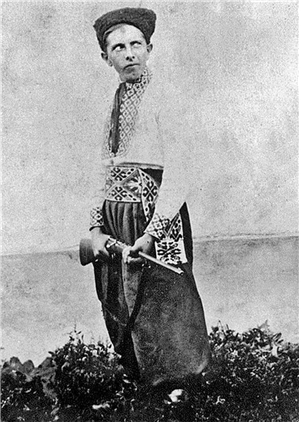
Stepan Bandera between 1929 and 1930
In 1940, the OUN split into OUN-M, led by the moderate Andriy Melnyk, and OUN-B, led by the radical Bandera. OUN-B viewed the German-Soviet War as an opportunity for independence and collaborated with the German Wehrmacht intelligence (Abwehr) to organize the Nachtigall and Roland Battalions. On June 30, 1941, when German troops entered Lviv, Yaroslav Stetsko, a close associate of Bandera, declared the “restoration of the Ukrainian state.” The declaration even included phrases expressing cooperation with Hitler's 'New Order.' However, the Nazis had no intention of tolerating an independent Ukraine, and Bandera, who refused to retract the declaration, was arrested and imprisoned in a special section of the Sachsenhausen concentration camp. This imprisonment later became the basis for viewing him as a 'figure who resisted the Nazis.' Critics point out that the reason for the split was not anti-Nazi ideology but merely the refusal of independence. Both are partially true. What is important is not the purity of ideology, but the structure in which the nationalism of the borderland, trying to use the war of a larger empire as a spear for its own state-building, is instead pierced by that spear.
The Two Faces of Memory Politics
The darkest part begins almost simultaneously with that declaration. As studies by John-Paul Himka, Grzegorz Rossoliński-Liebe, and others show, the involvement of OUN-B militias in the pogroms in Lviv and other parts of Western Ukraine in the summer of 1941 has been largely proven. The Ukrainian Insurgent Army (UPA), formed in 1942-43, systematically massacred Polish civilians in Volhynia and Eastern Galicia in 1943-44, with an estimated 50,000 to 100,000 victims. During this period, Bandera himself was in a concentration camp, and the actual commander of the UPA was Roman Shukhevych. The extent of his direct responsibility is a matter of debate. However, the general academic consensus is that it is difficult to separate his name from the ideology and movement of the organization he led. When the tide of war turned in 1944, Germany released him as an anti-Soviet asset. After the war, he led the exiled OUN-B from Munich and was assassinated on October 15, 1959, by KGB agent Bohdan Stashynsky with a cyanide spray gun.
The Soviet Union turned him into an insult (Banderite) to denounce all Ukrainian nationalism, and after independence, the West remembered him as a freedom fighter, while the East and South remembered him as a fascist collaborator. In 2010, Yushchenko's 'Hero of Ukraine' title was revoked amidst protests from Poland, Israel, and the European Parliament, and in 2015, the decommunization law recognized the OUN and UPA as organizations that fought for independence. In 2016, the Polish parliament classified the Volhynia massacre as genocide.
This memory does not end in the past. After the full-scale war in 2022, domestic approval for Bandera surged, and in May 2026, Zelenskyy bestowed the title 'UPA Hero' upon the Special Operations Forces. Poland reacted by revoking the Order of the White Eagle. For those walking the stone roads of the West, Bandera is a name against empire; for Warsaw and Jerusalem, he is a name of massacre. If only one face is placed at the center of the national myth, the transaction costs of alliances increase. Bandera is not the 'essence' of Ukrainian nationhood. However, he is a typical example of how nationalism on weak institutions attracts foreign powers to buy independence, leaving behind the corpses of neighbors and memory wars as a price. He is the 20th-century proper noun for that 'habit' (trying to solve problems by bringing in foreign powers when things don't go well) that a German entrepreneur once spoke of.
What you miss if you only see Zelenskyy as pro-American
Zelenskyy grew up in a Jewish family from Kryvyi Rih. A significant portion of his grandfather's family perished in the Holocaust, and his grandfather fought against Germany as a Soviet soldier. The theory that he is a 'descendant of a Jew who collaborated in the massacre of tens of thousands in Kyiv' is widely circulated but does not align with his family history. The observation that a wartime survivor can weigh both family and paternal affection is not a destiny of a particular lineage, but rather a political psychology that emerges in lands repeatedly subjected to occupation and civil war. Endless anxiety, situational transformation—these can be translated not as the language of conspiracy, but as survival skills on weak institutions. The contradiction of a Jewish comedian-turned-president incorporating the memory politics of Bandera and the UPA into the national narrative during wartime should also be accurately read not as a betrayal of lineage, but as the leverage management of a wartime regime.
During the Yoon Suk-yeol administration, there was close cooperation with Ukraine, even considering NATO-level collaboration. The Lee Jae-myung administration, however, maintained a sense of balance, restoring relations with Russia and attempting to find a breakthrough in the North Korean issue. Having a Russia expert like Wi Sung-rak, the National Security Advisor in the foreign and security team, is an asset. However, knowing Russia is separate from knowing Ukraine's culture and political customs.
Just because Zelensky is pro-American doesn't mean Ukraine should be treated like America. From his perspective, losing power means losing a lot. Russia started the war. However, after choosing full-scale resistance, the list of responsibilities for hundreds of thousands of young people dying and millions of refugees being displaced will be laid before him, along with the terms of a ceasefire agreement. There's no need to conclude that it will lead to prison or execution. However, the fact that an exit could soon become political death, while different from Kim Jong Un's regime, shares some similarities in the form of inducement. He can even deceive Trump for survival. Rather than calling this inherent cunning, it is diplomacy to interpret it as a wartime leader's management of leverage.
In that regard, President Lee Jae-myung might appear easy to deal with. Zelensky's transfer of North Korean prisoners to South Korea is an extension of what the two leaders agreed to discuss in the summer of 2026, based on international law, the prisoners' will, and the prohibition of forced repatriation. It cannot be simply dismissed as a unilateral surprise attack like Rhee Syng-man's release of prisoners on Geoje Island. However, the interpretation that Kyiv publicized this issue in a UN speech in September 2026 to attract international attention and connect the European war with tensions in Northeast Asia to expand its political space is still valid. The moment it was publicized, despite Seoul's request for confidentiality, the prisoners became both a humanitarian issue and a card to draw the Korean Peninsula onto the extended board of the European battlefield. This is because if North Korea reacts angrily and Russia becomes hardline, they can use that as a pretext to prolong the war and strengthen their leverage. It's a much smaller version of the same structure where Bandera saw the German army as a gateway to independence.
Two countries with different forms of corruption
After moving from Moscow to Kyiv, I interacted with German and Austrian businesspeople. The Ukrainian government had, to some extent, created a bubble and inflated corporate accounts to boost valuations. Austrian banks, unaware of this and believing it to be an emerging Eastern European market, invested heavily and lost a lot of money. Many memoirs recount how local businesspeople with meager profits would take their Austrian counterparts to Crimea, give them yacht rides, and entertain them with wine and vodka flowing all night. Drunken boats swayed on the calm waves of the Black Sea.
A German entrepreneur named Wolfgang said, “I strongly dislike prejudice. I love Ukraine, which is pursuing Westernization. However, businesspeople and diplomats who have experienced both Russia and Ukraine almost always prefer Russia. Russia is authoritarian and orderly, so corruption is vertical. You only need to lobby those at the top. In Ukraine, corruption is decentralized, and even if you give money to those at the top, things leak out in the middle. Money is wasted, and deals don't go through. When things don't work out, these people try to bring in foreign powers to solve problems. They brought in the Swedish army to check Russia, leading to the Great Battle of Poltava, and made the Ottomans and Russians fight in Crimea. In the 20th century, there was a faction that tried to use the German occupation as an opportunity for independence, and now they are flirting with the United States.” This is more an observation of institutions than an ethnic slur. Vertical corruption and 'democratically' decentralized corruption create different ways of choosing negotiation partners. The scene where Bandera's OUN-B joined hands with Abwehr and declared a state is the clearest historical example of this observation.
Bulgakov's Hill, Complaints Heard by Diplomats
I left the bar and went for a second round at a beer hall on Andriyivskyy Descent, where Mikhail Bulgakov's birthplace is located. Bulgakov left behind a monumental work, *The Master and Margarita*, based on the motif of Jesus' second coming to Moscow. He was bold enough to write to Stalin, asking to be allowed to leave the country if he wasn't going to be made director of the Moscow Art Theatre. There's an anecdote that Stalin called him and told him he'd be given theatre work, but he should write more interesting things. He was the son of a Russian Orthodox priest and had experience working as a field doctor in Ukraine during the civil war after the revolution. Although he was born and lived in Kyiv, he was critical of Ukrainian nationalism. When the war broke out, his statues and memorials were removed under the stigma of being a pro-Russian writer. The city where Bandera's statue was erected and Bulgakov's statue was taken down isn't a change in the essence of the nation, but a change in the distribution of wartime memories.
That day, a German diplomat at the beer hall saw me, approached, and said, “I'm a consul at the embassy. German men who marry Ukrainian women often don't last long. The attitude of looking for a share and the German lifestyle, ingrained with frugality, clash. Some people who don't even speak Russian come to this city to start a new life and end up losing their wallets and IDs. Germany wants to make Ukraine a stable market like Poland, but if the system doesn't support it, good intentions suffer. It's strange why such shrewd and intelligent people remain in poverty and misery for so long.”
Complaints that generalize women and nations are not something to be simply written down. There's a separate core diplomatic point that remains: the transaction costs for foreigners increase under a low-trust system, and talent and national performance are not proportional. Memory politics, which either solely glorifies Bandera as a hero or demonizes him as a devil, is also a way of increasing those transaction costs.
The Cunning that Korean Diplomacy Must Read
Ukraine should not be treated like the United States. Before being an ideologically pro-American figure, Zelenskyy is a wartime leader who has tied the war to his own destiny. North Korean prisoners are not only a humanitarian issue, but can also be a card that draws the Korean Peninsula into an extended board of the European battlefield. What Korea needs to do is not to morally condemn him or emotionally align with him. It is to prevent Kyiv from using Northeast Asian tensions as its leverage, while upholding prisoner human rights and the principles of international law. It is to restore the Moscow channel, but to ensure that this restoration is not misunderstood as taking sides. The moment we read the name of Bandera as the destiny of the Ukrainian nation, we fall into the grammar of Russian propaganda. The moment we erase that name, we miss the price of memory that Kyiv demands from its allies.
Instead of condemning cunning shrewdness, it is closer to balance to understand the circumstances from which shrewdness arises (borders, weak institutions, reliance on foreign powers, wartime survival). Ethnicity can be a supplementary hypothesis for explanation, but it should not be a premise for diplomacy. What should be a premise is the point where the opponent's incentives and our national interests overlap. The moment that point is missed, the one doing the planning is always the one desperate for survival.
댓글
( 0 / 500 )
모란
7
우크라이나인을 어떤 민족적 본질로 규정하는 순간 오히려 글의 핵심을 놓치게 됩니다. 중요한 것은 변경국가의 역사와 약한 제도, 외세를 활용할 수밖에 없었던 조건이 오늘의 정치행동에 어떻게 흔적을 남겼는지를 읽는 일이라고 봅니다. 젤렌스키 역시 선악의 틀보다 전시 지도자로서 어떤 유인을 갖고 움직이는지를 봐야 한다는 지적에 공감합니다.
( 0 / 500 )
Bio2274
7
우크라이나를 이해하는 데 민족성이라는 단어보다 중요한 것은 변경국가의 역사와 생존 조건입니다. 강대국 사이에서 살아남기 위해 외세를 활용해 온 경험이 오늘의 외교에도 흔적을 남겼다면, 한국은 감정보다 그 유인을 먼저 읽어야 합니다.
( 0 / 500 )
booboo
6
한국이 우크라이나와 관계를 맺는 데 필요한 것은 무조건적인 연대도 무조건적인 거리두기도 아닙니다. 포로와 인권 문제에서는 국제법 원칙을 지키되, 키이우가 한국의 안보 현실을 자신의 외교적 지렛대로 활용하지 못하도록 냉정하게 선을 긋는 균형감각이 필요합니다.
( 0 / 500 )
박나경
5
민족성이라는 위험한 개념을 무조건 폐기하거나 반대로 모든 것을 민족성으로 설명하는 양극단을 피해야 한다는 것이 이 글의 가장 중요한 대목 같습니다. 우크라이나를 이해하려면 지리와 제국의 역사, 민족주의, 부패한 제도, 러시아와 서방 사이의 지정학을 함께 봐야 합니다. 결국 외교에서 중요한 것은 상대를 좋아하거나 싫어하는 것이 아니라 상대가 왜 그렇게 행동하는지를 정확히 읽는 일입니다.
( 0 / 500 )
hanaro
5
반데라를 영웅으로만 기억하는 것도, 나치 협력자라는 한 문장으로만 규정하는 것도 우크라이나의 복잡한 역사를 설명하지 못합니다. 특히 폴란드인 학살과 유대인 박해, 독일과의 협력, 소련의 선전, 독립 이후의 기억정치까지 함께 봐야 오늘날 우크라이나의 외교적 행동도 제대로 이해할 수 있다는 점이 인상적입니다.
( 0 / 500 )
bora91
4
젤렌스키의 행동을 ‘교활함’이라는 성격론으로 설명하면 오히려 중요한 것을 놓칠 수 있습니다. 전쟁 중인 지도자에게 생존과 지원 확보는 정권의 존립과 직결됩니다. 한국 외교가 봐야 할 것은 그의 성품이 아니라 행동을 만들어내는 구조와 유인입니다.
( 0 / 500 )
Floral
4
결국 이 글이 말하는 ‘교활함’은 민족적 결함이라기보다 생존전략에 가깝다는 생각이 듭니다. 제도가 약하고 주변 강대국들이 끊임없이 개입하는 공간에서는 외세를 활용하는 능력 자체가 정치적 자산이 될 수 있습니다. 문제는 그 전략을 상대방이 어떻게 이용당하지 않고 국익의 관점에서 관리하느냐일 것입니다.
( 0 / 500 )
elite85
4
우크라이나의 역사를 보면 러시아와 서방 어느 한쪽의 설명만으로는 부족합니다. 폴란드·러시아·독일 사이에서 반복된 지배와 전쟁, 민족주의와 기억의 충돌이 현재까지 이어지고 있습니다. 외교는 결국 상대의 역사적 경험까지 읽어내는 작업입니다.
( 0 / 500 )
은하수
1
젤렌스키를 단순한 친미 지도자로 보는 것도, 반대로 교활한 정치인으로 단정하는 것도 모두 위험합니다. 전쟁의 생존이 곧 정권의 생존과 연결된 지도자라면 행동 하나하나에 국내 정치와 국제적 레버리지가 함께 작동할 수밖에 없습니다. 한국 외교가 필요한 것은 감정적 친소가 아니라 이런 유인을 냉정하게 계산하는 능력이라는 주장에 공감합니다.
( 0 / 500 )
최유미
0
우크라이나에 대해 일부지만 조금 알게 되었네요. 젤라스키 대통령은 자기를 드러내려는 쇼맨십이 강한 사람이라는 생각이 듭니다.
( 0 / 500 )
Jeong Byeon_72828
0
우크라이나인과 결혼했다가 얼마 못살고 이혼한 부잣집 딸의 모친이 전해준 말인데 전 신랑집 부모까지 서울에 찾아와서 이혼 위자료 청구하더랍니다.
( 0 / 500 )
신고내용
신고내용을 선택해주세요
회원비난/비하/욕설글 및 댓글도배성 게시물저작권 침해/불법자료 유출허위사실유포개인정보 유출.사생활 침해무단광고/홍보음란물 및 도박 불법 광고물범죄행위 관련 글불법행위 관련 소개물품 판매 및 사기글악성코드 및 스파이웨어 유포기타 사유 및 운영진 판단


비밀번호를 잊으셨나요?
Sign in with Google


All information provided by us is free of charge and is for the public good.