品

Corea든 Korea든, 품격은 이름보다 먼저다
Whatever the name—Corea or Korea—dignity comes first.
Whatever the name—Corea or Korea—dignity comes first.
Now
지금
751 Diaspora
Heritage
유산
Humanity
인문
Mirengsi
未冷尸
Politics
정치
Media
언론
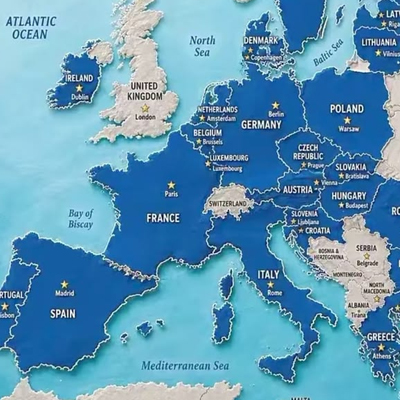
유럽은 에너지, 재정, 안보 위기가 복합적으로 작용하며 국제적 지위가 근본적으로 재편되는 전환점에 직면했다.

천하天下
칼럼
Grace_C
Europe's decline is self-inflicted.

0
2026. 09. 24
- Europe faces a turning point where a combination of energy, financial, and security crises is fundamentally reshaping its international standing.
- Europe's past prosperity, built on colonies and cheap energy, is no longer viable, exposing its lack of self-sufficiency.
- While reducing reliance on Russia, Europe shifted its energy sources to the US and Middle East, leading to a more expensive and unstable structure, and reduced US support exacerbates security gaps.
- Europe is at risk of shrinking from a norm-setter to a norm-taker, and from a global actor to a regional power bloc, with internal divisions also likely to deepen.
- The warning is that if Europe fails to strengthen its own energy, industrial, and security capabilities, it could become a "museum of expensive energy" rather than a "continent of values."
Europe is shaking. The epicenter of this tremor is not a single country. France's finances, Britain's cost of living, and Germany's factories and gas reserves are all simultaneously screaming in the same season. In the autumn of 2026, Europe is facing its second energy shock since the war in Ukraine, and this shock, compounded by a political rupture with Russia and reduced support from the United States, is escalating from a 'temporary crisis' to a reordering of its international standing. This reordering is not an accidental misfortune. It is the moment when a civilization that for centuries built its industry and welfare by cheaply acquiring others' land and energy can no longer sustain that formula.
Let's start with France. According to projections released by the Ministry of Finance, the national debt will reach 119.3% of GDP this year and 121.7% next year, the highest since statistics began in 1995. This is double the EU's fiscal rule of 60%. In Paris, ahead of the presidential election, 10-year government bond yields have soared to their highest since 2008, and the spread with German bonds has exceeded 1 percentage point for the first time in 14 years. The Le Cornu cabinet has proposed an austerity plan of 54 billion euros, but parliamentary approval is uncertain. Macron is discussing convening the G7 due to soaring energy prices and considering releasing strategic oil reserves. Although its reliance on gas is lower than Germany and Italy due to a high proportion of nuclear power, drought and heatwaves have threatened even nuclear power plant cooling water, and diesel and aviation fuel prices directly impact the daily lives of ordinary citizens and farmers. The 'dignity of the nation,' built on surpluses extracted from Africa, Indochina, and the Caribbean in the past, is now being tested in front of bond markets and gas stations.
The UK is experiencing the same season in a different way. Household energy bills are projected to rise by 25% in January. The OECD assessed that the UK had the largest decline in growth among major economies since the Iran war, and inflationary pressures are leading to fears of stagflation. After Brexit, the UK championed 'Global Britain,' but in reality, it became more exposed to the decline of North Sea gas and the LNG spot market. A country whose imperial navy once protected coal and oil routes now entrusts its winter to Qatar, the US, and shipping through the Strait of Hormuz. The financial assets of the City, accumulated from taxes and opium collected in India, and from African mines and the slave trade, remain, but these assets do not make heating affordable for its citizens.
Germany is at the forefront of the theory of Europe's decline. January electricity futures have exceeded 180 euros per megawatt-hour, an increase of over 60% compared to a year ago. The overall EU gas storage rate is around 68%, while Germany's is 56%, the lowest for this time of year since records began in 2011. In 2021, over half of Germany's gas imports came from Russia. After Nord Stream was cut off, US LNG filled the void. Approximately two-thirds of European LNG and a significant portion of German LNG come from the US. The price is several times that of previous long-term contracts. Energy-intensive industries have already left, and reports indicate that over 140,000 manufacturing jobs were lost in 2025 alone. Conservative Chancellor Friedrich Merz has shifted towards allowing large-scale debt for defense and infrastructure, but voter dissatisfaction is flowing elsewhere. The AfD is making strides in state elections, and there are reports that they are preparing to discuss the resumption of gas supplies and the reactivation of Nord Stream next year with Putin's economic envoy. The cost of cutting off cheap Russian gas and choosing 'values-based diplomacy' has come back as a bill for factory operating rates and winter heating all at once.
The crises in these three countries are not isolated. In late February 2026, the US-Israeli airstrikes on Iran and the de facto blockade of Hormuz shook the LNG alternative structure that Europe had painstakingly built since 2022. The achievement of reducing Russian pipeline gas is clear. Russian gas, which accounted for 45% of EU gas imports in 2021, fell to around 12% by 2025. However, the void was filled not by 'energy sovereignty' but by US spot markets and Middle Eastern shipping routes. Brent crude oil fluctuated above $100 per barrel, and European gas prices soared compared to the beginning of the year. The Eurozone's growth rate fell to around 0.9% in 2026, and the forecasts of the Commission and the IMF are tied to how long the Middle East war disrupts energy supplies. Europe declared that it had broken its dependence on Russia, a single supplier, but in reality, it shifted to a structure dependent on more expensive alternative suppliers and more dangerous straits.
The relationship with Russia is not just an energy issue. The war in Ukraine has become a test of whether Europe can remain a 'normative power.' The war has not ended, and Russia is expanding its contact with far-right and anti-war forces within Europe. The German AfD's discussion of resuming gas imports is symbolic of this. At the same time, the Ukrainian front is draining Europe's ammunition and air defense stockpiles, and warnings are repeatedly issued that Russian drone, sabotage, and cyber attacks have extended to the Baltics, Poland, and even within Germany. While Europe antagonizes Russia, it has not yet built the industrial, financial, and military foundations to bear the cost of that antagonism itself. The German model, which maintained export competitiveness with cheap energy; the French model, which maintained its status as a middle power with nuclear power and influence in Africa; and the British model, which survived the post-empire era with finance and maritime networks, have all simultaneously hit their limits.
This is compounded by a reduction in US support. The second Trump administration is considering withdrawing 25,000 to 40,000 of the 80,000 US troops stationed in Europe, with a final decision expected in November. This would be the largest withdrawal since the end of the Cold War. Germany, which hosts the largest number of troops, would be at the center of this impact, with Italy and Spain also being mentioned. The Department of Defense has repeatedly sent the message that Europe bears the 'primary responsibility' for its own defense. The nature of aid to Ukraine has also changed. The method of freely providing US stockpiles, as was done during the Biden era, has decreased, and a structure where Europe pays for and buys US weapons (such as PURL) has come to the forefront. Trump even mentioned 'repayment' for past aid. NATO remains intact on paper, but if the US military power, intelligence, and ammunition pipelines, which are central to its deterrence, thin out, the weight of the alliance will change. For nearly 70 years, Europe has operated its welfare states and export manufacturing on a dual subsidy of the US nuclear umbrella and dollar, and (in Germany's case) cheap Russian energy. Those two pillars are now shaking simultaneously.
At this point, past colonial history becomes not a moral embellishment but an explanatory variable of structure. Britain converted the finances and cotton of the Indian subcontinent, the opium trade with China, and the minerals and labor of Africa into imperial capital accumulation. France built the material foundations of a 'great nation' through settler colonialism, the franc zone, and exclusive resource contracts in Algeria, West Africa, and Indochina. Germany's overseas colonialism was relatively short, but the Herero and Nama genocide in Namibia was a prelude to 20th-century mass killings, and Germany's subsequent prosperity was reconfigured to rely on two world wars, the post-war American order, and Soviet/Russian energy. All three countries claimed to export 'civilization, law, and free trade,' but what actually operated was the violence of cheaply internalizing the sovereignty and resources of others. The surplus created by that violence was the material for the Industrial Revolution, the welfare state, and cultural confidence.
Karma is not a myth of cause and effect. It has a colder meaning. Colonial empires were systems that secured energy sources, raw materials, and markets through military force. Even after that system collapsed, Europe, for a time, extended the same formula as a junior partner to the successor empire of the United States, and then for another period, as a pipeline to the 'semi-periphery' of Russia. While shaking up the politics of Africa and the Middle East, treating Russia as an energy subcontractor, and outsourcing security to the US military, its own foundations for mining, refining, electricity, and defense industries became hollowed out. Now, the old colonies and semi-periphery no longer obey cheaply. Saudi Arabia and Qatar set prices, the US sells LNG and weapons, and Russia tries to turn gas back into a political weapon. The 'politics of dependence' that Europe once applied to others is now, in a reversal, being applied to Europe itself.
Europe's international standing is likely to decline on three fronts. First, there will be a shift from norm-setter to norm-taker. The power to write global rules through carbon borders, digital regulations, and human rights clauses transforms into bargaining power the moment it borrows energy and security from others. Energy purchase agreements with the US, tariffs, and defense cost-sharing already demonstrate this transition. Second, there will be a reduction from a global actor to a coalition of regional powers. Even if nuclear-armed France, the UK with its financial networks, and manufacturing powerhouse Germany each hold their own, if these three countries cannot act as a single strategic entity, their influence in the Indo-Pacific and Middle East will be overshadowed by China, the US, and the Gulf states. The ECB President's warning that Europe holds only a single-digit share in AI computing capacity is a signal that it could fall behind in the next mode of production as well. Third, internal divisions. Eastern Europe feels the Russian threat as an existential one, while parts of Germany and Hungary and Slovakia are re-evaluating cost and peace. French presidential elections and German state politics could institutionalize these divisions. Instead of a single 'Europe,' there could simultaneously exist a Europe clinging to the Atlantic and a Europe seeking to deal with Moscow and Beijing.
Of course, decline is not annihilation. Nuclear power, advanced manufacturing, pharmaceuticals, machinery, luxury goods, regulatory authority, and cultural capital remain. Germany's easing of the debt brake and defense investments, France's nuclear power, and the UK's finance and offshore wind could be the ingredients for recovery. However, the conditions for recovery are different from the past. Europe can no longer rely on colonial territories, ultra-cheap Russian gas, and near-unlimited US military deterrence. If it cannot produce its own energy, replenish its ammunition, and lower industrial electricity prices to be competitive, Europe will become a 'museum of expensive energy' rather than a 'continent of values.'
The tension in Europe ahead of the winter of 2026 is therefore not a matter of weather. Empty gas storage facilities, proposals for US troop reductions on the table, and fluctuating French government bonds are all signs of an era's accounting coming to a close. Nations that built their centuries on wealth accumulated from foreign lands now entrust their winters to foreign ships, foreign pipelines, and foreign aircraft carriers. This inverted dependence is the most accurate receipt left by the long shadow of colonialism and plunder in the 21st century. What goes around comes around is not a curse but a structure. Unless this structure is changed, Europe's international standing will decline at the same rate as it reminisces about the past.
댓글
( 0 / 500 )
moonjung
9
유럽의 현재 위기를 단순한 에너지 가격이나 우크라이나 전쟁의 후유증으로만 볼 수 없다는 문제의식에 공감합니다. 식민지 시대의 유산, 러시아 에너지 의존, 미국 안보 의존이 서로 연결되어 있다는 구조적 분석이 인상적입니다.
( 0 / 500 )
Mickey
7
유럽의 진짜 위기는 가스 가격 자체가 아니라 값싼 에너지와 미국의 안보 우산을 당연한 전제로 삼아온 성장모델이 흔들리고 있다는 데 있는 것 같습니다. 에너지·산업·국방을 동시에 자립시키지 못하면 국제적 영향력도 자연스럽게 줄어들 수밖에 없겠지요.
( 0 / 500 )
오광수
7
식민주의의 유산과 오늘날의 에너지 의존을 연결한 시각이 인상적입니다. 과거에는 군사력으로 확보했던 자원과 시장을 지금은 국제시장과 동맹이라는 방식으로 확보해 왔지만, 세계질서가 다극화되면서 그 방식 자체가 한계에 부딪힌 셈입니다.
( 0 / 500 )
Jane
6
특히 러시아산 가스를 끊은 것이 곧 에너지 자립을 의미하지 않았다는 지적이 중요해 보입니다. 공급처를 바꾸는 것과 에너지 주권을 확보하는 것은 전혀 다른 문제입니다. 결국 유럽 스스로의 산업·에너지·방위 기반을 얼마나 회복하느냐가 핵심이겠지요.
( 0 / 500 )
dongdong
4
‘자업자득’을 단순한 도덕적 응징이 아니라 구조적 결과로 해석한 부분이 흥미롭습니다. 과거의 식민지 지배와 현재의 에너지·안보 의존을 하나의 역사적 연속선에서 바라보니 유럽의 위기가 훨씬 입체적으로 보입니다.
( 0 / 500 )
강동철
4
독일 사례가 특히 상징적입니다. 값싼 러시아 가스와 중국 시장을 활용해 제조업 경쟁력을 키웠던 모델이 지정학적 충격 앞에서 얼마나 취약할 수 있는지를 보여줍니다. 경제정책과 외교·안보정책을 따로 볼 수 없다는 사실도 분명해집니다.
( 0 / 500 )
joongsub
3
다만 유럽의 위기를 식민주의의 결과 하나로만 설명하기에는 유럽 내부의 정책 실패와 인구구조, 생산성 정체, 에너지 전환의 비용 등도 함께 살펴볼 필요가 있겠습니다. 결국 중요한 것은 과거의 책임을 따지는 데서 끝나지 않고 어떤 새로운 자립 구조를 만들 것인가일 것입니다.
( 0 / 500 )
papa
2
유럽이 쇠퇴한다고 해서 곧바로 몰락하거나 소멸하는 것은 아닙니다. 핵전력과 첨단 제조업, 금융, 과학기술, 문화적 영향력이라는 자산은 여전히 큽니다. 이 글의 핵심은 유럽이 가진 힘보다 ‘남에게 의존해온 방식’이 더 이상 지속되기 어렵다는 경고로 읽힙니다.
( 0 / 500 )
최동혁86
1
‘비싼 에너지의 박물관’이라는 표현이 강렬하네요. 유럽이 가진 제도와 문화, 기술의 자산은 여전히 크지만 그것을 유지할 물질적 기반이 없다면 영향력은 점차 약해질 수밖에 없습니다. 결국 문명의 힘도 산업과 에너지라는 현실적 토대 위에 세워진다는 이야기로 읽힙니다.
( 0 / 500 )
최유미
0
프랑스 물가가 심상치 않아요. 유가는 2배 가까이 올랐고 월급은 고정인데 물가도 해마다 올르고 있어요. 10년전과 같은 수입으로 해마다 오르는 물가로 살기가 점점 팍팍해지네요. 교육재정도 많이 어려운 것 같더라구요. 대학들의 예산이 부족한지 교양과목들이 삭제되고 있습니다. 제 경우를 비롯해 주변 동료들의 수업이 축소되고 있어서 걱정입니다.
( 0 / 500 )
신고내용
신고내용을 선택해주세요
회원비난/비하/욕설글 및 댓글도배성 게시물저작권 침해/불법자료 유출허위사실유포개인정보 유출.사생활 침해무단광고/홍보음란물 및 도박 불법 광고물범죄행위 관련 글불법행위 관련 소개물품 판매 및 사기글악성코드 및 스파이웨어 유포기타 사유 및 운영진 판단


비밀번호를 잊으셨나요?
Sign in with Google


All information provided by us is free of charge and is for the public good.