品

Corea든 Korea든, 품격은 이름보다 먼저다
Whatever the name—Corea or Korea—dignity comes first.
Whatever the name—Corea or Korea—dignity comes first.
Now
지금
751 Diaspora
Heritage
유산
Humanity
인문
Mirengsi
未冷尸
Politics
정치
Media
언론
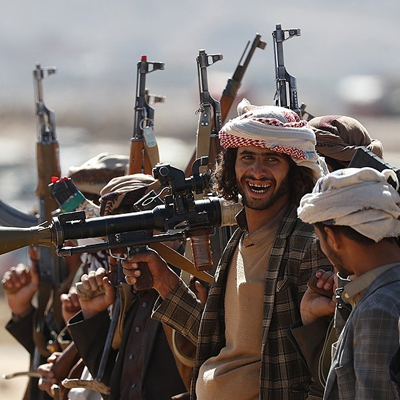
후티는 예멘과 사우디아라비아 남부, 이라크 일부 지역에서 활동하는 이슬람 근본주의 조직

천하天下
칼럼
baba77
The Houthis are not a militia that fell from the sky.

0
2026. 09. 22
- The Houthis are a de facto political entity governing North Yemen, operating taxes, conscription, and courts, and wielding military power, aligning with Weber's definition of a state.
- Calling the Houthis "rebels," however, emphasizes their challenge to the existing order and their intent to expand Shiite egalitarianism, reflecting the international community's political reluctance to recognize them as a state.
- The Houthi's control of the Red Sea directly impacts global oil prices and interest rates, creating ripple effects on the world economy, demonstrating that the Yemen issue is no longer a localized conflict but an international security and economic variable.
- The Houthi's actions must be understood within a complex historical and geopolitical context, including the Sunni-Shiite conflict, the Iran-Saudi rivalry for hegemony, the clash between Middle Eastern incumbents and oppressed groups, and the struggle for recognition between the US and anti-US forces.
- Yemen, since ancient times, has maintained its unique identity without being fully dominated by empires, a "land that can be conquered but not assimilated," and the Houthis are the latest manifestation of Yemen's resistant history and independent spirit.
If we define a state based on Max Weber's theory of the monopoly of violence over a specific territory, the Houthis are closer to a state than to rebels. They effectively govern the northern Yemeni highlands, including the capital Sana'a, and the Red Sea coast, operating taxes, conscription, and courts, and asserting their will on the outside world with missiles, drones, and a naval blockade. The Houthis' military power is different from that of Somali pirates. Pirates are plunderers who sweep shipping lanes and flee, while the Houthis are a political entity with territory, ideology, and alliances.
However, nomenclature is never pure. If the Houthis are not content with northern Yemen and seek to impose their egalitarian Shiite Islam on southern Yemen and Saudi Arabia, it is more accurate and cooler to still call them rebels. The moment they are recognized as a state, the Houthis become responsible for maintaining the status quo. Only by remaining rebels can they remain a force that shakes the existing order—the Riyadh monarchy, the Gulf oil elite, and Washington's alliance circuit. The name itself is already politics.
When the Houthis took control of the Red Sea and, in concert with Shiite militias in southern Iraq, struck Saudi Arabia with drones and missiles, oil prices surged again. In the Middle East of 2026, with the Strait of Hormuz blocked or threatened, Saudi Arabia's alternative route was the Red Sea. The East-West pipeline flows to Yanbu, and if Yanbu is shaken, global oil prices are shaken. If prices rise, central banks act. The United States, where Kevin Warsh, a former outside director of Coupang, sits as the Fed chairman, receives the fragments of drones launched by a Middle Eastern mountain force in the abstract language of interest rates. A world where Yemeni coastal batteries simultaneously affect Seoul's shopping baskets and New York's bond market has already arrived.
후티의 사우디 공격은 수니와 시아파의 내전을 예고한다. 그러나 그것만은 아니다. 이것은 마호메트의 사촌이자 사위인 알리와 그의 아들 후세인의 죽음을 소환하는, 이슬람 종갓집이 누구냐는 역사의 전쟁이다. 이란과 사우디 사이의 지정학적 패권전쟁이다. 중동의 기득권 세력과 피억압 세력 사이의 계급투쟁이다. 미국을 추종하는 사우디·걸프 국가들과 미국을 거부하는 세력들 사이의 인정투쟁이다. 네 겹이 한 전선에 겹쳐 있다. 후티를 “이란의 대리인”이라고만 부르는 말은 편리하다. 그러나 그 편리함 때문에 예멘이라는 공간의 독자적 무게가 지워진다.
Let's look at a map of Yemen. Yemen is located in the southwestern part of the Arabian Peninsula. It is a crossroads connecting the Red Sea, East Africa, the Indian Ocean, and the Gulf. The narrow strait of Bab-el-Mandeb is a lifeline connecting Asia and Europe to Suez, and whoever controls that lifeline also controls the price of goods. The Roman Empire kept an eye on Yemen's Mocha port to bring in silk and spices from India. The Red Sea was once the Mediterranean Sea for Jews. Some of the Jews who rebelled against Emperor Hadrian and were pushed out of Palestine moved south and integrated into Yemen's maritime trade network. In the late 4th century, the Himyarite Kingdom abandoned polytheism and adopted Judaism, or a strict monotheism close to Judaism, as its state religion. In the 5th and 6th centuries, this Jewish kingdom of South Arabia pushed back against the influence of neighboring Christian tribes and the Eastern Roman Empire. Justinian moved the Christian kingdom of Aksum in Ethiopia across the Red Sea to attack Himyar. The pretext was the persecution of Christians in Najran by the Jewish king Yusuf Dhu Nuwas (Dhu Nuwas). Aksum's army crossed the Red Sea, and the Jewish kingdom of Himyar fell. However, the people of that land did not disappear. The tribes of Yemen and South Arabia later contributed a large force to the Islamic conquests that pushed the Eastern Roman Empire and the Sasanian Persian Empire out of the Middle East. Yemen was not a periphery of Islam, but an engine in the process of Islam becoming an empire.
Even the Ottoman Empire, which dominated the Middle East after the 15th century, could not fully conquer Yemen. It is said that when Selim ordered the governor of Syria to conquer Yemen, the governor expressed his reluctance. The reasons given were that it was an important place for trade but too far, the mountains were rugged, and the people were fiercely independent. Actual history is not much different from that. The Ottomans entered in the 16th century, gave up the highlands to the Zaidi imams in the 17th century, re-entered in the 19th century, and withdrew again at the end of World War I. Yemen was a land that could be occupied but not assimilated. One needs to know this much before talking about the Houthis. The Houthis are not a militia that suddenly appeared, but the latest name for the unconquered highlands.
Middle Eastern studies in Korea are very poor. In Britain, which long dominated the Middle East, elites at Oxford and Cambridge first read Byzantine history and then studied the Middle East based on that. Once one understands the administration, doctrines, and border tribes of the Eastern Roman Empire, the language, identity, and geopolitics after Islam do not stand alone. Representatives of that tradition are Toynbee and Lawrence of Arabia, who loved the desert. Of course, it is well known that Lawrence loved men's buttocks more than his homeland or the desert. This is why Western Middle Eastern studies are three-dimensional. They put culture, politics, language, and geopolitics into one perspective. In Korea, people who have mainly studied in Arab countries do Middle Eastern studies, so there are limitations in analyzing how the strata before the advent of Islam leave their mark on the present. Before Islam came in the early 7th century, the Mediterranean coast was dominated by the Eastern Roman Empire, and Iraq and Iran were dominated by the Sasanian Persian Empire. Just as Honam and Gyeongsang provinces remain as old fault lines in Korean politics, the schism between Shiites and Sunnis in the Middle East is still the framework of modern politics.
The conflict between Shiites and Sunnis is still the backbone of Middle Eastern politics today. However, its essence is not merely a debate over doctrine and how much of Muhammad's bloodline one inherits. The essence is the geopolitical change that occurred when Islamic conquerors occupied Persia after Muhammad's death in 630. Most of the peoples conquered by Muslim conquerors were Arabized. However, to protect their language, culture, and identity, Persians adopted Shiism, the Islam of the oppressed and subjugated. Shiism is a syncretic and messianic sect that believes in the advent of Maitreya. It accounts for about one-tenth of the world's Muslims, mostly concentrated in Iran, its neighboring Gulf states, and Syria.
After the Battle of al-Qadisiyyah in 638, the Sasanian Persian Empire collapsed, and its last emperor fled to the vicinity of Samarkand, even requesting reinforcements from the Tang Dynasty. The Umayyad Dynasty dominated the Middle East, but about a century later, Shiites in the Iranian region revolted, and Persian officials, engineers, and soldiers established the Abbasid Dynasty. Its capital, Baghdad, is on the outskirts of Ctesiphon, the Sasanian capital. Islam has a strong tradition of religious strictness and egalitarianism. For a long time, it has been associated with an image of relatively little personal violence and crime, even if political violence exists. During the Ottoman domination of the Middle East and the Cold War, the Sunni-Shia conflict was overshadowed. However, as the Cold War ended, that conflict was reborn as a confrontation between Saddam Hussein and Khomeini, and after the US removed Saddam, it re-emerged as a hegemonic rivalry between Saudi Arabia and Iran.
The US sides with Saudi Arabia. However, one of the hotbeds that nurtured Al-Qaeda, the main culprit of 9/11, and ISIS, was the Saudi monarchy. The monarchy has used radical Sunni forces to protect its oppressive regime and has prevented American democracy from permeating its society. Israel is joining hands with Saudi Arabia to counter Iran's military and economic power. In this context, Yemen's Houthis are not simply Iranian proxies. They are closer to an indigenous, grassroots resistance movement in the Middle East, and if we were to translate it into the language of our history, they are the Middle Eastern version of the Donghak Peasant Army. The difference is that the Houthis, with Iran's support, possess advanced military capabilities and considerable administrative power. The US seems to have little interest in the Houthi resistance spreading to Saudi Arabia and weakening the monarchy itself. America's interest is in containing Iran.
In this situation, the Houthis could make a small deal with the US to secure their power. Unlike Iran, the Houthis are not developing nuclear weapons, nor are they deeply tied to Russia like Syria was during the Assad era. If they manage the Red Sea well and align with American interests, the US could distance itself from the Houthi conflict to focus on Iran. Because of this, Saudi Arabia does not fully trust the US and is trying to strengthen its national security by dealing with Russia or China. The Saudi royal family's impatience creates opportunities for South Korean defense companies.
The Houthis emerged from the Zaydi Shiites in the northern Saada province. While Zaydis share roots with Iran's Twelver Shiites, their doctrines and political traditions differ. They uphold the legitimate leadership of the Prophet's family while fiercely maintaining the autonomy of mountain tribes and rejecting external domination. When Hussein al-Houthi launched a revival movement in the 1990s and 2000s against Salafization, Saudiization, and Americanization, the slogan was already complete: Death to America, Death to Israel, A Curse Upon the Jews, Victory to Islam. When Ali Abdullah Saleh's long rule collapsed after the Arab Spring, and the Houthis took over Sana'a in 2014-2015, they didn't just seize the capital; they also took control of the regular army, intelligence agencies, and missile stockpiles. The Saudi-led intervention failed to crush the Houthis. Instead, it pushed them into the 'Axis of Resistance.' The Houthis filled the void left by the attrition of Hamas and Hezbollah. Iran sent technology, components, and doctrine, and the Houthis combined these with Yemen's terrain and tribal networks to create their own weapons.
The decisive turning point that transformed an obscure mountain force into a power controlling the Red Sea occurred in the summer and early autumn of 2026. As a larger war surrounding Iran jeopardized Hormuz, Saudi crude oil was funneled through east-west pipelines to Yanbu on the Red Sea. The Houthis saw this lifeline. In July, attacks on Saudi-linked vessels and energy facilities resumed. On September 10, Mocha fell. The next day, the Hanish Islands and Perim (Mayun) Island in the middle of Bab el-Mandeb were taken. That port of Mocha, coveted by Rome, that sea which the Jewish kingdom used as an inland sea, that coast which even the Ottomans could not fully close, fell into Houthi hands. The Houthis do not claim to block all international merchant ships. They state that passage is free except for Saudi vessels. Selective blockade is more cunning. It holds the lifeline of one country without making everyone an enemy. This is why China is reportedly telling Iran to rein in the Houthis, and why there are reports of secret meetings between the US and the Houthis in Oman. The Houthis are no longer just a party to the Yemeni civil war; they are a variable in energy security.
The road ahead seems to have three paths. First, the path where the Houthis remain as the landlords of the Red Sea gateway. This path involves selectively attacking ships, negotiating with Saudi Arabia, the US, and China at different prices, and making the international community turn a blind eye to the de facto state of North Yemen. Second, the path of not stopping the southward advance and attacks on Saudi Arabia. This involves pushing into Taiz and Marib, cutting off the route to Aden, and continuously striking Yanbu and air bases. This path lowers the threshold for an all-out Sunni-Shia war. Third, the path of being pushed back to the highlands after over-expansion. The Yemeni government forces, Saudi Arabia, and external support reclaim the coast, and the Houthis are once again folded back into the mountains of Sa'dah and Sana'a. Whichever path is taken, Weber's criteria have already been met. The monopoly of violence operates in North Yemen. However, as long as the Houthis try to convince the South and Saudi Arabia of Shia egalitarianism, the designation of them as rebels fits better. This is because "rebel" signifies a war that is not yet over, while "state" is the name of an order that has already ended.
Understanding the Houthis is not about reading missile specifications. It's about understanding how Yemen, a crossroads, has swallowed and spat out empires for thousands of years without digesting them. Neither Rome, nor Aksum, nor the Ottomans, nor Saudi Arabia could fully digest those mountains. The Houthis are the latest symptom of that indigestion. The waves of the Red Sea, the oil price gauges, and the Fed's interest rates are merely translating that symptom into a global language. A war of lineage, a war of hegemony, a war of class, a war of recognition meet in one strait. The name of that strait is Bab-el-Mandeb, and the reason they are still called rebels is that they are not yet satisfied.
댓글
( 0 / 500 )
88kda
9
후티를 단순히 ‘이란의 대리군’이나 ‘테러조직’이라는 한 문장으로 규정하면 예멘이라는 공간의 역사와 부족사회, 자이디 전통을 놓치게 된다는 지적이 인상적입니다. 특히 로마·악숨·오스만까지 거슬러 올라가 후티의 현재를 설명한 방식이 흥미롭습니다.
( 0 / 500 )
seeu79
8
홍해의 작은 해안 분쟁이 왜 유가와 물류비, 물가와 금리까지 연결되는지를 잘 보여주는 글입니다. 예멘의 지리적 위치가 단순한 중동의 변방이 아니라 세계 에너지와 해상교역의 핵심이라는 사실을 새삼 생각하게 합니다.
( 0 / 500 )
555k
6
후티를 국가와 반군의 중간에 있는 정치체로 바라보는 관점이 흥미롭습니다. 영토를 통치하고 세금을 걷으며 군사력을 행사한다면 사실상 국가적 기능을 수행하지만, 국제적 승인과 전쟁의 종결이라는 측면에서는 여전히 반군이라는 이중성이 존재하겠지요.
( 0 / 500 )
woo
5
무엇보다 후티를 오늘의 뉴스에서 갑자기 튀어나온 무장세력으로 보지 않고 예멘의 오랜 산악 정치문화와 외부 제국에 대한 저항의 역사 속에 위치시킨 점이 좋았습니다. 다만 시아파와 수니파의 갈등을 설명할 때는 종교적 차이와 현대의 국가·민족·계급·지정학적 이해관계가 서로 얽혀 있다는 점을 조금 더 구분해서 볼 필요도 있어 보입니다.
( 0 / 500 )
이정훈90
5
후티를 이해하려면 예멘 내전만 들여다봐서는 안 된다는 생각이 듭니다. 자이디 전통, 부족사회, 사우디와 이란의 경쟁, 홍해의 지정학이 겹쳐 있으니 어느 하나만으로 설명할 수 없는 세력입니다. 복잡하지만 그래서 더 공부할 가치가 있는 주제라는 생각이 듭니다.
( 0 / 500 )
고고준
4
특히 ‘폭력의 독점’이라는 베버의 국가론을 후티에 적용한 부분이 흥미롭습니다. 국제적으로 국가로 승인받았느냐와 별개로 실제로 영토를 통치하고 행정과 군사력을 행사한다면 사실상의 국가 기능을 수행한다고 볼 수 있다는 문제를 던지는군요.
( 0 / 500 )
이준호
3
‘후티는 소화 불량의 최신 증상’이라는 표현이 오래 남습니다. 제국과 왕조가 수없이 지나갔지만 산악지대의 정치적 자율성이 완전히 사라지지 않았다는 역사적 맥락에서 보면, 오늘의 후티 문제도 단순한 군사작전만으로 해결하기 어려운 이유를 조금은 이해할 수 있을 것 같습니다.
( 0 / 500 )
october79
3
예멘을 중동의 변방으로만 생각했던 시각을 다시 돌아보게 하는 글입니다. 바브엘만데브와 홍해를 통해 유럽과 아시아, 아프리카가 연결되는 지리적 조건을 생각하면 예멘의 혼란이 결코 예멘만의 문제가 아니라는 설명에 공감합니다.
( 0 / 500 )
89철민
1
핵심 질문은 ‘후티가 무엇인가’보다 ‘우리는 왜 후티를 그렇게 부르는가’인 것 같습니다. 반군, 테러조직, 이란의 대리세력, 사실상의 국가라는 명칭마다 바라보는 세계가 달라집니다. 홍해를 둘러싼 현재의 충돌을 이해하려면 무기와 군사력뿐 아니라 역사와 지리, 에너지와 국제정치까지 함께 봐야 한다는 데 공감합니다.
( 0 / 500 )
신고내용
신고내용을 선택해주세요
회원비난/비하/욕설글 및 댓글도배성 게시물저작권 침해/불법자료 유출허위사실유포개인정보 유출.사생활 침해무단광고/홍보음란물 및 도박 불법 광고물범죄행위 관련 글불법행위 관련 소개물품 판매 및 사기글악성코드 및 스파이웨어 유포기타 사유 및 운영진 판단


비밀번호를 잊으셨나요?
Sign in with Google


All information provided by us is free of charge and is for the public good.