品
품격있는 정치, 품위있는 정치인과 함께 하는 세상이어야 하는데
All Koreans are refugees like animals in the zoos. Corea, Korea, Corean, Korean, Coreans and Koreans. Whatever they are!
All Koreans are refugees like animals in the zoos. Corea, Korea, Corean, Korean, Coreans and Koreans. Whatever they are!
Now
지금
751 Diaspora
Heritage
유산
Humanity
인문
Mirengsi
未冷尸
Politics
정치
Media
언론
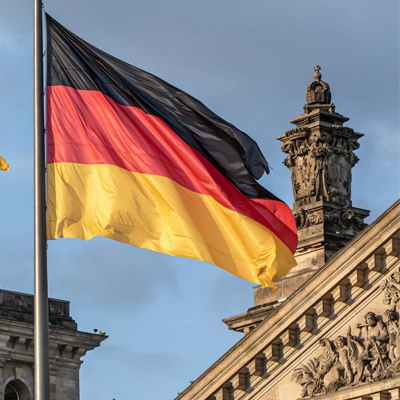
독일 모델은 값싼 에너지와 중국 시장, 자동차·기계·화학의 중간재 사슬 위에 세워졌다.

천하天下
칼럼
Grace_C
Germany's bill for peace bought cheaply

0
2026. 09. 17
- Germany is struggling to find political consensus between welfare cuts and strengthening security, as the "peace dividend" it enjoyed after the Cold War—cheap energy, the Chinese market, and low defense spending—has disappeared.
- Its reliance on cheap energy and the Chinese market, which were the foundation of its industrial model, is weakening, and the decline in competitiveness of key industries coupled with sluggish investment is slowing potential growth, deepening the economic crisis.
- Amidst increasing social burdens due to population decline and limitations in immigration policy, the rise of the far-right AfD is collapsing centrist politics, intensifying social conflict and division.
- Despite the disappearance of the prerequisites for its past success, Germany is failing to reach internal consensus and is attempting to cover up the crisis with fiscal deficits and subsidies, risking prolonged stagnation and political turmoil.
In the autumn of 2026, different shouts overlapped in front of the Brandenburg Gate in Berlin and in the squares of small towns in East Germany. On one side were protesters shouting, “Fascism is not an alternative,” after the Alternative for Germany (AfD) won first place with over 40% of the votes in the Saxony-Anhalt state parliamentary election. On the other side were voters who, combining pensions, immigration, electricity bills, and factory closures, said, “This country is no longer our country.” The Friedrich Merz cabinet, barely a year and a half into power, was at rock bottom in approval ratings. In national polls, the AfD was the leading party with 27-29%, while the CDU/CSU alliance had fallen to around 20%. The country, once called the locomotive of Europe and a model of export machinery, stands in the midst of a structural crisis facing post-war continental industrial nations.
Where the peace dividend disappeared
After the Cold War, Germany enjoyed three layers of余裕 (leeway/breathing room): low defense spending, Russian pipeline gas, and demand from the Chinese market. The war in Ukraine and the expansion of the Middle East front erased those preconditions all at once. NATO set a goal to spend 3.5% of GDP on defense itself and 5% on broader security by 2035. Germany's defense spending will rise from approximately 2.2% of GDP in 2025 to around 2.7% in 2026. The Ministry of Defense's main budget alone is set at 109.7 billion euros for 2027, making up about one-fifth of the federal budget, and the government aims to reach 3.5% by 2029. That money does not come from savings. With a constitutional amendment in March 2025, the debt brake (Schuldenbremse) was loosened to exempt the portion of defense spending exceeding 1% of GDP, and a 500 billion euro special fund for infrastructure and climate was created over 12 years. It was the moment when a nation of fiscal austerity suddenly pulled out a fiscal bazooka.
The fiscal deficit is projected to widen from around 3% of GDP in 2025 to over 4% in 2026, and further to 4.3-4.6% by 2028. The national debt ratio, currently around 64%, is climbing towards 68-70%. Germany is a central country in the Eurozone. Without the buffer of an independent currency, its deficit trajectory directly influences interest rates and rules across Europe. If defense spending is further increased, something will have to give among pension guarantees, long-term care, citizen's allowance, or industrial electricity subsidies. The Merz government clashed with its coalition partner, the SPD, when it tried to reform the pension eligibility age and sick pay. The day after the devastating defeat in Saxony-Anhalt, the SPD demanded a reopening of the reform proposals. The fiscal benefits of the reforms have been postponed, leaving only political costs.
Security is no longer free. However, Germany has failed to build the political consensus needed to reduce welfare in exchange for security. Filling that void is the veto power of the streets and opinion polls. Anti-AfD protests intersect with anti-immigrant and anti-energy transition sentiment, the sense of deprivation in East Germany, and the moral politics of West German metropolises. The government attempts reforms, falters, and then, after faltering, once again expands special funds and deficits. The crisis manifests not as soaring interest rates, but as a decline in the quality of growth and a fracturing of politics.
Cracks in the Export Machine
The German model was built on cheap energy, the Chinese market, and the intermediate goods chain of automobiles, machinery, and chemicals. Pipeline gas has been cut off, and liquefied natural gas will not return to its previous prices due due to transportation and regasification costs. Industrial electricity prices, even with subsidies, are nearly double those in the US and China. The government introduced an industrial electricity tariff system from 2026, subsidizing up to 50% of wholesale prices for energy-intensive industries, but this is more of a temporary measure to support the cost of transition with taxes. The Middle East conflict in 2026 once again shook oil and wholesale electricity prices, and household energy burdens suppressed consumption. This is why, even as research institutes raised their growth forecasts in their autumn outlooks, they separately noted energy prices as a key risk.
The current account surplus remained at 4.5% of GDP in 2025. However, a surplus does not necessarily mean competitiveness. The trade deficit with China in goods widened by an additional 28 billion euros in 2025 alone, reaching 72 billion euros, and global market share continues to decline. Growth forecasts for 2026 vary from 0.5% to 1.4% among institutions, but the commonality is that potential growth is below 1%. ifo projected potential growth to drop to 0.1% by the end of the decade. The unemployment rate, based on Employment Agency standards, has not significantly decreased from 6.3%, and a jobless recovery is becoming structural in a country where the labor supply itself is shrinking.
The core of pride lay in Volkswagen, BMW, Mercedes, BASF, and ThyssenKrupp. That chain is now shaking in the face of Chinese electric vehicles and overproduction. Volkswagen has reached the stage of considering layoffs of up to 100,000 people and closing four domestic factories, and its market share in China has fallen to less than half of what it once was. The share of Chinese brands in the European new car market has exceeded 10%. Chemical and steel industries are also reducing facilities or moving overseas due to high energy prices and carbon costs. While the transition to renewable energy has progressed in the power mix, intermittency and grid costs have become location factors for factories. Companies are observing the situation until the state elections, budget, and the 2029 general election. If investment stops, productivity also stops.
Limits of immigration as a buffer
The total fertility rate fell to 1.32 in 2025, the lowest since 1997. For German-national women alone, it was 1.20. Births in 2025 were 654,000, and deaths were approximately 1 million, resulting in a natural decrease of 340,000 to 360,000. This marks four consecutive years since 2022 with a deficit exceeding 300,000. The slight population increase was due to net immigration, but net immigration sharply declined to 220,000-260,000 in 2025. As a result, the population at year-end was approximately 83.5 million, decreasing for the first time since 2020. The increase in foreign residents was also the smallest in 15 years. The proportion of those aged 65 and over continues to rise, and the dependency burden on the working-age population is steepening.
Pensions, health insurance, and long-term care are already at the core of public finance. As the baby boomer generation enters their 80s, the expenditure curve will become even steeper. Filling the labor force through immigration was a hidden engine of growth in the 2010s. However, the political costs of housing, schools, public safety, and social assistance have accumulated. Refugee accommodation, public safety incidents, the emptiness of small towns in East Germany, and the "two Germanys" debate are the strongest fuel for the AfD. Weidel and Krupalla speak of large-scale repatriation and border controls, while simultaneously promising to defend pensions and industrial jobs. Economically, this is a tension. It means reducing the inflow of labor while simultaneously protecting elderly welfare and rearmament costs. Politically, it is consistent. This is because it is the grammar of the sentiment, "Our money for our elderly and our factories."
Shaking Triangle
Post-war Germany operated with a triangle of US security, the rules of the European single market, and its internal social state and export machinery. That triangle is now shaking simultaneously. In terms of security, Germany is transitioning from a civilian power exporting norms and checks to rebuilding military sovereignty. Tanks, air defense, support for Ukraine, and deployment on NATO's eastern front are new pillars. However, the pace of this transition is constrained by troops, ammunition, and public opinion. While Poland spends around 4% of its GDP on defense and the Baltic states are approaching 5%, Germany is increasing its budget figures but is blocked by conscription and the wall of social consensus. In a world where US security commitments are becoming transactional, Germany, while reiterating its European responsibilities, has not yet filled its ranks with the troops and ammunition needed to wage war independently. Every time energy, logistics, and prices fluctuate, the slogan "factories first" grows louder.
경제면에서 세계는 효율의 세계화에서 안보의 블록화로 이동한다. 중국의 과잉생산과 미국의 산업정책은 독일을 양쪽에서 압박한다. 보호주의와 보조금으로 잔존 산업을 지키는 길, 인도·인도 태평양과 동맹형 공급망에 편입되는 길, 유럽 안에서 산업정책을 키우는 길이 뒤섞여 표류한다. 방위산업과 인프라 특별기금은 진전되지만, 에너지 가격과 생산성 정체, 동독의 원심력은 속도를 맞추지 못한다.
In politics, the center is collapsing. The AfD is not a protest party but a leading candidate vying for state government. The CDU briefly held power as the face of the market, but that power will erode if it fails to address grievances regarding housing, immigration, energy, and factories. An AfD victory would shake the European Convention on Human Rights, climate goals, foreign aid, and the policy towards Russia, while a return to power by the left bloc would test the remaining norms of debt limits and the boundaries of industrial subsidies. Either way, Germany's self-proclaimed central role in shaping rules in post-war Europe will weaken.
The German-origin language of precision machinery and automobiles, accounting rules and fiscal discipline still exists. However, the cheap energy, military leeway, and demographic capacity that supported it have diminished. The world is choosing self-preservation over cooperation, and Germany is caught in a paradox where it cannot even forge internal consensus. Germany bought peace with Russian gas, Chinese markets, and debt limits. In a country where factories are leaving first, as long as the current generation rejects security costs, defers demographic costs through immigration, and covers industrial transition costs with subsidies, growth will hover around 1% and politics will become a contest of vetoes. Germany in the autumn of 2026 is not yet a fallen nation. It is merely that the most successful continental model of the post-war era is repeating the same grammar even after the prerequisites for its success have disappeared.
댓글
( 0 / 500 )
支配者
8
독일의 위기를 단순히 AfD의 약진이나 이민 문제로만 설명할 수 없다는 점이 인상적입니다. 값싼 러시아 에너지, 중국 수출시장, 낮은 국방비라는 기존 성장 공식이 동시에 흔들리면서 복지·안보·산업을 모두 지키기 어려워진 구조적 문제가 핵심이라는 분석에 공감합니다.
( 0 / 500 )
minsuk
7
결국 ‘평화 배당금’이라는 표현이 독일의 지난 수십 년을 압축해서 보여주는 것 같습니다. 안보 비용을 크게 부담하지 않고 산업 경쟁력과 복지에 집중할 수 있었던 시대가 끝났는데, 정치권은 아직 그 변화에 맞는 새로운 사회적 합의를 만들어내지 못하고 있는 듯합니다.
( 0 / 500 )
seeu79
7
특히 인구감소와 산업경쟁력, 국방비 증가를 하나의 문제로 연결한 부분이 중요해 보입니다. 노동력은 줄어드는데 연금과 복지 지출은 늘고, 동시에 재무장까지 해야 한다면 결국 어느 한쪽의 부담을 늘릴 수밖에 없습니다. 독일만의 문제가 아니라 고령화된 선진국들이 함께 마주할 문제라고 봅니다.
( 0 / 500 )
8502park
6
독일의 위기가 남의 일이 아닌 이유는 한국도 비슷한 구조적 압박을 받고 있기 때문입니다. 독일이 고령화와 산업 경쟁력 약화, 에너지 비용, 국방비 증가를 동시에 떠안고 있다면 한국은 여기에 훨씬 더 심각한 저출산 문제가 겹쳐 있습니다. OECD도 한국의 급격한 고령화가 재정과 성장에 큰 압박이 될 것으로 보고 있습니다.
( 0 / 500 )
pankorea
5
독일 경제의 어려움을 ‘돈이 없어서’가 아니라 ‘기존 성장모델이 더 이상 예전처럼 작동하지 않아서’라고 본 점에 주목합니다. 러시아와 중국에 대한 경제적 의존, 자동차 산업의 전환 지연, 높은 에너지 비용, 인구구조 변화가 서로 얽혀 있기 때문에 단순한 경기부양책만으로 해결하기 어려운 문제일 것입니다.
( 0 / 500 )
進化
5
가장 씁쓸한 대목은 평화를 유지하기 위해 절약했던 비용이 결국 다른 형태의 청구서로 돌아왔다는 것입니다. 국방비를 늘리면 복지와 재정의 부담이 커지고, 이민을 제한하면 노동력 부족이 심해지며, 산업을 보호하면 재정 부담이 커집니다. 독일의 사례는 이제 선진국에게 ‘무엇을 더 할 것인가’만큼 ‘무엇을 포기할 것인가’에 대한 사회적 합의가 중요하다는 사실을 보여주는 것 같습니다.
( 0 / 500 )
james_kang
4
독일이 러시아 가스와 중국 시장에 의존했던 것이 평화와 번영의 전제였다면, 한국은 반도체와 중국·미국 시장, 수입 에너지에 대한 의존도가 높다는 점에서 다른 형태의 위험을 안고 있습니다. 다만 한국은 2026년 반도체 수출이 성장을 견인하고 있어 독일보다 산업 전환의 여지가 남아 있다는 평가도 있습니다. 결국 핵심은 특정 산업과 특정 시장에 지나치게 의존하지 않는 구조를 얼마나 빨리 만들 수 있느냐일 것입니다.
( 0 / 500 )
do_hyun
4
한국 역시 단기적인 반도체 호황만으로 저출산, 지방소멸, 연금과 재정 문제를 해결할 수는 없습니다. 지금부터 산업·인구·에너지·안보를 하나의 장기 전략으로 묶어야 한다는 점에서 독일의 경험은 상당히 중요한 참고 사례입니다.
( 0 / 500 )
U_love90
2
경제와 안보, 인구와 복지가 서로 따로 떨어진 문제가 아니라는 사실이 분명해집니다. 값싼 에너지와 수출 호황이라는 과거의 조건이 사라진 상황에서 예전의 복지 수준과 산업 경쟁력, 국방비를 모두 유지하려면 결국 재정과 사회적 부담을 놓고 새로운 합의가 필요해 보입니다.
( 0 / 500 )
신고내용
신고내용을 선택해주세요
회원비난/비하/욕설글 및 댓글도배성 게시물저작권 침해/불법자료 유출허위사실유포개인정보 유출.사생활 침해무단광고/홍보음란물 및 도박 불법 광고물범죄행위 관련 글불법행위 관련 소개물품 판매 및 사기글악성코드 및 스파이웨어 유포기타 사유 및 운영진 판단


비밀번호를 잊으셨나요?
Sign in with Google


All information provided by us is free of charge and is for the public good.