品

Corea든 Korea든, 품격은 이름보다 먼저다
Whatever the name—Corea or Korea—dignity comes first.
Whatever the name—Corea or Korea—dignity comes first.
Now
지금
751 Diaspora
Heritage
유산
Humanity
인문
Mirengsi
未冷尸
Politics
정치
Media
언론
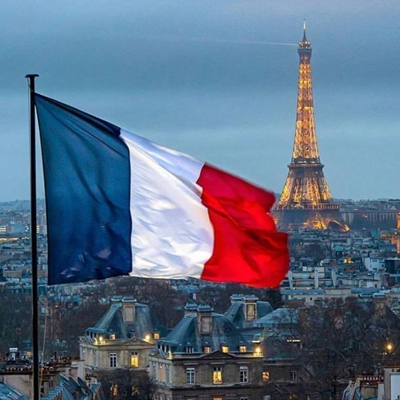
2026년 가을에도 ‘모든 것을 멈춰라(Block Everything)’를 외치는 시위가 되살아났다.

천하天下
칼럼
Grace_C
Why the 2027 French presidential election is shaking up the European order

0
2026. 09. 02
- France has become a symbol of the crisis of the 'European way of life' due to chronic fiscal deficits, low growth, high unemployment, and extreme political polarization.
- With the 'peace dividend' of the post-Cold War era gone and pressure to increase defense spending, France's fiscal crisis is deepening as it fails to reach social consensus on welfare cuts.
- The collapse of the German model, reliant on cheap energy and the Chinese market, led to a weakening of industrial competitiveness across Europe; France, despite some buffering, faces loss of technological sovereignty and youth unemployment.
- Even France, once an exception to Europe's low birth rate, has entered an era of natural population decline, increasing the burden on pension and healthcare finances, while failed immigration policies fuel the rise of the far-right, deepening political instability.
- Europe, with its structural flaw of one currency and 27 fiscal policies, is seeing the collapse of centrist politics and the rise of extremism, threatening its role as a core pillar of the post-war liberal order.
In the autumn of 2026, protests shouting 'Block Everything' revived in the streets of Paris, Lyon, and Marseille, and the cabinet repeatedly collapsed over the budget. Growth remained at 0%, virtually stagnant, and public debt exceeded 117-118% of GDP, surpassing 3.5 trillion euros. Ahead of the 2027 presidential election, public opinion is divided between the far-right National Rally (RN) and the far-left La France Insoumise (LFI). A country once the capital of the 'European way of life' has now become a laboratory for the structural crises facing the continent.
The End of Free Peace, and the War of Finance
The peace dividend Europe enjoyed after the Cold War was a hidden resource that allowed defense spending to be diverted to welfare and education. After the war in Ukraine, that premise disappeared. NATO member states have already exceeded the 2% target, and at the 2025 summit, they even set a goal of spending 5% of GDP on defense by 2035. Germany sharply increased its defense spending to 2.6-2.7% of GDP by NATO standards, and the defense spending of European NATO members has almost doubled in nominal terms in just a few years.
The question is where the money comes from. France's defense spending is around 2.1-2.2% of GDP, slower than Germany and much lower than the frontline countries in Eastern Europe. For a country with nuclear deterrence and overseas projection capabilities, this might seem passive. However, France already has a budget deficit exceeding 5% of GDP, and interest payments alone exceed 60 billion euros annually. If defense spending is further increased, something among pensions, healthcare, or local grants must be cut. The pension reform (raising the retirement age) that the Macron government pushed through in 2023 was frozen until January 2028 amid street protests and parliamentary deadlock. Instead of the fiscal effects of the reform being delayed, only political costs remained.
Security is no longer 'free.' However, France has failed to build the political consensus to reduce welfare in exchange for security. Filling that void is the veto power of the streets. The protest culture, where unions, youth, and retiree groups intersect, is not just a simple social conflict but an actual veto mechanism that prevents the state from shifting future costs to the current generation. As a result, the government attempts austerity, collapses, and then increases the deficit again.
The dual collapse of cheap energy and the Chinese market
The German model operated by relying on Russian gas and the Chinese market. That model has already broken. European industrial electricity prices are roughly twice as high as in the US and about 50% higher than in China. Production bases for chemicals, steel, and automobiles are moving to the US and Asia, and finished vehicle manufacturers, including Volkswagen, have announced large-scale layoffs. China is no longer Europe's end market but a competitor pushing Europe out of electric vehicles, machinery, and capital goods. Germany's share of exports to China has plummeted, and some analyses attribute a significant portion of Germany's GDP stagnation to 'China Shock 2.0' and energy costs.
France differs from Germany in this regard. With a high proportion of nuclear power, electricity prices are lower than in Germany. The manufacturing sector's share is also half that of Germany, so the direct impact of industrial shocks from China is relatively smaller. Aerospace, luxury goods, agri-food, and nuclear technology still maintain competitiveness. However, this 'relative buffer' has created an illusion. A less hollowed-out industry does not mean there is a growth engine. France's growth rate is projected to be around 0.6% in 2026, and after negative growth in the first quarter and zero growth in the second quarter, it is on the verge of a technical recession. The unemployment rate has risen again to 8.1-8.3%, and youth unemployment exceeds 21%. Along with Spain's youth unemployment at 23.4% and Italy's at 18.4%, the Southern European/French-style 'country without a country for the young' is becoming entrenched.
The deeper problem is technological sovereignty. There are no European big tech companies among the top global market capitalization. The regulatory environment, exemplified by GDPR, and risk-averse capital markets have prevented startups from growing to US scale. Data, cloud, and AI infrastructure rely on US platforms, and the real benefits of solar and battery supply chains have gone to China. France proclaimed itself a 'startup nation,' but that slogan has faded in the face of budget deficits and political uncertainty. Companies are taking a wait-and-see approach until the 2027 presidential election. If investment stops, productivity also stops.
Population: Even France crosses the threshold of natural decrease
The total fertility rate in the European Union has fallen to the low 1.3s. Italy's 1.18 and Spain's 1.10 are already close to 'reproductive incapacity.' France was long an exception in Europe. Family allowances, childcare, and a relatively high female labor force participation rate sustained a rate in the 1.8s. That exception has broken. In 2025, the total fertility rate fell to 1.56, the lowest since World War I, and with 645,000 births versus 651,000 deaths, natural increase turned negative for the first time since World War II. The slight population increase was due to net immigration (estimated +176,000). Those aged 65 and over now account for 22% of the total, almost equal to those under 20.
Macron's talk of 'demographic rearmament' is less rhetoric and more akin to fear. Pensions and healthcare costs are already central to the budget, and as the baby boomer generation enters their 80s, the expenditure curve will steepen further. Filling labor shortages through immigration has worked, but the political cost of integration failures has accumulated. The segregation of the banlieues, recurring riots, and debates over security and identity are the strongest fuel for the far-right. The National Rally promises both immigration restrictions and a return to a retirement age of 62 (some 60). Economically, this is contradictory. It means reducing the workforce while increasing pension recipients. Politically, however, it is consistent. This is because it follows the emotional logic of 'our money for our elderly.'
The flaw that brought it down: one currency, twenty-seven budgets, and a street veto.
The euro was a devalued export engine for Germany and a shackle for Southern Europe, depriving it of exchange rate adjustment tools. That structure remains. When a crisis hits, Northern Europe demands discipline, while Southern Europe and France demand solidarity. France is not as much of an export machine as Germany, yet it is large enough not to be exposed to the market as much as Italy. Thus, reforms are always 'just a little, later.' In a country where fiscal austerity and protest politics operate simultaneously, investment in infrastructure and future technologies is chronically delayed.
After 2024, French politics pushed this flaw to the extreme. The general election led to a divided parliament, and prime ministers were successively replaced over budget disputes. In the summer of 2026, the bond market widened the France-Germany sovereign bond spread again, and credit rating agencies revised their deficit projections upwards. Among the likely scenarios for the 2027 presidential election is a runoff between Le Pen (or Bardella) and Mélenchon. One side advocates immigration control and welfare defense, while the other proposes partial debt write-offs and increased fiscal spending. What the market fears is not the ideology itself, but that both are difficult to reconcile with current fiscal constraints.
Europe's technological failure meets political failure here. While high walls were built with regulations, innovation escaped from within. The renewable energy transition advanced morally, but the supply chain was ceded to China. In the digital realm, it became a colony of American platforms, and in security, it relies on American intelligence, missile defense, and strategic assets. The portrait of Europe in the 2020s is one where, while speaking of strategic autonomy, it failed to create the finances to realize that autonomy.
The future depicted by decline, and its relationship with the world
Europe's decline is more than just the 'fall of a continent'; it signifies the collapse of one pillar of the post-war liberal order. Post-war Europe operated with a triangle of American security, a globalized market, and an internal welfare state. That triangle is now simultaneously shaking.
First, in terms of security, Europe is transitioning from a 'normative power' to 'rebuilding military sovereignty.' However, the pace of this transition varies by country. Poland and the Baltic states spend 4-5% of their GDP on defense, Germany has embarked on rearmament, and France, while trying to maintain its nuclear and diplomatic pride, is constrained by financial limitations. In a world where American security commitments are becoming transactional, Europe has not become a unified strategic actor, with each country rearming at its own pace. Each time the war in Ukraine and the Middle East crisis shake energy, logistics, and inflation again, Europe's internal divisions grow.
Second, economically, the world is shifting from globalization of efficiency to bloc-based security. China's overproduction and the US's industrial policies are squeezing Europe from both sides. Europe has three paths it can take: protectionism to defend existing industries, integration into alliance-based supply chains with the US and Asia, or completing its internal market and creating a 'united Europe' through common fiscal and industrial policies. In reality, these three paths are intertwined and adrift. While joint borrowing and a common defense industry are progressing, France's fiscal crisis, Germany's industrial crisis, and Eastern Europe's security crisis are not keeping pace.
Third, politically, Europe is experiencing the collapse of the center. The far-right is being 'de-demonized,' and in eastern Germany, the possibility of the Alternative for Germany (AfD) taking control of state governments is being discussed for the first time. The French presidential election is the culmination of this trend. A victory for Le Pen or Bardella would shake Brussels' budget, immigration, and common foreign policy, while a victory for Mélenchon would test bond markets and eurozone rules. Either way, France's self-proclaimed role as the 'engine of European construction' since the post-war era would be weakened. The European Union risks being reduced from a community of norms to an alliance for crisis management.
The implications of this transition for the world are clear. The European-born language of free trade, multilateral norms, human rights, and climate still exists, but the prosperity and military leeway that supported it have diminished. In the Middle East, Indo-Pacific, and Africa, Europe's voice is overshadowed by American deals, Chinese capital, and Russian power. The world is choosing self-preservation over cooperation, and Europe is caught in the paradox of being unable to even forge internal consensus in the midst of this self-preservation.
What France shows, what Korea should read
France is a country where Europe's weaknesses converge: high welfare expectations, strong street politics, a divided parliament, an aging population, immigration conflicts, and a national pride that is not yet completely dead. Even with the energy asset of nuclear power, if finances and politics collapse, growth stops. Conversely, technology alone is not enough. If a nation loses the political capacity to allocate future costs to the present, external shocks immediately become systemic crises.
Korea is on a steeper slope than Europe. It imports 95% of its energy, its security is deeply tied to the ROK-US alliance, and its intermediate goods and markets are deeply linked to China. Its total fertility rate of 0.7 is far more serious than France's 1.56. Its strength, unlike Europe, lies in holding future infrastructure such as semiconductors, AI, and data centers. However, even that strength is instantly exposed to external variables if not supported by power grids, water, talent, and geopolitics.
Europe, complacent in 70 years of peace and welfare, did not factor into its blueprint the possibility of its three pillars shaking simultaneously. The result we are witnessing now is not a continental business cycle, but the entrance to a rearrangement of the post-war order. The streets of France are the loudest signpost at that entrance. Citizens trying to protect welfare, voters trying to close the country, the Ministry of Finance trying to balance the books, and presidential candidates calculating votes clash at the same time. The outcome of that clash will define Europe's tomorrow, and that tomorrow will change the climate of the world Korea stands in. Painful change is not a slogan, but rewriting internal distribution rules before external pillars collapse. The present of a country that has postponed that task is clearly visible through France.
댓글
( 0 / 500 )
뽀빠이
9
프랑스의 위기를 단순한 경기 침체가 아니라 안보·재정·인구·정치가 동시에 흔들리는 구조적 위기로 짚어낸 글입니다. 한국 역시 남의 일로 볼 수 없다는 경고가 특히 인상적입니다.
( 0 / 500 )
모란
7
유럽의 극단 정치 확산도 결국 경제와 사회의 불안이 낳은 결과라는 생각이 듭니다. 중도가 해법을 제시하지 못하면 유권자는 더 강한 구호로 이동합니다. 프랑스의 대선이 유럽 전체의 방향을 바꿀 수 있는 이유입니다.
( 0 / 500 )
october
6
프랑스의 위기는 복지냐 긴축이냐의 단순한 선택 문제가 아닌 듯합니다. 안보비 증액, 고령화, 저성장, 이민 갈등이 동시에 터지면서 정치가 해법을 만들지 못하는 구조적 위기로 보입니다. 한국도 남의 일이 아닙니다.
( 0 / 500 )
pixel89
5
복지를 지키려는 시민, 재정을 맞추려는 정부, 표를 계산하는 정치권이 서로 충돌하는 프랑스의 모습이 지금 유럽의 현실을 잘 보여주는 것 같습니다. 결국 개혁을 미룬 비용은 더 크게 돌아오는군요.
( 0 / 500 )
inchul
6
특히 인상적인 것은 ‘공짜 평화의 시대가 끝났다’는 지적입니다. 안보에는 돈이 들고, 그 비용을 결국 누가 부담할 것인지 사회적 합의를 만들어야 합니다. 개혁을 미루기만 하면 미래 세대의 부담은 더 커질 것입니다.
( 0 / 500 )
유미
6
프랑스가 원전과 강한 산업 기반을 갖고도 성장 정체와 재정위기를 피하지 못했다는 점이 중요합니다. 국가 경쟁력은 특정 산업 하나로 결정되지 않습니다. 정치적 안정과 미래를 위한 사회적 합의가 반드시 뒷받침돼야 합니다.
( 0 / 500 )
Bernard_Choi
5
한국은 프랑스보다 저출산이 심각하고 에너지와 안보, 수출시장 의존도도 높습니다. 지금 필요한 것은 위기를 나중으로 미루는 정치가 아니라 외부 환경이 더 악화되기 전에 내부의 분배와 성장 전략을 다시 세우는 일입니다.
( 0 / 500 )
Jeong Byeon_72828
4
주 35시간 근무 5주 유급 휴가 자녀 3 부터 가족 수당 주택수당 실직자수당 미혼모 사회복지가 너무 잘되어있어요. 이같은 복지혜택에 익숙한 프랑스인들. 구글에 의존하고 버금가는 기술도 없고 그래도 한국에는 네이버 다음이 있어요. 대선 주자들 열렬한 토론. 커다란 변혁이 있을것입니다
( 0 / 500 )
puma
4
최근 품에서 읽은 글 중에 가장 공감을 주는 글입니다. 한 나라의 번영과 위기 관리가 몇해 내에 되지 않기에 언급하신 우리가 처한 위험 요소가 더 크게 느껴집니다. 우리가 가고자 하는 길은 우리 내부만 해도 서로가 많은 이해와 양보가 필요한 상황입니다. 슬기롭고 빠르게 위기를 이겨 나갔으면 합니다. 좋은 글 고맙습니다. ^^
( 0 / 500 )
Atlanta
4
유럽의 쇠퇴가 곧 세계 질서의 재편이라는 분석이 설득력 있습니다. 외부의 평화와 번영에 기대던 시대가 끝났다면, 이제 각국은 내부의 분배와 개혁 원칙부터 다시 세워야 한다는 결론이 무겁게 다가옵니다.
( 0 / 500 )
나나
3
특히 프랑스의 저출산과 고령화, 재정위기를 한국과 연결한 부분이 의미 있습니다. 한국은 더 낮은 출산율과 높은 대외 의존도를 안고 있는 만큼 유럽의 위기를 미리 공부해야 할 것입니다.
( 0 / 500 )
天上天下
2
원전과 항공우주, 명품 산업 같은 강점이 있어도 정치적 합의 능력을 잃으면 국가의 성장 동력 자체가 멈출 수 있다는 지적에 공감합니다. 기술과 산업만큼 중요한 것이 사회적 합의라는 생각이 듭니다.
( 0 / 500 )
Oh YoungOlivier
0
27년 프랑스 대선의 가장큰 문제로 대두되는 것은 극우, 극좌 할 것 없이 나토 탈퇴를 대선 공약으로 내세우고 있다는 점입니다. 만일 프랑스 나토를 탈퇴하면 나토 회원국은 핵무기 보유국이 없는 것과 같습니다. 현재 여론조사에서는 극우 RN당이 1차 투표에서 일순위를 찾지 할 것이라고 보고 있습니다. 아래 주소는 프랑스 나퇴 탈퇴관련 글을 올린 주소입니다. 참고 바랍니다. https://agencecoreennepresseparis.blogspot.com/2026/09/2027.html
( 0 / 500 )
신고내용
신고내용을 선택해주세요
회원비난/비하/욕설글 및 댓글도배성 게시물저작권 침해/불법자료 유출허위사실유포개인정보 유출.사생활 침해무단광고/홍보음란물 및 도박 불법 광고물범죄행위 관련 글불법행위 관련 소개물품 판매 및 사기글악성코드 및 스파이웨어 유포기타 사유 및 운영진 판단


비밀번호를 잊으셨나요?
Sign in with Google


All information provided by us is free of charge and is for the public good.