品

Corea든 Korea든, 품격은 이름보다 먼저다
Whatever the name—Corea or Korea—dignity comes first.
Whatever the name—Corea or Korea—dignity comes first.
Now
지금
751 Diaspora
Heritage
유산
Humanity
인문
Mirengsi
未冷尸
Politics
정치
Media
언론
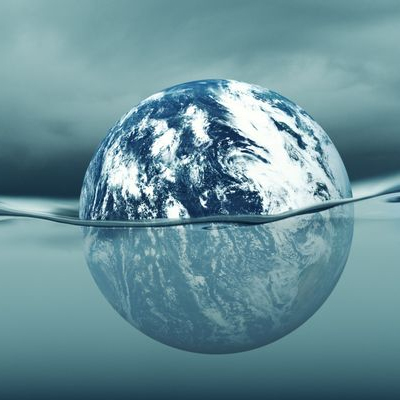
빙하는 풍경이 아니라 물·에너지·식량을 지탱해 온 지구 인프라다

과학/건강
칼럼
Atom
The collapse that begins in the mountains is completed in the sea.

0
2026. 10. 01
- Sea level rise is a complex physical process, triggering a chain of events from glacier melt to coastal inundation, saltwater intrusion, and population displacement.
- Low-lying nations and major cities worldwide face flood risks, food security is threatened by salinization of key granaries, and the climate refugee crisis will intensify.
- The impacts of climate change disproportionately affect low-income countries and vulnerable populations with low greenhouse gas emissions, raising issues of climate justice.
- South Korea also faces severe threats to critical infrastructure like ports, industrial complexes, and power plants, as well as to food and energy security, due to rising sea levels.
- To address this global threat, it is urgent to reduce greenhouse gas emissions and establish systems for defense, relocation, and compensation for affected areas.
Sea level rise is not just a number; it's a physical process that connects mountains, rivers, and cities in a single line. As ice in the Himalayas and Andes melts and flows into the sea, sea levels rise, and the ocean, in turn, pushes into deltas and coastal cities. In this process, land is submerged, groundwater becomes saline, and people lose their homes. This is why mountain floods in Nepal are not unrelated to seawalls in Korea.
Submerged land, shrinking territory
The most direct consequence of sea level rise is submerged land. Geographies with low elevations or those composed of deltas and coral islands, such as Bangladesh, the Maldives, Indonesia, Florida in the United States, and the Netherlands, will experience significant reductions in area even with a slight increase in water levels. In Bangladesh, it is estimated that if sea levels rise by 1 meter, a significant portion of the country, approximately 11-18% according to some studies, could be permanently or repeatedly inundated. This country is already vulnerable to monsoon floods. As sea levels rise, drainage at river mouths is blocked, and inland flooding persists longer. For island nations like the Maldives, where most of the land is only a few meters above sea level, there are repeated warnings that an 80% loss of land could occur with just a 1-meter rise. The Marshall Islands, Tuvalu, and Kiribati face similar structural risks.
Major cities are no exception. The IPCC's Sixth Assessment Report estimates that global average sea levels are likely to rise by approximately 0.3-0.6 meters under a low-emission pathway and 0.6-1.0 meters under a high-emission pathway by 2100, based on the period 1995-2014. Including processes with low certainty, such as ice sheet instability, the upper end of the high-emission scenario could exceed 1 meter. At this level, major coastal cities like New York, New Orleans, Shanghai, Mumbai, and Jakarta would be exposed to constant flood risk. Venice already experiences 'acqua alta' as a daily occurrence, and a significant portion of the Netherlands is below sea level, relying on dikes and pumping systems. Jakarta is experiencing a combination of land subsidence and sea level rise, which is destabilizing the city's functions.
Saltwater encroaching on deltas, cracks in the food basket
The Mekong Delta in Vietnam is where this problem extends to the food system. This delta accounts for about half of Vietnam's rice production and about 90% of its exports. According to scenarios from Vietnam's Ministry of Natural Resources and Environment, sea levels in the Mekong estuary could rise by about 23 cm by 2050 and 55 cm by 2100 under RCP 4.5, and by about 28 cm by 2050 and 77 cm by 2100 under RCP 8.5. As seawater pushes upstream and into aquifers, salinity easily exceeds the limits that crops can withstand. Some reports indicate that salinity has soared to 4 grams per liter, four times the permissible level. Rice is vulnerable to salinity. If yields plummet or cultivation becomes impossible, the damage will spread beyond Vietnam's domestic prices to the international rice market.
Saltwater intrusion is not just a problem for the Mekong. Large deltas like the Ganges-Brahmaputra, Nile, and Irrawaddy have high population densities and agricultural dependence. When arable land shrinks and water sources are contaminated, livelihoods collapse. Water purification costs rise, and the poor must drink salty water or fetch water from further away. This burden is often shifted to the labor of children and women. The structure where low-income countries and classes, who emit less greenhouse gases, are hit first is precisely the core of climate justice.
Uninhabitable land and cross-border migration
As uninhabitable land increases, populations move. In Pacific island nations, national-level migration is already being discussed. Tuvalu and Kiribati are exploring migration agreements with Australia and New Zealand, or even considering ways to preserve their nationality and sovereignty through the concept of a digital nation. In continental countries like Bangladesh, coastal and delta residents are pushed into inland metropolises like Dhaka. If housing, jobs, and infrastructure burdens are compounded in already overcrowded cities, social tensions can escalate into political instability. The problem is the law. The current Refugee Convention is based on war and persecution. People who lose their homes due to climate change are left in a blind spot of protection.
The rock and glacier collapse near Langtang Lirung on the Nepal-Tibet border in August 2026 and the floods in the Bhotekoshi basin brought this issue to the forefront. Even by official counts, the death toll exceeded 1,400, with thousands more missing. The Nepalese government classified this as a climate disaster, holding countries with large historical and current emissions, such as the United States, China, and India, accountable and demanding compensation from the UN Loss and Damage Fund. The saying, “Mountain dwellers pay the price for fossil fuels burned far away,” is not just rhetoric. Who will accept climate refugees and by what criteria, and how border controls and immigration policies will be reorganized, are variables that will shape international politics for decades to come.
Questions posed by the coastline of the peninsular nation of Korea
Korea is not exempt from this chain of events. For a peninsular nation surrounded by sea on three sides, rising sea levels are not an abstract global problem but a design standard issue for ports, industrial complexes, power plants, and reclaimed land. The Korea Meteorological Administration's recent high-resolution ocean scenarios suggest that under a high-carbon pathway, sea levels around the Korean Peninsula could rise by generally 50-60 cm by the end of the 21st century. Previous CMIP5-based projections for RCP 8.5 estimated an average of about 65 cm, with the upper uncertainty limit exceeding 90 cm. The west coast has large tidal ranges and gentle slopes. Areas like Incheon/Songdo, Pyeongtaek/Dangjin, Gunsan, and Saemangeum, which rely on seawalls and drainage pumps, experience rapidly escalating damage when high tides and typhoons coincide. This is why we must re-evaluate whether current design flood levels and pump capacities can withstand end-of-century conditions.
Food and energy are also tied to the coast. While Korea has a high self-sufficiency rate for rice, it heavily relies on imports for wheat, soybeans, and feed grains. If breadbaskets like the Mekong and Nile are shaken by salinization and flooding, international grain price fluctuations will translate into domestic price increases. Coastal thermal and nuclear power plants and LNG terminals are exposed to storm surges and changes in intake water levels. Rising sea levels are not just a task for disaster prevention departments but an issue that simultaneously reconfigures industrial location, energy security, and food strategy.
Why the collapse that began in the mountains is completed at sea
The Peruvian Andes are also flashing the same warning signs. A recent study by Peru's National Institute for Research on Glaciers and Mountain Ecosystems (INAIGEM) found that approximately 59% of glacier area has disappeared in the last 60 years, and there are 528 glacial lakes at risk of overflowing. If these lakes burst, the damage will be concentrated in mountain villages and downstream agricultural lands. A significant amount of greenhouse gases comes from developed and emerging major countries, but the sites of disaster first appear on mountaintops, deltas, and coral islands. The 'climate stratification,' where high ground inside dikes is protected and low ground outside dikes suffers repeated flooding, is a urban version of the same logic.
Although the Loss and Damage Fund has been launched, criticisms of its insufficient scale and accessibility are repeated. The rapid assistance requested by Nepal is only a tiny fraction of the estimated damage. Nevertheless, this request is important because it is an attempt to shift climate disasters from a matter of charity to one of responsibility.
Glaciers are not just scenery; they are Earth's infrastructure that has sustained water, energy, and food. The process of mountain ice flowing into the sea and the sea engulfing cities has already begun. The choice is simple: rapidly reduce emissions to slow the rate of increase, and simultaneously create systems for defense, migration, and compensation for the risks that are already submerged. The collapse in Nepal, the lakes in Peru, the salinity in the Mekong, and the seawalls on the west coast are not different places but a single chain. Where to break that chain is a matter of the time we still have left.
댓글
( 0 / 500 )
zoro9
9
기후위기를 해수면 상승이라는 숫자 하나로 설명하지 않고, 빙하 붕괴에서 강과 삼각주, 농업과 도시, 결국 이주와 국제정치까지 이어지는 하나의 물리적 과정으로 풀어낸 점이 인상적입니다. 산에서 시작된 변화가 결코 산에 머물지 않는다는 메시지가 선명합니다.
( 0 / 500 )
dada
8
특히 기후 재난을 단순한 자연재해가 아니라 불평등의 문제로 바라본 대목에 공감합니다. 배출에 대한 책임과 피해가 반드시 일치하지 않는 현실에서 손실과 피해에 대한 국제적 책임 논의가 왜 필요한지 잘 보여주는 글입니다.
( 0 / 500 )
Sarangbang
6
해수면이 몇십 센티미터 상승한다는 말을 들을 때는 막연했는데, 항만과 산업단지, 발전소, 간척지와 배수펌프의 문제라고 생각하니 훨씬 현실적으로 다가옵니다. 한국 역시 먼 나라의 재난을 구경하는 입장만은 아니라는 점을 일깨워줍니다.
( 0 / 500 )
nakyung90
6
메콩 델타의 염수 침투와 한국 서해안의 방조제를 하나의 문제로 연결한 시각이 설득력 있습니다. 기후변화는 환경부만의 문제가 아니라 식량·에너지·산업·국토계획의 문제라는 사실을 다시 생각하게 합니다.
( 0 / 500 )
아만다
4
결국 핵심은 기후위기를 미래의 어느 날 닥칠 재난으로 미루지 않는 것 같습니다. 이미 빙하와 삼각주, 섬나라와 해안도시에서 변화가 진행되고 있다면 감축과 적응, 이주와 보상 체계를 동시에 준비해야 합니다. 마지막의 “사슬을 어디서 끊을 것인가”라는 질문이 오래 남습니다.
( 0 / 500 )
龍首
4
기후변화를 이야기하면서도 흔히 탄소 배출량과 기온 상승에만 머무르는데, 이 글은 물이 실제로 어떻게 이동하고 그 결과 사람의 삶과 국토가 어떻게 변하는지를 보여줍니다. 기후위기를 훨씬 구체적인 현실의 문제로 바라보게 합니다.
( 0 / 500 )
난다랑
3
산악 지역의 빙하가 녹는 문제와 해안의 염수 침투가 사실은 하나의 연결된 과정이라는 설명이 인상적입니다. 기후 문제를 국경이나 행정구역별로 쪼개서 생각해서는 해결하기 어렵다는 사실을 잘 짚었습니다.
( 0 / 500 )
toxic820
3
가장 두려운 부분은 해수면 상승 자체보다 그 이후의 연쇄효과입니다. 농지가 줄고 식량 가격이 오르고 사람들이 도시로 이동하고, 결국 주거와 일자리, 국경과 난민 문제가 뒤따를 수 있다는 점에서 기후위기는 이미 사회 시스템의 문제입니다.
( 0 / 500 )
dondon
2
한국은 바다를 끼고 있는 데다 항만과 산업시설, 발전시설이 해안에 집중되어 있습니다. 그런데도 기후위기를 환경 문제 정도로만 생각하는 경우가 많습니다. 이제는 국가 기반시설의 수명을 결정하는 핵심 변수로 해수면 상승을 다뤄야 할 것 같습니다.
( 0 / 500 )
moran
2
“산에서 시작된 붕괴는 바다에서 완성된다”는 제목이 글 전체의 내용을 잘 압축합니다. 빙하 하나가 사라지는 일이 먼 나라의 풍경 변화로 끝나는 것이 아니라 강과 농업, 도시와 이주, 국제적 책임 문제로 이어질 수 있다는 사실을 차분하게 보여준 글입니다.
( 0 / 500 )
신고내용
신고내용을 선택해주세요
회원비난/비하/욕설글 및 댓글도배성 게시물저작권 침해/불법자료 유출허위사실유포개인정보 유출.사생활 침해무단광고/홍보음란물 및 도박 불법 광고물범죄행위 관련 글불법행위 관련 소개물품 판매 및 사기글악성코드 및 스파이웨어 유포기타 사유 및 운영진 판단


비밀번호를 잊으셨나요?
Sign in with Google


All information provided by us is free of charge and is for the public good.