

과학/건강
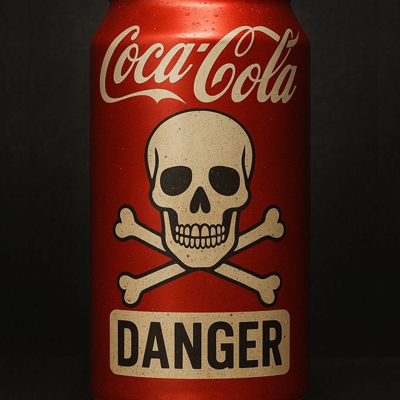
Coca-Cola: Conquering the World Silently

- Coca-Cola is more than just a beverage; it's an iconic entity that has created new desires, like a civilization, shaping lifestyles and eating habits worldwide.
- The combination of intense sweetness and carbonation, paired with food, created an addictive consumption pattern, and its powerful distribution network solidified Coca-Cola as an omnipresent "habit."
- As awareness of sugar content grows, the rise of zero-sugar cola is prominent, but this reflects an "evolution of taste" that prioritizes health rather than abandoning sweetness itself.
- Considering the bodily changes after age 50, true well-aging involves moving away from intensely sweet drinks like Coca-Cola in daily life and choosing healthy eating habits tailored to one's body.
The generation that tasted Coke, the generation that chose Zero, and after 50
Looking back over the years, there is one movie that stands out in my memory. It is “The Gods Must Be Crazy,” made in South Africa in 1980. South African director Jamie Uys wrote, directed, and produced it. There is a scene from that movie that I still vividly remember: a Coca-Cola bottle falling from the sky.
Before that, it was an object whose absence caused no problems. No one needed it, and no one wanted it. People thought the bottle that fell from the sky was a gift from the gods. But once the bottle entered the community, the situation changed. People wanted it, fought over it, and eventually, disputes arose. Bushman Xi leaves for the end of the world to return the bottle that broke the peace to the gods. At the time, I just laughed and watched. But looking back now, that single Coke bottle was civilization. Civilization sometimes creates what we need, but sometimes it also creates desires that didn't exist before. Something that was fine without it, once it becomes familiar, feels empty when it's gone.
Coca-Cola was created in 1886 by John Stith Pemberton, a pharmacist in Atlanta, USA. The Coca-Cola syrup he made was first sold at Jacobs' Pharmacy, mixed with carbonated water as a soda fountain drink for 5 cents a glass. Later, Asa G. Candler expanded advertising and marketing. The first bottled sales began in 1894, and the bottling system as we know it today was established with the bottling rights contract in 1899. As local bottlers and the distribution network expanded, Coca-Cola spread beyond the United States to the rest of the world.
I sometimes think that empires are not always expanded with guns and armies. In the 20th century, the United States spread not only products but also a lifestyle and taste to the world through movies, music, jeans, hamburgers, pizza, and Coca-Cola. Pizza with Coke. Hamburgers with Coke. Popcorn with Coke at the movies. The combination of flavors is exquisite. After eating salty and greasy food, when cold, tangy carbonation and acidity enter the mouth, it feels refreshing. Then sweetness comes in. Then you reach for salty food again. Salt and fat, sweetness and a sip of carbonation, and then salt and fat again. Industry has turned this rhythm of taste into a 'set.' At some point, we started to take this combination for granted. The chimaek and chicol culture created by the Korean Wave might also be a Korean variation of this food and drink combination.
I also can't forget the scene from when I went on a medical mission to the Philippines about 20 years ago. When I arrived in Manila, it was stiflingly hot outside. But inside the bus, it was so cold that I wanted to cover myself with newspaper. Even in the countryside, which we reached after several more hours of shivering, there was Coca-Cola without fail. It was a very familiar sight: drinking from a cold, condensation-covered bottle with a straw. Coconut trees were everywhere. You could just pick a coconut from the tree and drink it. Coca-Cola had to be bought. Nevertheless, people held cold Coca-Cola with straws in their hands.
At the time, I thought it might be due to the Philippines having been under long-term American colonial rule. But that alone doesn't explain it. The true power of Coca-Cola lay not just in its taste, but in its distribution network, which ensured that products were always available, even in refrigerators in the remotest corners of the world. No matter how good a product is, it won't sell if it's not there. Coca-Cola established the foundation of its bottling network using local bottlers in 1899, and by 1930, it was already being bottled in 27 countries. As those bottles passed through people's hands once, then twice, it quickly became a daily habit. Coca-Cola and Pepsi's TV commercials were always a hot topic. They were young and sophisticated, showcasing the lifestyle people aspired to at the time. Coca-Cola didn't just sell a beverage; it created a culture around when, where, and with what to drink it.
Looking back, it was a long time ago that I first looked at the other side of cola. I was shocked by the amount of sugar in cola after reading Sugar Blues. I remember writing a column on this topic and submitting it to a Korean community magazine at the time.
The weight of sugar cubes varies by product, so it's more accurate to look at grams now. Although it varies slightly by country and product, one example from the official nutritional information for Coca-Cola Original shows about 10.6g of sugar per 100mL. A 200mL glass contains about 21g, and a 500mL bottle contains about 53g. If you calculate one teaspoon as approximately 4g, a 500mL bottle contains about 13 teaspoons of sugar. It's not easy to eat 13 spoonfuls of sugar all at once if they're placed in front of you. But when it's chilled and carbonation and flavor are added, we drink it far too easily. There's no need to chew, and a large amount goes down before we feel sufficiently full.
When raising my son, I forbade him from drinking cola, even telling him the terrifying story that 'if you put a pulled tooth in cola, it will completely dissolve.' Looking back now, it was an exaggerated scare tactic from a mother. Teeth don't disappear without a trace. However, sugars are a significant risk factor for tooth decay, and the habit of repeated exposure to acidic beverages is also bad for tooth enamel. Cola doesn't seem to be just a sugar problem. Sugars burden metabolism, and caffeine interferes with sleep. Moreover, as the habit of pairing it with greasy food becomes ingrained, an extra dose of sugar and caffeine is added to every meal. The habit of frequently drinking sugary beverages is associated with weight gain and an increased risk of type 2 diabetes.
Long-term follow-up studies have shown that higher intake is associated with increased liver fat and a higher likelihood of developing new fatty liver, and this association was particularly clear in older age groups. We cannot say that one glass of cola causes diabetes, or that phosphoric acid immediately extracts calcium from bones. Phosphorus is a nutrient necessary for energy metabolism and bone formation. However, if someone with insufficient calcium intake frequently consumes cola and processed foods, and consequently eats fewer other calcium-rich foods, it's necessary to consider this within the overall context of bone health. The same applies to caffeine. The caffeine in one glass of cola may be less than in coffee, but if you drink several cups of coffee in the morning and add cola in the afternoon and evening, you need to look at the total amount and time over the entire day. When looking at dietary habits, I first consider 'what is eaten daily' rather than 'what was eaten once.' With cola, the habit is more of a problem than a single glass. A day becomes a month, a month becomes a year, and so 10, 20 years accumulate.
When I was studying in China, there was a junior who always carried a large cola bottle with him. His dormitory refrigerator contained nothing but cola bottles. Even after exercise, he would gulp down cola from a large plastic bottle instead of water. We were young then. It was a time when our bodies endured a lot just because we were young. But now, over 50, when a cola bottle that came as a service with delivery food is placed on the table, I tell myself, "Ah, I need to clean the bathroom. Cola is a cleaning tool."
A 50-year-old body is different from before. Muscle mass and insulin sensitivity change, and women experience changes in their hormonal environment and bone condition around menopause. Sleep and recovery are also not what they used to be. There's no need for your taste buds and lifestyle to remain in your 20s when your body is already in its 50s. A while ago, while getting my son's bone age checked, I started rethinking his lifestyle during his growth period. In Korea's college entrance exam environment, putting a child to bed early is easier said than done. Even if growth hormone injections are given, they cannot replace the lifestyle habits of sleeping early, moving sufficiently, and properly consuming protein, calcium, and vitamin D. Ultimately, such ordinary habits form the foundation of a child's growth. The same goes for sweetness. What tastes one learns as part of daily life in childhood tend to stick around for a long time.
나도 아들에게 첨가당과 강한 단맛을 가능한 한 늦게 접하게 하려고 했다. 콜라가 이를 녹인다는 겁주기 덕분인지 아들은 지금도 콜라를 그다지 찾지 않는다. 가끔 탄산음료가 먹고 싶을 때는 사이다를 고른다. 사이다도 당류가 든 음료이니 건강한 대안은 아니다. 그래도 '콜라는 꼭 있어야 한다'는 입맛으로 자라지 않은 것은 다행이라고 생각한다. 청소년기에도 콜라가 일상의 음료가 되지 않았으면 한다. 생각해보면 이런 마음은 나만의 것이 아니다. 대한민국의 많은 부모가 아이에게 콜라를 물처럼 마시게 하지 않고, 강한 단맛을 가능한 한 늦게 접하게 하려 한 지도 이미 오래됐다. 그런데도 코카콜라는 사라지지 않았다. 부모들은 달라졌는데 시장은 왜 좀처럼 달라지지 않았을까?
However, a small change has recently been observed in the domestic market. According to the Ministry of Food and Drug Safety's 2025 production performance, domestic sales of carbonated beverages, including cola and cider, decreased by 0.7% compared to the previous year, while sparkling water increased by 9.8%. As more people become conscious of sugar and weight, some demand for sweet carbonated beverages has begun to shift to sparkling water. However, it is too early to say that the era of cola is coming to an end based solely on this. The numbers from the global market tell a slightly different story. Here, it is necessary to distinguish between the overall revenue of The Coca-Cola Company and the sales volume of the Coca-Cola trademark portfolio. What The Coca-Cola Company refers to as Trademark Coca-Cola is not just the original product, but the entire Coca-Cola trademark portfolio.
Looking at the most recently confirmed annual performance for 2025, The Coca-Cola Company's net revenue was approximately $47.9 billion, a 2% increase from the previous year. Global unit case sales and Trademark Coca-Cola sales remained flat on an annual basis. In contrast, Coca-Cola Zero Sugar sales grew by 14%. In the latest quarterly performance available, Q2 2026, net revenue was $13.4 billion, a 7% increase from the same period last year. Trademark Coca-Cola sales increased by 5%, and Coca-Cola Zero Sugar sales increased by 16%. These results were announced on July 28, 2026.
This data alone cannot confirm the standalone sales of original cola. However, the trend clearly shows that zero-sugar is growing much faster than the entire Coca-Cola brand family. People didn't abandon cola. They wanted to reduce sugar, but they didn't want to give up the familiar taste and experience of cola. The rapid growth of zero-sugar shows exactly that sentiment. Switching to zero-sugar cola offers the practical advantage of reducing sugar and calories. However, just because sugar is removed doesn't mean the strong sweetness is gone. Why do we still crave such intense sweetness every day? The relationship between sweeteners in zero-sugar cola, appetite, the brain's reward circuit, and gut microbes will be explored in the next article. Perhaps Coca-Cola didn't just sell beverages; it sold memories of taste. From moments of eating hamburgers, watching movies, laughing with friends, to the moment of putting a straw into a cold, condensation-covered bottle on a hot day.
If you're over 50, it's time to graduate from cola as an everyday beverage. For children, I believe we should absolutely avoid creating a taste for cola from the start. It's about me choosing my taste, not cola choosing me. It's about not needing to crave intense sweetness every day, finding water sufficient, and feeling that something is delicious even if it's a little less sweet. I want to call that the evolution of taste. It's not about rejecting civilization. It's about choosing what suits my body and age without being dragged along by civilization. That, too, is a part of well-aging that we should learn after 50.
References
British Film Institute. The Gods Must Be Crazy (1980).
The Coca-Cola Company. The Birth of a Refreshing Idea; The Asa Candler Era.
The Coca-Cola Company. Founders Day 2026: Celebrating 140 Years of Shared Moments.
U.S. Department of State, Office of the Historian. Philippines: U.S. Recognition of Philippine Independence, 1946.
Coca-Cola. Coca-Cola Original Taste - Nutrition and Ingredients.
World Health Organization. Reducing Consumption of Sugar-Sweetened Beverages; Sugars and Dental Caries.
Park WY, et al. Sugar-Sweetened Beverage, Diet Soda, and Nonalcoholic Fatty Liver Disease Over 6 Years: The Framingham Heart Study. Clinical Gastroenterology and Hepatology. 2022.
Ministry of Food and Drug Safety. 2025 Statistics on Food and Other Product Manufacturing Performance. 2026.
The Coca-Cola Company. Coca-Cola Reports Fourth Quarter and Full Year 2025 Results. February 10, 2026.
The Coca-Cola Company. Coca-Cola Reports Second Quarter 2026 Results and Raises Full Year Guidance. July 28, 2026.


All information provided by us is free of charge and is for the public good.