品

Corea든 Korea든, 품격이 먼저다
Whether Corea or Korea, dignity comes first.
Whether Corea or Korea, dignity comes first.
Now
지금
751 Diaspora
Heritage
유산
Humanity
인문
Mirengsi
未冷尸
Politics
정치
Media
언론
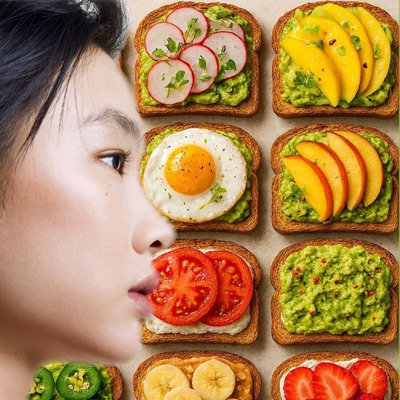
식상(食常)은 한 번 무엇을 먹었는가에 대한 이야기가 아니다. 매일 무엇을 먹고, 어떻게 먹으며, 어떤 생활을 반복하는가에 대한 기록이다.

과학/건강
칼럼
jinjinbara
What's more important than physiognomy and Saju: Sik-sang (eating habits)

0
2026. 07. 20
- It emphasizes that daily eating habits have a greater impact on life's direction and health than innate factors like 사주 (four pillars of destiny) or 관상 (physiognomy).
- While innate temperament and constitution are important, what and how one eats plays a decisive role in the body's recovery and the realization of its potential.
- It reinterprets '식상 (sik-sang)' (a term from 사주) as '식상 (sik-sang)' (meaning 'daily eating habits'), referring to 'what and how one eats every day.'
These days, I am studying I Ching and Saju.
I Ching and Myeongrihak (Four Pillars of Destiny) offer remarkable insights into understanding a person's innate temperament and tendencies, and in discerning the flow of physiology and pathology according to their constitution. Having long counseled cancer patients and those with various intractable diseases, often referred to as 'eui-nan-jap-jeung' (difficult and complex illnesses), and having coached them on dietary nutrition, immune management, and lifestyle, I too have experienced countless times how different each person's innate constitution and reactions are.
Even with the same illness, some people recover astonishingly quickly, while others struggle to cross the threshold of recovery. Initially, I thought this difference primarily stemmed from innate constitution and congenital energy. However, observing patients' lives over a long period, I came to realize something: even people with similar constitutions and similar illnesses show vastly different bodily responses and recovery trajectories depending on what they eat, how they sleep, how much they move, and with what mindset they live.
Therefore, the more I studied I Ching and Saju, one thought became clearer.
Perhaps it's not Saju, but 'the food we eat every day' that truly changes a person's life.
Mizuno Nanboku, known as a physiognomist during Japan's Edo period, is also said to have realized, after observing countless people's faces and lives, that it is difficult to fully judge a person's destiny by their face alone. What he looked into more deeply than faces was their dietary habits.
What do they eat?
How much do they eat?
And with what mindset and attitude do they eat?
He believed that even if one was born with good physiognomy, indulging in gluttony and luxury could disrupt one's life, and conversely, a disciplined diet could change the direction of one's life. Although he was a master of physiognomy, what he ultimately discovered, deeper than physiognomy, was 'food' (食).
In Saju Myeongrihak, there is a concept called 'Siksang' (食傷), which encompasses 'Siksin' (食神) and 'Sanggwan' (傷官). Siksang refers to the action of one's inner energy flowing outward and being expressed. It is the power to speak, act, create, teach, give, and reveal one's thoughts and talents to the world. Children are also interpreted as being in the realm of Siksang, in that their life force extends outward.
I connect this 'shik-sang' (食傷) with another 'shik-sang,' namely 'shik-sang' (食常).
The character 'shik' (食) means 'to eat,' and 'sang' (常) means 'always.'
'Shik-sang' (食常) is not about what you ate once. It's a record of what you eat every day, how you eat it, and what kind of lifestyle you repeat.
If 'shik-sang' (食傷) in 사주 (Saju, Four Pillars of Destiny) is the innate vitality expressed outwardly, then the 'shik-sang' (食常) I'm talking about is the root that nurtures that vitality every day.
Human thoughts and emotions, immunity and hormones, gut microbes and energy metabolism are constantly influenced by daily food and lifestyle habits. When the gut is compromised, blood sugar fluctuates, and the balance of inflammation and immunity is disrupted, even innate talents and dispositions are difficult to fully express. Conversely, when the body's order is restored and energy is revived, thoughts become clear, emotions stabilize, and words and actions gain strength. Only then can one's abilities, creativity, and expressiveness flow out into the world in a healthy way.
Good 'shik-sang' (食常) creates good 'shik-sang' (食傷).
In traditional Chinese medicine, the spleen and stomach (脾胃) are called 'huchun-jibon' (後天之本), meaning the foundation for maintaining life activities and generating acquired energy after birth.
Even if one is born with a naturally good constitution, it is difficult to fully exert that strength if food is not properly digested and absorbed. If what is eaten cannot be converted into qi, blood, and energy, no matter how good the food, it cannot become a resource for the body. Conversely, even if one's innate constitution is somewhat weak, by taking care of the spleen and stomach and consistently consuming food that suits them, one can cultivate acquired energy.
While innate conditions may determine the starting point of life, acquired diet and lifestyle can influence the direction in which life flows.
Modern functional medicine is not much different. Food is not just calories. What we eat affects the ecology of gut microbes, blood sugar and insulin response, inflammation and immune balance, hormones, and energy metabolism. Food and its metabolites act as biological information involved in cellular signaling systems and gene expression.
Therefore, today's meal is not just an act of filling one's stomach. It is a message delivered to my gut ecosystem, immune system, hormones, and cells.
Furthermore, not only what you eat, but also how you eat, is important. Even with the same food, the body's reaction is not the same when you eat hastily in a rushed and highly stressed state, compared to when you chew slowly and eat in a relaxed state. The meaning of a meal also changes depending on who you eat with, what time you eat, whether you eat because you are actually hungry, or whether you eat to soothe emotional hunger such as stress or loneliness. A daily meal can be a signal to restore the body, or it can be a signal to continuously disrupt the body's order.
Therefore, before asking, “Is my Saju good, or is my physiognomy good?” it is necessary to first look back at one's eating habits (식상).
What am I repeatedly eating?
Is that food suitable for my current body?
Am I truly eating because I'm hungry?
Or am I eating due to habit, desire, or stress?
Am I treating food as a material that nourishes life?
Or am I treating it only as consumption for momentary satisfaction?
The concept of moderation in eating (節食) emphasized by Mizuno Namboku does not necessarily mean eating unconditionally less or starving. It is closer to eating an amount appropriate for one's constitution and metabolic state, reducing excessive gluttony and late-night snacks, and restoring an attitude of self-control and gratitude towards food.
The ability to eat what the body needs properly and to stop what is unnecessary. That is the power to control one's body, and furthermore, the power to control one's life.
If Saju is the blueprint received at the moment of birth, then physiognomy can be a record of the time lived so far, etched on the face. However, eating habits (식상) are an ongoing record that is still being written today.
We cannot change the date of birth we were given. But we can choose what to eat today. We can also choose when to go to sleep, how much to move, and with what mindset to sit at the table.
Perhaps 'good fortune' (開運) is not about changing one's Saju itself, but rather about cultivating life force through these small choices. Destiny is not made only in grand events, but gradually gains direction in daily repeated habits.
However, objectively looking at one's eating habits is not as easy as it seems. We eat and live every day, but we rarely notice what traces that repetition leaves on our bodies.
Restoring health and changing the course of life should not begin with starting a grand treatment, but with understanding one's eating habits.
댓글
( 0 / 500 )
minho
9
정말 인상 깊은 글입니다. 사주나 관상처럼 바꿀 수 없는 선천적 요소보다, 매일의 식습관과 생활습관이라는 후천적 선택에 초점을 맞춘 점이 특히 와닿았습니다. "좋은 식상(食常)이 좋은 식상(食傷)을 만든다"는 표현은 오래 기억에 남을 것 같습니다.
( 0 / 500 )
nanazzang
9
식상(食常)이라는 새로운 개념이 참 신선합니다. 명리학과 기능의학, 중의학을 억지로 섞은 것이 아니라 '매일의 반복이 운명을 만든다'는 공통된 메시지로 자연스럽게 연결한 점이 설득력 있었습니다. 결국 운도 몸이 받아줄 때 비로소 꽃피운다는 말이 맞는 것 같습니다.
( 0 / 500 )
윤희
7
사주를 맹신하는 사람도, 사주를 부정하는 사람도 한 번쯤 읽어볼 만한 글입니다. 결국 타고난 조건보다 중요한 것은 매일 반복하는 선택이라는 메시지가 가장 큰 울림을 주었습니다. 운명은 습관이라는 말이 새삼 실감됩니다.
( 0 / 500 )
야수
6
미즈노 남보쿠의 절식 사상을 현대 영양학과 연결한 부분이 흥미로웠습니다. 음식은 칼로리가 아니라 몸에 보내는 정보라는 설명이 인상적이네요. 운을 바꾸고 싶다면 먼저 냉장고와 식탁부터 바꾸라는 메시지로 읽혔습니다.
( 0 / 500 )
olive
5
건강을 업으로 삼아 오신 분의 경험이 녹아 있어 더욱 신뢰가 갑니다. 체질은 출발점일 뿐이고, 결국 회복을 결정하는 것은 매일의 식사와 수면, 운동이라는 점에 깊이 공감합니다. 누구나 오늘부터 실천할 수 있는 개운법이라는 점이 무엇보다 좋았습니다.
( 0 / 500 )
Andrew91
5
'식상(食傷)'을 '식상(食常)'으로 재해석한 발상이 참 참신합니다. 단순한 말장난이 아니라 명리학과 현대 영양학, 기능의학을 하나의 관점으로 연결해 새로운 의미를 만들어낸 점이 인상적이었습니다.
( 0 / 500 )
Rosario
4
몸이 무너지면 생각도 무너지고, 몸이 회복되면 삶도 달라진다는 설명에 깊이 공감했습니다. 우리는 운을 바꾸려 애쓰기 전에 장 건강과 수면, 식습관부터 돌아봐야 하는 것이 아닐까요. 결국 몸이 삶의 토대라는 사실을 다시 깨닫게 됩니다.
( 0 / 500 )
Jeong Byeon_72828
4
당신이 먹는것을 말해봐 당신이 어떤 사람인지 알려줄게.라는 프랑스 표현이 있습니다. 유명한 요리사 가르침입니다. 특히 현세대 균형없는 음식을 먹다보니 거대한 비만자들을 도처에서 볼 수 있어서 식상이 얼마나 절실하고 심각한 사회 문제가 되었습니다.
( 0 / 500 )
Jeong Byeon_72828
0
당신이 먹는것을 말해봐 당신이 어떤 사람인지 알려줄게.라는 프랑스 표현이 있습니다. 유명한 요리사 가르침입니다. 특히 현세대 균형없는 음식을 먹다보니 거대한 비만자들을 도처에서 볼 수 있어서 식상이 얼마나 절실하고 심각한 사회 문제가 되었습니다.
( 0 / 500 )
6925pan
3
"우리는 생년월일은 바꿀 수 없지만 오늘 무엇을 먹을지는 선택할 수 있다." 이 문장이 글 전체를 관통하는 핵심이라고 생각합니다. 운명을 거창한 신비의 영역이 아니라 일상의 습관으로 풀어낸 시각이 참 현실적이고 희망적입니다. 좋은 글 잘 읽었습니다.
( 0 / 500 )
sara
3
절식을 '굶는 것'이 아니라 '자신에게 필요한 만큼 먹는 지혜'로 설명한 부분이 특히 좋았습니다. 현대인에게 가장 필요한 것은 극단적인 다이어트가 아니라 절제와 균형이라는 점을 다시 생각하게 만드는 글이었습니다.
( 0 / 500 )
藝能人
1
이 글을 읽고 나니 '나는 오늘 무엇을 먹었는가'보다 '나는 왜 그렇게 먹었는가'를 스스로 묻게 됩니다. 음식은 단순한 식사가 아니라 삶의 태도를 비추는 거울이라는 메시지가 오래 남습니다. 건강도 운도 결국 매일의 작은 선택에서 시작된다는 사실을 다시 한번 느꼈습니다.
( 0 / 500 )
신고내용
신고내용을 선택해주세요
회원비난/비하/욕설글 및 댓글도배성 게시물저작권 침해/불법자료 유출허위사실유포개인정보 유출.사생활 침해무단광고/홍보음란물 및 도박 불법 광고물범죄행위 관련 글불법행위 관련 소개물품 판매 및 사기글악성코드 및 스파이웨어 유포기타 사유 및 운영진 판단


비밀번호를 잊으셨나요?
Sign in with Google


All information provided by us is free of charge and is for the public good.