品

Corea든 Korea든, 품격이 먼저다
Whether Corea or Korea, dignity comes first.
Whether Corea or Korea, dignity comes first.
Now
지금
751 Diaspora
Heritage
유산
Humanity
인문
Mirengsi
未冷尸
Politics
정치
Media
언론
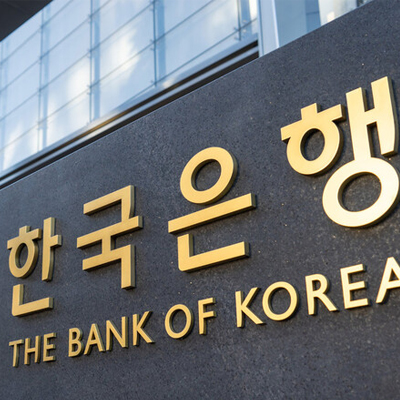
국민·하나·신한·우리·NH농협 등 5대 시중은행이 올해 3분기까지 거둔 순이익이 14조 7천억 원을 넘었다.

돈經濟
칼럼
andante
Changes in the structure of the Korean economy and financial sovereignty

0
2026. 11. 23
- While ordinary citizens suffer daily from high loan interest rates, banks are maximizing their interest margins through their oligopolistic market dominance, achieving record-high profits.
- Most of the banks' interest income creates a vicious cycle that empties the pockets of ordinary citizens, leading to a decline in consumption and domestic demand, with a significant portion flowing into employee bonuses and shareholder dividends.
- Notably, with high foreign ownership in the top four domestic financial holding companies, approximately 65% of the interest paid by ordinary citizens is distributed to overseas investors, leading to concerns about national wealth outflow.
- As banks have lost their original public role and transformed into institutions representing the interests of foreign capital, the government must restore the public nature of finance through a shift to productive finance and a restructuring of ownership.
- Ordinary citizens hope for an improved quality of life through reduced interest burdens and a virtuous economic cycle, which is directly linked to the true advancement of the Korean economy.
At five in the morning, before the sun rises, a door opens in the apartment hallway. As the head of the household puts on their shoes and closes the front door on their way to work, the loan interest statement received yesterday still lies on the living room table. There's interest on the home mortgage loan, interest on the jeonse (lump-sum deposit) loan, and even interest on the recent business credit loan. If just one number changes, a month's living expenses are completely shaken. A shop owner checks their bank balance and sighs before heading to the market at dawn to buy ingredients. When rent, ingredient costs, labor costs, and interest are added up, there's almost nothing left. Parents raising children look at their balance again after transferring academy fees, calculating how they will meet next month's interest payments. The day of ordinary people begins and ends with these interest figures.
However, during the same period, banks recorded their highest-ever profits. The net profit earned by the five major commercial banks—Kookmin, Hana, Shinhan, Woori, and NH Nonghyup—exceeded 14.7 trillion won by the third quarter of this year. Of that, 78.4% of the total operating profit came from interest income. This wasn't money earned by developing new services or fostering innovative companies. It was money earned by exploiting a structure where depositors receive low interest and borrowers pay high interest. When interest rates rose, loan rates were increased first, and when rates fell, deposit rates were quietly lowered first. This was made possible by an oligopolistic structure where a few large banks divided the market. The interest that was withdrawn from ordinary people's bank accounts every month went into the banks' coffers, and a significant portion of it flowed back out as employee bonuses and shareholder dividends.
From the perspective of ordinary people, this structure isn't about 'banks making good money.' A loan is essentially mortgaging future income to the bank in advance. A significant portion of hard-earned salaries goes to interest, leaving little money left. People cut back on dining out, grocery shopping, and consider canceling even one more after-school academy for their children. Business owners calculate the day they'll have to close, as interest doesn't decrease even if sales do. It's a natural consequence that consumption declines and domestic demand collapses. The interest earned by banks isn't a virtuous cycle that refills the wallets of ordinary people; instead, it acts as a vicious cycle that empties them. Ordinary people don't envy the banks' high profits. They simply hope that at least some of the interest they pay will return to their lives and the lives of their neighbors.
Banks weren't always this distorted. Originally, banks played a public role, collecting funds from various parts of society and channeling them to factories, shops, and rural areas. However, everything changed after the 1997 Asian financial crisis. Foreign capital acquired shares of banks, which had been revived with public funds, at bargain prices, and the Lone Star incident involving Korea Exchange Bank was a symbolic event. As ownership changed, so did the banks' objectives. Lending money to businesses to foster industry became a risky and troublesome endeavor. Instead, they focused on household loans with secure collateral. During low-interest periods, they fueled rising housing prices, and during the COVID-19 pandemic, they encouraged 'all-in' borrowing and 'debt-fueled investment.' When interest rates rose, they charged high interest on those loans, making huge profits. Thirty years later, banks have transformed from the lifeblood of industry into institutions that feed on the debt of ordinary people. Ordinary people have experienced this change firsthand. They ended up in debt trying to buy a house, struggled with interest trying to maintain their businesses, and had to bear both academy fees and interest while raising their children.
For ordinary people, where these profits ultimately go is more important. The average foreign ownership of the four major financial holding companies reaches 64.4%. Of the 5.4 trillion won in cash dividends to be distributed this year, approximately 3.5 trillion won will go to overseas investors. This structure means that the interest paid monthly by borrowers is converted into dividends for dollar capital across the Pacific. Compared to China's state-owned banks, where foreign ownership is less than 10%, large US banks at 20-30%, and Japanese banks at 30-40%, South Korea's figure is exceptionally high. This effectively means that the lifeline of the nation's economy is in the hands of foreign capital. Foreign capital is only interested in quarterly results and dividends, not in the lives of ordinary Koreans, the maintenance of local branches, or debt adjustments for small business owners. When a crisis hits, capital can withdraw all at once, causing currency exchange rates to fluctuate wildly, and that burden again falls on ordinary people. If exchange rates rise, import prices increase, and the cost of living for ordinary people goes up. It's a structure where the interest paid by ordinary people flows overseas, and the consequences then return as increased living expenses for them.
Similar contradictions are seen in overseas investments. Some banks have incurred losses in their overseas subsidiaries and alternative real estate investments, and there have been cases of significant losses in foreign exchange transactions. While the money accumulated from the interest paid by ordinary people domestically is wasted overseas or disappears due to valuation losses, that money does not properly flow into domestic production sites and people's livelihoods. There are many cases where expansion, carried out under the guise of internationalization, does not provide substantial help to the lives of ordinary people. Ordinary people realize that they are still paying high interest rates, even as they hear news of overseas investment losses. Instead of money flowing into factories, shops, and rural areas domestically, losses are accumulating overseas.
Statistics showing that banks' loan-deposit margins have reached hundreds of trillions of won in recent years indicate that this structure is not temporary. The share returned to depositors is relatively small compared to the money earned from interest. The government calls for a shift to productive finance and talks about expanding investment in high-tech industries, but as long as the ownership structure and incentives remain the same, change will be slow. From the perspective of ordinary people, while banks earn money solely from interest, their salaries and store sales decrease, and a significant portion of those profits repeatedly flow overseas. In a structure dependent on the dollar and dominated by foreign capital, asking whether Korea is truly a developed country is not an abstract question for ordinary people. It is a question raised in the reality of paying interest every day.
Finance is an institution that enjoys oligopolistic privileges with state approval and has been sustained by public taxes during every crisis. It is hollow to talk about economic sovereignty or people's livelihoods while leaving intact a structure where the blood and sweat of ordinary people flow through banks and turn into dividends for foreign capital. It is necessary to consider a cap on foreign ownership, for public funds like the National Pension Service to act as responsible shareholders, and to encourage more bank funds to flow into people's livelihoods and production sites. That can be the starting point for reducing the interest burden on ordinary people, restoring consumption and domestic demand, and changing the fundamental structure of the Korean economy. Ordinary people, rather than grand policy terms, hope that next month's interest will be reduced even a little, that they can keep their stores open a little longer, and that they can pay their children's academy fees a little more affordably.
Unless that wish comes true, it will be difficult for Korea to become a truly advanced nation within a structure where it is dependent on the dollar and dominated by foreign capital. Only when finance becomes a tool to support the lives of ordinary people, rather than a burden that weighs them down, will the fundamental nature of the economy begin to change. The day must come when the head of a household closing the door on their way to work at dawn, the small business owner tapping a calculator in front of their shop, and the parents checking their balance after sending tuition fees, can receive their next month's interest statement with a little less weight. Until that day comes, the daily lives of ordinary people will still begin and end with interest figures.
댓글
( 0 / 500 )
최진석
6
은행이 사상 최대 이익을 냈다는 소식이 서민에게는 왜 좋은 소식이 아닐까요. 국민의 예금과 대출을 기반으로 성장한 은행이라면 이익만큼 사회적 책임도 고민해야 합니다. 금융이 산업과 민생을 살리는 본래 역할을 되찾아야 합니다.
( 0 / 500 )
임필립
5
서민에게 대출이자는 생존의 문제지만 은행에는 수익을 극대화하는 수단이 되고 있습니다. 돈이 필요한 소상공인과 중소기업에는 생산적인 금융이 공급되고, 금융기관도 그 성과를 함께 나누는 구조가 필요합니다.
( 0 / 500 )
U_love90
4
은행은 공공의 인프라를 기반으로 영업하면서도 이익은 사유화하고, 손실이 발생하면 사회가 부담하는 구조라는 지적에 공감합니다. 금융의 소유 구조와 수익 배분, 대출 관행을 근본적으로 재검토할 시점입니다.
( 0 / 500 )
88kda
4
외국자본의 참여 자체가 문제라기보다 금융기관이 국내 경제와 민생에 어떤 책임을 지고 있는지가 핵심이라고 봅니다. 배당과 주주 이익뿐 아니라 산업 경쟁력과 금융 안정성까지 고려하는 제도적 장치가 필요합니다.
( 0 / 500 )
woo
3
금융 주권이라는 말이 단순히 외국인 지분을 제한하자는 주장에 머물러서는 안 됩니다. 국민의 자금이 어디로 흘러가고 누구에게 이익이 돌아가는지 투명하게 공개하고, 가계부채 완화와 생산적 투자로 연결되도록 금융의 역할을 다시 설계해야 합니다.
( 0 / 500 )
john89
3
은행이 위험을 감수하며 기업을 키우기보다 담보 잡힌 가계대출로 손쉽게 이익을 내는 구조가 고착됐습니다. 금융이 부동산 투기를 뒷받침하는 수단에서 벗어나 미래 산업과 일자리를 만드는 생산적 금융으로 전환해야 합니다.
( 0 / 500 )
ganghyug
2
외환위기 당시 국민의 세금으로 은행을 살렸던 역사를 잊어서는 안 됩니다. 금융기관이 오늘날의 수익을 누릴 수 있는 토대에는 국민의 희생도 있었습니다. 그렇다면 그 이익 역시 국민경제에 환원할 책임이 있습니다.
( 0 / 500 )
hankil64
0
경제 주권은 반도체와 자동차를 잘 만드는 것만으로 완성되지 않습니다. 돈의 흐름을 누가 결정하고 금융의 성과가 누구에게 돌아가는지도 중요합니다. 서민의 이자 부담은 커지는데 은행과 주주만 배를 불리는 구조라면 금융 개혁은 더 이상 미룰 수 없는 과제입니다.
( 0 / 500 )
신고내용
신고내용을 선택해주세요
회원비난/비하/욕설글 및 댓글도배성 게시물저작권 침해/불법자료 유출허위사실유포개인정보 유출.사생활 침해무단광고/홍보음란물 및 도박 불법 광고물범죄행위 관련 글불법행위 관련 소개물품 판매 및 사기글악성코드 및 스파이웨어 유포기타 사유 및 운영진 판단


비밀번호를 잊으셨나요?
Sign in with Google


All information provided by us is free of charge and is for the public good.