品

Corea든 Korea든, 품격이 먼저다
Whether Corea or Korea, dignity comes first.
Whether Corea or Korea, dignity comes first.
Now
지금
751 Diaspora
Heritage
유산
Humanity
인문
Mirengsi
未冷尸
Politics
정치
Media
언론
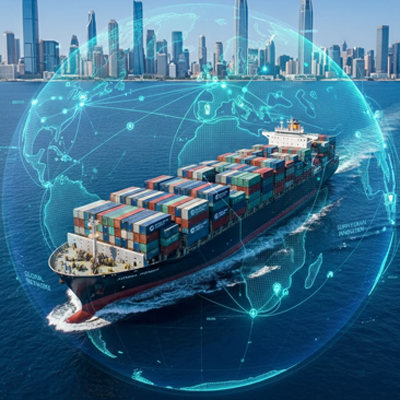
2026년 11월, 한국 경제는 연간 수출 1조 달러 시대의 문턱에 서 있다.

돈經濟
칼럼
wonderboy
The Other Side of $1 Trillion in Exports

0
2026. 11. 18
- The Korean economy achieved quantitative growth, reaching $1 trillion in exports by 2026 due to a semiconductor supercycle, but this growth remains vulnerable to external variables like energy supply and demand and US interest rates.
- Despite the semiconductor-driven export boom, reliance on energy imports and a high-interest rate environment constrain domestic demand recovery, burden vulnerable populations, and deepen the economy's dual structure.
- An expanding trade surplus with the US could provoke trade friction, and the semiconductor industry's low job creation effect reveals limitations in spreading export gains to people's livelihoods.
- Ultimately, the sustainable growth of the Korean economy in 2027 hinges on a qualitative shift that evenly distributes the benefits of the semiconductor boom to domestic demand and people's livelihoods, making government policy efforts crucial.
Semiconductor Supercycle and Energy/Interest Rate Risks
In November 2026, the Korean economy stands on the threshold of an era of annual exports reaching 1 trillion dollars. With the Ministry of Trade, Industry and Energy virtually confirming its achievement around the 19th-20th of that month, Korea will become the fourth country in the world, after the United States, Germany, and China, to set this record. The leap from 709.3 billion dollars last year to 1 trillion dollars in just one year is not merely a numerical jump. It is the result of the global AI investment boom exploding demand for memory semiconductors, especially High Bandwidth Memory (HBM). From January to October, semiconductor exports surged by over 193% year-on-year, accounting for more than 40% of total exports, and by October, semiconductors accounted for approximately 49% of total exports and 80% of ICT exports, indicating a deepening concentration.
The cumulative trade surplus reached 294.9 billion dollars, significantly exceeding past annual maximums, and the trade surplus with the US also surpassed 100 billion dollars for the first time (approximately 102.3 billion dollars), directly benefiting from the expansion of US AI infrastructure investment. However, the sustainability of this supercycle now depends more strongly on two external variables: energy supply and demand trends and the path of US interest rates. In 2027, while the Korean economy maintains semiconductor-led quantitative growth, the success or failure of its qualitative transformation will depend on how much energy costs and the interest rate environment constrain the spread of domestic demand and its impact on people's livelihoods.
The strength of the Korean economy lies in its status as a key node in the global supply chain. The expansion of US AI infrastructure investment has boosted memory demand, leading to a simultaneous rise not only in semiconductors but also in computers, peripherals, and power equipment. The expansion of production capacity by major companies will form the basis for supporting volume-based exports in 2027 as well. The expanding surplus with the US has enriched foreign currency liquidity in the short term and is the background for the possibility of the current account surplus expanding further in 2027. The government recently upgraded its economic assessment in the Green Book and expects sustained semiconductor demand and a moderate recovery in facility investment and private consumption to support the pillars of growth.
Based on the forecasts of major research institutions, the real GDP growth rate in 2027 is expected to be in the range of 2.7-3.1%. The Korea Institute of Finance projects 3.1%, while the National Assembly Budget Office suggests 2.7%. Although the export growth rate is expected to decrease from the high growth of 2026 (over 9%) to around 5%, the absolute level is projected to be maintained. Facility investment is expected to maintain a mid-5% increase, driven by semiconductor line expansion and related infrastructure investments.
However, this strength is two-sided in the face of energy supply and demand and interest rate variables. As Korea's energy import dependency exceeds 90%, if high oil prices persist, a significant portion of the foreign currency earned from the export boom will flow out again as payment for crude oil and LNG imports. With international oil prices hovering around the mid-to-high $80s per barrel since 2026, inflationary pressure has already become visible, and if this trend continues into 2027, the real buffering effect of the trade surplus will diminish.
The surge in electricity demand related to semiconductors and data centers simultaneously increases domestic power facility and fuel import dependency. If electricity demand grows by more than 4-5% year-on-year due to the expansion of data centers and semiconductor lines, and LNG import prices continue to soar, the burden of electricity costs on businesses will increase, potentially lowering the facility investment growth rate to the 4% range. If the combination of high oil prices and high interest rates persists, the improvement in real household income will slow, and private consumption is likely to remain in the low 2% range. In particular, vulnerable groups will face further constraints on their consumption capacity due to the combined effects of rising energy costs and worsening employment conditions. The semiconductor industry, due to its capital-intensive nature, has a limited job creation effect (the number of jobs per billion won of production is significantly lower than the overall average), creating a time lag for the export boom to spread to household income and consumption. As a result, a dual structure where 'super-booming exports' and 'moderate domestic demand and employment' coexist is becoming entrenched.
The path of US interest rates directly impacts the Korean economy through capital flows and exchange rates. In the second half of 2026, the US Federal Reserve began a gradual interest rate cut, but the pace of reduction was moderate as inflation did not fully converge to the target. In 2027, there is a high possibility that the Fed's interest rate will remain stuck in the mid-to-high 3% range. In this case, if the interest rate differential between Korea and the US is maintained or slightly widens, the inflow of foreign capital into Korea will be limited, and downward pressure on the won may reappear. A weaker won is favorable for the profitability of export companies, but it further increases energy import costs in won terms, simultaneously pressuring domestic prices and manufacturing costs.
Conversely, if the Fed lowers interest rates faster than expected, capital inflows will increase, leading to a stronger won and room for domestic interest rate cuts. However, even in this scenario, if it coincides with a slowdown in the AI cycle, the risk of semiconductor price adjustments increases. Either way, the interest rate path remains a variable that constrains the pace of recovery in facility investment and private consumption. As pointed out by the Ministry of Economy and Finance, inflationary pressure due to high oil prices and worsening employment conditions for vulnerable groups are acting as a burden on people's livelihoods, and this structure will not be easily resolved in 2027.
Trade risks and energy risks can be mutually reinforcing. Surpassing a trade surplus of 100 billion dollars with the US is an achievement, but under the protectionist policies of the Trump administration, it could become a justification for additional tariff pressure or demands for local investment and purchases (such as Alaska LNG). There is a constant possibility that trade risks reminiscent of Japan's Plaza Accord in the 1980s could materialize. If pressure to introduce Alaska LNG or expand purchases of US energy materializes, diversification of energy import sources will make some progress, but in the short term, it will act as pressure for rising import unit prices and a reduction in the trade surplus.
If the expansion of the trade surplus with the US leads to additional pressure following policies after the US midterm elections, diversification of exports and expansion of local production will be inevitable. At the same time, the uncertainty of the AI investment cycle increases. If global big tech's capital expenditures slow down faster than expected, both semiconductor prices and volumes could undergo adjustments. The delay in the spread of domestic demand and polarization are also problems. If the benefits of semiconductors are not sufficiently transferred to employment and consumption, the gap within the manufacturing sector could widen between industries such as semiconductors versus petrochemicals and secondary batteries, and between the export and domestic demand sectors. With the structural decline in labor contribution due to low birth rates and an aging population, there is a risk that the mid-to-long-term growth rate will remain in the mid-2% range without productivity improvements.
The year 2027 will be a test for the Korean economy, transitioning from 'semiconductor-led quantitative growth' to 'the spread of domestic demand and qualitative growth.' Achieving $1 trillion in exports is a symbol confirming Korea's position as a key node in the global supply chain, but if its fruits are not evenly distributed across the economy and people's livelihoods, the gap between 'export powerhouse' and 'national economy' could actually widen. If the expansion of power infrastructure and the adjustment of the nuclear power/renewable energy mix are not carried out in a timely manner, data center demand itself could act as a bottleneck, and if US interest rates become entrenched, household debt and housing market burdens will delay consumption recovery.
The government should focus its policy efforts on managing trade risks, strengthening energy security, supporting energy costs for vulnerable groups, and structural reforms to enhance productivity. If it succeeds in mitigating the vulnerabilities of concentration and dual structure based on its strengths in technological superiority and supply chain status, 2027 could be a turning point for sustainable growth. Conversely, if it fails to make the transition, the super boom of 2026 is likely to remain a temporary special boom due to energy and interest rate shocks. Ultimately, the success or failure of 2027 does not lie in extending quantitative records, but in how its fruits permeate people's livelihoods through stable energy supply and demand and interest rate environment management. Whether the super boom leads to sustainable growth depends on the speed of this transition.
댓글
( 0 / 500 )
Vincentkang
7
바닥 경기가 너무 안 좋습니다 점점 심해지겠지만요
구태정치로는 공든탑도 무너집니다
선각자들이 목소리를 높여야합니다
( 0 / 500 )
┖ seeu79
3
말씀에 공감합니다. 수출 호황이라는 숫자 뒤에 가려진 민생경제의 어려움을 결코 가볍게 봐서는 안 됩니다. 구태정치와 기득권의 안일한 대응으로 어렵게 쌓아 올린 경제적 성과마저 무너뜨리는 일이 없도록 깨어 있는 목소리가 필요합니다.
( 0 / 500 )
┖ kth69
2
결국 경제를 살리는 것은 과거의 정치적 관행이 아니라 시대 변화에 맞는 혁신과 실천입니다. 수출 성과가 골목상권과 서민의 삶으로 이어지도록 정치권부터 낡은 사고와 기득권을 내려놓아야 합니다. 선각자들의 경고를 정책으로 연결하는 것이 중요합니다.
( 0 / 500 )
재선
7
반도체 수출 호황과 1조 달러 수출이라는 성과에 안주해서는 안 됩니다. 수출 실적이 아무리 좋아도 에너지 수입 비용과 고금리 부담이 국민의 실질소득을 잠식한다면 진정한 경제 회복이라고 보기 어렵습니다. 이제는 수출 성장의 과실을 내수와 민생으로 연결하는 정책이 필요합니다.
( 0 / 500 )
古道
5
한국 경제의 가장 큰 위험은 반도체 산업의 경쟁력이 아니라 특정 산업에 지나치게 의존하는 경제 구조입니다. AI 특수가 언제까지 지속될지 누구도 장담할 수 없습니다. 지금의 호황을 산업 다변화와 기술 경쟁력 강화의 기회로 활용하지 못한다면 다음 위기에는 더욱 취약해질 것입니다.
( 0 / 500 )
happynam
5
수출은 사상 최대를 기록하는데 서민들의 생활은 여전히 팍팍하다는 사실에 주목해야 합니다. 반도체 기업의 실적 개선이 고용과 임금, 소비 확대로 이어지는 구조를 만들지 못한다면 경제성장률 숫자는 국민에게 큰 의미가 없습니다. 성장의 질을 바꾸는 정책이 절실합니다.
( 0 / 500 )
한상길
4
이번 글의 핵심은 수출 호황 자체보다 그 이면에 놓인 구조적 취약성을 짚었다는 점이라고 생각합니다. 미국의 금리 정책, 에너지 가격, 통상 압박은 우리가 통제하기 어려운 변수입니다. 결국 외부 충격을 견딜 수 있는 경제 체질을 만들고 성장의 성과를 국민에게 돌려주는 것이 정부의 진정한 경제정책 역량입니다.
( 0 / 500 )
king
3
에너지 안보를 단순히 수입선을 다변화하는 문제로 접근해서는 안 됩니다. AI 산업과 반도체 생산이 확대될수록 안정적이고 경쟁력 있는 전력 공급은 국가 산업 경쟁력을 좌우하는 핵심 조건이 됩니다. 원전과 재생에너지의 현실적인 조합을 서둘러 마련해야 합니다.
( 0 / 500 )
pianoman
3
수출 1조 달러라는 기록은 분명 자랑스러운 성과입니다. 그러나 특정 산업의 호황이 국가 경제 전체의 체력으로 이어지는 것은 별개의 문제입니다. 지금 필요한 것은 반도체 실적에 대한 낙관론이 아니라 다음 위기에도 흔들리지 않을 경제 구조를 만드는 일입니다.
( 0 / 500 )
崔先生
3
미국의 금리와 통상정책, 국제 에너지 가격에 따라 우리 경제가 크게 흔들리는 현실은 대외 의존도가 높은 한국 경제의 숙명적인 약점입니다. 정부는 단기적인 수출 성과에 만족하지 말고 환율과 에너지, 금융시장의 충격을 흡수할 정책적 안전판을 마련해야 합니다.
( 0 / 500 )
사랑비
1
AI 시대의 반도체 경쟁력은 대한민국의 중요한 성장 동력입니다. 하지만 반도체 생산시설을 늘리는 것만큼 전력과 에너지 공급 기반을 확충하는 일도 중요합니다. 산업정책과 에너지정책을 따로 생각하는 과거의 접근에서 벗어나야 합니다.
( 0 / 500 )
신고내용
신고내용을 선택해주세요
회원비난/비하/욕설글 및 댓글도배성 게시물저작권 침해/불법자료 유출허위사실유포개인정보 유출.사생활 침해무단광고/홍보음란물 및 도박 불법 광고물범죄행위 관련 글불법행위 관련 소개물품 판매 및 사기글악성코드 및 스파이웨어 유포기타 사유 및 운영진 판단


비밀번호를 잊으셨나요?
Sign in with Google


All information provided by us is free of charge and is for the public good.