品

Corea든 Korea든, 품격이 먼저다
Whether Corea or Korea, dignity comes first.
Whether Corea or Korea, dignity comes first.
Now
지금
751 Diaspora
Heritage
유산
Humanity
인문
Mirengsi
未冷尸
Politics
정치
Media
언론
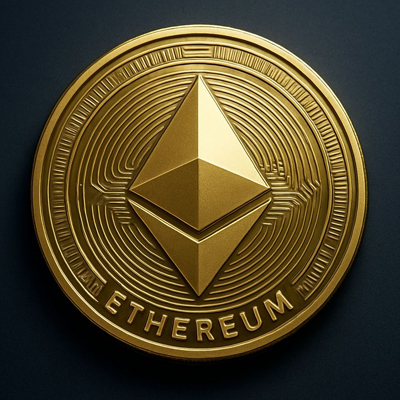
이더리움은 블록체인을 단순한 암호화폐의 기반 기술로 한정하지 않고 모든 형태의 자산을 연결하는 공통 정산 계층으로 만들겠다는 비전.

돈經濟
칼럼
andante
Ethereum's Vision for Integrated Finance

0
2026. 11. 08
- Vitalik Buterin's vision is to expand Ethereum into a common settlement layer connecting all assets, an attempt to unify a fragmented financial system into a single application.
- Through asset tokenization and smart contracts, it aims to maximize efficiency and liquidity by transforming the ownership and trading of real-world assets like stocks, bonds, and real estate into a programmable form.
- While this concept offers economic benefits such as reduced transaction costs and increased financial accessibility, it faces significant challenges including legal uncertainties, technological risks, and the need to establish new regulatory frameworks.
- If successful, it could democratize asset ownership and promote borderless investment, redefining the concept of ownership and the role of the state, but it must manage the digital divide and new forms of systemic risk.
The concept proposed by Ethereum founder Vitalik Buterin, 'trading stocks, bonds, coins, and real estate in a single app,' is a vision to make blockchain not just the underlying technology for cryptocurrency, but a common settlement layer connecting all forms of assets. He believes that the current financial system is fragmented into different exchanges, intermediaries, payment systems, and regulatory frameworks depending on the asset type. Stocks must go through securities firms and exchanges, bonds are mainly traded in over-the-counter markets between institutions, and real estate involves complex intertwining of registration, brokerage, and loans. Cryptocurrencies form yet another ecosystem. The attempt to bring all of this under a single interface is to convert assets into digital representations called 'tokens' and then enable them to be connected and exchanged via smart contracts. This concept goes beyond simply enhancing convenience; it presupposes a technological and institutional transformation where asset ownership and trading become programmable.
From a scientific and technological perspective, this vision is based on Ethereum's programmability and interoperability. Ethereum was designed not just as a simple ledger, but as a world computer capable of executing smart contracts. Asset tokenization is the process of mapping real-world ownership or rights to tokens on the blockchain. Stocks and bonds can be issued as security tokens, and real estate as fractional ownership tokens. These tokens can be exchanged with each other through standards, and smart contracts enable automatic settlement, dividends, collateralization, and fractional ownership. Oracle technology plays a role in securely bringing external data (such as stock prices, interest rates, real estate market prices, and registration information) into the blockchain.
Recently, research has also been conducted on methods that utilize zero-knowledge proof technology to maintain the privacy of transaction details while allowing regulatory authorities to perform necessary verifications. Ethereum has improved energy efficiency and security since its transition to Proof-of-Stake, and is enhancing scalability through Layer 2 solutions and a modular architecture. Technical challenges still exist. Key issues include the differing legal statuses of various assets, the reliability of oracles, performance when processing large-scale transactions, and how to ensure the legal connection between off-chain assets and on-chain tokens. Nevertheless, the Ethereum ecosystem already accounts for a significant portion of tokenized real-world asset transactions, and institutions are beginning to consider this network as a settlement layer.
From an economic perspective, this integration aims for significant reductions in transaction costs and increased liquidity. Currently, each asset market has different brokerage fees, clearing times, minimum transaction units, and access restrictions. Enabling all assets to be traded within a single app would allow for 24-hour real-time settlement, and small investors could participate in real estate equity or institutional bonds. Fractional ownership of assets would increase the liquidity of high-value assets and make portfolio rebalancing much easier. Smart contracts could automatically set collateral or combine loans with trades, replacing complex traditional financial procedures with code.
However, the economic risks are also significant. Questions arise regarding how legal ownership of tokenized assets will be recognized in disputes, who will be responsible for losses due to oracle errors or smart contract bugs, and the potential for increased systemic risk if large-scale assets are concentrated on a single platform. Regulatory authorities manage securities, real estate, and cryptocurrencies under different legal frameworks, so integrating them into one app would require a new regulatory framework. While market participants clearly see the benefits of convenience and cost savings, significant technical failures or regulatory uncertainties could lead them to prefer the stability of existing systems.
In a future society, the potential uses of Ethereum could extend beyond finance. Vitalik Buterin has emphasized that moving real estate ownership on-chain could transform it from mere digitalization into a programmable form. Tokenizing real estate shares could automate ownership transfers, collateralization, and rental income distribution through smart contracts. If stocks and bonds are also tokenized, enabling 24/7 trading and instant settlement, the lines between institutions and individuals would blur.
Furthermore, Ethereum could become a gateway for people worldwide to access assets like stocks and bonds through low-risk decentralized finance. A future where AI agents perform on-chain transactions on behalf of users is also envisioned. Users could issue instructions in natural language, and agents would adjust portfolios or exchange assets. Ethereum-based technology also has potential applications in non-financial areas such as identity verification, voting, and public goods funding. However, for all of this to materialize, regulatory frameworks, technological stability, and user trust must be established simultaneously.
The societal changes brought about by these transformations are complex. The democratization of asset ownership is a clear positive aspect. If high-value real estate or institutional bonds can be owned in fractional amounts, more people can participate in wealth creation, and cross-border investment becomes easier. The reduced role of intermediaries lowers transaction costs and can increase financial access in underserved areas or developing countries. At the same time, there is a risk of new inequalities emerging. The gap between those with technological understanding and digital literacy and those without could widen, and errors in oracles or smart contracts could disproportionately harm specific groups.
The very concept of ownership could change. As real estate and stocks are no longer perceived as 'what I own' but rather 'part of a protocol I participate in,' co-ownership and automated profit distribution could become commonplace. The role of regulation and the state will also be redefined. The state may need to shift from directly managing registration and securities systems to recognizing blockchain records as legally binding. In this process, a significant redistribution of power is likely to occur among existing financial institutions, technology companies, and regulatory authorities.
Ultimately, this vision is an attempt for Ethereum to become a common settlement layer encompassing real-world assets, beyond just a coin network. While technical possibilities are gradually opening up, legal and institutional integration and securing the trust of market participants are key to success. The idea of trading all assets within a single app is attractive, but underlying it are deep design challenges: how to harmonize the characteristics of different assets within the single structure of a blockchain, and how that outcome will change the way society owns and trades. If this change materializes, financial efficiency will increase, but at the same time, how society will manage its dependence on technology and new forms of systemic risk will remain an important challenge.
댓글
( 0 / 500 )
JudgmentDay
8
주식과 채권, 부동산까지 블록체인 하나로 연결한다는 구상은 금융의 미래를 바꿀 만한 발상입니다. 특히 자산의 분할 소유와 실시간 정산이 가능해진다면 개인의 투자 기회와 금융 접근성이 크게 확대될 것입니다. 다만 기술적 혁신만큼 법적 소유권과 투자자 보호 체계를 마련하는 일이 중요합니다.
( 0 / 500 )
memo
6
이더리움의 진정한 가능성은 코인 가격의 상승이 아니라 현실 세계의 자산과 경제활동을 디지털 생태계로 연결하는 데 있다고 생각합니다. 금융 중개 비용을 낮추고 자산의 유동성을 높이는 변화가 실현된다면 블록체인은 금융산업의 기반 구조 자체를 바꾸게 될 것입니다.
( 0 / 500 )
king
6
자산 토큰화가 실현되면 부동산이나 채권처럼 일반인이 접근하기 어려웠던 자산에도 소액으로 참여할 수 있다는 점이 흥미롭습니다. 이는 단순한 금융기술의 발전을 넘어 자산 소유의 구조를 바꿀 가능성이 있습니다. 다만 투자 기회의 확대가 자산 불평등 해소로 이어질지는 별도의 정책적 고민이 필요합니다
( 0 / 500 )
Alexander
5
모든 자산을 하나의 앱에서 거래한다는 발상은 편리하지만, 금융의 통합이 곧 위험의 통합이 될 수도 있습니다. 특정 플랫폼의 오류나 해킹이 주식과 부동산, 채권 시장 전체로 확산될 가능성도 고려해야 합니다. 혁신의 속도만큼 안전장치와 책임 구조도 함께 발전해야 합니다.
( 0 / 500 )
이기상
5
인공지능과 블록체인이 결합하면 금융은 지금과 전혀 다른 모습으로 진화할 것입니다. AI 에이전트가 자산을 분석하고 거래하며 스마트 계약이 정산까지 수행하는 시대가 멀지 않았을 수도 있습니다. 결국 중요한 것은 기술 자체가 아니라 그 기술이 소수의 플랫폼 권력이 아닌 다수의 경제적 자유를 확대하는 방향으로 작동하도록 만드는 일입니다.
( 0 / 500 )
wonkyung
4
비탈릭 부테린의 구상은 금융상품을 하나의 앱에 모으는 수준을 넘어 자산의 발행과 소유, 거래, 정산의 전 과정을 재설계하려는 시도라는 점에서 의미가 큽니다. 금융의 미래는 얼마나 많은 자산을 연결하느냐보다 얼마나 투명하고 신뢰할 수 있는 구조를 만드느냐에 달려 있습니다.
( 0 / 500 )
pianoman
4
블록체인이 기존 금융기관을 모두 대체하지는 않더라도 금융의 작동 방식을 근본적으로 바꿀 가능성은 충분합니다. 특히 중개 비용과 국경의 장벽을 낮춘다는 점에서 금융 소외계층과 소액 투자자에게 새로운 기회를 제공할 수 있다는 점이 주목됩니다.
( 0 / 500 )
Ultraman
2
기술적으로는 이미 상당한 진전이 이루어졌지만 현실의 소유권을 디지털 토큰으로 바꾸는 문제는 생각보다 복잡합니다. 블록체인에 기록된 소유권과 국가가 인정하는 법적 소유권이 충돌한다면 기술의 신뢰성도 무너질 수 있습니다. 제도적 뒷받침이 반드시 필요한 이유입니다.
( 0 / 500 )
Jasmine
1
블록체인 금융의 성공 여부는 기술적 우수성보다 사회적 신뢰를 얼마나 확보하느냐에 달려 있습니다. 거래가 빠르고 비용이 저렴하더라도 해킹과 사기, 자산 손실에 대한 책임을 이용자에게 떠넘긴다면 진정한 금융혁신이라고 할 수 없습니다. 기술 발전의 혜택과 위험을 사회 전체가 공정하게 나누는 제도가 필요합니다.
( 0 / 500 )
신고내용
신고내용을 선택해주세요
회원비난/비하/욕설글 및 댓글도배성 게시물저작권 침해/불법자료 유출허위사실유포개인정보 유출.사생활 침해무단광고/홍보음란물 및 도박 불법 광고물범죄행위 관련 글불법행위 관련 소개물품 판매 및 사기글악성코드 및 스파이웨어 유포기타 사유 및 운영진 판단


비밀번호를 잊으셨나요?
Sign in with Google


All information provided by us is free of charge and is for the public good.