品

Corea든 Korea든, 품격이 먼저다
Whether Corea or Korea, dignity comes first.
Whether Corea or Korea, dignity comes first.
Now
지금
751 Diaspora
Heritage
유산
Humanity
인문
Mirengsi
未冷尸
Politics
정치
Media
언론
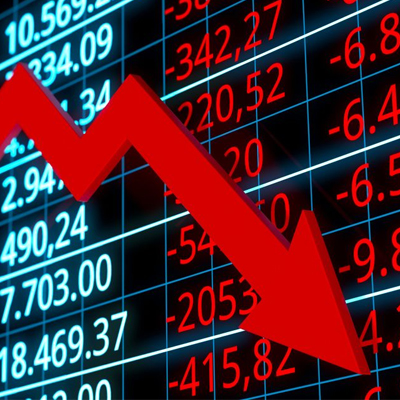
올해 2분기 반도체 수출은 1,138억 9천만 달러로 전년 동기 대비 181.6% 급증했고, 3분기에는 1,480억 2천만 달러로 218.7% 늘었다

돈經濟
칼럼
andy74
South Korea Surpasses Germany and Japan, So Why Has KOSPI Stalled?

0
2026. 10. 27
- South Korea's economy has achieved its largest-ever current account surplus, surpassing Germany and Japan, thanks to a boom in semiconductor exports, thereby elevating its global standing.
- However, the overwhelming majority of this surplus is concentrated in semiconductors, particularly due to price increases, highlighting the vulnerability of the economic structure unlike in the past when various items contributed evenly.
- The stock market is already reflecting future uncertainties regarding this semiconductor dependency, maintaining low valuations, which resonates with past experiences of the 'PER trap' in the semiconductor industry.
- Experts warn that if structural changes such as industrial diversification and domestic demand promotion are not pursued using the current surplus opportunity, the economy could face a significant shock when the semiconductor cycle slows down.
- Ultimately, the sustainable growth of the Korean economy and the direction of the stock market depend on efforts to manage semiconductor dependency and secure new growth engines.
The fact that Korea's current account surplus has surpassed both Germany and Japan, often called the home of manufacturing, is more than just a numerical record; it symbolically demonstrates how the Korean economy's fundamental structure has changed. According to IMF major country statistics recorded in the Bank of Korea's Economic Statistics System, Korea's current account surplus reached $116.63 billion in the second quarter of 2026. During the same period, Germany's $52.28 billion and Japan's $50.62 billion combined amounted to only $102.89 billion, putting Korea $13.74 billion ahead. This is the first time this has happened since 1996, when statistics for all three countries became available, and it ranks Korea second among 36 major countries, after China. For the cumulative first half of the year, Korea also maintained its second-place position with $191.01 billion, and for the two months of July and August, it exceeded the combined total of Germany and Japan with $88.19 billion. The IMF projects an annual surplus of around $421.9 billion for this year, anticipating that the increase will be the largest among 190 countries. The Bank of Korea also expects the surplus to continue to exceed its initial forecast of $450 billion, driven by strong semiconductor exports.
The driving force behind this phenomenal surplus is semiconductor exports. In the second quarter of this year, semiconductor exports surged by 181.6% year-on-year to $113.89 billion, and in the third quarter, they increased by 218.7% to $148.02 billion. The rise in prices played a greater role than the increase in volume. As investment in artificial intelligence (AI) expanded, memory demand exploded, creating a structure where export value significantly increased even with the same volume sold. Semiconductors accounted for well over 40% of total cumulative exports up to September, indicating that the Korean economy's external surplus is now virtually deeply linked to the semiconductor cycle. Compared to the past, when various items such as heavy and chemical industries, petrochemicals, and automobiles contributed evenly, the qualitative nature of the surplus has significantly changed.
However, even though the country is earning so much money, the stock market presents a completely different picture. The KOSPI has fallen by over 39%, from its all-time high closing price of 9,114.55 to 5,550.30 on October 23rd. While current account surpluses and stock prices don't move in lockstep every day, the general expectation is that in the long term, they should trend in the same direction, as a surplus is ultimately money earned by companies overseas, which then translates into corporate profits. However, the reality is different. According to data from financial information provider FnGuide, the KOSPI's 12-month forward PER in late October was only 4.41x. This is even lower than the 7-8x seen during the 2008 financial crisis or the 2020 COVID shock. Interestingly, if semiconductors are excluded from the calculation, the PER rises to 10.3x, which is almost identical to the past 20-year average of 10.4x. This means that companies other than semiconductors are being valued appropriately for their profit levels, while it is semiconductor stocks, with PERs of less than 3x, that are dragging down the index.
The market's skepticism about semiconductor profits is clear. The semiconductor industry has a long-standing adage: “A low PER can actually signal the peak of profits.” Due to the industry's characteristic volatility in earnings, the 'PER trap' often appears, where stock prices seem relatively cheap when performance is at its best. A prime example is SK Hynix in 2018, which recorded a record annual operating profit of 20.8 trillion won, pushing its PER down to 4.6x, only to see its stock price subsequently fall by 42%. The market is currently wary of precisely this pattern. If the current semiconductor boom is a temporary price effect driven by the AI investment frenzy, then the market is preemptively pricing in the possibility of a sharp decline in profits after they peak. The first stage for confirmation will be the third-quarter earnings announcements by SK Hynix on October 28th and Samsung Electronics on October 29th. More important than the numbers for this quarter itself will be how they present their profit outlook for next year.
The IMF also believes this trend will not last forever. Korea's current account surplus is projected to exceed $400 billion next year and until 2028, but then decrease to $295.6 billion in 2029 and $177.5 billion in 2031. This is because most of the surplus resulted from rising semiconductor prices rather than increased export volumes. If the pace of AI investment slows down, or if competitors like US Micron and Chinese Changxin Memory increase their self-sufficiency in memory procurement, prices could fall, and the surplus could shrink just as quickly. With semiconductors accounting for nearly half of total exports, this concentration simultaneously exposes the vulnerability of the Korean economy. It means that the larger the surplus, the greater the potential shock.
However, there is no need to underestimate the current achievements. The surplus created by the semiconductor supercycle clearly demonstrates Korea's position in the global supply chain. The problem lies in what comes next. Experts say that this year and next should be used as an opportunity for overdue structural adjustments and industrial diversification. They point out that the surplus capacity should be invested in new growth engines to lead beyond semiconductors, and domestic industries, which are weaker than exports, should be nurtured to strengthen the economy's safety net. The government has also stated that it will enhance the competitiveness of the service industry and expand new investment foundations in preparation for a slowdown in exports. From a household perspective, it is also risky to take on debt and expand investment based on a booming atmosphere, as leveraged investments are the most impacted if the economy suddenly cools down. Monitoring the semiconductor export growth rate in the import and export trends announced monthly by the Ministry of Trade, Industry and Energy for several consecutive months of slowdown is also a practical way to detect signs of an economic shift.
The future of the Korean economy and stock market ultimately depends on how this semiconductor-dependent structure is managed. The current undervaluation may be a result of the market pre-reflecting future uncertainties in prices. If third-quarter earnings and next year's guidance allay market concerns and confirm earnings sustainability, the excessively low semiconductor valuation could become a catalyst for a rebound. Conversely, if there are signs of weakening price effects or intensifying competition, there is a risk that the pace of profit reduction and the extent of stock price adjustments will both increase. The fact that non-semiconductor companies are already fairly valued also means that there is room for the overall index's rise to be diversified and not solely dependent on semiconductors. However, given the significant weight of semiconductors in the overall index, the direction of semiconductor profits is still highly likely to determine the mid-term direction of the KOSPI.
Ultimately, the Korean economy is currently in a very peculiar phase. Externally, it has surpassed major manufacturing nations by recording its strongest surplus in history, but most of that surplus relies on the price cycle of a single industry. The stock market is already aware of this fact and maintains a low valuation, pre-reflecting future uncertainties. Whether this discrepancy is temporary over-caution or a rational pre-reflection will be determined by semiconductor performance and global AI investment trends over the next few quarters. In this process, how Korea reinvests the money it earns and how much it diversifies its industrial structure will be the key tasks that determine the quality of mid-to-long-term growth. A record surplus can be a source of pride, but it is also an opportunity that has bought time to prepare for the next cycle. How that opportunity is utilized will determine the future of the Korean economy and stock market.
댓글
( 0 / 500 )
민준
8
경상수지 흑자가 독일과 일본을 앞질렀다는 사실은 분명 자랑스럽지만, 그 성과가 반도체 한 산업에 지나치게 집중되어 있다는 점은 우려스럽습니다. 지금 필요한 것은 기록적인 흑자를 자축하는 데 그치지 않고, 다음 산업 사이클을 준비하는 전략입니다.
( 0 / 500 )
Min_lee
6
나라가 돈을 많이 벌어도 주식시장이 하락할 수 있다는 사실은 경제의 외형과 내실이 반드시 일치하지는 않는다는 점을 보여 줍니다. 시장은 현재의 실적보다 미래의 지속 가능성을 평가합니다. 반도체 호황이 언제까지 이어질 수 있는지에 대한 불안이 코스피의 발목을 잡고 있는 셈입니다
( 0 / 500 )
Atom
5
반도체 기업의 낮은 PER을 무조건 저평가라고 해석해서는 안 된다는 분석에 공감합니다. 이익이 정점에 도달했을 때 주가는 오히려 싸 보일 수 있기 때문입니다. 지금은 실적 숫자만 볼 것이 아니라 AI 투자 지속성, 경쟁국의 추격, 메모리 가격의 흐름을 함께 살펴야 할 때입니다.
( 0 / 500 )
sooil
3
한국 경제의 진짜 문제는 돈을 벌 능력이 없다는 것이 아니라, 특정 산업이 흔들릴 때 경제 전체를 지탱할 대안이 부족하다는 데 있습니다. 반도체 호황으로 확보한 여력을 기술 혁신과 서비스업, 내수 기반 강화에 투자하지 못한다면 지금의 흑자는 미래의 위기를 늦추는 데 그칠 수 있습니다.
( 0 / 500 )
Anonymous
3
코스피의 반등을 기대한다면 반도체 실적 회복만 바라볼 것이 아니라 기업 이익의 지속성과 경제 구조의 변화를 함께 봐야 합니다. 기록적인 흑자는 한국 경제의 저력을 증명하지만, 그 저력이 한 산업에 갇혀 있다면 언제든 취약점으로 바뀔 수 있습니다. 지금이야말로 호황을 구조 개혁의 기회로 바꿔야 합니다.
( 0 / 500 )
sun
3
경상수지 흑자가 세계 최고 수준인데도 코스피가 폭락한다면, 단순히 시장의 비이성만 탓할 일은 아닙니다. 기업이 지금 얼마나 버느냐보다 앞으로도 계속 벌 수 있느냐가 주가를 결정하기 때문입니다. 기록적인 수출 실적에 취하기보다 그 이익이 얼마나 오래 지속될 수 있는지 냉정하게 따져야 합니다.
( 0 / 500 )
Seeker557
3
한국 경제의 성과를 부정할 이유는 없지만, 반도체가 전체 수출과 증시를 좌우하는 구조는 결코 안심할 상황이 아닙니다. 호황일 때는 경쟁력이 돋보이지만 불황이 닥치면 경제 전체가 흔들릴 수 있습니다. 지금의 흑자를 산업 다변화와 미래 먹거리 확보에 활용하지 못한다면 이 기회를 놓치는 것입니다.
( 0 / 500 )
支配者
2
주식시장은 현재의 성적표가 아니라 미래에 대한 평가서입니다. 경상수지 흑자가 아무리 커도 투자자들이 반도체 이익의 지속성을 의심한다면 주가는 떨어질 수밖에 없습니다. 코스피의 저평가를 기회로 볼 것인지 위험의 경고로 볼 것인지는 결국 앞으로 확인될 실적과 산업 경쟁력이 말해 줄 것입니다.
( 0 / 500 )
koa
1
수출로 막대한 돈을 벌어들이는 나라에서 내수 부진과 가계의 어려움이 계속된다면, 그 성과가 국민의 삶으로 충분히 연결되고 있는지도 살펴야 합니다. 기업의 수출 실적과 국민의 체감경기는 다를 수 있습니다. 이제는 흑자 규모를 자랑하는 경제에서 벗어나 그 성과가 고용과 소득, 국내 투자로 이어지는 경제를 고민해야 합니다.
( 0 / 500 )
신고내용
신고내용을 선택해주세요
회원비난/비하/욕설글 및 댓글도배성 게시물저작권 침해/불법자료 유출허위사실유포개인정보 유출.사생활 침해무단광고/홍보음란물 및 도박 불법 광고물범죄행위 관련 글불법행위 관련 소개물품 판매 및 사기글악성코드 및 스파이웨어 유포기타 사유 및 운영진 판단


비밀번호를 잊으셨나요?
Sign in with Google


All information provided by us is free of charge and is for the public good.