品

Corea든 Korea든, 품격은 이름보다 먼저다
Whatever the name—Corea or Korea—dignity comes first.
Whatever the name—Corea or Korea—dignity comes first.
Now
지금
751 Diaspora
Heritage
유산
Humanity
인문
Mirengsi
未冷尸
Politics
정치
Media
언론
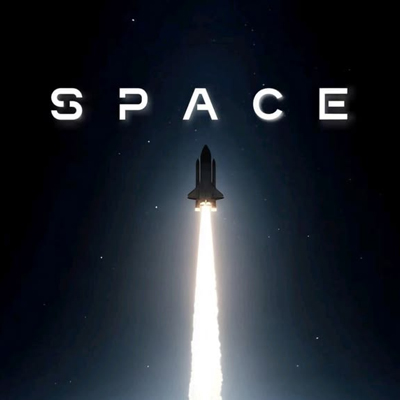
한국은 우주항공청 예산이 1조 원대를 넘어 2027년 1조 6천억 원대로 뛰는 구간에 들어섰다.

돈經濟
칼럼
panda_Lee
The next big thing after semiconductors is space: Aerospace stocks to watch in late 2026-2027

0
2026. 10. 03
- The aerospace industry is emerging as the next growth engine after semiconductors, with market validation through performance and orders expected to fully kick off in the latter half of 2026.
- Aerospace provides essential technology for AI infrastructure and security, with robust defense exports and increased KASA budgets forming the two main pillars of industry growth.
- The success of Nuriho's fifth launch and the delivery of defense exports will be key drivers of stock price fluctuations in H2 2026, with budget execution and mass production deliveries translating into tangible results in H1 2027.
- Hanwha Aerospace is a pivotal company, funding space investments with defense cash flow, while KAI, Hanwha Systems, and LIG Nex1, among others, will drive industry growth through their respective roles.
- The aerospace industry is driven by long-term orders and budget execution rather than short-term demand surges, so investment strategies should focus on concrete performance indicators like successful launches and export backlogs.
After the semiconductor cycle peaked, attention has been turning to aerospace since the second half of 2026, as people seek industries that will continue to grow. If semiconductors drove the demand for AI computing, aerospace is closer to providing the security, communication, and observation infrastructure, as well as national sovereignty technology, needed for that computing to function. Even after wars end, defense spending rarely decreases, and low-orbit satellites are being reinterpreted as candidates for communication, reconnaissance, and AI data centers. Korea has entered a phase where the budget for the Korea Aerospace Administration is exceeding 1 trillion won, projected to reach 1.6 trillion won by 2027. The second half of 2026 and the first half of 2027 will be a verification period where this expectation transitions from a 'theme' to 'performance and orders.'
The industry's foundation rests on two pillars. One is defense exports, for which figures are already available. Hanwha Aerospace recorded its highest quarterly performance in Q2 2026, with consolidated sales of 9.2929 trillion won and operating profit of 1.3655 trillion won. Its land defense order backlog reached 38.3 trillion won, with approximately 75% of that being export volume. S&P projects sales of 29.9 trillion won in 2026 and 33.7 trillion won in 2027, estimating adjusted EBITDA to be between 4.9 trillion and 5.5 trillion won. With the K9 and Chunmo to Poland, followed by Redback, Middle East air defense, and localization investments in the US, the company is transforming from a 'self-propelled artillery exporter' to a 'K-defense package' provider. The other pillar is space, which is still only visible in terms of budget and schedule. The Korea Aerospace Administration's 2026 budget has been confirmed at 1.1201 trillion won, and the 2027 budget proposal has increased by 47.2% to 1.6491 trillion won. The budget for the 'Space Highway' for launch vehicles alone increased by 113.8%, from 263.2 billion won to 562.9 billion won. This budget also includes follow-up launches of Nuriho, next-generation launch vehicles, lunar exploration, and a constellation of ultra-small SAR satellites.
The key event in the second half of 2026 is the 5th launch of Nuriho. In early October, the mission is to sequentially separate micro-satellite constellations 2-6 from Goheung at an altitude of 570km, with an error margin of within 15km. The precision has increased compared to the 4th launch's 35km error, and it includes multiple separations at 35-40 second intervals. If successful, it will be evidence of regular launches at least once a year, rather than a 'one-off national project launch.' If it fails, theme-based space stocks will be immediately discounted. In the same quarter, Hanwha Aerospace is setting up a mass production system at the Suncheon Space Hub rocket manufacturing center and is transitioning the full-cycle Nuriho technology transfer received from KARI to private system integration. Approximately 950.5 billion won for next-generation launch vehicle system integration has already been secured. In the defense sector, the concentrated delivery of K9 and Chunmo in the fourth quarter supports the profit floor. In a period where the market is contemplating where to move funds withdrawn from semiconductors, a re-rating will only be maintained in the second half if 'successful launch + export delivery' occur simultaneously.
In the first half of 2027, budget execution and mass production deliveries overlap. If the 2027 budget passes the National Assembly, 75 billion won will be newly allocated for the preparation of Nuriho 7th and 8th launches, and 291.6 billion won will be reflected for the next-generation launch vehicle. This project, aiming for first-stage reuse and large-scale transport, has a roadmap of performance demonstration in 2030 and reusable landing in 2035. In the aviation sector, the initial delivery of KF-21 (estimated at 8 units) and the delivery of FA-50s to Poland and Malaysia are expected to boost KAI's sales from 5 trillion won in 2026 to 6 trillion won in 2027. In the satellite sector, the selection of operators for 40 multi-agency micro-SAR satellites, a project worth a total of 1.4223 trillion won, is scheduled to be completed by the end of 2026. Therefore, the first half of 2027 is the period when design and initial production after the contract award will be reflected in stock prices. Overseas, expectations for SpaceX's IPO are driving up multiples for low-earth orbit communication and launch services, and this spillover effect is spreading to domestic engine, satellite, and antenna stocks. Shinhan Investment Corp. has proposed an approach that bundles SpaceX and domestic launch vehicle/satellite companies into one basket for these reasons.
If we divide the promising stocks, their roles are clear.
Hanwha Aerospace is the benchmark in this sector. It is the only domestic manufacturer of medium-to-large liquid rocket engines and is in charge of the Nuri rocket's 75-ton class engine. At the same time, it is the export channel for K9, Chunmoo, Redback, and L-SAM. In early October 2026, its stock price will be around 1.07 million won, with a market capitalization of approximately 55 trillion won. Securities firms' target prices range from 1.5 million won (IBK, initiation of buy) to an average of 1.6 million won, and a simple fair value model suggests a 30% discount potential. A key feature is that defense cash flow supports space investment. Although debt will increase as capital expenditures rise to 3.5 trillion to 3.7 trillion won in 2026-2027, export margins will protect EBITDA, maintaining its credit rating (S&P A-). Weaknesses include the risk of executing localization in the US and political noise surrounding its 15.89% stake in KAI. The Fair Trade Commission has determined that there is no effective control with the current shareholding, but if regional complaints and management rights disputes are repeated during parliamentary audits, it will become a valuation discount factor.
Korea Aerospace Industries (KAI) is at the intersection of system integration and finished aircraft. It has a track record of Nuri rocket final assembly, Arirang and 425 reconnaissance satellites, and next-generation medium-sized satellites, and generates aviation performance with FA-50, KF-21, and LAH. In early October 2026, its stock price will be around 130,000 won. Although 2025 was sluggish due to delays in the FA-50PL progress and LAH carryover, the momentum comes from the initial delivery of KF-21 and export trainer deliveries overlapping from 2026. After Hanwha became the second-largest shareholder, the possibility of package exports combining engines, radars, guided weapons with fighter jets, helicopters, and unmanned aerial vehicles opened up. However, if the equity dispute is consumed by 'regional livelihood complaints,' order reliability will be eroded. In satellites, KAI is forming a consortium with LIG to compete with the Hanwha Systems and Satrec Initiative alliance for the 40-unit ultra-small SAR project, making them the two dominant players.
Hanwha Systems focuses on satellite payloads, communications, and the Jeju Space Center. Its role does not overlap with its parent company's launch vehicles, leaving room for separate multiples as low-Earth orbit communication and observation data grow. LIG Nex1 (defense and aerospace) combines guided missile exports and satellite navigation with Cheongung-II and the Korean Positioning System (KPS) system integration. Large Middle Eastern exports are a variable for performance in 2026-2027. Hyundai Rotem's main business is tank exports, but it is almost the only listed company in Korea pursuing methane engines and reusable launch vehicle technology. As next-generation launch vehicles shift from kerosene to methane and reusability, the company is sensitive to news of technology demonstrations after 2027.
Among small and medium-sized companies, Satrec Initiative has the highest purity. It specializes in medium and small Earth observation satellites and, as part of the Hanwha group, is integrated into the system rather than being a subcontractor for large orders. Its revenue scale is small, leading to high volatility from a single order, and its performance is linked to launch schedules. Intellian Technologies focuses on satellite communication antennas, and AP Satellite on main bodies and low-Earth orbit communication equipment, offering leverage when SpaceX and OneWeb-type demand spreads domestically. Their stock prices react more significantly to order announcements and successful launches than to budget approvals.
A scenario for late 2026 to early 2027 is more realistic when viewed in three layers. The baseline path includes the successful 5th Nuriho launch, continued defense export deliveries, and the passage of the 2027 space budget. In this case, large-cap stocks could see a moderate re-rating commensurate with their earnings growth rate (Hanwha Aerospace revenue in the low to mid-teens, KAI recovering complete aircraft deliveries), while small and medium-sized satellite stocks would experience increased volatility around operator selection. The optimistic path involves the concretization of SpaceX's IPO schedule and additional package orders from the Middle East and Eastern Europe. As the combined order backlog of the top five defense companies is projected to reach 120 trillion won in 2026, the market could overlook the space sector's deficit period if new orders materialize. The pessimistic path includes launch failures, prolonged political disputes over KAI's stake, and delays in US local investments. Although space revenue still accounts for a smaller portion compared to defense and engines, Hanwha Aerospace's profit resilience would remain even with a failure, but the sector multiple would drop sharply.
The expression 'next leading stock' after semiconductors is only half true. Aerospace is not an industry where demand explodes in a single quarter like HBM. Order backlogs lock in 3-5 years of revenue in advance, and budgets are tied to the National Assembly and launch windows. Therefore, in the second half of 2026, events (5th launch, Q4 delivery) will sway stock prices, and in the first half of 2027, whether those events translate into revenue will determine stock prices. In terms of portfolio, a structure that centers on Hanwha Aerospace, where defense cash flow has been confirmed, and then divides the satellite proportion among KAI for KF-21 and satellite systems, Hanwha Systems and LIG for satellites and navigation, and Satrec Initiative for pure space betting, is closer to the sector definition. Stocks bought solely on launch success and stocks with confirmed export backlogs are different assets, even if they are both aerospace.
댓글
( 0 / 500 )
Hybridman
9
반도체 이후의 성장 산업을 단순한 테마가 아니라 방산 수출의 현금흐름과 우주산업의 정부 투자라는 두 축으로 나눠 설명한 점이 좋습니다. 특히 누리호 발사 성공 여부와 실제 수주·인도가 어떻게 실적으로 연결되는지를 짚은 대목이 설득력 있습니다. 항공우주를 막연한 미래산업이 아니라 검증해야 할 산업으로 본 점에 공감합니다.
( 0 / 500 )
eunjung
6
항공우주를 바라볼 때 단순히 발사체 기업만 보는 것은 너무 좁은 시각이라고 생각합니다. 전투기와 미사일, 위성, 통신장비, 발사체가 서로 연결되면서 하나의 산업 생태계를 만드는 과정이 중요합니다. 결국 수주와 양산이 확인되는 기업과 기술개발 단계 기업을 구별해야 합니다.
( 0 / 500 )
문상준
7
항공우주라고 해서 모두 같은 종목으로 묶어서는 안 된다는 지적이 핵심이라고 봅니다. 한화에어로스페이스처럼 이미 방산 수출로 현금을 벌어들이는 기업과 쎄트렉아이처럼 우주사업 자체의 성장성을 바라봐야 하는 기업은 위험도와 투자 논리가 전혀 다르죠. 수주잔고가 있는 기업과 기대감만 있는 기업을 구분해야 한다는 메시지가 인상적입니다.
( 0 / 500 )
DinDin
6
우주산업은 아직 기대와 실적 사이의 간격이 큰 분야입니다. 그래서 누리호 발사 성공 자체보다 중요한 것은 반복 발사가 가능한 생산체계가 만들어지고, 그 과정에서 민간기업의 매출과 수익성이 실제로 커지는가라고 봅니다. 2027년은 그런 산업적 전환이 확인되는 시기가 될 가능성이 있습니다.
( 0 / 500 )
중섭
4
한화에어로스페이스의 사례가 흥미로운 것은 방산 수출이 우주사업의 투자 재원이 된다는 점입니다. 자주포와 다연장로켓 수출로 확보한 생산능력과 기술력이 엔진과 발사체 분야로 이어지고 있습니다. 한국 우주산업이 독립적으로 성장하기보다 방산산업과 결합해 커지는 경로를 보여주는 사례라고 봅니다.
( 0 / 500 )
철수네
3
항공우주는 정부 예산, 발사 일정, 국제정세, 대형 수주에 따라 실적의 시차가 길고 변동성도 큽니다. 그래서 산업 전체를 하나의 성장주로 보기보다는 방산으로 실적을 확보한 기업과 우주 기술의 미래가치를 가진 기업을 분리해서 보는 접근이 더 현실적이라는 생각입니다.
( 0 / 500 )
Tomson
3
우주산업의 경쟁력은 ‘한 번 성공하는 기술’보다 ‘반복해서 돈을 벌 수 있는 시스템’에 있다는 생각이 듭니다. 발사체를 만들고 위성을 제작하는 것에서 끝나는 것이 아니라 발사 서비스와 관측 데이터, 통신망까지 사업화해야 합니다. 2027년은 그 가능성을 확인하는 중요한 시기가 될 것 같습니다.
( 0 / 500 )
포도
3
2026년 하반기에는 누리호 5차 발사가 중요한 분기점이 되겠군요. 발사체 산업은 기술이 아무리 좋아도 실제 발사 성공과 반복 발사 능력이 증명되지 않으면 시장의 높은 평가를 받기 어렵습니다. 특히 연 1회 이상 정례 발사 체제로 넘어갈 수 있느냐가 한국 우주산업의 성격을 바꾸는 중요한 시험대가 될 것 같습니다.
( 0 / 500 )
苦盡甘來
2
항공우주 분야는 장기적으로 볼 필요가 있다는 생각입니다. 반도체처럼 분기별 실적이 즉각적으로 움직이는 산업과 달리 발사체와 위성은 개발부터 발사, 검증, 양산까지 상당한 시간이 필요합니다.
( 0 / 500 )
신고내용
신고내용을 선택해주세요
회원비난/비하/욕설글 및 댓글도배성 게시물저작권 침해/불법자료 유출허위사실유포개인정보 유출.사생활 침해무단광고/홍보음란물 및 도박 불법 광고물범죄행위 관련 글불법행위 관련 소개물품 판매 및 사기글악성코드 및 스파이웨어 유포기타 사유 및 운영진 판단


비밀번호를 잊으셨나요?
Sign in with Google


All information provided by us is free of charge and is for the public good.