品

품격있는 정치, 품위있는 정치인과 함께 하는 세상이어야 하는데
All Koreans are refugees like animals in the zoos. Corea, Korea, Corean, Korean, Coreans and Koreans. Whatever they are!
All Koreans are refugees like animals in the zoos. Corea, Korea, Corean, Korean, Coreans and Koreans. Whatever they are!
Now
지금
751 Diaspora
Heritage
유산
Humanity
인문
Mirengsi
未冷尸
Politics
정치
Media
언론
이원영 (국토미래연구소장, 시민인권위 공동위원장)의 기고글입니다.

돈經濟
칼럼
blueSky
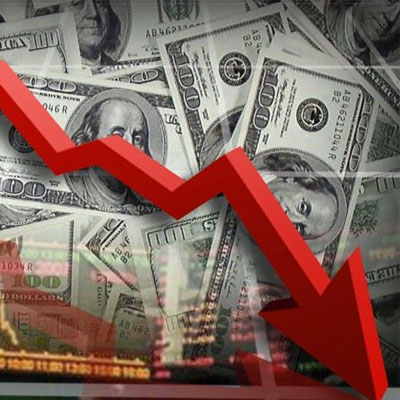
Why dollar hegemony is ruining the US—and what its lessons imply

0
2026. 09. 18
- Dollar hegemony enriched the US but also created internal constraints, deepening social inequality and weakening manufacturing.
- Its reserve currency status supported military power, but now, with immense interest burdens, it raises questions about the system's sustainability.
- The US projects a tough image externally through dollar weaponization and attempts to rename the Department of Defense, while internally grappling with unequal distribution.
- Dissatisfaction stemming from dollar hegemony is misdirected due to complex causes, hindering fundamental problem-solving within American society.
- These issues are not unique to the US; a fundamental re-evaluation of the structural imbalances created by currency, land, and debt is necessary.
As you know, dollar hegemony has made the US wealthy, but it has not made Americans equally wealthy. From the outside, it looks like the might of hegemony, but from the inside, it is a divided society. This is not so much a mistake of one or two policies as it is the result of the incentives created by reserve currency status combined with domestic politics. That's why it's difficult to fix. This system has another face. Dollar hegemony has long contributed to keeping US military power inexpensive, and now that structure is beginning to bear a different weight: the interest on debt. This article aims to confront that reality without elevating one cause to the level of fate.
Privilege or Constraint?
In 1960, Robert Triffin warned Congress about the dilemma of a reserve currency country. For world trade to grow, more dollars are needed for settlement, and for dollars to go out into the world, the US must run a deficit. However, if deficits accumulate, confidence is shaken, and if deficits are reduced, the world lacks settlement means. Problems arise no matter which path is taken. We often call reserve currency status a privilege. It seems that way because one can print money to buy goods. However, as Triffin pointed out, it is also a constraint. A country that supplies currency to the world finds it difficult to treat its trade balance with complete sovereignty. Privilege and constraint are two sides of the same status.
Why did manufacturing decline?
Demand for the dollar isn't just due to trade. Central banks around the world accumulate dollars as foreign exchange reserves, and investors buy dollar-denominated bonds as safe assets. This demand structurally makes the dollar expensive. When a currency is expensive, the price competitiveness of exports decreases, and imports become cheaper. This is an unfavorable wind for manufacturing. However, one should not interpret the wind as the entire season. For decades after the war, the US was the center of global manufacturing under the same dollar hegemony. The critical period when employment collapsed was after the early 2000s. This coincided with China's entry into the WTO and import penetration, automation and productivity changes, relative wages, and companies' location choices.
So the accurate expression is this: “The overvaluation of the dollar is one of the factors that weakened manufacturing, not the sole fundamental cause.” To say that factories were destined to leave the moment the dollar became the reserve currency is to turn complex causality into an origin story. It is true that finance filled the void left by the decline of factories. As global money flowed into dollar assets, the value of stocks, real estate, and bonds rose, and those profits went more to those who owned assets. Rather than viewing the decline of the Rust Belt and the prosperity of Wall Street as one taking from the other, it is more accurate to see it as “different outcomes for different sectors within the same system.”
Why does a country that prints its own money borrow?
The United States is a country that issues dollars. However, the government borrows money by issuing national bonds. This may seem strange, but that's how the law is. The Federal Reserve issues currency, and the Treasury Department funds itself through taxes and national bonds. The Fed buys already issued national bonds in the open market, and direct purchases from the Treasury are blocked. The intention was to separate the power of currency issuance from politics, and the historical experience of governments printing money at will leading to hyperinflation is the basis for that justification. There is a cost. The US national debt has exceeded $40 trillion, and net interest expenditures have been consistently crossing or surpassing defense spending, reaching around $1 trillion annually. To whom does that interest go? China often comes to mind, but the reality is different. Foreign holdings account for less than a third of publicly held national bonds, and Japan and the UK hold more than China. A large portion of the remainder is held in US accounts. This includes debt the government owes to itself, such as Social Security trust funds, holdings by the Fed, and mutual funds, pension funds, banks, and individuals.
Therefore, the statement that $1 trillion flows entirely to the top asset holders is an exaggeration. Some of the interest is an accounting transfer, a significant portion of the Fed's profits are returned to the Treasury, and some also goes into the retirement accounts of the middle class. Nevertheless, some facts remain. Those who hold a lot of national bonds and financial assets benefit more from interest and asset price increases. The benefits of currency issuance do not immediately become an equal public good. The other face of privilege is that inequality.
The cheap maintenance of a war-state
Treasury bonds were used for various purposes, a large portion of which was military spending. This reveals another face of dollar hegemony. As long as the world uses the dollar as a reserve asset, the US can run deficits of a magnitude that other countries would find unbearable, at relatively low interest rates. Foreign central banks buying US Treasury bonds does not directly pay for the defense budget dollar for dollar. However, it has lowered borrowing costs and provided fiscal breathing room.
The reverse is also true. One of the reasons the dollar remains the reserve currency is the US's military power, sanctioning capabilities, and the safety of sea lanes. The war-state and dollar hegemony have been partners supporting each other. There are signs that this partnership is now cracking. Interest payments surpassing defense spending is one such sign. However, just because interest has grown larger does not mean the cycle has already stopped. The US still borrows more cheaply than other countries. The start of pressure and the collapse of the structure are different statements.
The name is changing
In September 2025, the US signed an executive order renaming the Department of Defense to the Department of War. In July 2026, the House of Representatives included a renaming clause in the National Defense Authorization Act by a vote of 216 to 212. This is an attempt to restore the name after 78 years, since 1947. Until the 19th century, 'War Department' was a common name. Its disappearance was within a linguistic order that pushed war out of being a legitimate tool of state policy, following the Kellogg-Briand Pact and the UN Charter. The US Department of Defense is also a product of the 1947 National Security Act. Therefore, this reversal cannot be seen as a simple return to the past. However, interpreting this solely as evidence of diminishing power and shedding a disguise is also one-sided. It is also possible to interpret the same renaming as an aggressive language, and that interpretation is closer to the wording of the executive order. The Senate and final legislation are still pending. Whether power has diminished or it is a will to reveal it cannot be judged by the name alone.
A similar thing happened with currency. In 2022, the US and the West froze approximately $300 billion of the Russian central bank's foreign exchange reserves. Regardless of the legitimacy of the sanctions, the lesson learned by central banks worldwide was singular: dollar-denominated assets are not merely neutral public goods but can become weapons at any time. Until then, the dollar had worn the guise of a universally usable means of payment, but that guise thinned after that day. If we place the two points in time side by side, a structure emerges, though not a perfect symmetry. If the 1944 Bretton Woods agreement and the 1947 National Security Act were the two pillars of the post-war order, then the asset freeze of 2022 is 'an event that revealed the weaponization of the currency pillar,' and the renaming of the Department of War in 2025-26 is 'a process of changing the language of the military pillar.' One is the blatant use of sanctions, and the other is a symbol of domestic politics.
Globalization or protectionism is not the whole crossroads.
The question is whether the US should pursue globalization or protectionism. Both could be options that merely open or close the doors of trade while leaving the dollar's status unchanged. If the doors are left open, an overvalued dollar remains disadvantageous for manufacturing. If blocked by tariffs, some imports may decrease, but exchange rates, retaliation, and prices will erode the effect. In either case, one of the root causes remains. Therefore, prescriptions don't work as expected, and as they don't work, dissatisfaction grows.
However, the statement that 'no policy is meaningful unless the dollar's status is touched' is also an exaggeration. Industrial policy, exchange rate cooperation, taxation, housing, and education can change distribution and positioning without altering the dollar's status. The problem is that these policies cannot erase the dollar factor. There is a space between omnipotence and powerlessness.
Why does dissatisfaction go to the wrong place?
The most difficult part is separate. There are clearly those who have suffered losses. Manufacturing regions where jobs have decreased, young people who find it difficult to buy homes, and tenant households without assets. However, these people find it difficult to articulate in a single word why they have suffered losses. There are multiple causes, and among them, the status of currency is not easily visible. On the other hand, those who have benefited organize their interests more precisely. The financial sector has its advocates. Therefore, calls to change the structure do not often emerge.
Complaints go to immigrants, to trading partners, to the politicians in front of us. Meanwhile, the gap remains, and the language for the cause becomes short. It is at this point that one should say that dollar hegemony is ruining America. Not because it is bankrupting the national accounts, but because it divides profits and losses within a society and makes the reasons for that division invisible. The mechanism that enriched the country and the mechanism that divided society can be the same mechanism.
What America Forgot
In the 1886 New York City mayoral election, Henry George came in second as the United Labor Party candidate, ahead of Theodore Roosevelt, who would later become president. The fact that a land reformist garnered such support was because workers at the time found one cause of their poverty in ground rent. What George did was not invent a new theory. It was to give a name to an invisible structure and make it visible. The reason why people become poor even if they work hard is not only laziness but also the rise in land prices. Once they had that name, people had the language to explain their situation.
139 years later, in 2025, Zohran Mamdani was elected mayor in the same city. The core of his platform was not just housing, but bus fares, childcare, and the overall cost of living. The question George posed, 'Who collects the rent and who pays it?' had never left that city. What America needs now is probably such naming. It's about making visible who bears the benefits and costs of privilege, a calculation that doesn't end with tariffs and immigration restrictions. And that work must be the politics of American citizens themselves, not outside advice. The self-correcting ability that the Church Committee demonstrated in the 1970s, when the US itself scrutinized its intelligence agencies and established congressional oversight, was a tangible reason why America was respected. Those who tied the knot can untie it. If they don't untie it, others will cut it.
One more thing to add. The idea that a significant portion of the value derived from land is not solely created by the owner but by the community, and therefore some of it should be returned to everyone. This idea originated in the United States. In 1797, Thomas Paine, in "Agrarian Justice," viewed the value of land as communal and proposed creating a national fund. Not just for the poor, but for everyone, as a right, not charity. Henry George systematized this, and in the late 19th century, "Progress and Poverty" became one of the books that achieved phenomenal sales in the United States.
Traces remain. Several cities in Pennsylvania have operated or still operate property tax systems that levy higher taxes on land than on buildings. Pittsburgh lived under such a system for most of the 20th century. Alaska funds its residents' dividends from oil fields, and this system, which has been in place for nearly half a century, has met with resistance every time there have been attempts to reduce the amount. It's not about recommending something new to America, but rather reminding America of what it has forgotten.
And this is not just an American problem
The United States is not alone in this. China propped up local finances by selling land use rights for a lump sum, and when that bubble burst, it sustained itself with equipment investment. Korea is deeply embedded in a structure where banks create credit by collateralizing land prices. After Japan's real estate bubble burst, it shifted the center of collateral from land to government bonds. The details differ. However, they are similar in that they use the price of an as-yet-unrealized future as today's collateral. The United States is merely the largest version of that structure. Therefore, this article is less an indictment of the United States than a story about the ground we all stand on. Seeing how dollar hegemony has divided the United States leads to "asking what our own currency, land, and debt stand on."
If American citizens are at a crossroads, so are we. But let's not call that crossroads a predetermined downfall. Politics begins when names are accurate.
댓글
( 0 / 500 )
wiseman
5
달러패권을 단순히 미국의 특권이라고만 생각했는데, 그 이면에 제조업 쇠퇴와 자산격차라는 비용이 있었다는 설명이 인상적입니다. 특히 패권 자체가 모든 문제의 원인은 아니라는 선을 그은 점이 설득력 있습니다.
( 0 / 500 )
xp56
7
“나라를 부유하게 한 장치와 사회를 가른 장치는 같은 장치일 수 있다”는 문장이 핵심을 찌르는 것 같습니다. 경제성장률이나 국가의 부만 볼 것이 아니라 그 부가 사회 구성원들에게 어떻게 배분됐는지를 함께 봐야 한다는 이야기로 읽힙니다.
( 0 / 500 )
iljoon7
5
달러패권과 군사력, 국채와 재정적자의 관계를 설명하면서도 미국의 쇠퇴를 단순한 몰락 서사로 몰아가지 않은 점이 좋습니다. 결국 미국이 문제를 해결할 수 있느냐는 자기교정 능력에 달려 있다는 결론에도 공감합니다.
( 0 / 500 )
nadaniel
5
헨리 조지와 토머스 페인의 이야기를 달러 문제와 연결한 부분이 흥미롭습니다. 보이지 않는 구조적 원인에 이름을 붙여야 사회적 논쟁이 시작된다는 메시지가 미국뿐 아니라 한국에도 그대로 적용될 수 있겠다는 생각이 듭니다.
( 0 / 500 )
hyundong
4
결국 이 글이 던지는 질문은 ‘미국이 망하느냐’가 아니라 ‘우리는 무엇을 부의 원천으로 착각하고 있는가’인 것 같습니다. 달러패권, 부동산, 부채, 금융자산의 문제를 한국의 현실과 연결해 읽어야 한다는 마지막 대목이 특히 오래 남습니다.
( 0 / 500 )
dami
4
달러가 세계의 기축통화라는 사실을 미국의 일방적인 특혜로만 보면 중요한 부분을 놓치게 됩니다. 세계에 달러를 공급해야 하는 구조 자체가 미국의 무역적자와 재정적자를 확대하는 압력으로 작용한다는 트리핀의 딜레마를 쉽게 설명한 점이 좋습니다.
( 0 / 500 )
최혁준
2
제조업 쇠퇴를 전부 달러패권 탓으로 돌리지 않은 것이 오히려 글의 신뢰도를 높입니다. 중국의 WTO 가입, 자동화, 임금 격차, 기업의 해외 이전 등 여러 요인이 함께 작용했다는 설명이 현실에 더 가깝다고 봅니다.
( 0 / 500 )
namhee
1
러시아 외환보유고 동결을 계기로 달러가 단순한 결제수단을 넘어 제재 수단이 될 수 있다는 사실이 각국 중앙은행에 어떤 신호를 줬는지 생각하게 됩니다. 기축통화의 신뢰는 경제력뿐 아니라 그 통화를 운용하는 국가의 정치적 행동과도 연결되어 있다는 점이 중요하네요.
( 0 / 500 )
신고내용
신고내용을 선택해주세요
회원비난/비하/욕설글 및 댓글도배성 게시물저작권 침해/불법자료 유출허위사실유포개인정보 유출.사생활 침해무단광고/홍보음란물 및 도박 불법 광고물범죄행위 관련 글불법행위 관련 소개물품 판매 및 사기글악성코드 및 스파이웨어 유포기타 사유 및 운영진 판단


비밀번호를 잊으셨나요?
Sign in with Google


All information provided by us is free of charge and is for the public good.