品

Corea든 Korea든, 품격은 이름보다 먼저다
Whatever the name—Corea or Korea—dignity comes first.
Whatever the name—Corea or Korea—dignity comes first.
Now
지금
751 Diaspora
Heritage
유산
Humanity
인문
Mirengsi
未冷尸
Politics
정치
Media
언론
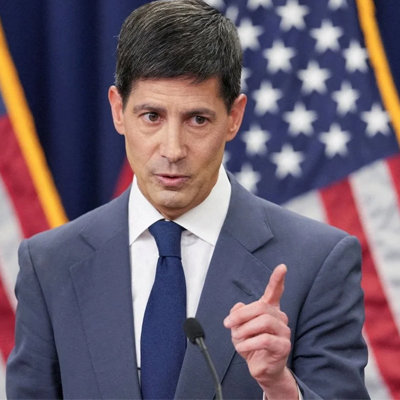
케빈 워시 연준 의장은 “근원 물가가 분명하고 충분한 속도로 목표를 향해 가고 있다는 확신이 있어야 한다. 그렇지 않다면 우리가 할 일이 있다”라고 말했다.

돈經濟
칼럼
andy74
Jackson Hole's Warning to Korean Stocks

0
2026. 08. 30
- Fed Chairman Kevin Warsh's remarks, a strong warning that US inflation remains high and further rate hikes are possible if needed, signal increased volatility for the Korean stock market.
- US interest rate hikes increase the discount rate for Korean stocks, prompting foreign investor sell-offs, and could particularly hit large tech stocks like Samsung Electronics and SK Hynix, leading to a broader KOSPI decline.
- Exchange rate instability and the widening US-Korea interest rate gap pressure the Bank of Korea to raise rates further, burdening sectors like real estate and high-debt growth stocks, but potentially creating buying opportunities for fundamentally strong companies.
- Amidst the Fed's uncertain monetary policy stance, market differentiation by stock based on interest rate sensitivity will intensify, making careful stock selection crucial for investors, considering US inflation, interest rates, exchange rates, and the semiconductor industry outlook.
Federal Reserve Chairman Kevin Warsh's Jackson Hole speech is a signal to Korean stock investors that the topic of US interest rates could once again shake our accounts. If we look at the core rather than difficult theories, it's like this: The US believes that inflation has not yet been brought under control and has indicated that it will raise interest rates further if necessary. The title of the speech was "In Our Time." Warsh said, "We need to be confident that core inflation is moving towards the target at a clear and sufficient pace. If not, we have work to do." In July, US PCE inflation was 3.7% year-on-year, and core PCE was 3.3%, far exceeding the Fed's target of 2%. Warsh flatly stated that even if the summer inflation numbers were better than expected, he did not "see a significant improvement in the underlying trend." Immediately after the speech, the market raised the probability of a September interest rate hike from the high 30s-low 40s to 55-60%. The Nasdaq reacted more sensitively than the Dow because rising discount rates first impact growth stocks that rely on distant future profits. The Korean market still has Monday. What to look at and what to be careful about before then is important.
The reason our market is sensitive to US interest rates is simple. KOSPI has a very large proportion of Samsung Electronics and SK Hynix. The performance of these two companies depends on AI and memory demand, but their stock prices do not move solely based on performance. When US interest rates rise, the 'discount rate that cuts future stock profits to present value' increases. Even if the same profit is made, the stock price appears expensive. Foreign investors compare Korean stocks with US Treasury bonds. The Fed's policy rate is still 3.50-3.75%. If US short-term interest rates rise again, the thought of whether there is a reason to hold Korean stocks and bear exchange rate risk grows. The scene where KOSPI fell more than 5% in one day and Samsung Electronics and SK Hynix led the index decline when US long-term interest rates soared, like on August 19, is exactly that structure. On the 28th, KOSPI also fell 1.79% to 6788.88, and foreigners net sold about 1.756 trillion won. Samsung Electronics fell 3.38%, and SK Hynix fell 4.45%. Foreigners sold more than 1.2 trillion won from Hynix alone. The burden was compounded by reports on the same day that the US was considering expanding the scope of semiconductor tariffs to include not only chips but also finished products such as servers and laptops.
The exchange rate is not too bad right now. The won/dollar rate is in the upper 1370s, significantly down from this year's high of mid-to-upper 1500s to 1580s. Dollar selling by export companies is supporting the lower end. A stronger won helps with import prices and foreign investor sentiment. However, if the dollar strengthens again after Wash's remarks, this trend could reverse in an instant. If the exchange rate goes above 1400 won again, the Bank of Korea will consider further rate hikes. The BOK already raised the rate from 2.50% to 2.75% in July, and then to 3.00% at the Monetary Policy Committee meeting on the 27th, a consecutive increase. The growth rate forecast was also significantly raised from 2.6% to 3.3%. As semiconductor exports and AI facility investments are boosting the economy, the judgment is that inflation and household debt must be proactively suppressed. If the US raises rates first, the formula of 'Korea-US interest rate differential → capital outflow → exchange rate instability → additional BOK hike' could be reactivated. At that time, real estate and construction, high-debt growth stocks, and overvalued KOSDAQ stocks will be hit. Household credit at the end of the second quarter exceeded 2,000 trillion won for the first time, reaching 2,019.8 trillion won. If loan interest rates rise again, consumption and housing-related industries will also face increased burdens.
Conversely, it's not a market where all stocks fall equally. Even if the US raises interest rates, it's hard to say that the economy will immediately collapse. Wash himself said that corporate and household spending are holding up thanks to AI productivity. He viewed financial conditions as 'not yet tight.' His diagnosis is that corporate bond spreads are low, capital expenditures are rapidly increasing, and more than half of them are related to AI. He also assessed the labor market as being close to full employment with an unemployment rate of 4.1%. Therefore, if inflation doesn't fall, there's more justification to raise interest rates further. In Korea's case, this aligns with the trend of semiconductor exports and AI capital expenditures boosting growth to the 3% range. What needs to be distinguished are 'stocks with strong earnings' and 'stocks with big stories only.' Samsung Electronics and SK Hynix may be swayed by interest rate and tariff issues in the short term. However, the scenario where AI server and HBM demand itself disappears is not yet in sight. The question is whether the stock price has already largely reflected that demand, and whether there is enough cash flow to withstand higher interest rates. As long as earnings forecasts are maintained, a sharp drop could be a buying opportunity, but if interest rate shocks continue, valuations will be cut first. We need to look at 'good companies' and 'prices that are good to buy now' separately.
By sector, the next few weeks are likely to unfold this way. Those vulnerable to rising interest rates include stocks with high growth premiums, those in the red or relying on distant future profits, real estate and construction, and some securities stocks. Those with relatively more room to withstand include financial stocks like banks, which benefit from widening loan-deposit margins, large export stocks with ample cash and capacity for dividends and share buybacks, and essential consumer goods and some auto stocks with high earnings visibility. On the 28th, KB Financial rose more than 2%, but biotech and semiconductors fell. This means the market has already started to differentiate stocks based on interest rate sensitivity. It's also important that Wash spoke of a 'quieter Fed' and said they would reduce forward guidance. If the future is not kindly communicated, the market will react more strongly to each individual indicator. Volatility may not be a one-time event.
First, the upcoming schedule to check is the US FOMC on September 15-16. The short-term direction will depend on whether they actually raise rates or freeze them and only say, 'We can raise them at any time.' Second, the US inflation and employment indicators released before that. If inflation doesn't fall, the probability of a rate hike increases. Third, the won/dollar exchange rate and US 2-year and 10-year bond yields. These two numbers move before the KOSPI. If the exchange rate surges and US short-term interest rates rise together, foreign selling is likely to increase. Fourth, the earnings of Samsung Electronics and SK Hynix and orders from their customers. Even if interest rates rise, if memory prices and shipments hold up, the nature of stock price adjustments changes. Tariff issues are likely to remain a headline risk until the actual rates, scope of application, and whether there will be reductions linked to investment in the US become clear.
There are three scenarios to consider. If the US raises rates once or twice and inflation gradually subsides, the Korean stock market may fluctuate initially and then return to a semiconductor earnings-driven market. The most uncomfortable scenario is when inflation is not controlled, and only interest rates rise. In this case, the KOSPI may test the lower end of its box range multiple times, and the period where individuals bear the brunt of the market may lengthen. If oil prices jump again due to geopolitics, both inflation and interest rates become a burden. In any case, rather than seeing the entire index move in only one direction, it is a market where stock selection becomes more important.
This speech is closer to a warning to Korean investors that the 'market where only semiconductors matter' is over. AI demand is alive, but in an environment where the value of money has become expensive, expensive expectations are cut first. Wash attributed the responsibility for inflation to the Fed itself and nailed the 2% target as a 'firm and fixed target.' That means that the Fed's responsibility takes precedence over the easing the market desires. Even if the market falls after Monday, it's not a time to panic and sell everything, nor is it a time to chase if it rises. Those who look at the exchange rate, US interest rates, foreign supply and demand, and actual semiconductor orders together will have an advantage. Now is the time to re-examine whether stocks have the cash flow to withstand even higher interest rates, rather than trying to predict the direction.
댓글
( 0 / 500 )
포도
8
워시의 잭슨홀 연설은 단순한 금리 발언이 아니라 글로벌 자산시장의 기준 자체가 바뀔 수 있다는 경고로 읽힙니다. 한국 증시 역시 반도체 호황만 믿기보다 금리·환율·외국인 자금 흐름을 함께 살펴야 할 때입니다.
( 0 / 500 )
kingmaker
7
워시의 발언을 단순한 매파적 수사로 볼 수 없다는 분석에 공감합니다. 결국 한국 증시의 핵심 변수는 AI 성장 기대와 높아지는 글로벌 할인율 사이의 싸움이 될 것 같습니다.
( 0 / 500 )
dongbang
6
결국 고금리 시대의 시장은 기대와 이야기만으로 움직이지 않습니다. AI라는 거대한 성장 서사도 높아진 자본비용을 이겨낼 만큼 실제 수익과 현금흐름을 증명해야 합니다. 한국 증시의 옥석 가리기가 더욱 중요해질 것입니다.
( 0 / 500 )
Chul74
6
특히 “이야기의 크기가 아니라 현금흐름의 크기”라는 결론이 인상적입니다. 고금리 시대에는 기대만으로 유지되던 고평가 종목들이 더욱 냉정한 검증을 받을 수밖에 없겠네요.
( 0 / 500 )
Daehan
4
미국의 추가 긴축이 현실화될 경우 원화와 국내 금리에 미칠 연쇄효과가 가장 걱정스럽습니다. 외국인 자금 흐름과 원/달러 환율이 한국 증시의 변동성을 크게 좌우할 가능성이 높아 보입니다.
( 0 / 500 )
ariana90
3
한국 증시가 반도체 호황이라는 호재만 믿고 글로벌 금리와 환율 위험을 간과해서는 안 된다는 지적에 공감합니다. 하반기에는 지수보다 종목별 실적과 재무 체력을 더 꼼꼼히 봐야 할 시점 같습니다.
( 0 / 500 )
donghoon
3
미국의 금리 인상은 한국에 결코 먼 나라의 이야기가 아닙니다. 금리 격차 확대와 원화 약세, 외국인 자금 이탈 가능성이 연결될 수 있기 때문입니다. 이번 글처럼 글로벌 변수와 국내 증시를 함께 보는 시각이 필요합니다.
( 0 / 500 )
찬호74
1
워시가 던진 핵심 메시지는 결국 ‘돈이 다시 비싸지고 있다’는 현실입니다. 시장은 앞으로 막연한 기대보다 물가와 금리, 기업 실적이라는 냉정한 숫자에 반응할 것입니다. 투자자에게는 더욱 신중한 판단이 요구됩니다.
( 0 / 500 )
Jamie
0
AI 투자 사이클이 구조적 성장 동력인 것은 분명하지만, 금리가 오르면 결국 투자 효율성과 수익성 검증의 시간이 앞당겨질 수 있다는 분석이 설득력 있습니다. 무조건적인 AI 낙관론보다 선별적 접근이 필요한 시점입니다.
( 0 / 500 )
신고내용
신고내용을 선택해주세요
회원비난/비하/욕설글 및 댓글도배성 게시물저작권 침해/불법자료 유출허위사실유포개인정보 유출.사생활 침해무단광고/홍보음란물 및 도박 불법 광고물범죄행위 관련 글불법행위 관련 소개물품 판매 및 사기글악성코드 및 스파이웨어 유포기타 사유 및 운영진 판단


비밀번호를 잊으셨나요?
Sign in with Google


All information provided by us is free of charge and is for the public good.