品

Corea든 Korea든, 품격은 이름보다 먼저다
Whatever the name—Corea or Korea—dignity comes first.
Whatever the name—Corea or Korea—dignity comes first.
Now
지금
751 Diaspora
Heritage
유산
Humanity
인문
Mirengsi
未冷尸
Politics
정치
Media
언론
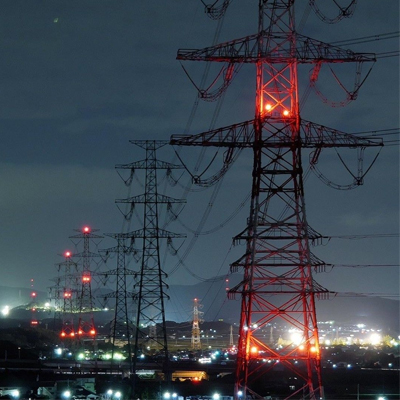
정부가 SK·GS·네이버 등을 중심으로 1단계 8.4GW 규모 AI 데이터센터 구축을 추진 중

돈經濟
칼럼
panda_Lee
Korean stock market's leading sectors next week are 'power infrastructure' and structural export industries.

0
2026. 08. 25
- The semiconductor-led market, which dominated the Korean stock market in the first half of 2026, is experiencing volatility due to concerns about a slowdown in AI investment and National Pension Service rebalancing, prompting the market to seek "beyond semiconductors."
- AI technological advancements are driving investment in power and cooling infrastructure for data center construction, beyond just software and chips, making related power equipment and cooling equipment industries new growth engines.
- The shipbuilding and defense industries are attracting attention as stable investment options, securing longer structural growth visibility than semiconductors, driven by exclusive LNG carrier orders and increased demand due to ongoing geopolitical tensions, respectively.
- With AI data center construction expected to begin and North American order revenue recognition becoming visible by year-end, a sector rotation is anticipated, with funds shifting from semiconductors, due to potential profit growth deceleration, to industries with structural demand like power, shipbuilding, and defense.
From the first half of 2026, the Korean stock market was dominated by semiconductors, led by Samsung Electronics and SK Hynix. As demand for HBM and AI servers exploded, the profits of both companies soared several times year-on-year, and their share of KOSPI's market capitalization at one point exceeded 50%. However, in July, the market experienced significant volatility due to concerns about a slowdown in AI investment (controversy over Meta's oversupply), National Pension Service rebalancing, and exchange rate fluctuations. In mid-August, it plummeted with rising US Treasury yields, only to rebound repeatedly with SK Hynix's announcement of a 40 trillion won share buyback and full cancellation.
As of the closing price on Friday, August 21, the KOSPI closed at 6,912.95. Samsung Electronics at 281,500 won (+3.87%) and SK Hynix in the 1.73 million won range (+2.31%) boosted the index, but leading power equipment stocks underwent adjustments. HD Hyundai Electric was at 718,000 won (-3.75%), LS ELECTRIC at 187,000 won (-6.12%), and Hyosung Heavy Industries at 2.721 million won (-4.76%). With semiconductor profit forecasts peaking this year and the growth rate potentially slowing next year, the market is already looking for what comes 'after semiconductors'.
The key is that AI doesn't end with software or chips; it requires physical infrastructure. The biggest bottleneck in building data centers is power, followed by cooling. Goldman Sachs estimates that major cloud providers will invest approximately $1.14 trillion (about 1,600 trillion won) in AI infrastructure next year. In Korea, the government is also promoting the construction of 8.4GW of AI data centers in the first phase, centered around SK, GS, and Naver, with a mega-project totaling 550 trillion won being discussed.
This trend is the most promising theme to follow semiconductors.
The clearest candidates are power equipment and cooling.
Demand for ultra-high voltage transformers and distribution equipment for data centers and the replacement of aging power grids are surging, especially in North America. HD Hyundai Electric has signed a long-term supply contract worth 1 trillion won with North American big tech companies, and Hyosung Heavy Industries and LS ELECTRIC have also seen a sharp increase in their order backlogs. Iljin Electric is accelerating its entry into the North American market by securing a 120 billion won order for 245kV ultra-high voltage transformers for a Canadian data center. With factory utilization rates high, supply cannot keep up with demand.
Cooling is also rapidly emerging. AI servers generate much more heat than general servers, so air cooling alone has limitations, and there is a trend towards liquid cooling (cold plates, CDUs, etc.). Samsung Electronics has decided to invest 280 billion won in its Gwangju plant to build a line for producing HVAC and cooling equipment for the German Fläkt Group. This is a large-scale investment in production facilities after 37 years, meaning that cooling equipment for AI data centers will be manufactured domestically. LG Electronics is also strengthening its related businesses.
This industry is already showing a rotational pattern where it performs relatively strongly during periods when semiconductors are 'resting.' However, stocks with high valuations may experience short-term corrections. Currently, it is at the initial stage of transitioning from 'order confirmation' to 'revenue recognition.'
Shipbuilding and defense are structural industries with different 'visibility.'
Shipbuilding has already secured 3-4 years' worth of order backlog. Orders for LNG carriers, coupled with the reorganization of the energy supply chain from the Middle East, have led to domestic shipbuilders almost monopolizing orders. The performance of HD Korea Shipbuilding & Offshore Engineering and Hanwha Ocean also exceeds consensus. If new momentum, such as engines for data centers, is added, it is evaluated that the mid-to-long-term visibility is even longer than that of Semi (Semicon-semiconductors).
The defense industry has a structure where demand is maintained as long as geopolitical tensions are not easily resolved. Exports of K9 self-propelled howitzers and K2 tanks are expanding beyond Poland to the Middle East, Central and South America, and Eastern Europe, and Hanwha's entry into North America is also becoming visible, as it secured a contract for a prototype of the US Army's next-generation self-propelled howitzer. Although short-term stock price movements are highly volatile, it is important that the order cycle has not broken.
Among construction companies, Hyundai Engineering & Construction, Daewoo Engineering & Construction, Daelim Industrial, and SK ecoplant, which have specialized construction capabilities for AI data centers, can benefit. Companies that integrate power input, cooling systems, and modular construction methods are at an advantage.
Expected changes by year-end
The biggest variables until the end of the year (December 2026) are the actual commencement of construction and the speed of order conversion. Once domestic AI data center projects begin full-scale construction, the earnings visibility of companies related to power equipment, electric wires, and cooling will improve significantly. The timing of North American orders being recognized as revenue is also likely to be concentrated in the second half of this year to early next year.
While semiconductors remain a key driver of the market, if the perception of 'peak growth rate in profits' spreads, funds could shift more rapidly to power, shipbuilding, and defense. Some brokerage firms, such as Kiwoom Securities, already point out that the upward revision in profit forecasts for the third quarter is greater for transportation, IT hardware, construction, and machinery sectors than for semiconductors. This is a period where sector rotation is becoming full-fledged.
The KOSPI has the potential to test the 7,500-8,000 range by the end of the year. However, if concerns about a resurgence in US long-term interest rates, the November midterm elections, and a slowdown in additional AI investment emerge, a pullback to the 6,400-6,700 range could occur. The exchange rate (won/dollar) is moving around 1,380 won, which is still favorable for export companies' performance.
Secondary batteries (ESS) could indirectly benefit if demand for power stabilization in AI data centers aligns, but currently, the pace of EV demand recovery and the shift to LFP are more critical variables. Biotech and cosmetics may see thematic rebounds, but it will be difficult for them to become leading sectors.
In summary,
Summarizing the analyses so far, the Korean stock market in 2026 still has semiconductors as its most powerful 'engine,' but it has entered a stage where the engine alone can no longer drive the index upward. The sectors to follow are power and cooling infrastructure, which are the physical foundations of AI, and shipbuilding and defense, which have already secured several years' worth of work.
Currently (end of August), semiconductor shareholder returns (SK Hynix's 40 trillion won share cancellation, anticipation of Samsung Electronics' follow-up measures) are supporting the downside, and the power equipment sector's order momentum is not yet fully reflected in stock prices. As the year progresses, as data center construction and power equipment deliveries become more visible, the assessment of them as 'the second semiconductor' is likely to gain more traction. From an investment perspective, rather than completely abandoning semiconductors, a portfolio that expands the AI value chain from chips to power/cooling to construction/shipbuilding seems reasonable. Volatility remains, but sectors supported by structural demand (power shortages, geopolitics, energy transition) will take over the baton from semiconductors.
댓글
( 0 / 500 )
大虎
6
반도체가 여전히 핵심이지만 시장의 시선이 칩에서 전력과 인프라로 이동하는 흐름은 상당히 설득력이 있습니다. 특히 AI 데이터센터가 늘어날수록 전력망과 냉각은 선택이 아니라 필수라는 점에서 전력기기의 구조적 성장 가능성을 눈여겨볼 필요가 있겠습니다.
( 0 / 500 )
김태일
10
좋은 분석입니다. AI 시대라고 해서 결국 수혜가 반도체에만 머무는 것은 아니죠. 데이터센터를 지으려면 전력, 변압기, 냉각, 건설이 모두 필요합니다. 오히려 지금부터는 AI를 가능하게 만드는 ‘보이지 않는 인프라’가 새로운 주도주가 될 수 있다는 관점에 공감합니다.
( 0 / 500 )
hyundong
8
조선과 방산을 단순한 테마주로 보는 것보다 수년치 수주잔고와 글로벌 공급망 재편이라는 구조적 관점에서 바라본 것이 인상적입니다. 반도체 이후를 찾는다면 단기 급등주보다 실제 수주와 실적으로 연결되는 업종을 봐야 한다는 데 동의합니다.
( 0 / 500 )
gangho
6
전력기기주는 이미 많이 올랐다는 부담이 있지만, 주가가 올랐다는 이유만으로 구조적 성장성을 무시할 수도 없습니다. 결국 중요한 것은 수주잔고가 실제 매출과 이익으로 얼마나 빠르게 전환되느냐겠죠. ‘수주 확인→매출 인식’이라는 다음 단계가 핵심이라고 봅니다.
( 0 / 500 )
minsuk
6
이번 사이클은 과거와 조금 다른 것 같습니다. 반도체가 AI의 두뇌라면 전력·냉각은 AI 산업을 움직이는 심장과 혈관에 가깝습니다. 반도체를 버리는 것이 아니라 AI 밸류체인을 전력·냉각·건설·조선·방산으로 넓혀 보는 전략이 합리적이라는 결론에 공감합니다.
( 0 / 500 )
김태훈
5
결국 AI 산업의 다음 병목은 반도체가 아니라 전력일 가능성이 높습니다. 아무리 GPU와 HBM을 많이 만들어도 전력망과 냉각시설이 따라오지 못하면 데이터센터를 늘릴 수 없으니까요. 전력 인프라를 새로운 성장축으로 보는 시각에 공감합니다.
( 0 / 500 )
박나경
5
시장의 주도권이 한 업종에 계속 머물기는 어렵습니다. 반도체가 상반기를 이끌었다면 하반기부터는 전력기기와 조선·방산으로 순환매가 확산될 가능성을 충분히 생각해볼 만합니다. 특히 실적과 수주가 뒷받침되는 업종이라는 점이 중요해 보입니다.
( 0 / 500 )
苦盡甘來
4
전력기기 업체들의 높은 밸류에이션은 분명 부담이지만, 북미 전력망 교체와 AI 데이터센터 증설이라는 두 가지 거대한 수요가 동시에 발생하고 있다는 점은 주목할 만합니다. 결국 단기 주가보다 향후 수주잔고와 이익 증가를 확인하는 접근이 필요하겠습니다.
( 0 / 500 )
Ellie
4
조선과 방산은 AI처럼 화려한 테마는 아니지만 오히려 그래서 더 안정적일 수 있습니다. 이미 확보한 수주가 실적으로 이어지는 구조이고 세계적인 에너지·안보 환경 변화까지 뒷받침하고 있으니 장기 투자 관점에서는 상당히 매력적인 영역이라고 봅니다.
( 0 / 500 )
Daniel
3
‘제2의 반도체’를 찾는다는 표현보다는 AI 산업 전체의 확장으로 보는 게 더 정확할 것 같습니다. 칩이 성장하면 전력이 필요하고, 전력이 늘면 변압기와 냉각이 필요하고, 데이터센터가 늘면 건설과 설비가 따라옵니다. 앞으로는 이런 밸류체인 전체를 보는 시각이 중요해 보입니다.
( 0 / 500 )
신고내용
신고내용을 선택해주세요
회원비난/비하/욕설글 및 댓글도배성 게시물저작권 침해/불법자료 유출허위사실유포개인정보 유출.사생활 침해무단광고/홍보음란물 및 도박 불법 광고물범죄행위 관련 글불법행위 관련 소개물품 판매 및 사기글악성코드 및 스파이웨어 유포기타 사유 및 운영진 판단


비밀번호를 잊으셨나요?
Sign in with Google


All information provided by us is free of charge and is for the public good.