品

Corea든 Korea든, 품격은 이름보다 먼저다
Whatever the name—Corea or Korea—dignity comes first.
Whatever the name—Corea or Korea—dignity comes first.
Now
지금
751 Diaspora
Heritage
유산
Humanity
인문
Mirengsi
未冷尸
Politics
정치
Media
언론
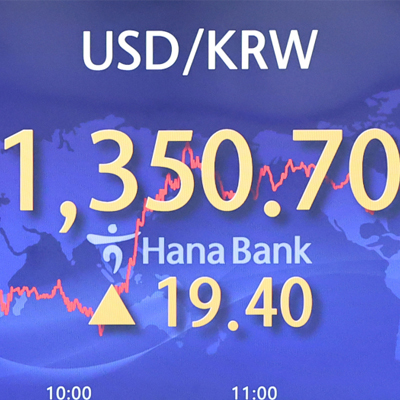
환율이 1350원까지 추가 하락하는 시나리오를 상정

돈經濟
칼럼
andy74
Korean Economy and Stock Market Shaken by Strong Won

0
2026. 08. 21
- A fall in the won-dollar exchange rate to 1350 won would stabilize import prices and boost domestic consumption, but it could also hurt export companies' profitability, exposing Korea's structural economic vulnerabilities.
- The stock market, heavily reliant on semiconductors, faces increased volatility with a falling exchange rate due to concerns over export company performance, likely deepening the decoupling of stock prices and exchange rates.
- The speed and cause of the exchange rate's decline are crucial; a gradual drop based on fundamental improvements is positive, but a rapid fall could harm exporters and destabilize the market.
- Beyond just a measure of external competitiveness, the exchange rate has become a key variable influencing capital flows and investment sentiment; if it hits 1350 won, the market must understand the true nature of the decline to respond effectively.
As of August 2026, the won-dollar exchange rate is trading in the early to mid-1410s. Compared to the peak of around 1560 won just two months ago in June, when Middle East risks and large-scale foreign selling coincided, it has already experienced a significant decline. If we assume a scenario where the exchange rate further drops to 1350 won at this point, the impact on the Korean economy and stock market cannot be simply summarized as a 'positive for a strong won.' With an export-oriented growth structure, a stock market extremely concentrated in semiconductors, and the decoupling of stock prices and exchange rates that became evident in the first half of 2026, volatility is more likely to increase. It is necessary to examine the structural changes and market dynamics that a falling exchange rate will bring.
From a macroeconomic perspective, a strong won has a dual nature. On the import side, there are clear positive effects. As the won-denominated cost of items with a high proportion of dollar payments, such as crude oil, natural gas, raw materials, semiconductor equipment, and materials, decreases, the cost burden on companies is alleviated, and inflationary pressure on consumer prices also slows down. Given Korea's high dependence on energy imports, this has a significant potential to lead to inflation suppression and an improvement in households' real purchasing power. The costs of overseas travel and study, as well as corporate overseas investments and M&A, also decrease. The repayment burden on companies and households with foreign currency debt is also reduced. Thus, stable import prices and enhanced purchasing power can act as factors that expand the potential for domestic demand recovery.
However, the export sector experiences the opposite pressure. In a structure where a significant portion of Korean exports are settled in dollars, if the exchange rate falls, the sales and operating profit, when converted to Korean won, shrink even with the same dollar sales. Especially considering the experience in the first half of 2026, when semiconductor exports significantly expanded year-on-year and the high exchange rate further inflated conversion profits, thereby increasing the current account surplus, an exchange rate of around 1,350 won largely reverses this 'exchange rate effect.' In the case of Samsung Electronics and SK Hynix, past analyses have shown a sensitivity where quarterly operating profit fluctuates by tens of billions to hundreds of billions of won for every 10 won movement in the won-dollar exchange rate. If the exchange rate falls from 1,410 won to 1,350 won, the profit buffer enjoyed during the high exchange rate period will rapidly shrink, likely weakening the earnings visibility of export companies. Other major export industries such as automobiles, shipbuilding, and defense will also face similar pressures.
The problem is that this process does not proceed smoothly. If the exchange rate falls rapidly, export companies may choose strategies such as lowering dollar-denominated prices to maintain price competitiveness or expanding overseas local production. While this may be positive for export volumes in the short term, it could negatively impact domestic employment and facility investment. Conversely, if the exchange rate decline is gradual, companies can gain time to adapt, but in the process of reaching a specific level like 1,350 won, the market must already undergo significant expectations and position adjustments. If the current account surplus continues and foreign capital flows in net, the exchange rate decline can be interpreted as a result of improving economic fundamentals. However, if the experience of foreign stock selling and rebalancing pushing up the exchange rate, as seen in the first half of 2026, is repeated, the opposite path is also possible.
The relationship with the stock market is more complex. Traditionally, a weaker won has been favorable for the KOSPI, driven by expectations of improved performance from export companies. However, in 2026, this formula largely broke down. Even as the KOSPI surged on the back of a semiconductor supercycle and expectations of AI demand, foreigners continued large-scale net selling to adjust portfolio weightings and realize profits, which in turn put upward pressure on the exchange rate. A clear 'decoupling' emerged, where stock prices rose while the won weakened. In this situation, if the exchange rate falls to 1,350 won, it could temporarily improve the won-denominated asset conversion returns for foreign investors. This is because for investors holding Korean stocks in dollar terms, a stronger won means exchange rate gains. If foreign net buying resumes and is coupled with adjustments in the foreign investment currency hedging ratio by institutions like the National Pension Service, there is potential for increased capital inflow into the stock market.
Conversely, if a falling exchange rate worsens the earnings outlook for export companies, especially large semiconductor stocks which dominate market capitalization, overall market volatility will increase. If concerns spread that the earnings momentum of the semiconductor sector will slow, the narrow rally that has driven the market could falter, accelerating sector rotation. As capital shifts from export-related stocks to domestic demand/import-dependent sectors, or to interest-rate-sensitive financial and real estate-related stocks, the fluctuation range of the index itself is likely to widen. Furthermore, in a rapidly falling exchange rate environment, the movement of short-term speculative capital becomes active, increasing intraday volatility, and the combination of hedging demand and derivative position adjustments can amplify overall market uncertainty.
A more fundamental problem is that market interpretations differ depending on what causes the exchange rate to fall. If the exchange rate naturally declines due to a combination of receding expectations for a US interest rate cut, a weaker dollar, a continued surplus in Korea's current account, and a full-scale re-entry of foreign capital, this could be seen as a signal reflecting the relative strength of the Korean economy. In this case, the stock market has room to resume a stable upward trend after a short-term correction. On the other hand, if the exchange rate plummets due to artificial intervention by authorities or a temporary supply-demand imbalance, the market will view this as an unsustainable movement and be wary. In particular, the 1350 won level is close to a psychological resistance line formed during the high exchange rate regime of recent years, so as it approaches this level, there is a high possibility that downward adjustments in export companies' earnings guidance, readjustment of foreign investors' positions, and changes in domestic institutions' currency hedging strategies will complexly interact, increasing volatility.
Changes in the structure of capital inflows and outflows are also important variables. In recent years, as domestic investors' overseas stock and bond investments have structurally expanded, the tendency for the won to weaken has become entrenched. Even if the exchange rate falls, if overseas investment demand does not easily decline, the downside may be limited. Conversely, if the won strengthens significantly, the relative attractiveness of domestic assets increases, which could lead to foreign capital returning to the country. In this process, there is a possibility that a feedback loop will form where the stock market and the foreign exchange market either reinforce or weaken each other. If foreign investors flow in without currency hedging, the upward pressure on the won will further increase, which in turn puts a burden on the earnings outlook of export companies.
Ultimately, a scenario where the exchange rate falls to 1,350 won offers clear benefits to the Korean economy, such as easing inflation and reducing import costs. However, it also exposes the structural vulnerabilities of its export-driven growth model and its semiconductor-heavy stock market. The core of the volatility lies in the speed and drivers of the exchange rate decline. A gradual, fundamentally-driven decline could enhance overall economic stability and attract foreign capital inflows. Still, a rapid decline would entail significant pain, impacting export companies' performance and leading to a substantial restructuring of the stock market. As the experience of the first half of 2026 showed, when stock prices and exchange rates moved in opposite directions, the exchange rate in the Korean financial market has now become a key variable that dictates capital flows and investment sentiment, beyond just an indicator of external competitiveness. The 1,350 won level is likely to be a testbed for this turning point. Market participants must calmly distinguish whether the exchange rate decline reflects a structural improvement in the real economy or an over-adjustment due to temporary supply and demand. The outcome of this distinction will be a crucial criterion in determining the future direction and volatility level of the KOSPI.
댓글
( 0 / 500 )
고동수
8
원화 강세를 무조건 호재로 보는 시각의 한계를 잘 짚은 글입니다. 수입물가와 내수에는 긍정적이지만, 수출 대기업과 반도체 중심의 한국 증시에는 실적 부담으로 작용할 수 있다는 점이 핵심이네요.
( 0 / 500 )
大虎
8
결국 중요한 것은 환율의 숫자보다 하락의 이유인 것 같습니다. 경상수지 개선과 외국인 자금 유입에 따른 1350원이라면 긍정적이지만, 단기 수급이나 정책 요인에 의한 급락이라면 전혀 다른 결과가 나올 수 있겠네요.
( 0 / 500 )
hyundong
5
한국 경제가 환율에 얼마나 민감한 구조인지 다시 생각하게 됩니다. 원화 강세로 물가와 원자재 비용은 낮아지지만 반도체·자동차·조선 같은 수출주에는 부담이 될 수 있으니 결국 업종별 희비가 크게 갈릴 것 같습니다.
( 0 / 500 )
nadaniel
6
특히 주가와 환율의 탈동조화에 주목할 필요가 있어 보입니다. 예전처럼 ‘원화 약세=수출주 상승’이라는 단순한 공식으로 시장을 설명하기 어려워졌다는 분석에 공감합니다. 앞으로는 외국인 자금 흐름까지 함께 봐야 할 것 같습니다.
( 0 / 500 )
김범준
5
1350원이 한국 경제의 새로운 시험대가 될 수 있다는 분석이 인상적입니다. 환율 하락 자체를 두려워하거나 반대로 무조건 반길 것이 아니라, 수출 경쟁력과 내수 구매력, 외국인 자금 흐름을 종합적으로 살펴봐야 할 시점인 것 같습니다.
( 0 / 500 )
송이버섯
4
원화 강세의 가장 큰 수혜자는 결국 수입 원자재와 에너지 비중이 높은 기업, 그리고 소비자일 수 있겠네요. 반면 수출 대기업 중심의 코스피는 실적 환산 효과가 사라지면서 새로운 평가를 받아야 할 것 같습니다.
( 0 / 500 )
강재섭
4
환율이 1350원까지 내려간다고 해서 한국 경제가 무조건 좋아지는 것도, 나빠지는 것도 아니라는 점이 핵심이네요. 산업별로 손익 구조가 완전히 달라지는 만큼 지수만 보고 판단해서는 안 될 것 같습니다.
( 0 / 500 )
K_maria
3
반도체 호황이 계속되더라도 환율 효과가 사라지면 기업 이익의 질을 다시 따져봐야 할 것 같습니다. 앞으로는 단순한 매출 증가보다 실제 원화 기준 이익과 현금흐름을 보는 것이 더 중요해 보입니다.
( 0 / 500 )
oldboy
1
좋은 분석입니다. 1350원이라는 숫자 자체보다 그 숫자에 도달하는 과정이 더 중요하다는 주장에 공감합니다. 펀더멘털에 따른 완만한 원화 강세인지, 자금 흐름에 따른 급격한 쏠림인지 구분해서 봐야겠습니다.
( 0 / 500 )
신고내용
신고내용을 선택해주세요
회원비난/비하/욕설글 및 댓글도배성 게시물저작권 침해/불법자료 유출허위사실유포개인정보 유출.사생활 침해무단광고/홍보음란물 및 도박 불법 광고물범죄행위 관련 글불법행위 관련 소개물품 판매 및 사기글악성코드 및 스파이웨어 유포기타 사유 및 운영진 판단


비밀번호를 잊으셨나요?
Sign in with Google


All information provided by us is free of charge and is for the public good.