品

Corea든 Korea든, 품격은 이름보다 먼저다
Whatever the name—Corea or Korea—dignity comes first.
Whatever the name—Corea or Korea—dignity comes first.
Now
지금
751 Diaspora
Heritage
유산
Humanity
인문
Mirengsi
未冷尸
Politics
정치
Media
언론

돈經濟
칼럼
panda_Lee
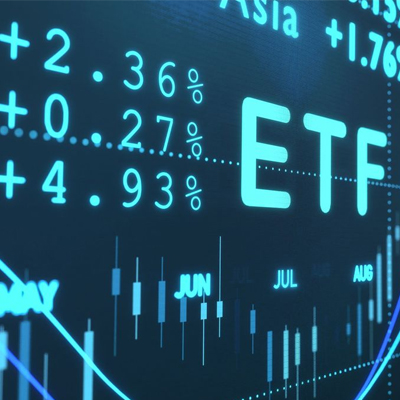
After Leverage ETF Regulations, Where Is the Korean Stock Market Heading?

0
2026. 08. 13
- In 2026, the Korean stock market experienced extreme volatility and increased market distortion due to the listing of single-stock leveraged ETFs for Samsung Electronics and SK Hynix amidst the AI semiconductor boom.
- The government's belated supplementary measures curbed short-term speculative demand, but regulations focused on individual investors left fundamental market vulnerabilities and a "balloon effect" unresolved.
- Despite robust semiconductor fundamentals in the second half, the concentrated market capitalization structure and lingering speculative demand could sustain market volatility, making industry diversification crucial.
- In conclusion, the leveraged ETF incident exposed structural problems in the Korean stock market, highlighting that balanced growth across industries, alongside volatility management, is essential for sustainable growth.
In 2026, the Korean stock market showed strength, with KOSPI reaching an all-time high, driven by the AI semiconductor supercycle. However, volatility expanded extremely after May, leading to increased controversy. In particular, the Samsung Electronics and SK Hynix single-stock leveraged ETFs, listed on May 27, were identified as a key factor in market distortion, and the phenomenon of 'the tail wagging the dog' began in earnest. The government belatedly introduced and implemented supplementary measures, and this report summarizes their impact and the outlook for the second half of the year.
Introduction of Single-Stock Leveraged ETFs and Exploding Volatility
A single-stock leveraged ETF is a product that tracks the daily return of a specific stock by two times. In Korea, it had been virtually prohibited due to restrictions on the proportion of single stocks. In early 2026, the introduction of this product was seriously considered during discussions led by Kim Yong-beom, Chief of Staff for Policy at Cheong Wa Dae, among others. The ostensible justification was to prevent capital outflow to Samsung Electronics and SK Hynix leveraged products listed in overseas markets such as Hong Kong, and to attract Korean retail investors back to the domestic market to stabilize the won-dollar exchange rate. Financial authorities even assessed that there was some effect of reducing the size of related products traded in places like Hong Kong.
However, the results were vastly different from expectations. Immediately after listing, capital poured in, mainly from individual investors, causing the net assets of related ETFs to exceed 10 trillion won in a short period. This created an abnormal structure where trading volume accounted for 30-40% of the entire ETF market. Leveraged ETFs perform daily rebalancing, mechanically buying and selling Samsung Electronics and SK Hynix, their underlying assets, to maintain their target leverage ratio. As this trading concentrated on these two stocks, which account for nearly half of KOSPI's market capitalization, a vicious cycle emerged, amplifying gains when stock prices rose and losses when they fell.
As a result, within about a month of listing, the circuit breaker was triggered more than 10 times, and the circuit breaker was activated multiple times. The KOSPI 200 Volatility Index (VKOSPI) reached an all-time high, fluctuating around the 90-point mark. With frequent days of daily fluctuations exceeding 5%, the market's speculative nature intensified to the point where it was compared to a 'casino' or 'Squid Game.' In particular, due to the negative compounding effect, there were numerous cases where the returns of leveraged ETFs did not meet expectations or even resulted in losses, despite the underlying assets rising for a certain period. Some analyses even estimated that individual investors' losses amounted to tens of billions of dollars within about a month. The side effects were so severe that even the head of the Financial Supervisory Service publicly regretted it, saying, 'We should have stopped it, even if we had to lie down.'
Government's supplementary measures and implementation process
As the volatility controversy spread to the political sphere and public opinion, financial authorities began to implement full-scale supplementary measures from mid-July. On July 16, the first set of measures was announced, including a temporary suspension of new single-stock leveraged product listings, a ban on advertising and events, an increase in the minimum deposit from 10 million won to 30 million won (cash only accepted), and an expansion of pre-education hours and enhanced evaluation. The increase in the deposit, originally scheduled to be implemented after mid-August, was brought forward to July 31 due to continued market instability.
Subsequently, additional measures were announced at an emergency market situation review meeting at the end of July. These included a total limit restricting individual investors' allocation to such products to within 20% of their total financial investment assets, the introduction of excessive bid surcharges similar to those in the futures market to increase the cost of short-term speculative trading, mandatory simulated trading, and a plan to establish emergency powers through an amendment to the Capital Markets Act, allowing financial authorities to directly adjust leverage ratios in emergency situations. This measure, which referenced Hong Kong's variable leverage system, was an attempt to secure a legal basis to temporarily lower the 2x leverage ratio when the market fluctuates sharply. A recommendation was also made to disperse rebalancing times instead of concentrating them just before market close.
Market changes after supplementary measures
The effects of the regulation were relatively quick to appear. Trading volume for single-stock leveraged and inverse ETFs plummeted from 10-15 trillion won per day before the regulation to 3 trillion won, and then to less than 1 trillion won. The turnover rate also significantly decreased, and its share of the total KOSPI trading volume fell from over 30% to less than 5%. As a result, in early August, some segments showed signs of stabilization, with intraday volatility shrinking to half the level of July.
However, it is still too early to consider it a complete normalization. As the regulation focused on individual investors, foreign and institutional trading remained relatively free, and the underlying shares of Samsung Electronics and SK Hynix continued to exhibit roller-coaster-like fluctuations, with daily surges and drops of around 10%. Furthermore, a balloon effect occurred, with some of the funds withdrawn from single-stock products moving to KOSPI200 and KOSDAQ150 index-based leveraged ETFs, which have relatively lower deposit requirements, or to overseas 3x leveraged products like the US SOXL. It was also pointed out that the volume of rebalancing itself did not significantly decrease, and the increased proportion of index-based products could become a new source of volatility. Ultimately, the market still holds the view that a half-hearted regulation that only restricts individuals makes it difficult to completely resolve the fundamental structure of market distortion.
Politically, this issue also became a burden for the Lee Jae-myung administration's economic team. Calls for the dismissal of Director Kim Yong-beom, who spearheaded the introduction of the product, and even accusations followed, leaving a significant blow to policy credibility.
Outlook for the domestic stock market in the second half of the year
The domestic stock market in the second half of the year is likely to be a phase where the robustness of semiconductor fundamentals intertwines with uncertainties in supply and demand and regulations. With expanding AI data center investments, HBM demand, and rising memory prices, the 2026 operating profit outlook for Samsung Electronics and SK Hynix remains explosive. Some securities firms believe that the memory supercycle could continue until 2028, and optimism was presented in the first half that the KOSPI could once again aim for above 10,000 if valuations merely recover to historical average levels. The recent sharp decline, which significantly lowered the forward PER, could also act as an attractive factor in the mid-to-long term.
However, several constraints remain in the short term. First, as long as the concentrated market capitalization structure itself does not easily change, the vulnerability where the movements of the two semiconductor stocks dictate the entire index will persist. Second, speculative demand remaining even after leverage regulations, foreign trading, National Pension Service rebalancing, and exchange rate variables could cause supply and demand instability. Third, if the global AI investment momentum slows down or concerns about a semiconductor peak-out emerge, there is a possibility that the rebound range could be limited, given the significant drop from the peak.
Therefore, in the second half of the year, the market is expected to focus not solely on semiconductors as in the first half, but on the spread to AI infrastructure-related sectors such as power equipment, secondary batteries (ESS), robots, and some materials, parts, and equipment. If the effects of regulations stabilize and volatility gradually returns to normal levels, selective buying opportunities may emerge for stocks with strong fundamentals. Conversely, if additional regulations are strengthened or political uncertainties increase, the possibility that investor sentiment will not easily recover cannot be ruled out.
In summary, the Korean stock market in the first half of 2026 will be remembered as an event where the high-leverage experiment of leverage ETFs starkly exposed the vulnerabilities of the market structure. The government's supplementary measures have achieved some success in curbing speculative demand in the short term, but they are still insufficient to fundamentally change the concentrated market capitalization and the individual-centric preference for leverage. In the second half, a sustainable basis for growth can only be established when volatility management and industry diversification are pursued alongside the sustained momentum of semiconductor performance.
댓글
( 0 / 500 )
正義
8
결국 문제는 레버리지 ETF 자체보다 시장 구조였다는 점이 인상적입니다. 삼성전자와 SK하이닉스 두 종목이 코스피를 좌우하는 상황에서 고배율 상품을 허용하면 어떤 결과가 나올지 충분히 예측 가능했던 것 아닙니까. 뒤늦게 개인만 규제하는 방식으로는 근본 해결이 어렵다는 지적에 공감합니다.
( 0 / 500 )
coco
7
정부가 해외로 빠져나가는 자금을 막겠다는 명분은 이해합니다. 하지만 금융상품은 한번 허용하면 되돌리기 어렵다는 점을 너무 가볍게 본 것 같습니다. 정책은 의도보다 설계가 중요합니다. 이번 사태는 한국 금융당국의 사전 영향평가 시스템이 얼마나 취약한지를 보여준 사례라고 생각합니다.
( 0 / 500 )
Bernard_Choi
6
개인투자자들이 단기간에 큰 수익을 기대하며 레버리지 상품에 몰린 것도 사실입니다. 다만 금융회사의 공격적인 마케팅과 당국의 허술한 규제가 함께 만든 결과를 개인 책임으로만 돌리는 것은 공정하지 않습니다. 교육 강화보다 상품 구조와 시장 영향에 대한 규제가 먼저였어야 합니다.
( 0 / 500 )
hero76
6
하반기 전망에서 업종 다변화가 중요하다는 분석에 동의합니다. AI 시대의 수혜가 반도체에만 머무르지 않는다면 전력, 데이터센터, 로봇, 소부장으로 확산되는 흐름이 나와야 한국 증시도 더 건강해질 수 있습니다.
( 0 / 500 )
나나
5
이번 일을 계기로 '빠른 돈'을 좇는 투자 문화도 돌아볼 필요가 있습니다. 레버리지 ETF는 도구일 뿐인데, 마치 복권처럼 접근한 투자자가 너무 많았습니다. 변동성이 줄어든 지금이 오히려 기업의 펀더멘털과 산업의 장기 흐름을 다시 보는 계기가 되었으면 합니다.
( 0 / 500 )
tongtong
4
레버리지 ETF 규제로 거래대금은 줄었지만 투자자 신뢰까지 회복된 것은 아니라는 점이 더 중요합니다. 최근 개인 자금이 다시 미국 시장으로 이동하고 있다는 보도를 보면, 문제는 상품이 아니라 시장에 대한 신뢰였다는 생각이 듭니다. 신뢰를 잃은 시장은 규제로만 살릴 수 없습니다.
( 0 / 500 )
nakyung90
4
이번 사태는 금융혁신과 금융안정이 얼마나 미묘한 균형 위에 있는지를 보여준 사례라고 생각합니다. 해외와 경쟁하겠다며 규제를 풀었지만, 한국 시장의 유동성과 종목 집중도를 충분히 고려하지 못했습니다. 같은 제도를 도입해도 시장 구조가 다르면 결과도 달라진다는 교훈을 남겼습니다.
( 0 / 500 )
Andrew91
3
국민연금 리밸런싱, 외국인 자금, 환율, 레버리지 ETF가 동시에 얽히면서 시장이 지나치게 복잡해졌습니다. 개인투자자는 정보와 속도에서 불리할 수밖에 없습니다. 앞으로는 단순히 위험 경고를 늘리는 것이 아니라 시장 미시구조 자체를 손보는 논의가 필요해 보입니다.
( 0 / 500 )
홍정우
2
흥미로운 점은 이번 논란이 반도체 산업의 경쟁력과는 별개의 문제라는 것입니다. 삼성전자와 SK하이닉스의 실적 전망은 여전히 강한데도 주가는 금융상품 구조 때문에 과도하게 흔들렸습니다. 실물경제는 견조한데 금융시장이 이를 왜곡하는 전형적인 사례로 기록될 만합니다.
( 0 / 500 )
kim_mj
1
코스피가 장기적으로 1만을 갈 수 있느냐보다 더 중요한 질문은 그 과정이 얼마나 건강한가입니다. 특정 두 종목과 고배율 상품이 지수를 끌어올리는 구조라면 지속 가능성이 낮습니다. 이번 규제가 일시적 진정에 그치지 않고 한국 증시의 체질 개선으로 이어질 수 있을지가 진짜 관전 포인트입니다.
( 0 / 500 )
신고내용
신고내용을 선택해주세요
회원비난/비하/욕설글 및 댓글도배성 게시물저작권 침해/불법자료 유출허위사실유포개인정보 유출.사생활 침해무단광고/홍보음란물 및 도박 불법 광고물범죄행위 관련 글불법행위 관련 소개물품 판매 및 사기글악성코드 및 스파이웨어 유포기타 사유 및 운영진 판단


비밀번호를 잊으셨나요?
Sign in with Google


All information provided by us is free of charge and is for the public good.