品

Corea든 Korea든, 품격은 이름보다 먼저다
Whatever the name—Corea or Korea—dignity comes first.
Whatever the name—Corea or Korea—dignity comes first.
Now
지금
751 Diaspora
Heritage
유산
Humanity
인문
Mirengsi
未冷尸
Politics
정치
Media
언론
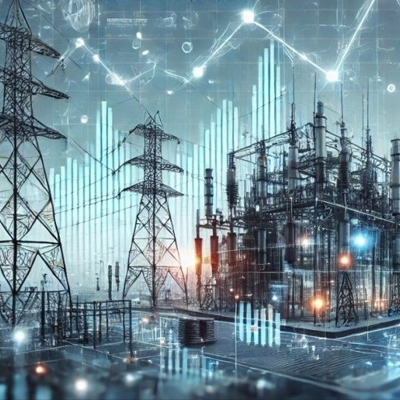
AI 인프라 시장은 전력을 어떻게 안정적으로 끌어오고, 열을 어떻게 빼내느냐가 진짜 핵심이 됐다.

돈經濟
칼럼
andy74
AI Infrastructure Transformation: It's No Longer About Chips, But Power and Cooling

0
2026. 08. 06
- By 2026, the AI infrastructure market will see power supply and cooling technology, not just chip performance, become key competitive advantages, with training and inference infrastructure physically separating.
- Traditional infrastructure companies are shifting to recurring revenue models through long-term contracts with big tech, leading to a re-evaluation of their corporate value, while off-grid power generation and waterless cooling technologies become crucial amidst the gap between green goals and reality.
- A shortage of cooling components and skilled construction workers is the biggest bottleneck for AI infrastructure expansion, and the conversion of cryptocurrency mining farms into AI data centers suggests new potential uses for power-intensive sites.
- Investors should review their portfolios based on the scale of long-term contracts, the commercialization progress of cooling and power solutions, and connections to government mega-projects, rather than short-term performance.
In 2026, the AI infrastructure market will no longer be decided solely by chips and servers. The real key has become how to reliably draw power and how to dissipate heat. The situation is characterized by a split into super-large facilities for training and distributed networks for inference, traditional infrastructure companies fixing profits with long-term contracts, and cooling components and skilled labor emerging as bottlenecks.
Training and inference are physically separated
The most noticeable change is that infrastructure is completely divided according to the nature of the AI task. Training requires so much power that it moves to isolated, massive facilities near natural gas power plants or SMRs to avoid existing power grid queues. Conversely, inference, where user response speed is critical, is fragmented into small edge networks that utilize communication networks and surplus power in urban or small and medium-sized cities.
In Korea, this trend is already becoming a reality. GS is promoting gigawatt-class data centers near its Donghae and Dangjin power plants. This is a strategy to avoid transmission network bottlenecks by directly connecting to self-generated power. SK Group is preparing regional facilities, centered in Ulsan, utilizing LNG and LPG power generation from SK Gas and SK Multi Utility. Doosan Enerbility is investing hundreds of billions in a dedicated SMR plant to enhance its long-term power supply capabilities. In construction, SK ecoplant, Hyundai E&C, Samsung C&T, and Daewoo E&C are actually building these facilities. For inference, LG Uplus's Paju Center and KT Cloud's commercialization of liquid cooling are representative examples.
From an investor's perspective, the power and construction value chain directly connected to power plants is more likely to be a stable growth axis than data center operators. Training facilities are large-scale and have long contract periods, so once secured, their performance lasts for a long time.
Traditional infrastructure companies are transforming like software
The second change is the business model itself. In the past, it was about delivering equipment or completing a one-time construction project. Now, they are entering into ultra-long-term exclusive contracts with big tech companies for 10 to 15 years. As revenue transforms into predictable, recurring revenue, the method of valuing companies also changes.
HD Hyundai Electric, Hyosung Heavy Industries, and LS ELECTRIC are the companies that most clearly demonstrate this trend in Korea. They have successively signed long-term supply contracts worth trillions of won with North American big tech companies, accumulating tens of trillions of won in order backlogs. In Korea, if the government's 18.4GW AI data center mega-project is added, mid-to-long-term performance visibility will further increase. LS ELECTRIC is also securing next-generation technology by jointly demonstrating 800V DC power infrastructure with LG Uplus.
Investors should now focus more on the proportion of long-term contracts and the speed of order backlog growth of these companies rather than their short-term performance. Key points to check are whether margins are stably maintained and whether production capacity can actually keep up. The re-evaluation of valuations, similar to software companies, has already begun.
Contradiction between eco-friendly goals and reality
The third is the discrepancy between eco-friendly goals and reality. Big tech companies advocate for net-zero, but they are immediately increasing off-grid natural gas power generation due to a lack of electricity. At the same time, to avoid concerns about water depletion, they are adopting closed-loop cooling and two-phase direct liquid cooling, which use almost no water, as essential specifications.
In Korea, GS, SK Gas, and SK Multi Utility are strengthening their self-generation-based data center models. In terms of cooling, GS Caltex and SK Enmove supply immersion cooling fluids, and LG Electronics manufactures D2C cold plates and cooling distribution units. GST and KNSOL are entering the market by developing immersion cooling systems. KT Cloud and LG Uplus have already commercialized a hybrid method that combines air and liquid.
As deregulation and technology demonstration are progressing rapidly in this area, it is necessary to carefully observe the commercialization speed of related companies and their entry into the global supply chain. If waterless cooling technology becomes the standard, the bargaining power of these companies will significantly increase.
The real bottleneck is cooling components and skilled labor.
Fourth, and most realistically, the bottleneck is not the chip. It's components like special chemical fluids to physically cool ultra-high-density AI chips, flawless magnetic pumps, and aerospace-grade quick connector valves. A few companies globally monopolize these, and there's an even greater shortage of skilled personnel who can perfectly install ultra-high-pressure electrical facilities and precision piping.
In Korea, GST is standing out by developing 2-phase immersion cooling technology. Hyosung Goodsprings supplies sensorless pumps optimized for data centers, and LG Electronics is expanding its CDU solutions. The capabilities of construction companies' specialized construction teams are also becoming important, as supply delays directly push back data center operation schedules.
From an investor's perspective, companies that can resolve bottlenecks are more likely to command a premium than equipment suppliers. Those with cooling fluids, special components, and skilled construction capabilities will have a long-term advantage.
Opportunity Cost of Mining Farms Shifting to AI
Finally, the rapid conversion of cryptocurrency mining farms in the US is also worth noting. Gigawatt-scale sites connected to the power grid are starting to generate much higher profits from AI hosting than from Bitcoin mining, causing mining rigs to shut down en masse and pivot to AI clouds. While Korea is not a major mining hub, the same logic applies in terms of the reversal of opportunity cost. The moves by GS, SK, and SGC Energy to convert existing power-intensive sites or power generation facilities into AI data centers are prime examples.
Points investors should pay attention to
In summary, the core of AI infrastructure investment in 2026 will not be chips, but rather the ability to stably supply power, efficiently dissipate heat, and secure profits through long-term contracts. Domestically, the three power equipment companies, HD Hyundai Electric, Hyosung Heavy Industries, and LS ELECTRIC, appear to be the most visible beneficiaries in the short term. GST, GS Caltex, SK Enmove, and LG Electronics, which are part of the cooling value chain, and SK ecoplant, GS, and Doosan Enerbility, which are EPC companies linked to power generation, are highly likely to emerge as mid-to-long-term growth drivers. Of course, execution risks such as delays in power grid permits, a shortage of skilled personnel, and global component supply bottlenecks still remain. Therefore, it is reasonable to review portfolios focusing on the scale of long-term contracts, the commercialization progress of cooling and power solutions, and linkage with government mega-projects, rather than the short-term performance of individual companies. As this trend accelerates, the re-evaluation of traditional infrastructure companies' valuations is likely to become more pronounced. Now is a time when the ability to discern structural changes is more important than mere numbers.
댓글
( 0 / 500 )
shindong
11
AI 시대의 승부처가 GPU에서 전력과 냉각으로 넘어간다는 분석이 설득력 있습니다. 결국 데이터를 계산하는 능력보다 그 계산을 지속할 전기와 열 관리가 더 중요해지는 것이죠. 반도체만 보던 시각에서 전력기기·발전·냉각 밸류체인으로 시야를 넓혀야 한다는 점이 특히 인상적이었습니다.
( 0 / 500 )
hong_J
8
학습용 데이터센터와 추론용 엣지센터가 물리적으로 분리된다는 설명이 특히 좋았습니다. AI도 결국 사용 목적에 따라 산업 구조가 달라지고 있다는 점을 이해하게 되네요.
( 0 / 500 )
speaker
9
AI 인프라를 반도체 산업의 연장선으로만 봤는데, 전력과 냉각이 핵심이라는 설명을 보니 관점이 완전히 달라집니다. 결국 AI도 물리 법칙을 벗어날 수 없고, 전기와 열을 다루는 기업들이 앞으로 더 중요한 위치를 차지할 가능성이 커 보입니다.
( 0 / 500 )
백금
8
AI 시대가 결국 ‘전기를 가장 싸고 안정적으로 공급하는 나라가 이기는 시대’라는 말이 실감납니다. 반도체만 잘 만든다고 끝나는 것이 아니라 에너지 인프라가 국가 경쟁력이 되는 흐름이네요.
( 0 / 500 )
parang88
6
냉각 기술이 표준이 되면 화학·기계·배관 같은 전통 제조업이 다시 주목받는다는 부분이 인상적입니다. AI가 첨단 산업만 키우는 것이 아니라 오래된 산업도 함께 재평가하는 것 같습니다
( 0 / 500 )
cook49
5
AI 산업이 결국 전기 산업이라는 말이 점점 현실이 되는 것 같습니다. GPU 성능 경쟁은 계속되겠지만, 그 GPU를 안정적으로 돌릴 전력과 냉각이 없다면 아무 의미가 없다는 점을 잘 보여주는 글이었습니다. 인프라를 보는 시각이 한 단계 넓어졌습니다.
( 0 / 500 )
홍민성
7
AI 투자의 초점이 GPU에서 전력과 냉각으로 이동한다는 분석이 인상적입니다. 결국 데이터센터는 거대한 공장이고, 공장은 전기와 열 관리가 핵심이라는 사실을 다시 확인하게 됩니다. 앞으로는 반도체만큼 전력기기와 냉각 기술 기업도 함께 봐야겠네요.
( 0 / 500 )
PizzaBoy
6
결국 AI 인프라는 ‘누가 더 좋은 알고리즘을 만들었는가’보다 ‘누가 더 빨리 전기를 연결하고 열을 처리하는가’의 경쟁이 되는군요. 숫자보다 구조를 보라는 마지막 문장이 가장 기억에 남습니다.
( 0 / 500 )
민규
5
냉각 부품과 숙련공이 병목이라는 대목이 가장 현실적으로 와닿았습니다. 아무리 좋은 칩이 있어도 전기를 공급하고 열을 빼지 못하면 데이터센터는 돌아가지 않죠. 결국 AI 시대의 숨은 승자는 인프라를 만드는 기업들일 수도 있겠습니다.
( 0 / 500 )
배종성
4
예전에는 AI 관련주라고 하면 반도체만 떠올렸는데, 이제는 발전소·변압기·냉각 시스템까지 연결해서 봐야 한다는 점이 흥미롭습니다. 특히 장기 전력 계약을 맺은 기업들이 반복 매출 구조를 갖게 된다는 부분은 투자 관점에서도 중요한 포인트 같습니다.
( 0 / 500 )
Miranda4k
4
한국 기업 사례를 함께 정리해줘서 이해가 쉬웠습니다. HD현대일렉트릭, 효성중공업, LS ELECTRIC 같은 전통 제조업 기업들이 AI 시대에 다시 주목받는 이유가 명확해 보입니다. 기술보다 인프라가 먼저라는 말이 점점 현실이 되는 것 같습니다.
( 0 / 500 )
sungbin
3
좋은 글입니다. 다만 장기 성장성에는 공감하지만 전력망 인허가와 지역 주민 수용성 문제도 생각보다 큰 변수일 것 같습니다. 결국 AI 인프라는 기술 경쟁이 아니라 에너지와 사회적 합의를 함께 해결해야 하는 산업이라는 점을 잊지 말아야겠네요.
( 0 / 500 )
신고내용
신고내용을 선택해주세요
회원비난/비하/욕설글 및 댓글도배성 게시물저작권 침해/불법자료 유출허위사실유포개인정보 유출.사생활 침해무단광고/홍보음란물 및 도박 불법 광고물범죄행위 관련 글불법행위 관련 소개물품 판매 및 사기글악성코드 및 스파이웨어 유포기타 사유 및 운영진 판단


비밀번호를 잊으셨나요?
Sign in with Google


All information provided by us is free of charge and is for the public good.